Why is it necessary to precisely control precursor boat placement for MoS2 CVD? Master Thermal Synchronization Today!
Updated 3 months ago
Precise precursor boat placement is the fundamental method for managing thermal synchronization in a single-zone furnace. Because a single-zone furnace features a fixed heating profile that peaks at the center and cools toward the ends, researchers must use spatial positioning to "program" the evaporation timing of different materials. This ensures that sulfur and molybdenum trioxide ($MoO_3$) reach their required vapor pressures simultaneously to facilitate the chemical reaction.
Precise spatial control leverages the furnace's natural temperature gradient to meet the unique sublimation requirements of each precursor. This synchronization is the only way to maintain the specific vapor concentration ratios necessary for high-quality, monolayer $MoS_2$ growth.
Leveraging the Natural Thermal Gradient
Overcoming the Single-Zone Limitation
In a single-zone CVD furnace, the heating element creates a fixed temperature profile where the highest temperature is at the center. Without multiple heating controls, researchers cannot independently set temperatures for different materials.
Synchronizing Disparate Evaporation Points
Sulfur evaporates at a significantly lower temperature than $MoO_3$. By placing the sulfur boat further from the heating center (in a cooler zone) and the $MoO_3$ closer to the center, both precursors can reach their optimal volatilization temperatures at the same time.
Maintaining Stoichiometric Balance
The distance between boats directly dictates the concentration ratio of sulfur vapor to molybdenum source in the reaction zone. Precise placement ensures this ratio remains within the narrow window required to produce monolayer films rather than bulk crystals.
Regulating Vapor Transport and Growth Kinetics
Controlling Local Vapor Density
The proximity of the $MoO_3$ source to the substrate—often calibrated to approximately 1.5 cm—is a critical variable in growth kinetics. This specific distance modifies the diffusion rate of reactants and the local concentration gradient near the substrate surface.
Preventing Unwanted Growth Modes
If the precursor boats are improperly positioned, a local excess of one reactant can occur. For instance, a delayed but excessive sulfur supply can trigger a transition from horizontal monolayer growth to vertical nanosheet orientation due to the Mullins-Sekerka mechanism.
Impact on Film Crystallinity
Uniformity across a large-area substrate depends on a stable thermal field and a consistent flow of vapor. Precise positioning prevents the agglomeration or multi-layer stacking that occurs when precursor concentrations are too high or fluctuate during the deposition process.
Understanding the Trade-offs and Constraints
Sensitivity to Carrier Gas Flow
While boat distance sets the potential vapor pressure, the Mass Flow Controller (MFC) determines the actual flux of that vapor to the substrate. If the boat position is precise but the gas flow is unstable, the boundary layer thickness will fluctuate, ruining film uniformity.
The Rigidity of Single-Zone Setups
Unlike multi-zone furnaces where temperatures can be adjusted via software mid-run, boat placement in a single-zone furnace is a "hard-coded" variable. Once the tube is sealed and the process begins, the spatial relationship cannot be changed, leaving no room for error in the initial setup.
Thermal Lag and Timing
Even with perfect placement, different materials have different thermal masses. Researchers must account for the time it takes for each boat to reach its target temperature within its specific zone to ensure the vapors meet at the substrate at the exact moment the growth temperature (e.g., 705°C) is reached.
Strategic Recommendations for CVD Synthesis
How to Apply This to Your Project
- If your primary focus is Monolayer Quality: Prioritize the precise distance between the $MoO_3$ source and the substrate to strictly control the local concentration gradient and prevent multilayer stacking.
- If your primary focus is Growth Repeatability: Use a high-precision Mass Flow Controller in conjunction with fixed boat positions to ensure the carrier gas flux remains constant across multiple experimental runs.
- If your primary focus is Large-Area Uniformity: Optimize the sulfur boat placement further toward the edge of the heating zone to ensure a steady, prolonged supply of sulfur vapor that covers the entire substrate area.
Mastering the spatial geography of your furnace transforms a simple heating tool into a precision instrument for two-dimensional material engineering.
Summary Table:
| Parameter | Function | Key Impact on Synthesis |
|---|---|---|
| Sulfur Placement | Evaporation timing | Ensures sulfur vapor meets MoO3 at optimal growth temp |
| MoO3 Placement | Concentration control | Dictates monolayer vs. bulk crystal growth modes |
| Boat-to-Substrate | Diffusion rate | Controls film thickness and local vapor density |
| Thermal Gradient | Synchronization | Leverages furnace peak and edge cooling for disparate precursors |
Optimize Your Material Synthesis with THERMUNITS
Elevate your R&D results with precision thermal technology. THERMUNITS is a leading manufacturer of high-temperature laboratory equipment specifically designed for material science and industrial research. Whether you are synthesizing monolayer $MoS_2$ or exploring advanced 2D materials, our comprehensive range of CVD/PECVD systems, Tube furnaces, and Atmosphere furnaces provides the stable thermal profiles and gas flow control necessary for success.
Ready to enhance your lab's efficiency and repeatability? Contact us today to find your thermal solution!
References
- Moha Feroz Hossen, Shyam Aravamudhan. Quantitative Defect Analysis in CVD‐Grown Monolayer MoS<sub>2</sub> via In‐Plane Raman Vibration. DOI: 10.1002/nano.202400103
Mentioned Products
- Multi Heating Zones CVD Tube Furnace System for Precision Chemical Vapor Deposition and Advanced Material Synthesis
- 5 Inch Three Zone Rotary Tube Furnace with Integrated Gas Delivery System and 1200C Capability for Advanced Material CVD Processing
- 5 Inch Two Zone Rotary Tube Furnace 1100C for Powder CVD and Material Synthesis
- High Temperature Dual Zone Split Tube Furnace for Advanced Atmosphere Sintering and Vacuum CVD Applications
- Dual Tube 100mm 80mm CVD Sliding Furnace with 4 Channel Gas Mixing and Vacuum System
People Also Ask
- How does a sliding rail design benefit the CVD process within a furnace ventilation hood? Enhance Control & Quenching
- How does the deposition process occur within a Chemical Vapor Deposition (CVD) reactor? Explore the 5-Stage Growth Cycle
- What are the primary differences between hot-wall and cold-wall CVD reactors? Choose the Best System for High Purity
- What is the primary function of a CVD system in the synthesis of Bi2O2Se thin films? Master High-Quality Crystal Growth
- What is the core function of a CVD system in FG-FET fabrication? High-Quality Graphene Synthesis for Research

Tech Team · ThermUnits
Last updated on Jun 02, 2026
Related Products
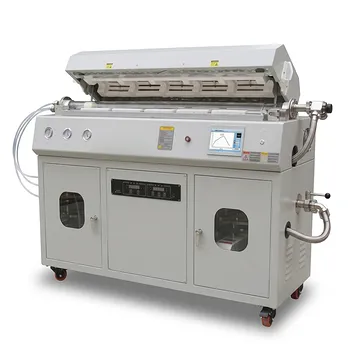
Multi Heating Zones CVD Tube Furnace System for Precision Chemical Vapor Deposition and Advanced Material Synthesis
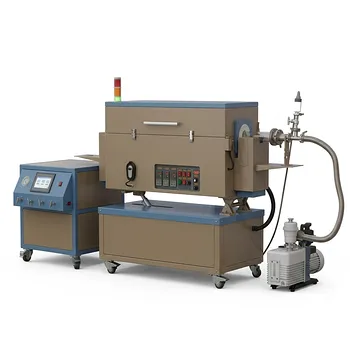
5 Inch Three Zone Rotary Tube Furnace with Integrated Gas Delivery System and 1200C Capability for Advanced Material CVD Processing
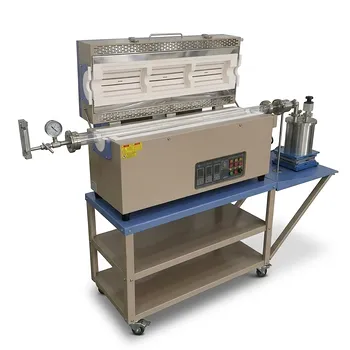
5 Inch Two Zone Rotary Tube Furnace 1100C for Powder CVD and Material Synthesis
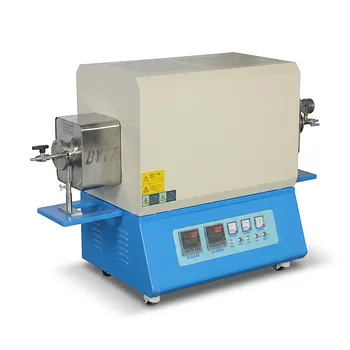
High Temperature Dual Zone Split Tube Furnace for Advanced Atmosphere Sintering and Vacuum CVD Applications
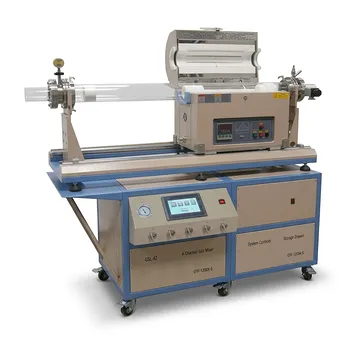
Dual Tube 100mm 80mm CVD Sliding Furnace with 4 Channel Gas Mixing and Vacuum System
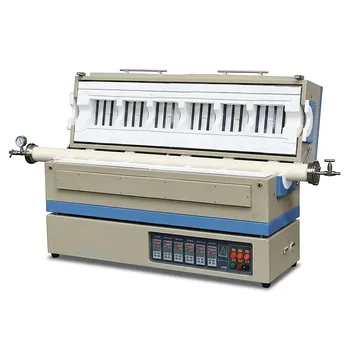
Six Zone Split Tube Furnace with Alumina Tube and Vacuum Flanges for 1500C High Temperature Thermal Processing and CVD
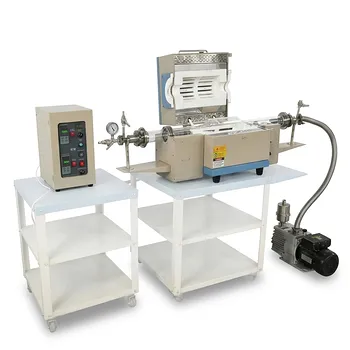
Two Zone Rotary Tube Furnace for Powder CVD Coating and Core Shell Material Synthesis 1100C
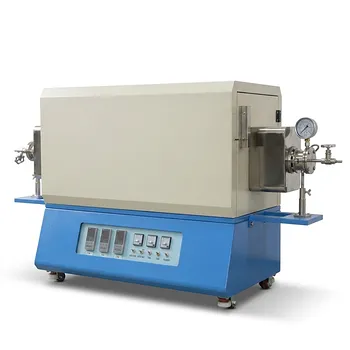
Three Temperature Zone High Temperature Vacuum Tube Furnace for CVD and Material Sintering
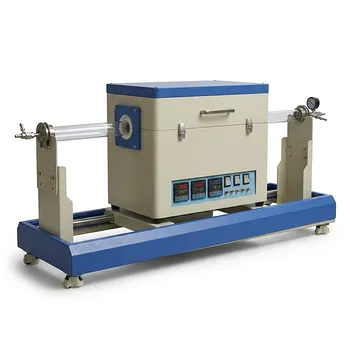
Double Temperature Zone Double Cover Tube Furnace for High Temperature CVD and Vacuum Annealing
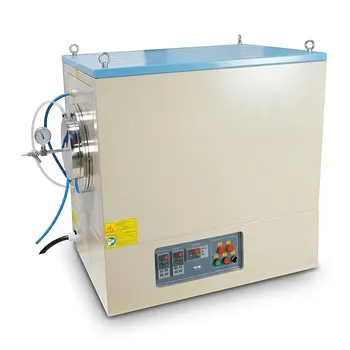
Dual Zone Tube Furnace 1100C with 11 Inch Quartz Tube and Vacuum Flanges for 8 Inch Wafer Processing
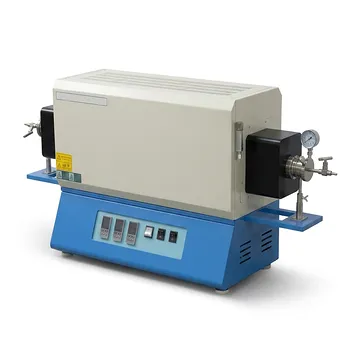
High Temperature Three Temperature Zone Tube Furnace for Advanced Material Science Sintering and Chemical Vapor Deposition Applications
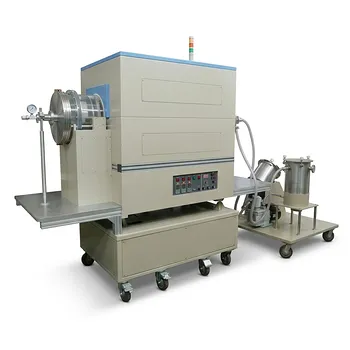
Three Zone Rotary Tube Furnace with Automatic Powder Feeding for Large Scale CVD Coating 1100C
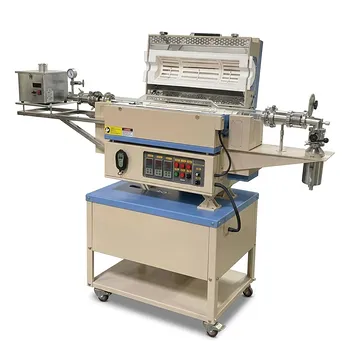
5 Inch Rotary Tube Furnace with Automatic Feeding and Receiving System 1200C Three Zone CVD Powder Processing
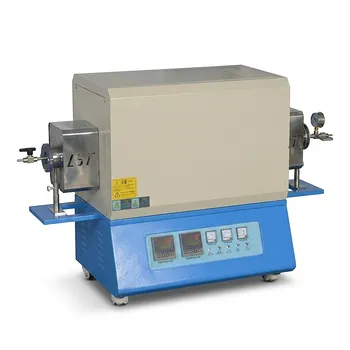
High Temperature Dual Zone Vacuum Tube Furnace for Material Research and CVD Processing
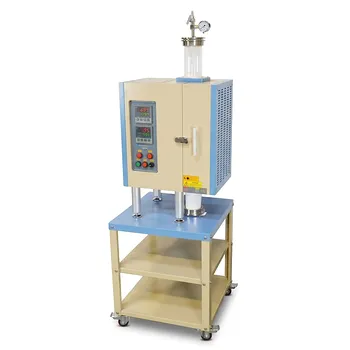
1100°C Dual Zone Split Vertical Tube Furnace with 4 Inch Quartz Tube and Vacuum Sealing Flanges
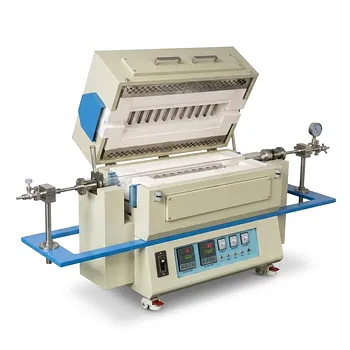
High Temperature Dual Zone Rotating Tube Furnace 1500C Silicon Carbide Heating for Advanced Material Synthesis
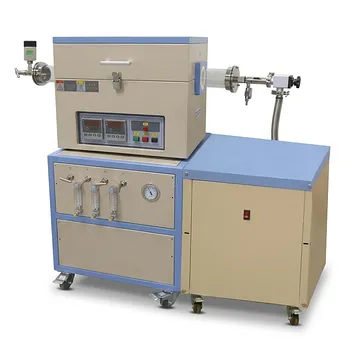
Dual Zone Quartz Tube Furnace with 80mm Diameter 1200C Max Temperature 3 Channel Gas Mixer and Vacuum Pump System
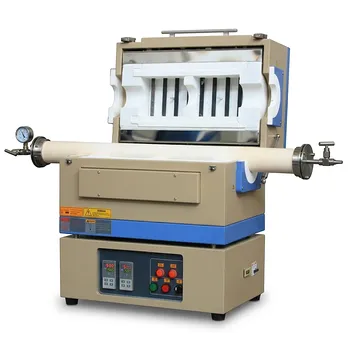
1500C Two Zone Split Tube Furnace with Vacuum Flange and 80mm Alumina Tube
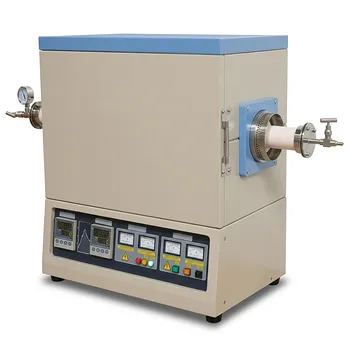
High Temperature 1700C Dual Zone Tube Furnace for Material Science and Industrial Chemical Vapor Deposition Research