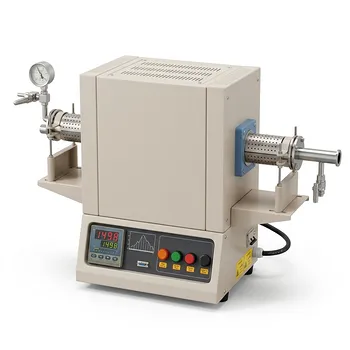
Why use vacuum or argon for Ti5553 heat treatment? Ensure peak performance for additive-manufactured components.
Updated 3 months ago
To maintain the structural integrity and mechanical performance of Ti5553 components, an inert or vacuum environment is non-negotiable. This controlled atmosphere prevents the alloy’s high chemical reactivity from causing catastrophic oxidation and embrittlement while allowing for the precise microstructural tuning required after the additive manufacturing process.
The use of vacuum or argon-protected tube furnaces is essential to isolate Ti5553 from oxygen and nitrogen, which would otherwise degrade the material's properties at high temperatures. This environment ensures effective residual stress relief from the Laser Powder Bed Fusion (L-PBF) process and enables the controlled precipitation of critical phases.
The Chemical Vulnerability of Ti5553 at High Temperatures
Extreme Chemical Activity of Titanium
Titanium alloys like Ti5553 exhibit a high affinity for atmospheric gases when heated. At elevated temperatures, the material reacts aggressively with even trace amounts of oxygen and nitrogen.
Prevention of Surface Oxidation and Embrittlement
Exposure to air during heat treatment results in the formation of a brittle "alpha case" or surface oxide layer. A vacuum or argon-shrouded environment eliminates these contaminants, preserving the ductility and fatigue life of the component.
Mitigating Hydrogen Absorption
High-purity argon protection is particularly effective at preventing hydrogen absorption during heating and cooling cycles. This is vital because hydrogen can lead to delayed cracking and internal structural failures in titanium joints.
Optimizing Additive-Manufactured Microstructures
Relieving Residual Stresses from L-PBF
The Laser Powder Bed Fusion (L-PBF) process involves rapid solidification, which traps significant residual stresses within the part. A controlled furnace environment allows these stresses to be eliminated through thermal relaxation without compromising the material’s surface chemistry.
Precision Control of Alpha and Omega Phases
Ti5553 is a near-beta titanium alloy whose properties depend heavily on the precipitation of alpha and omega phases. The stable thermal environment of a tube furnace ensures these phases precipitate uniformly, leading to optimized strength and toughness.
Facilitating Densification and Homogenization
In sintering or high-temperature soaking applications, an inert atmosphere promotes diffusion between particles. This facilitates the homogenization of the alloy's microstructure, ensuring consistent mechanical properties throughout the entire component.
The Technical Advantages of Argon and Vacuum Environments
Enhancing Heat Transfer and Uniformity
While a vacuum provides excellent isolation, the introduction of argon at specific pressures (e.g., 1000 Pa) can improve thermal conductivity. This ensures more uniform heat transfer across complex additive-manufactured geometries, preventing localized microstructural variations.
Controlling Cooling Rates and Phase Transformations
Flowing argon can be used as a quenching medium to manage cooling speeds. This allows engineers to prevent the excessive precipitation of brittle phases, such as Ti2Ni in similar alloys, ensuring the final product remains ductile.
Inducing Beneficial Lattice Defects
In specific scenarios involving titanium oxides, an oxygen-deficient environment can induce oxygen vacancies. These vacancies can lower the material's bandgap and significantly improve electronic conductivity if the component serves a functional electronic purpose.
Understanding the Trade-offs
Equipment and Operational Costs
Maintaining high-purity argon environments or deep vacuums requires specialized tube furnaces and sophisticated monitoring equipment. This increases the total cost of production compared to standard atmospheric heat treatments.
Gas Purity and Potential Contamination
The effectiveness of argon protection is entirely dependent on the purity of the gas. Even minor leaks in the furnace seals or low-grade argon can introduce enough oxygen to cause surface discoloration and subsurface embrittlement.
Complexity of Cooling Profiles
Managing the transition from vacuum to argon cooling requires precise timing. Improperly managed gas flow during the cooling stage can lead to thermal shock or unintended phase shifts that degrade the mechanical performance of the Ti5553 alloy.
Applying This to Your Heat Treatment Protocol
How to Apply This to Your Project
- If your primary focus is maximizing fatigue resistance: Prioritize a high-vacuum environment to ensure zero oxygen uptake, which prevents the formation of a brittle surface layer.
- If your primary focus is microstructural uniformity in complex parts: Utilize a partial-pressure argon atmosphere to improve heat transfer and ensure consistent phase precipitation across varying cross-sections.
- If your primary focus is rapid stress relief for high-volume parts: Implement a flowing argon system to enable faster cooling cycles while maintaining an inert shield against oxidation.
By strictly controlling the furnace atmosphere, you transform a highly reactive titanium alloy into a high-performance component capable of meeting the most demanding engineering standards.
Summary Table:
| Key Factor | Technical Requirement | Benefit for Ti5553 Alloy |
|---|---|---|
| Atmosphere | Vacuum or High-Purity Argon | Prevents surface oxidation and brittle "alpha case" |
| Stress Relief | Controlled Thermal Soaking | Eliminates residual stresses from the L-PBF process |
| Phase Control | Precise Temperature Stability | Ensures uniform precipitation of alpha and omega phases |
| Cooling Speed | Flowing Argon Quenching | Manages phase transformations and prevents embrittlement |
Elevate Your Additive Manufacturing with THERMUNITS
Precision is non-negotiable when dealing with high-performance alloys like Ti5553. THERMUNITS is a leading manufacturer of high-temperature laboratory equipment, providing the advanced thermal processing solutions required for critical material science and industrial R&D.
Our specialized range of equipment—including Vacuum, Atmosphere, and Tube Furnaces, as well as CVD/PECVD and Hot Press systems—is engineered to meet the strictest standards of the additive manufacturing industry. By choosing THERMUNITS, you benefit from:
- Total Atmospheric Control: Achieve the deep vacuum or high-purity inert environments necessary to prevent titanium oxidation.
- Superior Thermal Uniformity: Ensure consistent microstructural tuning across complex, 3D-printed geometries.
- Reliable Performance: Rugged designs built for stress relief, sintering, and homogenization of advanced alloys.
Don't let contamination compromise your research or production. Contact our technical team today to find the ideal furnace solution for your Ti5553 heat treatment protocol.
References
- Margaret Wu, Thomas Voisin. Additively manufactured β-Ti5553 with laser powder bed fusion: Microstructures and mechanical properties of bulk and lattice parts. DOI: 10.1016/j.jmatprotec.2024.118354
Mentioned Products
- 1100C Tube Furnace with Vacuum Flange and Programmable Temperature Controller for Material Science and Industrial Heat Treatment
- Vertical Openable Tube Furnace 0-1700c High Temperature Laboratory System for CVD and Vacuum Heat Treatment
- Laboratory Tilting Rotary Tubular Furnaces for Material Science and Industrial Heat Treatment
- High Temperature Dual Zone Tube Furnace for Material Science Research and Professional Thermal Processing
- 500C Vacuum Vertical Tube Furnace 84mm OD Sample Rotation Lifting System
People Also Ask
- What are the advantages of 1100°C tube furnaces for ORR catalysts? Boost Conductivity and Structural Stability.
- What role does a tube furnace play in PS template removal? Ensure ZnO/SiO2 Structural Integrity & High Performance.
- What core functions does a high-temperature vacuum tube furnace provide? Optimize np-CuSn Sintering & Joint Integrity
- What impact does the heating rate of a tube furnace have on biochar microstructure? Optimize Your Material R&D.
- What is the role of a high-temperature tube furnace in the calcination process of ZnO/In2O3 nanocomposites?

Tech Team · ThermUnits
Last updated on Jun 03, 2026
Related Products

1100C Tube Furnace with Vacuum Flange and Programmable Temperature Controller for Material Science and Industrial Heat Treatment
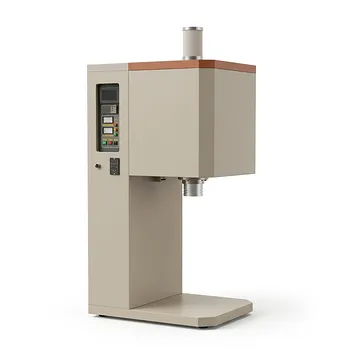
Vertical Openable Tube Furnace 0-1700c High Temperature Laboratory System for CVD and Vacuum Heat Treatment
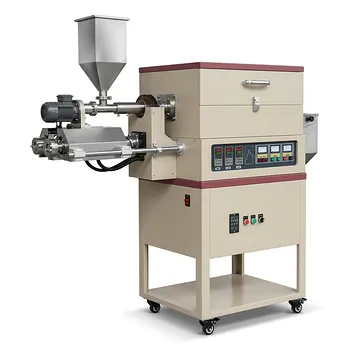
Laboratory Tilting Rotary Tubular Furnaces for Material Science and Industrial Heat Treatment
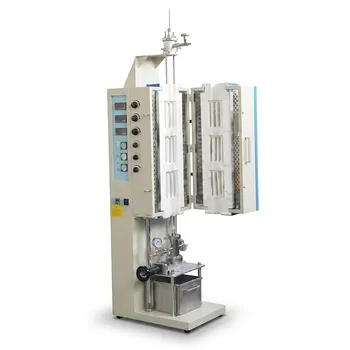
High Temperature Dual Zone Tube Furnace for Material Science Research and Professional Thermal Processing
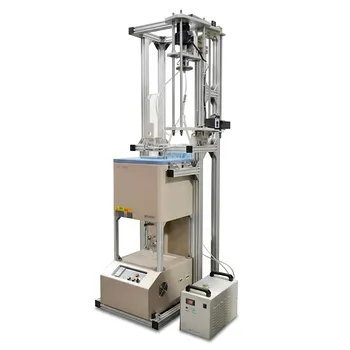
500C Vacuum Vertical Tube Furnace 84mm OD Sample Rotation Lifting System
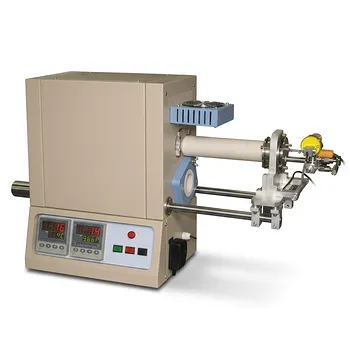
High Temperature Tube Furnace 1500C with Sliding Flanges and 50mm OD for Rapid Thermal Processing Fast Heating and Cooling
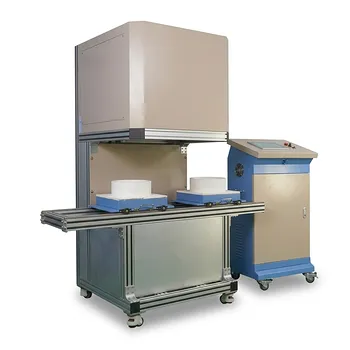
High Temperature Bottom Loading Vertical Furnace 1700C Dual Stage Sample Processing System 18L Large Capacity Thermal Treatment Equipment
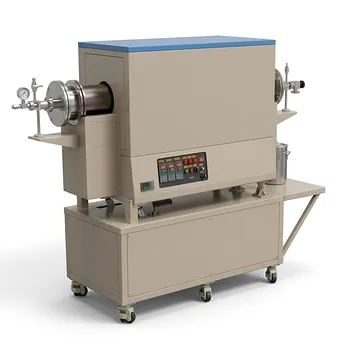
900°C Max Rotary Tube Furnace with 8 Inch 310S Alloy Tube and Optional Multi Zone Heating for Industrial Material Calcination
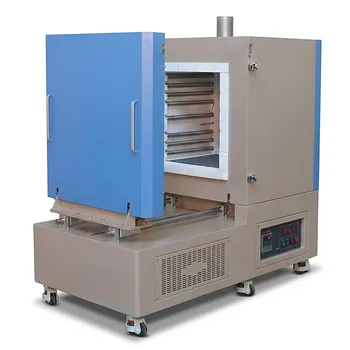
1200C Five Side Heating Muffle Furnace with Sliding Door 125L Volume High Temperature Heat Treatment System for Large Scale Sintering and Annealing
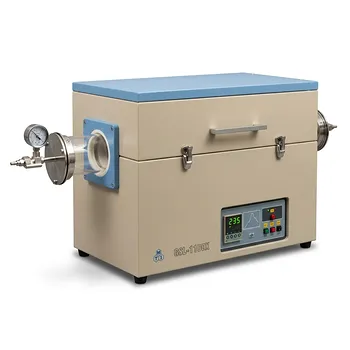
Single Zone Tube Furnace 5 Inch Quartz Tube 36 Inch Heating Zone Vacuum Flanges

1800C High Temperature Compact Vacuum Tube Furnace with 60mm OD Alumina Tube and Kanthal MoSi2 Heating Elements

High Temperature 1700C Benchtop Tube Furnace with 5 Inch Heating Zone High Purity Alumina Tube and Vacuum Sealing Flanges
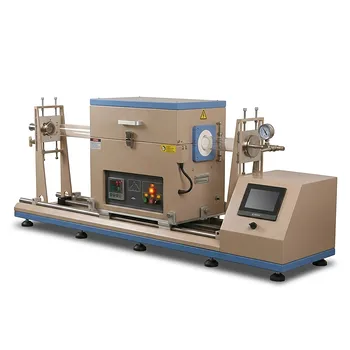
1200C Sliding Tube Furnace for Rapid Thermal Processing and CVD Graphene Growth with 100mm OD Capacity
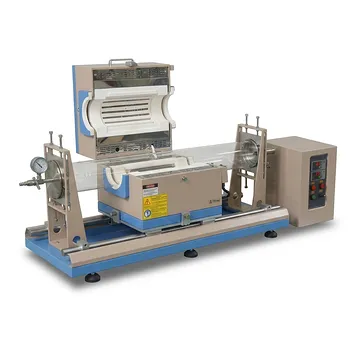
1200C High Temperature 5 Inch Sliding Tube Furnace for Rapid Thermal Processing RTP and Wafer Annealing
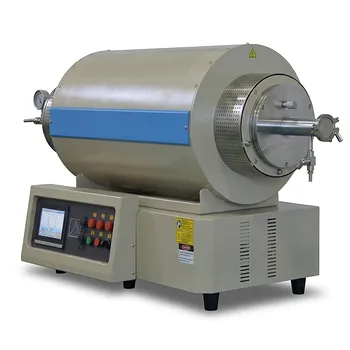
1200C Max Three Zone Tube Furnace 6 Inch OD Max with Tube and Flange

High Temperature Automated 5 Inch Tube Furnace for Autonomous Material Research and Advanced Laboratory R&D

Compact High Temperature 1600C Tube Furnace with 50mm Alumina Tube and Vacuum Flanges for Material Sintering
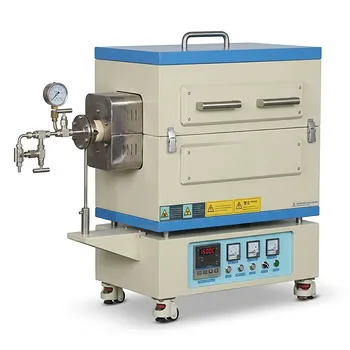
High Temperature Split Tube Furnace 1500C for Material Research Vacuum and Atmosphere Thermal Processing
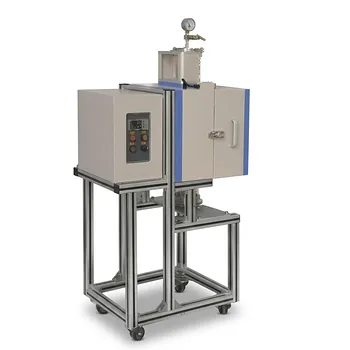
1200°C 5 Inch Vertical Quartz Tube Furnace with Stainless Steel Vacuum Flanges