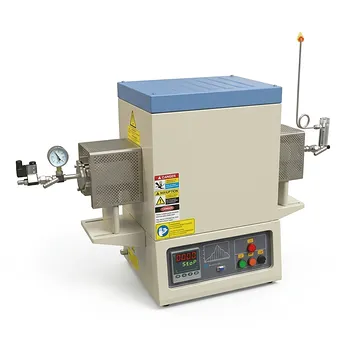
Why Tube Furnace Atmosphere Control is Critical for B-doped Mesoporous Carbon: Prevent Oxidation & Ensure Doping
Updated 5 months ago
Atmosphere control in a high-temperature tube furnace is the fundamental safeguard that prevents the total oxidative burnout of the carbon framework during thermal processing. By continuously introducing high-purity inert gases like argon, the furnace isolates the material from oxygen, allowing polymer precursors to successfully transform into stable carbon structures and facilitating the precise embedding of boron atoms into the lattice at temperatures reaching 850°C or higher.
The critical nature of atmosphere control lies in its dual role: it acts as a chemical shield to preserve the physical carbon structure while simultaneously creating the oxygen-free environment necessary for boron functionalization and pore preservation.
Preventing Oxidative Destruction of the Carbon Lattice
Eliminating High-Temperature Combustion
At the elevated temperatures required for carbonization (often exceeding 800°C), carbon reacts violently with even trace amounts of oxygen.
Atmosphere control ensures that high-purity argon or nitrogen displaces all oxygen within the quartz tube.
Without this inert environment, the organic precursors would undergo aerobic combustion—essentially turning your sample into ash—rather than controlled pyrolysis.
Preserving the Mesoporous Framework
Ordered Mesoporous Carbons (OMCs) rely on a delicate, high-surface-area architecture that is highly susceptible to "pitting" or structural collapse.
An oxygen-free environment prevents chemical etching from occurring prematurely or unevenly across the carbon surface.
This stability is what allows the material to maintain its specific pore volume and surface area, which are the defining characteristics of mesoporous materials.
Facilitating the Boron Doping Process
Enabling Boron Integration
The primary goal of creating B-OMCs is the thermal doping of boron atoms into the carbon framework to modify its electronic properties.
The furnace must reach specific stages, such as 850°C, to decompose boron sources (like boric acid) and induce their migration into the carbon lattice.
An inert atmosphere ensures these boron atoms bind to the carbon rather than reacting with oxygen to form unwanted bulk boron oxides.
Regulating the Aromatization Degree
Precise control over the gas flow rate allows for the regulation of the aromatization degree during the transition from polymer to carbon.
By managing the removal of volatile organic compounds (VOCs) through a steady flow of argon, the furnace prevents the re-deposition of impurities.
This results in a cleaner, more conductive carbon framework with a high distribution of functional boron groups.
Understanding the Trade-offs and Risks
Gas Purity vs. Operational Cost
Using ultra-high-purity (99.999%) argon is significantly more expensive than industrial-grade nitrogen but is often necessary for sensitive boron doping.
Even minor impurities in the gas stream can lead to the formation of coarse oxide particles, which can block the mesopores of the carbon.
Choosing a lower-grade gas may save costs but risks compromising the catalytic or electronic performance of the final B-OMC.
Flow Rate and Thermal Gradients
If the gas flow rate is too high, it can create thermal gradients inside the tube, leading to uneven carbonization across the boat.
Conversely, a flow rate that is too low may fail to sufficiently remove corrosive by-products or oxygen leaks.
Finding the "Goldilocks" flow rate is a technical necessity to ensure uniformity across the entire batch of material.
How to Optimize Your Carbonization Process
Recommendations Based on Project Goals
To achieve the best results with Boron-doped Ordered Mesoporous Carbons, align your furnace settings with your specific objectives:
- If your primary focus is maximum surface area: Maintain a strict vacuum purge before introducing argon to ensure every trace of oxygen is removed from the mesopores.
- If your primary focus is high boron content: Utilize a multi-stage heating profile (e.g., 180°C to 400°C to 850°C) to allow the boron precursors to stabilize before the final high-heat embedding phase.
- If your primary focus is electrical conductivity: Ensure a high flow rate during the final 850°C soak to maximize the degree of graphitization and remove non-conductive volatile residues.
Effective atmosphere control transforms a tube furnace from a simple heater into a precision chemical reactor capable of engineering materials at the atomic level.
Summary Table:
| Key Function | Impact on B-OMC Synthesis | Critical Benefit |
|---|---|---|
| Oxygen Displacement | Prevents aerobic combustion at 850°C+ | Preserves Carbon Framework |
| Inert Shielding | Prevents chemical etching and pitting | Maintains Mesoporous Volume |
| Chemical Isolation | Inhibits formation of bulk boron oxides | Enables Effective Boron Doping |
| Volatile Removal | Regulates VOC extraction and flow | Maximizes Aromatization & Conductivity |
Precision Thermal Solutions for Advanced Material R&D
At THERMUNITS, we understand that atmosphere control is the difference between a successful synthesis and a failed experiment. As a leading manufacturer of high-temperature laboratory equipment, we provide the precision tools needed for complex material science research.
Why partner with THERMUNITS?
- Comprehensive Solutions: We offer a wide range of equipment including Tube, Atmosphere, Vacuum, and Muffle furnaces, as well as CVD/PECVD systems and Rotary Kilns.
- Built for Accuracy: Our furnaces, including Hot Press, Dental, and Vacuum Induction Melting (VIM) units, are engineered for superior temperature uniformity and strict atmosphere integrity.
- R&D Support: From Thermal Elements to specialized Electric Rotary Kilns, we empower industrial and academic researchers to achieve atomic-level precision.
Ready to optimize your carbonization and pyrolysis results? Contact our technical experts today to find the perfect thermal processing configuration for your lab's unique requirements!
References
- Taner Türker, Silver Güneş. Characterization and oxygen reduction activities of boron-doped ordered mesoporous carbons synthesized by soft-template method. DOI: 10.30728/boron.1432885
Mentioned Products
- High Temperature Tube Furnace 1500C with Sliding Flanges and 50mm OD for Rapid Thermal Processing Fast Heating and Cooling
- High Temperature 1700C Tube Furnace with High Vacuum Turbomolecular Pump System and Multi Channel Mass Flow Controller Gas Mixer
- 1750°C High Temperature Benchtop Vacuum Atmosphere Tube Furnace with Kanthal Super 1800 Heating Elements and 60mm Alumina Processing Tube
- High Temperature 1700C Benchtop Tube Furnace with 5 Inch Heating Zone High Purity Alumina Tube and Vacuum Sealing Flanges
- 1700C High Temperature Alumina Tube Furnace with 18 Inch Heated Zone and Vacuum Sealing Flanges
People Also Ask
- How are high-temperature tube furnaces utilized to repair etching damage? Precision Lattice Restoration Solutions
- What core conditions does a high-temperature tube furnace provide for rGO aerogels? Mastering Precision Synthesis.
- What role does a high-temperature tube furnace play in CVD synthesis of silicon nanowires? Master VLS Growth Precision.
- How does precision tube furnace control influence CoFe nanoparticle formation? Master Your Bimetallic Synthesis.
- What role does a high-temperature tube furnace play in the sulfidation heat treatment of CoS@C/MXene nanocomposites? Guide

Tech Team · ThermUnits
Last updated on Apr 14, 2026
Related Products
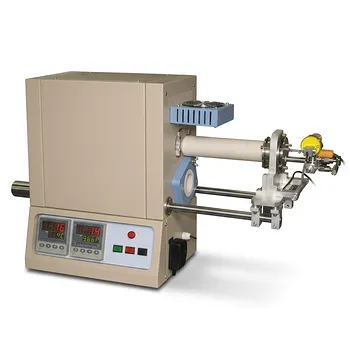
High Temperature Tube Furnace 1500C with Sliding Flanges and 50mm OD for Rapid Thermal Processing Fast Heating and Cooling

High Temperature 1700C Tube Furnace with High Vacuum Turbomolecular Pump System and Multi Channel Mass Flow Controller Gas Mixer
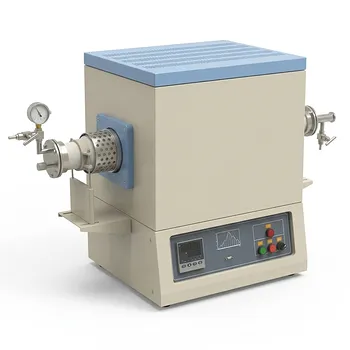
1750°C High Temperature Benchtop Vacuum Atmosphere Tube Furnace with Kanthal Super 1800 Heating Elements and 60mm Alumina Processing Tube
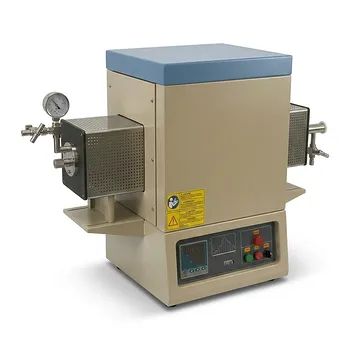
High Temperature 1700C Benchtop Tube Furnace with 5 Inch Heating Zone High Purity Alumina Tube and Vacuum Sealing Flanges
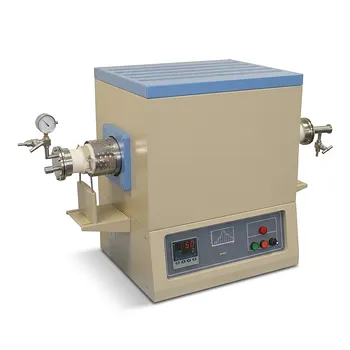
1700C High Temperature Alumina Tube Furnace with 18 Inch Heated Zone and Vacuum Sealing Flanges
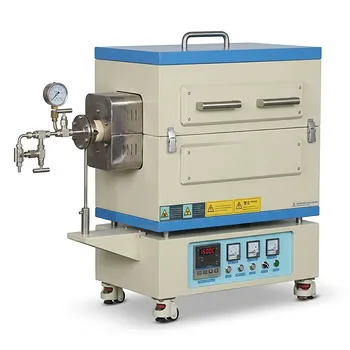
High Temperature Split Tube Furnace 1500C for Material Research Vacuum and Atmosphere Thermal Processing

1800C High Temperature Compact Vacuum Tube Furnace with 60mm OD Alumina Tube and Kanthal MoSi2 Heating Elements

Compact High Temperature 1600C Tube Furnace with 50mm Alumina Tube and Vacuum Flanges for Material Sintering
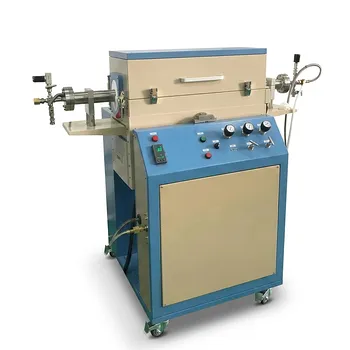
High Temperature Rocking Tube Furnace 1700°C Alumina Processing Tube with Precision Oscillation for Material Synthesis
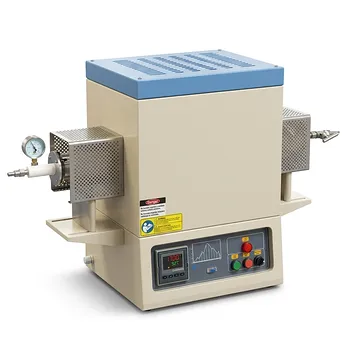
High Temperature Three Zone Tube Furnace 1700C with Alumina Tube and Water Cooled Flanges

High Temperature 1700C Vertical Tube Furnace for Powder Spherification and Material Sintering
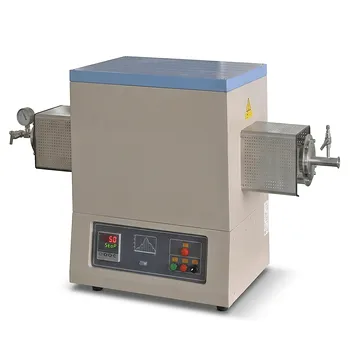
High Temperature 1700C Tube Furnace with 4 Inch OD Alumina Tube and Vacuum Sealing Flanges
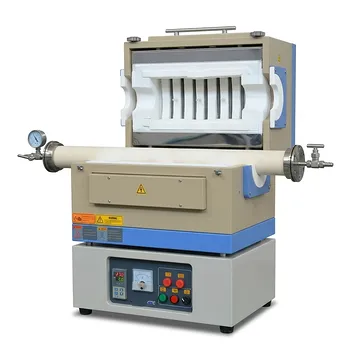
High Temperature 1600C Split Tube Furnace Vacuum Flanges Valves Optional 60mm 80mm Alumina Tube

High Temperature Automated 5 Inch Tube Furnace for Autonomous Material Research and Advanced Laboratory R&D
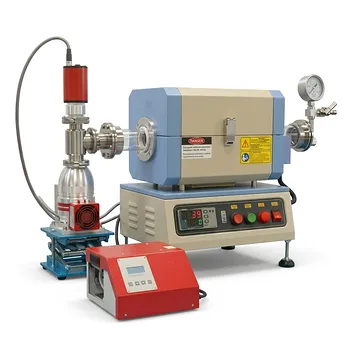
High Vacuum Compact Tube Furnace 1200C with Integrated Turbo Pump System and 8 Inch Heating Zone
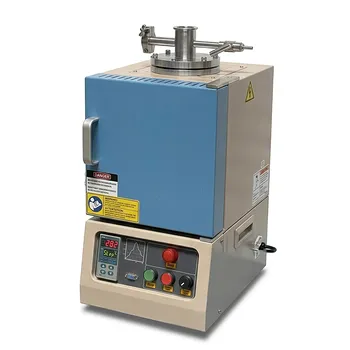
High Temperature Hybrid Muffle and Tube Furnace with Vacuum Capability and PID Control
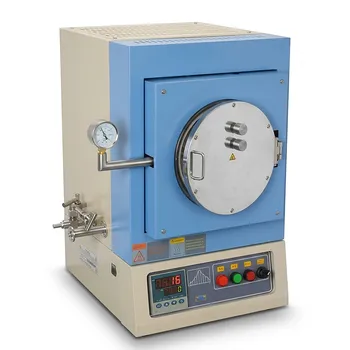
1100°C High Temperature Quartz Chamber Furnace 8 Inch OD with 7.6 Liter Capacity and Vacuum Atmosphere Capability
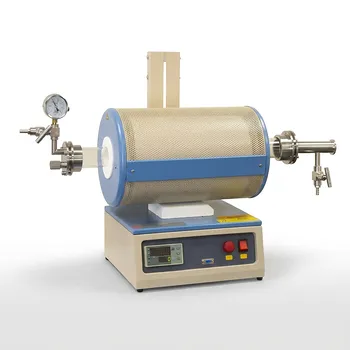
1100C Tube Furnace with Vacuum Flange and Programmable Temperature Controller for Material Science and Industrial Heat Treatment
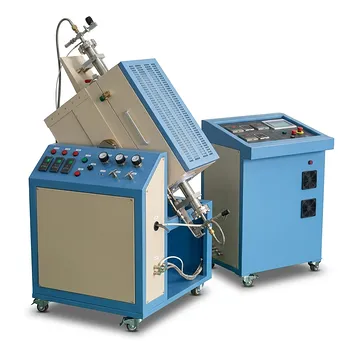
1100C High Pressure Rocking Tube Furnace with 2 Inch Super Alloy Processing Tube for Material Synthesis