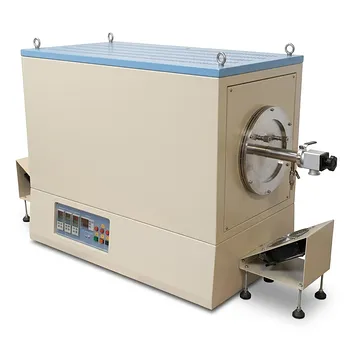
Why must an atmosphere-controlled tube furnace be used for annealing MXene composites? Protect Sensitive 2D Materials
Updated 3 months ago
Atmosphere control is the critical safeguard against irreversible material degradation during high-temperature processing. Using an atmosphere-controlled tube furnace is mandatory because MXene nanosheets and their sulfide or nitride partners are chemically unstable when exposed to oxygen or moisture at annealing temperatures. Without this controlled environment, these high-performance materials oxidize into inactive compounds, destroying their metallic conductivity and the specific chemical functionality required for their application.
An atmosphere-controlled tube furnace isolates sensitive MXene composites from ambient oxygen, using inert or reducing gases to prevent oxidation and sulfur loss. This precision allows the material to achieve high crystallinity and strong interfacial bonding without compromising its core chemical structure or electrical properties.
Preventing the Oxidative Transformation of MXenes
The Vulnerability of Two-Dimensional Structures
MXene nanosheets are highly susceptible to oxidation at elevated temperatures. In the presence of even trace amounts of oxygen, the transition metal atoms in the MXene lattice react to form inactive oxides, such as titanium dioxide ($TiO_2$).
Maintaining Metallic Conductivity
The primary value of MXenes in composites is often their metallic-grade electrical conductivity. Thermal treatment in an oxygen-rich environment destroys this conductivity by breaking the continuous 2D carbide/nitride structure, rendering the material useless for energy storage or catalytic applications.
Structural Integrity and Carrier Support
An atmosphere-controlled furnace uses gases like Argon or Nitrogen to create a protective shroud. This ensures the MXene maintains its role as a high-surface-area carrier, preserving its structural integrity during the critical phases of thermal bonding.
Protecting Sulfide and Nitride Stability
Preventing Sulfur Loss and Volatilization
Sulfide components within a composite are prone to sulfur loss or "desulfurization" during heating. A sealed tube furnace allows for the control of vapor concentrations, ensuring that the chemical stoichiometry of the sulfide remains intact rather than converting into a metal oxide.
Inhibiting the Formation of Harmful Byproducts
In the case of antimony trisulfide ($Sb_2S_3$) or similar compounds, heating in air results in the formation of harmful oxides like $Sb_2O_3$. The tube furnace environment facilitates the transition from an amorphous state to a crystalline phase while blocking these parasitic chemical reactions.
Preservation of Nitride Networks
Nitride components require similar protection to avoid the replacement of nitrogen atoms with oxygen. By using reducing gases or high-purity inert flows, the furnace maintains the specific nitrogen-bonding environments necessary for efficient charge transfer.
Optimizing Interfacial and Crystalline Properties
Enhancing Interfacial Coupling
The thermal energy provided by the furnace is intended to strengthen the interfacial coupling between the MXene and the added sulfides or nitrides. This tight attachment is essential for efficient electron transport across the heterojunction interface.
Elimination of Residual Impurities
Atmosphere control allows for the safe removal of organic solvents, ligands, and impurities remaining from previous processing steps like hydrothermal synthesis. The gas flow carries these volatile byproducts away from the material, resulting in a cleaner, more active surface.
Facilitating Phase Transitions
High-temperature annealing is often used to convert precursors into highly ordered crystalline structures. The precise temperature control of a tube furnace ensures that this crystallization occurs uniformly, which significantly optimizes carrier mobility and photoelectric response.
Understanding the Trade-offs
Equipment and Operational Complexity
Operating an atmosphere-controlled tube furnace requires rigorous sealing protocols and vacuum testing. Any leak in the system can lead to the total failure of a batch, as even small oxygen concentrations can initiate the oxidation of MXenes at temperatures exceeding 300 °C.
Cost and Gas Consumption
Maintaining a continuous flow of high-purity inert gases like Argon increases the operational cost of material production. Furthermore, using Hydrogen mixtures for reducing atmospheres introduces safety risks that require specialized monitoring and ventilation systems.
Batch Size and Scalability
Tube furnaces are typically designed for small-to-medium batch processing. Scaling the annealing of MXene composites to industrial levels requires significantly more complex equipment to maintain the same level of atmosphere uniformity across larger volumes of material.
How to Apply This to Your Project
When preparing to anneal MXene-based composites, your choice of atmosphere and temperature must be dictated by the specific chemical sensitivity of your additives.
- If your primary focus is maximizing electrical conductivity: Use high-purity Argon or a Nitrogen atmosphere to prevent any trace oxidation of the MXene carbide core.
- If your primary focus is optimizing sulfide-based catalysts: Ensure the furnace is tightly sealed to maintain sulfur vapor pressure and prevent the formation of metallic oxides.
- If your primary focus is removing stubborn organic residues: Consider a reducing atmosphere, such as a Hydrogen/Argon mixture, to effectively strip away ligands while protecting the 2D lattice.
Precise control over the thermal environment is the only way to transform sensitive precursors into high-performance, stable MXene composites.
Summary Table:
| Feature / Function | Benefit for MXene & Sulfide/Nitride Composites |
|---|---|
| Oxygen Exclusion | Prevents MXene oxidation into inactive oxides like $TiO_2$. |
| Inert/Reducing Gas Flow | Preserves metallic-grade conductivity and removes organic impurities. |
| Vapor Pressure Control | Inhibits sulfur loss (desulfurization) and maintains stoichiometry. |
| Precise Temperature Control | Facilitates uniform crystallization and optimizes carrier mobility. |
| Sealed Environment | Blocks the formation of harmful oxide byproducts (e.g., $Sb_2O_3$). |
Elevate Your Material Research with THERMUNITS
Are you struggling with material degradation during high-temperature annealing? THERMUNITS is a leading manufacturer of high-temperature laboratory equipment specifically designed for the demands of material science and industrial R&D.
Our precision Atmosphere-Controlled Tube Furnaces, Vacuum Furnaces, and CVD/PECVD systems provide the rigorous oxygen-free environment required to protect MXenes, sulfides, and nitrides from irreversible oxidation. Whether you are developing next-generation energy storage or advanced catalysts, our thermal processing solutions ensure maximum conductivity and structural integrity.
Take control of your synthesis process today:
- Explore our range: Muffle, Tube, Rotary, and Hot Press furnaces.
- Expert Support: Specialized solutions for vacuum induction melting and thermal elements.
Contact our technical team today to request a quote!
References
- Imran Haider Sajid, Syed Rizwan. Recent advances in the role of MXene based hybrid architectures as electrocatalysts for water splitting. DOI: 10.1039/d3ra06725d
Mentioned Products
- 1200°C Atmosphere Controlled Automatic Bottom Loading Furnace with 6 Inch Quartz Tube
- Compact Vertical Split Quartz Tube Furnace with Stainless Steel Vacuum Flanges for Rapid Thermal Quenching and Controlled Atmosphere Material Processing
- Compact Hybrid Muffle and Tube Furnace for 1000C Controlled Atmosphere Laboratory Material Sintering
- High Temperature Tilting Rotary Tubular Furnace for Continuous Powder Thermal Processing and Controlled Atmosphere Sintering
- 1700C High Temperature Alumina Tube Furnace with 18 Inch Heated Zone and Vacuum Sealing Flanges
People Also Ask
- Why is a tube furnace required for FGM-PhG structural color ceramics? Key to Carbon Preservation & Vibrant Color
- Why is an atmosphere-controlled tube furnace required for the pre-sulfidation of NiMo/gamma-Al2O3 catalysts?
- Why is an atmosphere-controlled tube furnace required for 800 °C CNF annealing? Essential for Oxidative Protection.
- Why is an atmosphere-controlled tube furnace required for [email protected]/C preparation? Key for Purity & Structure
- Why is an atmosphere-controlled tube furnace required for single-atom sensor calcination? Ensure Atomic Dispersion.

Tech Team · ThermUnits
Last updated on Jun 03, 2026
Related Products
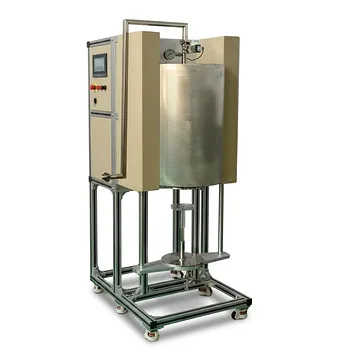
1200°C Atmosphere Controlled Automatic Bottom Loading Furnace with 6 Inch Quartz Tube

Compact Vertical Split Quartz Tube Furnace with Stainless Steel Vacuum Flanges for Rapid Thermal Quenching and Controlled Atmosphere Material Processing
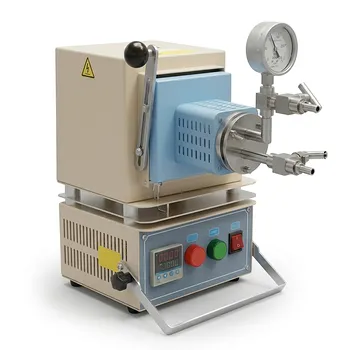
Compact Hybrid Muffle and Tube Furnace for 1000C Controlled Atmosphere Laboratory Material Sintering
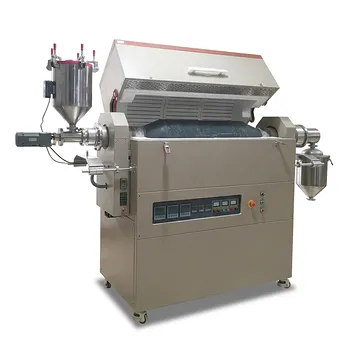
High Temperature Tilting Rotary Tubular Furnace for Continuous Powder Thermal Processing and Controlled Atmosphere Sintering
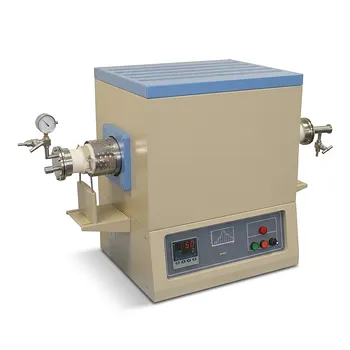
1700C High Temperature Alumina Tube Furnace with 18 Inch Heated Zone and Vacuum Sealing Flanges

Vertical 1700C Vacuum and Atmosphere Tube Furnace with 80mm Alumina Tube
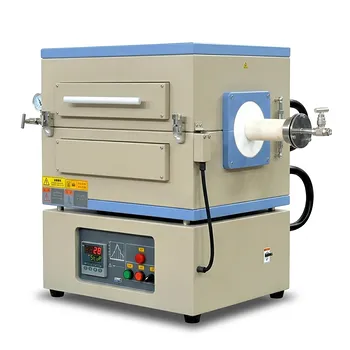
1500°C Split Tube Furnace with Alumina Tube and Vacuum Sealing Flanges for Material Research
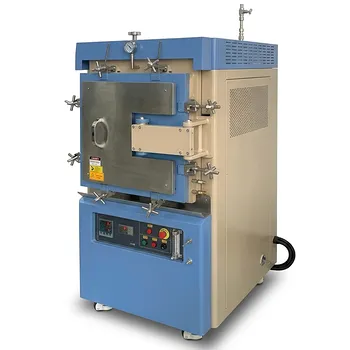
Atmosphere Controlled Muffle Furnace 1700C Maximum Temperature 80L High Capacity Vacuum Inert Gas Box Furnace
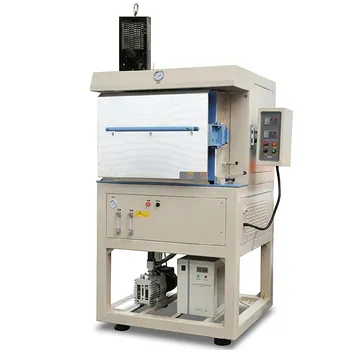
1200C Hydrogen Atmosphere Box Furnace with 5 Heated Sides and 64L Chamber

Three Zone Tube Furnace with 11 Inch or 15 Inch Quartz Tube and Hinged Flanges for Vacuum Atmosphere Heat Treatment
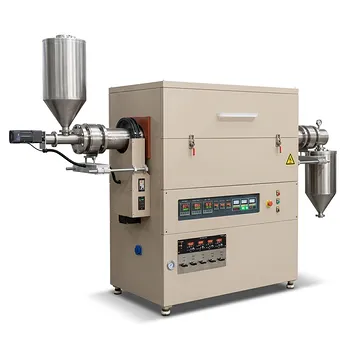
High Temperature Tilting Rotary Tube Furnace with Integrated Mass Flow Control and Multi Zone Heating
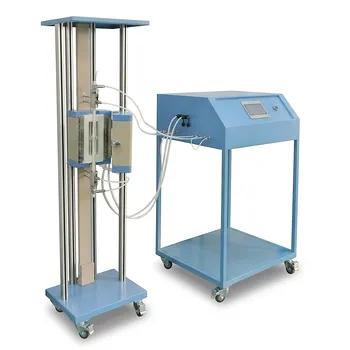
High Temperature Vertical Tube Furnace for Small Solid Oxide Fuel Cell Testing with Four Channel Gas Control
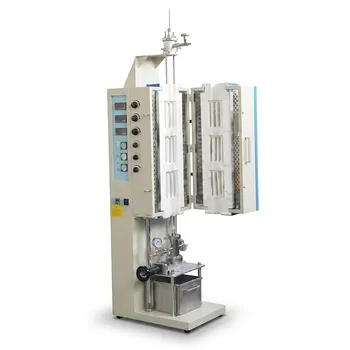
High Temperature Dual Zone Tube Furnace for Material Science Research and Professional Thermal Processing

High Temperature 1700C Tube Furnace with High Vacuum Turbomolecular Pump System and Multi Channel Mass Flow Controller Gas Mixer

High Temperature 1700C Vertical Tube Furnace for Powder Spherification and Material Sintering
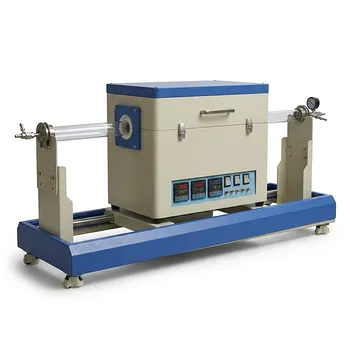
Double Temperature Zone Double Cover Tube Furnace for High Temperature CVD and Vacuum Annealing

High Temperature Automated 5 Inch Tube Furnace for Autonomous Material Research and Advanced Laboratory R&D

High Temperature 1700C Six Zone Split Tube Furnace with Alumina Tube and Water Cooled Flanges
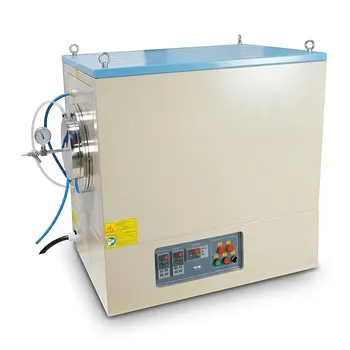
Dual Zone Tube Furnace 1100C with 11 Inch Quartz Tube and Vacuum Flanges for 8 Inch Wafer Processing