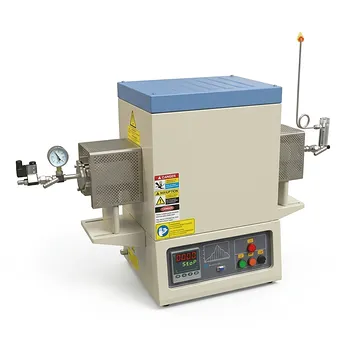
Why must high-purity argon be introduced during the pyrolysis of the CB@Cu catalyst? Protect Catalyst Integrity.
Updated 3 months ago
High-purity argon is introduced during pyrolysis primarily to create an anaerobic environment that prevents the oxidative destruction of the catalyst. By excluding oxygen, argon ensures that the carbon black carrier does not undergo combustion at high temperatures (typically 600°C and above) and that the copper species remain in their intended metallic or specific valence states rather than forming coarse, inactive copper oxides.
The use of high-purity argon transforms the furnace into a chemically inert reaction chamber, protecting the structural integrity of the carbon framework and the precise chemical activity of the copper active sites from thermal degradation and oxidation.
Preservation of the Carbon Support Structure
Preventing Oxidative Combustion
At temperatures around 600°C, carbon materials react readily with oxygen to form CO2, leading to the ablation or total loss of the carbon black carrier. The argon atmosphere replaces air within the tube furnace, ensuring the carbon framework remains intact to support the metal phase.
Maintaining the Conductive Framework
The structural integrity of the carbon black is vital for the catalyst's electrical conductivity and mechanical stability. Without an inert shield, the oxidation process would degrade the carbon lattice, compromising the catalyst's performance in electrochemical applications.
Facilitating Pore Development
The argon flow helps manage the internal pressure and gas environment within the carbon matrix during heating. This promotes the opening of the material's pore structure, which is essential for ensuring that active sites are accessible to reactants.
Stabilization of Copper Active Sites
Control of Metallic Valence States
Copper is highly sensitive to oxygen at elevated temperatures and will rapidly convert into various oxide forms if even trace oxygen is present. Argon ensures the copper is anchored in specific valence states or as metallic nanoparticles, which are the required configurations for catalytic activity.
Inhibiting Particle Coarsening
In the presence of oxygen, copper tends to form coarse copper oxide particles, which significantly reduces the effective surface area. An inert argon environment prevents this agglomeration, preserving the microscopic distribution of the metal on the carbon surface.
Protecting Site Micro-Morphology
The chemical activity of the CB@Cu catalyst depends on the specific arrangement of atoms at the interface of the copper and carbon. Argon prevents uncontrolled secondary oxidation reactions that would otherwise alter this micro-morphology and diminish the catalyst’s efficiency.
Mass Transport and Surface Cleanliness
Removal of Volatile Byproducts
As the precursor materials decompose, they release volatile organic compounds (VOCs) and other gaseous byproducts. A continuous flow of argon actively carries these vapors out of the furnace, preventing them from lingering in the hot zone.
Prevention of Secondary Deposition
If volatiles are not removed, they can undergo secondary reactions and re-deposit onto the catalyst surface. Argon ensures the "cleanliness" of the catalyst by preventing these contaminants from clogging pores or covering active copper sites.
Understanding the Trade-offs
Purity Levels vs. Catalyst Performance
The use of "high-purity" argon (typically 99.999%) is necessary because even parts-per-million (ppm) levels of oxygen can trigger surface oxidation at high temperatures. While lower-grade inert gases are cheaper, they risk the formation of thin oxide layers that act as barriers to electron transfer.
Gas Flow Rate Dynamics
While a high flow rate effectively removes contaminants, it can also cause temperature gradients within the tube furnace if the gas is not pre-heated. Finding the balance between efficient byproduct removal and maintaining a stable thermal environment is a common challenge in pyrolysis.
How to Apply This to Your Project
Recommendations for Effective Pyrolysis
- If your primary focus is Maximum Catalytic Activity: Ensure a strictly oxygen-free environment by using high-purity (5N) argon and verifying the airtightness of the tube furnace seals before heating.
- If your primary focus is Pore Structure Optimization: Maintain a consistent argon flow rate throughout the entire heating and cooling cycle to ensure volatile byproducts are removed before they can condense in the pores.
- If your primary focus is Controlling Metal Valence: Closely monitor the cooling phase, as the material remains susceptible to oxidation until the temperature drops below 100°C; do not terminate the argon flow prematurely.
By strictly controlling the inert environment with high-purity argon, you secure the fundamental structural and chemical properties required for a high-performance CB@Cu catalyst.
Summary Table:
| Feature | With High-Purity Argon | Risk Without Argon (Oxygen) |
|---|---|---|
| Carbon Support | Preserves framework & conductivity | Oxidative combustion (ablation) |
| Copper Sites | Stabilizes metallic/valence states | Formation of inactive coarse oxides |
| Pore Structure | Promotes opening & accessibility | Clogging by re-deposited volatiles |
| Surface State | Clean, high catalytic activity | Contamination & electron barriers |
Elevate Your Material Research with THERMUNITS
Precision atmosphere control is critical for high-performance catalyst synthesis. THERMUNITS is a leading manufacturer of high-temperature laboratory equipment, providing specialized solutions like Atmosphere Tube Furnaces, Vacuum Furnaces, and CVD systems designed for material science and industrial R&D.
Our advanced thermal systems ensure the strict anaerobic environments required to protect your carbon frameworks and metallic active sites from oxidative degradation. Whether you are working on pyrolysis, heat treatment, or complex industrial R&D, our equipment offers the stability and purity your research demands.
Ready to optimize your pyrolysis process? Contact THERMUNITS Today to discover how our high-temperature solutions can enhance your lab's efficiency and material performance.
References
- Yajing Yao, Shuangqi Hu. Preparation, characterization, and thermal decomposition catalytic activity of novel combustion rate catalysts. DOI: 10.2478/msp-2024-0036
Mentioned Products
- High Temperature Tube Furnace 1500C with Sliding Flanges and 50mm OD for Rapid Thermal Processing Fast Heating and Cooling
- High Temperature 1700C Tube Furnace with High Vacuum Turbomolecular Pump System and Multi Channel Mass Flow Controller Gas Mixer
- 1750°C High Temperature Benchtop Vacuum Atmosphere Tube Furnace with Kanthal Super 1800 Heating Elements and 60mm Alumina Processing Tube
- High Temperature 1700C Benchtop Tube Furnace with 5 Inch Heating Zone High Purity Alumina Tube and Vacuum Sealing Flanges
- 1700C High Temperature Alumina Tube Furnace with 18 Inch Heated Zone and Vacuum Sealing Flanges
People Also Ask
- How are high-temperature tube furnaces utilized to repair etching damage? Precision Lattice Restoration Solutions
- What core conditions does a high-temperature tube furnace provide for rGO aerogels? Mastering Precision Synthesis.
- What role does a high-temperature tube furnace play in CVD synthesis of silicon nanowires? Master VLS Growth Precision.
- How does precision tube furnace control influence CoFe nanoparticle formation? Master Your Bimetallic Synthesis.
- What role does a high-temperature tube furnace play in the sulfidation heat treatment of CoS@C/MXene nanocomposites? Guide

Tech Team · ThermUnits
Last updated on Jun 02, 2026
Related Products

High Temperature Tube Furnace 1500C with Sliding Flanges and 50mm OD for Rapid Thermal Processing Fast Heating and Cooling

High Temperature 1700C Tube Furnace with High Vacuum Turbomolecular Pump System and Multi Channel Mass Flow Controller Gas Mixer

1750°C High Temperature Benchtop Vacuum Atmosphere Tube Furnace with Kanthal Super 1800 Heating Elements and 60mm Alumina Processing Tube

High Temperature 1700C Benchtop Tube Furnace with 5 Inch Heating Zone High Purity Alumina Tube and Vacuum Sealing Flanges

1700C High Temperature Alumina Tube Furnace with 18 Inch Heated Zone and Vacuum Sealing Flanges
High Temperature Split Tube Furnace 1500C for Material Research Vacuum and Atmosphere Thermal Processing

Compact High Temperature 1600C Tube Furnace with 50mm Alumina Tube and Vacuum Flanges for Material Sintering

1800C High Temperature Compact Vacuum Tube Furnace with 60mm OD Alumina Tube and Kanthal MoSi2 Heating Elements
High Temperature Rocking Tube Furnace 1700°C Alumina Processing Tube with Precision Oscillation for Material Synthesis
High Temperature Three Zone Tube Furnace 1700C with Alumina Tube and Water Cooled Flanges

High Temperature 1700C Vertical Tube Furnace for Powder Spherification and Material Sintering

High Temperature 1700C Tube Furnace with 4 Inch OD Alumina Tube and Vacuum Sealing Flanges
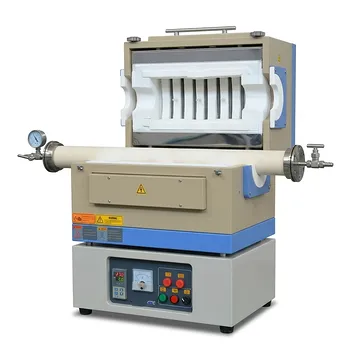
High Temperature 1600C Split Tube Furnace Vacuum Flanges Valves Optional 60mm 80mm Alumina Tube

High Temperature Automated 5 Inch Tube Furnace for Autonomous Material Research and Advanced Laboratory R&D
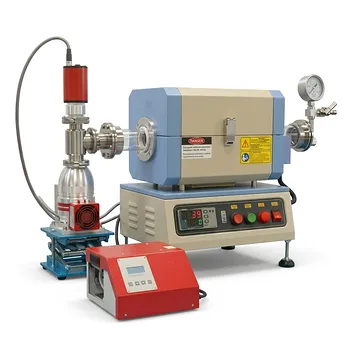
High Vacuum Compact Tube Furnace 1200C with Integrated Turbo Pump System and 8 Inch Heating Zone
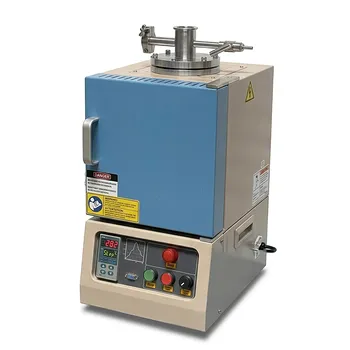
High Temperature Hybrid Muffle and Tube Furnace with Vacuum Capability and PID Control

1100°C High Temperature Quartz Chamber Furnace 8 Inch OD with 7.6 Liter Capacity and Vacuum Atmosphere Capability

1100C Tube Furnace with Vacuum Flange and Programmable Temperature Controller for Material Science and Industrial Heat Treatment
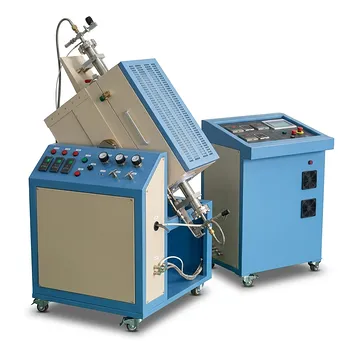
1100C High Pressure Rocking Tube Furnace with 2 Inch Super Alloy Processing Tube for Material Synthesis