The Architecture of Resonance: Why the Cavity is the Heart of MPCVD Success
Aug 15, 2026
In the world of material science, we often focus on the "what"—the synthetic diamond, the high-purity film, the semiconductor wafer. We rarely focus on the "where."
In a Microwave Plasma Chemical Vapor Deposition (MPCVD) reactor, the "where" is the resonant cavity. It is more than a container; it is a physical manifestation of electromagnetic intent. It is the difference between a chaotic discharge and a surgical strike of energy.
To understand the resonant cavity is to understand the soul of high-performance deposition.
The Engineering of Silence
At its core, an MPCVD reactor is an exercise in confinement. Raw microwave energy is inherently wild. If left to its own devices, it dissipates, creating heat where you don't want it and instability where you need control.
The resonant cavity changes the nature of this energy through Constructive Interference.
- Reflective Precision: The cavity walls reflect microwaves with such accuracy that waves overlap.
- The Standing Wave: This overlap creates "standing waves"—regions where the energy remains stationary.
- The Sweet Spot: At the peaks of these waves, electric field intensities reach several kV/cm.
This is the engineer’s version of a magnifying glass under the sun. It is not about having more power; it is about having the right power in exactly the right place.
The High-Pressure Paradox
In industrial R&D, there is a constant psychological pull toward speed. In MPCVD, speed (growth rate) is achieved through higher pressures.
However, as gas density increases, plasma becomes temperamental. It wants to shrink, drift, or extinguish. The resonant cavity acts as a stabilizer in this high-stress environment.
| Feature | Technical Function | Material Impact |
|---|---|---|
| Energy Confinement | Generates standing-wave maxima | Reaches ionization thresholds for ignition |
| Spatial Stability | Fixes electric-field peaks | Prevents plasma drift and wall damage |
| Electromagnetic Modes | Shapes field distribution | Ensures large-area uniformity |
| Pressure Management | Manages energy at high gas densities | Enables high growth rates for diamonds |
A well-designed cavity ensures that as you push the pressure limits, the plasma stays anchored. It prevents the "parasitic discharges" that waste energy and threaten the integrity of the reactor.
The Psychology of Modes
In MPCVD design, we talk about "modes"—the specific shapes the electromagnetic field takes within the cavity. Choosing a mode is a study in trade-offs.
A cylindrical cavity might offer incredible energy efficiency but produce a "peaked" field. This results in a diamond that is thick in the center and thin at the edges. Achieving a "flat" plasma profile requires a deep understanding of electromagnetic geometry.
We often choose specific modes (like TM02) not because they are easy to maintain, but because they provide the uniformity required for scalability. Engineering is rarely about finding the perfect solution; it is about choosing the right set of compromises.
Purity and the Quartz Barrier
The romanticism of engineering often hits a hard wall: contamination.
High thermal loads can degrade the very structures meant to contain them. Many advanced reactors utilize quartz domes or bell jars to isolate the plasma from the metallic walls of the cavity.
This isolation is critical. Without it, the intense heat of the plasma would introduce metallic impurities into the vacuum, turning a high-purity synthetic crystal into a flawed specimen. The cavity must provide the energy while the vacuum architecture protects the chemistry.
Choosing Your Reactor Architecture
When selecting a thermal processing system, the cavity architecture must align with your ultimate goal:
- For High Growth Rates: Look for ellipsoidal geometries optimized for high-pressure stability.
- For Scalability: Prioritize systems that support specific modes designed for large-area uniformity.
- For Extreme Purity: Ensure the system utilizes high-quality vacuum isolation (like quartz structures) to prevent wall-interference.
At THERMUNITS, we understand that the cavity is the heart of the machine. Our expertise in high-temperature laboratory equipment—from CVD/PECVD systems to Vacuum Induction Melting—is built on the principle that precision in the environment leads to perfection in the material.
Whether you are synthesizing diamonds or advancing semiconductor R&D, the right thermal solution is the bridge between a laboratory concept and an industrial reality.
Ready to optimize your lab's performance? Contact Our Experts
Quick Links
Suggested Products
Cylindrical Resonator MPCVD Machine System for Microwave Plasma Chemical Vapor Deposition and Lab Diamond Growth 915MHz MPCVD Diamond Machine Microwave Plasma Chemical Vapor Deposition System Reactor Multi Heating Zones CVD Tube Furnace System for Precision Chemical Vapor Deposition and Advanced Material Synthesis Versatile Chemical Vapor Deposition Tube Furnace System for Advanced Material Research and Industrial Coating Processes Inclined Rotary Plasma Enhanced Chemical Vapor Deposition PECVD System for Thin Film Deposition and Nanomaterial SynthesisFurther Reading
The Invisible Architecture: Balancing Purity and Intensity in MPCVD Systems The Architect of Absence: Why Atomic Hydrogen Defines Diamond Growth The Choreography of Carbon: Why CVD Precision Defines the Next Era of Material Science The Architecture of Inertness: Why Nitrogen is the Silent Guardian of CVD Synthesis The Geometry of Silence: Why Depth Demands a Chemical Solution
ThermUnits
Last updated on Apr 14, 2026
Related Products
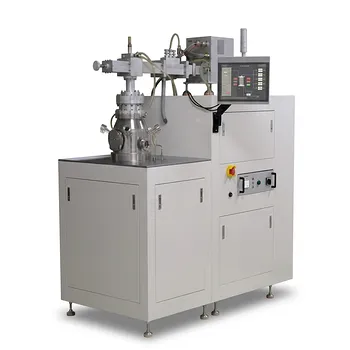
Cylindrical Resonator MPCVD Machine System for Microwave Plasma Chemical Vapor Deposition and Lab Diamond Growth
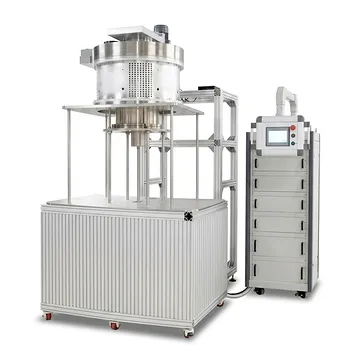
915MHz MPCVD Diamond Machine Microwave Plasma Chemical Vapor Deposition System Reactor
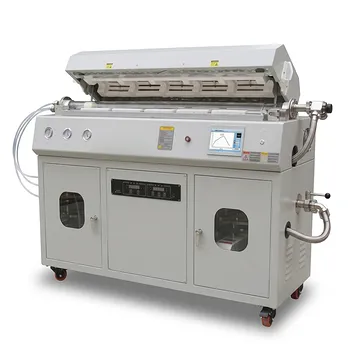
Multi Heating Zones CVD Tube Furnace System for Precision Chemical Vapor Deposition and Advanced Material Synthesis
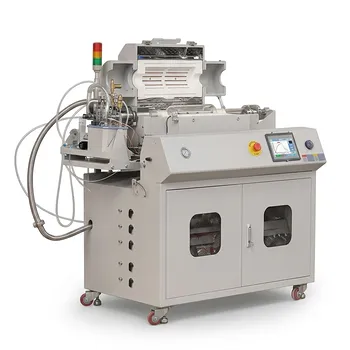
Versatile Chemical Vapor Deposition Tube Furnace System for Advanced Material Research and Industrial Coating Processes
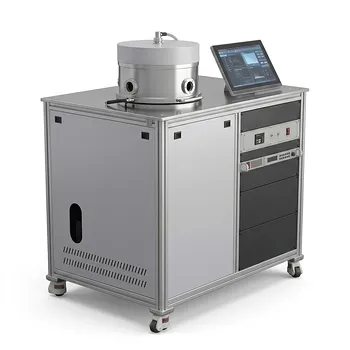
Inclined Rotary Plasma Enhanced Chemical Vapor Deposition PECVD System for Thin Film Deposition and Nanomaterial Synthesis
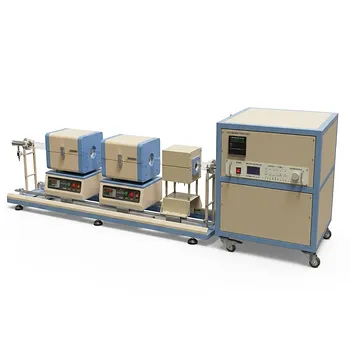
1200C Dual Sliding Tube Furnace with Dual Tubes and Flanges for PECVD Processes
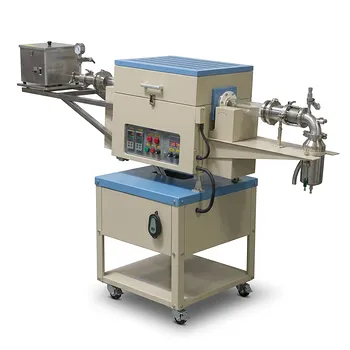
Two Zone Rotary CVD Furnace with Automatic Feeding and Receiving System for Powder Processing
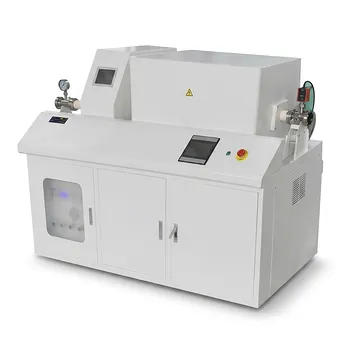
Chemical Vapor Deposition CVD System Slide PECVD Tube Furnace with Liquid Gasifier PECVD Machine
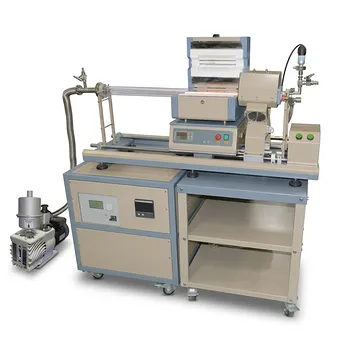
1200C Max Compact Auto-Sliding PECVD Furnace with 2 Inch Tube and Vacuum Pump
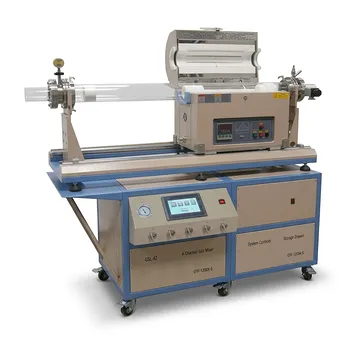
Dual Tube 100mm 80mm CVD Sliding Furnace with 4 Channel Gas Mixing and Vacuum System
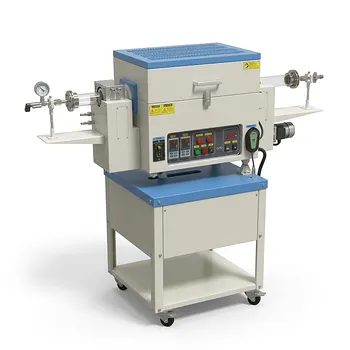
4 Inch Two Zone Rotary CVD Tube Furnace for High Temperature Battery Material Synthesis and Advanced Material Calcination
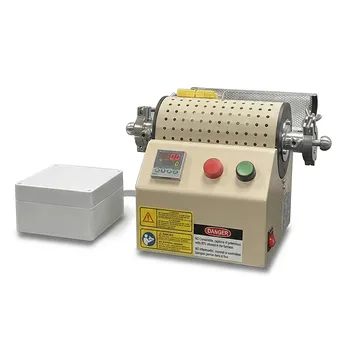
1000C Mini Tube Furnace with 20mm Quartz Tube and Vacuum Flanges for Material Science Research and Controlled Atmosphere Small Sample Processing
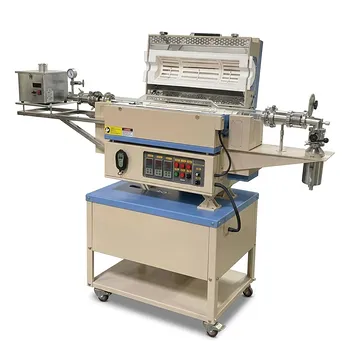
5 Inch Rotary Tube Furnace with Automatic Feeding and Receiving System 1200C Three Zone CVD Powder Processing
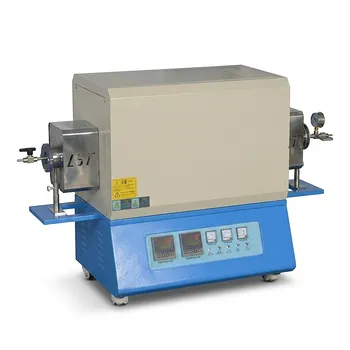
High Temperature Dual Zone Vacuum Tube Furnace for Material Research and CVD Processing
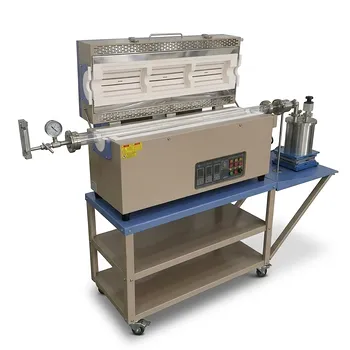
5 Inch Two Zone Rotary Tube Furnace 1100C for Powder CVD and Material Synthesis
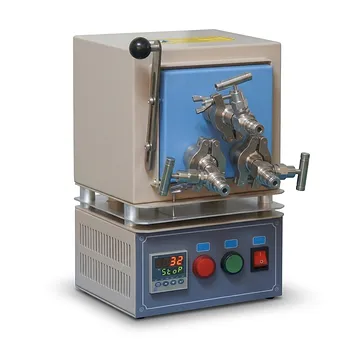
Triple Tube Compact Hybrid Muffle Furnace 1000C High Vacuum Thermal Processing System
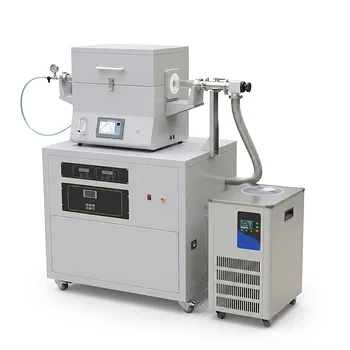
Split Chamber CVD Tube Furnace with Vacuum Station Chemical Vapor Deposition System Machine
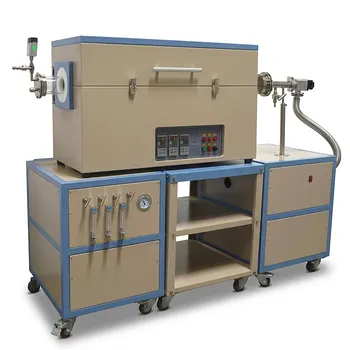
Three Zone Quartz Tube Furnace with 3 Channel Gas Mixer Vacuum Pump and Anti Corrosive Vacuum Gauge
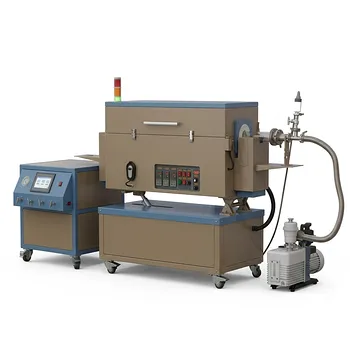
5 Inch Three Zone Rotary Tube Furnace with Integrated Gas Delivery System and 1200C Capability for Advanced Material CVD Processing