The Invisible Architecture: Balancing Purity and Intensity in MPCVD Systems
Aug 10, 2026
In the world of advanced material synthesis, the most critical variables are often those we cannot see.
In Microwave Plasma Chemical Vapor Deposition (MPCVD), we are essentially trying to replicate the geological patience of the Earth within the confines of a laboratory chamber. The success of this endeavor rests not just on the microwave source, but on the invisible architecture of pressure.
To grow high-purity synthetic diamond or complex carbon nanostructures, an engineer must master a dual-stage pressure strategy: a transition from an absolute void to a high-energy storm.
The Psychology of the Clean Slate
Before the first spark of plasma, there is the vacuum.
In manufacturing, we often talk about "getting to zero." In MPCVD, this means reaching a base vacuum of less than 10⁻³ Torr. This isn't just a technical requirement; it is a defensive measure against the chaos of the atmosphere.
Residual nitrogen, oxygen, and water vapor are the enemies of crystalline perfection. Even trace amounts of background gas can introduce lattice defects that turn a transparent crystal into a clouded failure.
We evacuate the chamber to ensure that when we finally introduce process gases, every molecule present is there by design, not by accident.
The High-Pressure Engine: 50 to 400 Torr
Once purity is established, the strategy shifts from evacuation to concentration.
Modern MPCVD processes operate in a counter-intuitive space. While many CVD processes crave lower pressures to ensure uniformity, high-performance MPCVD thrives at higher pressures, typically between 50 and 400 Torr.
At these levels, the microwave energy isn't just passing through the gas; it is being "squeezed."
The Power Density Advantage
When we push the operating pressure toward the higher end of the spectrum—specifically 160 Torr and above—something remarkable happens to the plasma:
- Compression: The plasma volume shrinks and becomes more localized.
- Energy Density: The microwave power is concentrated into a smaller area.
- Deposition Velocity: Higher power density translates directly into faster growth rates.
In the language of R&D, this is the "sweet spot" where industrial throughput meets material integrity.
The Engineering Trade-off: Stability vs. Speed
Growth speed is seductive, but it comes with a physical cost. As pressure increases, the system moves further from equilibrium.
- Thermal Management: Concentrated plasma generates localized heat that can overwhelm standard cooling. If the substrate holder cannot dissipate this energy, the diamond will graphitize or the reactor walls could fail.
- Plasma Instability: At 400 Torr, the plasma is a high-energy beast. It wants to flicker, jump, or extinguish. Maintaining a stable "ball" of plasma requires precision-engineered microwave coupling and gas flow control.
Strategic Pressure Mapping
Choosing your pressure range is a declaration of your research goals. There is no "perfect" setting, only the right setting for the specific outcome.
| Operational Phase | Pressure Requirement | Primary Objective |
|---|---|---|
| Pre-Deposition | < 10⁻³ Torr | Atmospheric decontamination and purity baseline. |
| Standard Deposition | 50 - 400 Torr | Establishing stable plasma for controlled crystal growth. |
| High-Performance Growth | 160 - 400 Torr | Maximizing power density for accelerated deposition rates. |
The Role of Hardware Excellence
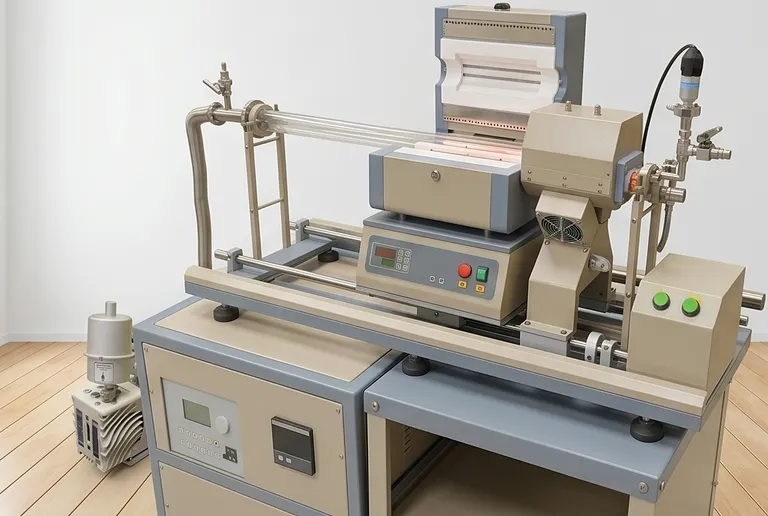
Systemic problems require systemic solutions. You cannot achieve 10⁻³ Torr with a leaking seals, and you cannot manage a 400 Torr plasma with subpar cooling.
At THERMUNITS, we approach kiln and furnace design with an "engineer’s romance"—the belief that precision in the hardware enables the poetry of science. Our CVD and PECVD systems are built to handle these extreme transitions, providing the vacuum integrity needed for purity and the thermal robustness required for high-pressure energy density.
Whether you are pushing the boundaries of diamond synthesis or exploring new semiconductor frontiers, your equipment should be the foundation, not the limit.
Quick Links
Suggested Products
Cylindrical Resonator MPCVD Machine System for Microwave Plasma Chemical Vapor Deposition and Lab Diamond Growth 915MHz MPCVD Diamond Machine Microwave Plasma Chemical Vapor Deposition System Reactor Multi Heating Zones CVD Tube Furnace System for Precision Chemical Vapor Deposition and Advanced Material Synthesis Radio Frequency Plasma Enhanced Chemical Vapor Deposition RF PECVD System for Laboratory and Industrial Thin Film Growth Chemical Vapor Deposition CVD System Slide PECVD Tube Furnace with Liquid Gasifier PECVD MachineFurther Reading
The Architecture of Resonance: Why the Cavity is the Heart of MPCVD Success The Architect of Absence: Why Atomic Hydrogen Defines Diamond Growth The Choreography of Carbon: Why CVD Precision Defines the Next Era of Material Science The Architecture of Inertness: Why Nitrogen is the Silent Guardian of CVD Synthesis The Geometry of Silence: Why Depth Demands a Chemical Solution
ThermUnits
Last updated on Apr 14, 2026
Related Products
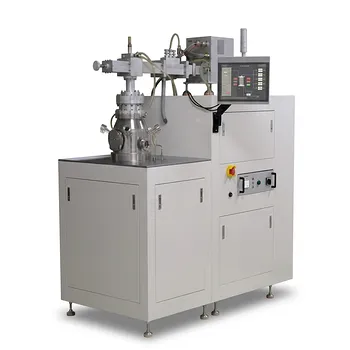
Cylindrical Resonator MPCVD Machine System for Microwave Plasma Chemical Vapor Deposition and Lab Diamond Growth
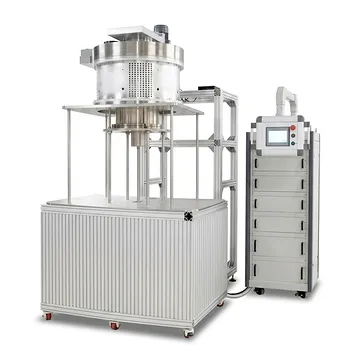
915MHz MPCVD Diamond Machine Microwave Plasma Chemical Vapor Deposition System Reactor
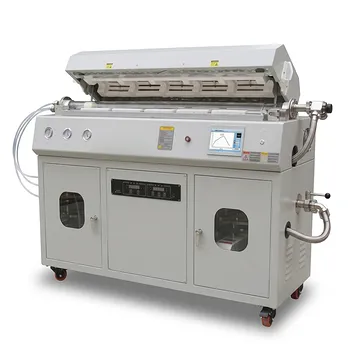
Multi Heating Zones CVD Tube Furnace System for Precision Chemical Vapor Deposition and Advanced Material Synthesis
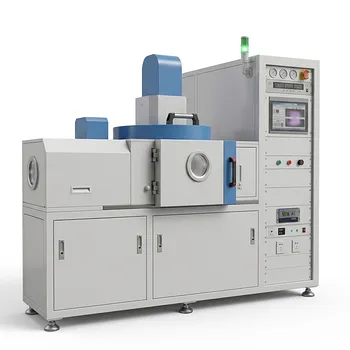
Radio Frequency Plasma Enhanced Chemical Vapor Deposition RF PECVD System for Laboratory and Industrial Thin Film Growth
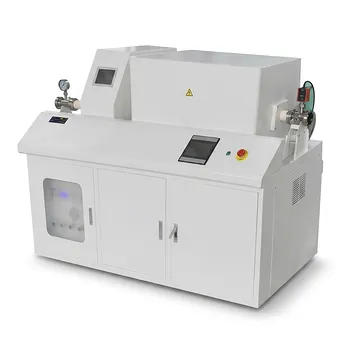
Chemical Vapor Deposition CVD System Slide PECVD Tube Furnace with Liquid Gasifier PECVD Machine
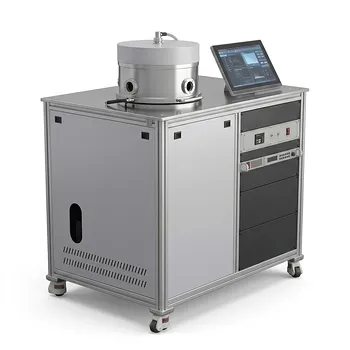
Inclined Rotary Plasma Enhanced Chemical Vapor Deposition PECVD System for Thin Film Deposition and Nanomaterial Synthesis
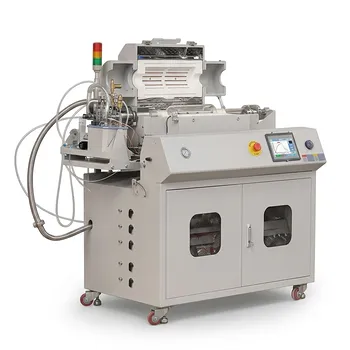
Versatile Chemical Vapor Deposition Tube Furnace System for Advanced Material Research and Industrial Coating Processes
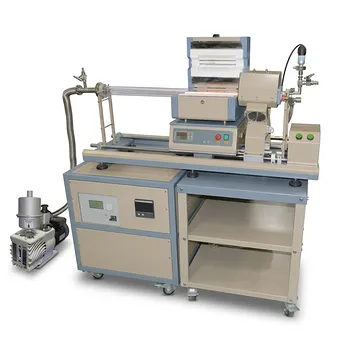
1200C Max Compact Auto-Sliding PECVD Furnace with 2 Inch Tube and Vacuum Pump
Triple Tube Compact Hybrid Muffle Furnace 1000C High Vacuum Thermal Processing System
Split Chamber CVD Tube Furnace with Vacuum Station Chemical Vapor Deposition System Machine

High Temperature 1700C Tube Furnace with High Vacuum Turbomolecular Pump System and Multi Channel Mass Flow Controller Gas Mixer
Vertical Openable Tube Furnace 0-1700c High Temperature Laboratory System for CVD and Vacuum Heat Treatment
HFCVD Machine System for Nano Diamond Coating on Drawing Dies and Industrial Tools
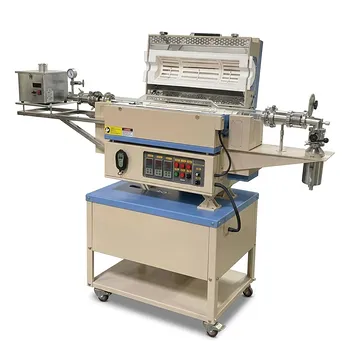
5 Inch Rotary Tube Furnace with Automatic Feeding and Receiving System 1200C Three Zone CVD Powder Processing
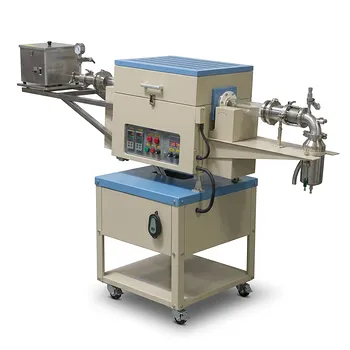
Two Zone Rotary CVD Furnace with Automatic Feeding and Receiving System for Powder Processing
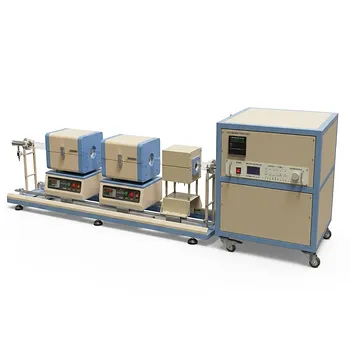
1200C Dual Sliding Tube Furnace with Dual Tubes and Flanges for PECVD Processes
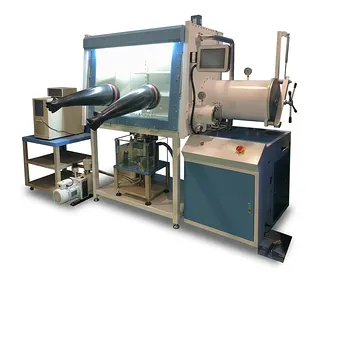
High Temperature Induction Melting System with Integrated Ultra High Purity Glove Box for Metallic Alloy Processing
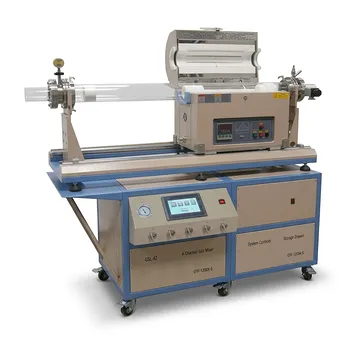
Dual Tube 100mm 80mm CVD Sliding Furnace with 4 Channel Gas Mixing and Vacuum System
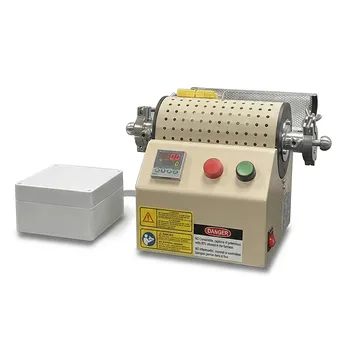
1000C Mini Tube Furnace with 20mm Quartz Tube and Vacuum Flanges for Material Science Research and Controlled Atmosphere Small Sample Processing