The Geometry of Supersaturation: Why the "Face-Down" Orientation Defines 2D Excellence
Jul 29, 2026
In the world of material science, we often obsess over the "big" variables: temperature, pressure, and flow rates. We treat the furnace as a black box where heat performs magic.
But real precision happens at the boundary layer. When synthesizing $Fe_{1+y}Te$—a material whose superconducting properties hinge on delicate stoichiometry—the most critical decision might not be the temperature setting, but which way the substrate is facing.
The "face-down" approach is an engineer’s solution to a chaotic problem. It is the art of creating a micro-sanctuary within a high-velocity storm.
The Architecture of Confinement
In a standard CVD setup, the carrier gas is a river. It carries precursor vapors (Iron and Tellurium) across the tube at high speeds. While efficient, this "open-flow" environment often suffers from low local concentrations. The atoms are there, but they are moving too fast to settle.
By placing the polished side of a $Si/SiO_2$ substrate facing downward—typically propped or placed directly over the precursor boat—you create a confined micro-reaction space.
The Vapor Trap
This configuration transforms the substrate from a mere landing pad into a physical barrier. It traps the rising vapors, forcing them to linger. Instead of being swept away by the furnace’s primary flow, the precursors are held in a high-density "pocket" against the polished surface.
Engineering Supersaturation
Growth requires a "supersaturated" state—a moment where the concentration of vapor exceeds the equilibrium limit. By restricting the volume of the reaction zone, you artificially spike the local supersaturation.
This is the thermodynamic engine that drives the nucleation of ultra-thin 2D nanosheets. Without this confinement, the energy barrier to start a crystal would often be too high, resulting in sparse, bulky, or non-existent growth.
The Logic of 2D Precision
Why does this specific geometry favor 2D nanosheets over 3D clumps? It comes down to the management of "Atomic Supply and Demand."
- Controlled Nucleation: High local concentration ensures that nucleation happens simultaneously across the surface, leading to more uniform layers.
- Kinetic Regulation: In a confined space, the amount of material is finite. This "starvation" of the 3D-growth axis forces the crystal to expand horizontally, creating the thin, 2D morphology researchers crave.
- Debris Shielding: By facing downward, the growth surface is immune to "falling snow"—micro-particles or debris that can shed from the tube walls during high-temperature cycles.
The Price of Control: A Systemic Trade-off
Every optimization has a cost. In a "face-down" system, the very confinement that breeds precision also introduces new risks. As Morgan Housel might suggest, you cannot eliminate risk; you can only trade it for another.
| Feature | The Strategic Benefit | The Inherent Risk |
|---|---|---|
| Micro-Volume | Maximizes local supersaturation | Rapid precursor depletion over time |
| Proximity | High growth rate for thin films | Sensitivity to substrate alignment/tilt |
| Shielding | Zero contamination from debris | Potential for stagnant "dead zones" in gas flow |
| Thermal Mass | Stable local heating | Risk of local temperature gradients |
Designing for Success: Beyond the Orientation
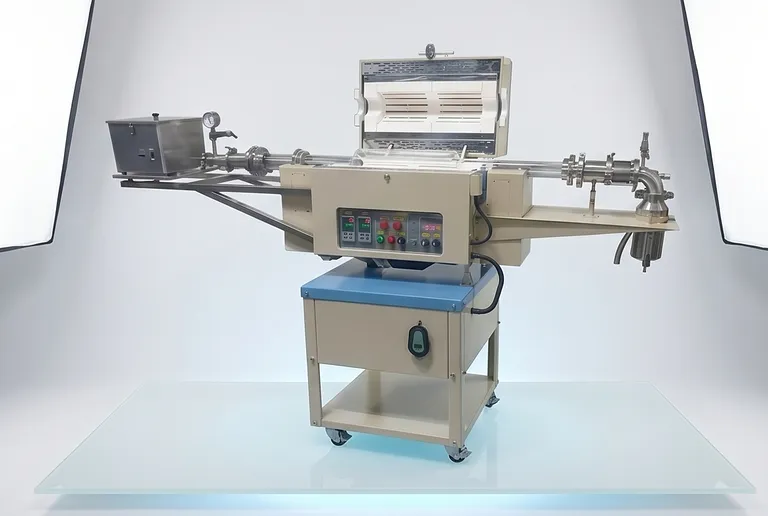
Mastering $Fe_{1+y}Te$ synthesis requires a holistic view of the growth environment. If your goal is the thinnest possible nanosheet, the face-down method with a minimal gap is your best tool. If you require large-scale film uniformity, you might move toward a hybrid approach.
However, the "geometry of the substrate" is only as reliable as the furnace that houses it. Thermal stability is the foundation upon which this micro-reaction space is built.
At THERMUNITS, we design thermal systems that respect these nuances. Whether you are using our CVD/PECVD systems for atomic-scale engineering or our Vacuum Tube Furnaces for precise atmospheric control, we provide the stability required to make "face-down" growth a repeatable science rather than a game of chance.
Elevate Your Heat Treatment Process
Our suite of high-temperature solutions includes:
- CVD/PECVD Systems: Optimized for 2D material synthesis.
- High-Vacuum Tube Furnaces: For oxygen-sensitive $Fe_{1+y}Te$ growth.
- Hot Press & Atmosphere Furnaces: For advanced material densification.
Precision is never an accident; it is the result of systematic control and superior equipment. Contact Our Experts
Quick Links
Suggested Products
Chemical Vapor Deposition CVD System Slide PECVD Tube Furnace with Liquid Gasifier PECVD Machine Versatile Chemical Vapor Deposition Tube Furnace System for Advanced Material Research and Industrial Coating Processes HFCVD Machine System for Nano Diamond Coating on Drawing Dies and Industrial Tools Inclined Rotary Plasma Enhanced Chemical Vapor Deposition PECVD System for Thin Film Deposition and Nanomaterial Synthesis Radio Frequency Plasma Enhanced Chemical Vapor Deposition RF PECVD System for Laboratory and Industrial Thin Film GrowthFurther Reading
The Geometry of Silence: Why Depth Demands a Chemical Solution The Choreography of Carbon: Why CVD Precision Defines the Next Era of Material Science The Architecture of Ions: Decoding the Geometry of Plasma Coupling The Architecture of Clouds: Mastering the RF Equilibrium in PECVD The Low-Temperature Alchemy: Navigating the Thermal Budget with PECVD
ThermUnits
Last updated on Apr 14, 2026
Related Products
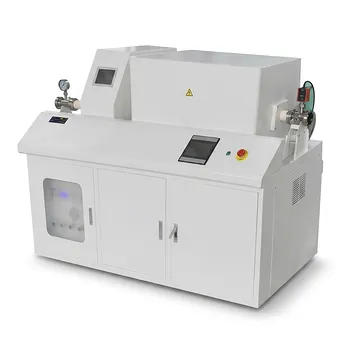
Chemical Vapor Deposition CVD System Slide PECVD Tube Furnace with Liquid Gasifier PECVD Machine
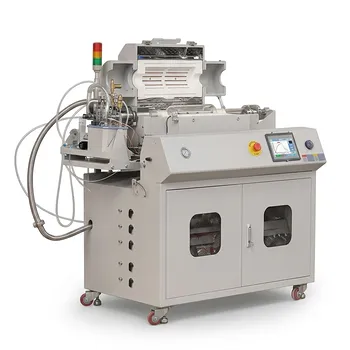
Versatile Chemical Vapor Deposition Tube Furnace System for Advanced Material Research and Industrial Coating Processes
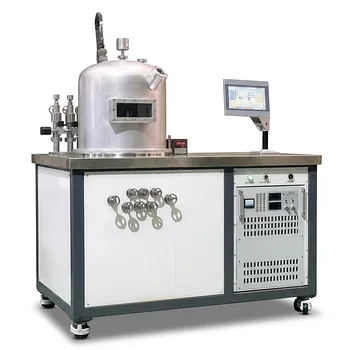
HFCVD Machine System for Nano Diamond Coating on Drawing Dies and Industrial Tools
Inclined Rotary Plasma Enhanced Chemical Vapor Deposition PECVD System for Thin Film Deposition and Nanomaterial Synthesis
Radio Frequency Plasma Enhanced Chemical Vapor Deposition RF PECVD System for Laboratory and Industrial Thin Film Growth
Cylindrical Resonator MPCVD Machine System for Microwave Plasma Chemical Vapor Deposition and Lab Diamond Growth
Multi Heating Zones CVD Tube Furnace System for Precision Chemical Vapor Deposition and Advanced Material Synthesis
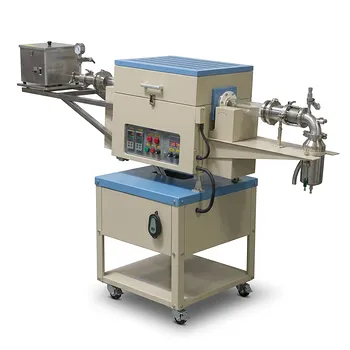
Two Zone Rotary CVD Furnace with Automatic Feeding and Receiving System for Powder Processing
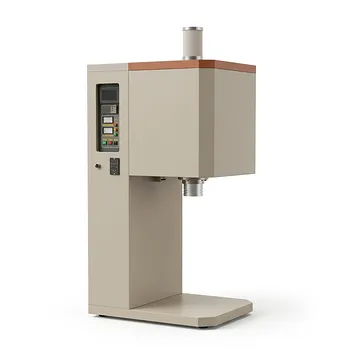
Vertical Openable Tube Furnace 0-1700c High Temperature Laboratory System for CVD and Vacuum Heat Treatment
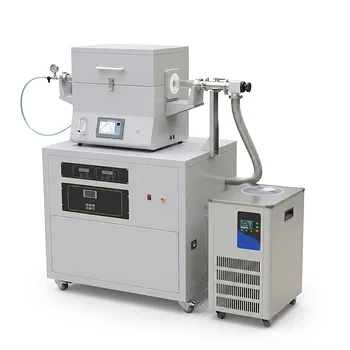
Split Chamber CVD Tube Furnace with Vacuum Station Chemical Vapor Deposition System Machine
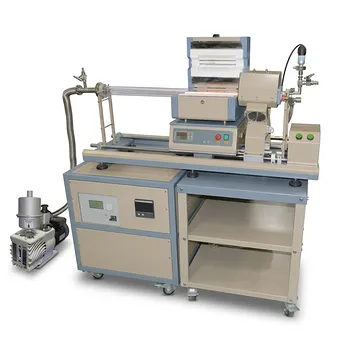
1200C Max Compact Auto-Sliding PECVD Furnace with 2 Inch Tube and Vacuum Pump
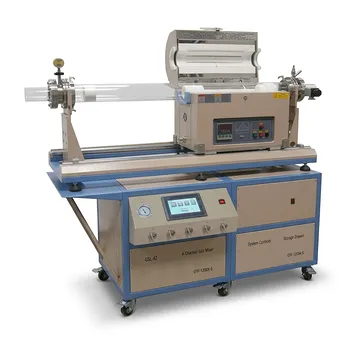
Dual Tube 100mm 80mm CVD Sliding Furnace with 4 Channel Gas Mixing and Vacuum System
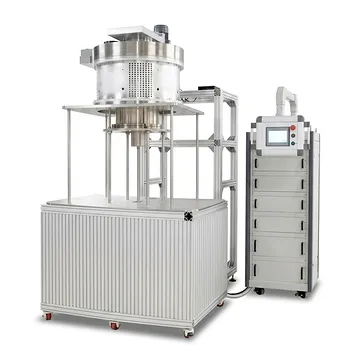
915MHz MPCVD Diamond Machine Microwave Plasma Chemical Vapor Deposition System Reactor
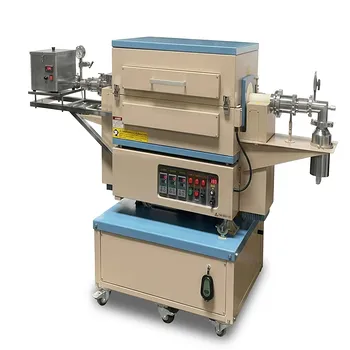
1500C 3-Zone Rotary Tube Furnace 60mm with Automatic Powder Feeding and Receiving System for Continuous Material Synthesis

High Temperature 1700C Tube Furnace with High Vacuum Turbomolecular Pump System and Multi Channel Mass Flow Controller Gas Mixer
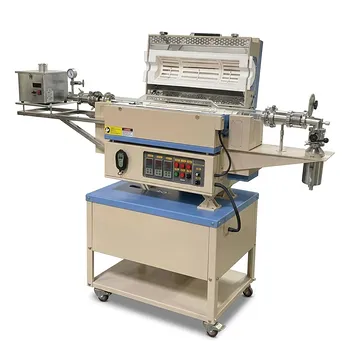
5 Inch Rotary Tube Furnace with Automatic Feeding and Receiving System 1200C Three Zone CVD Powder Processing
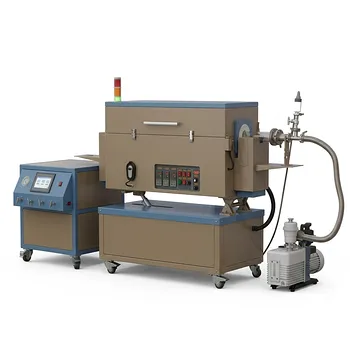
5 Inch Three Zone Rotary Tube Furnace with Integrated Gas Delivery System and 1200C Capability for Advanced Material CVD Processing
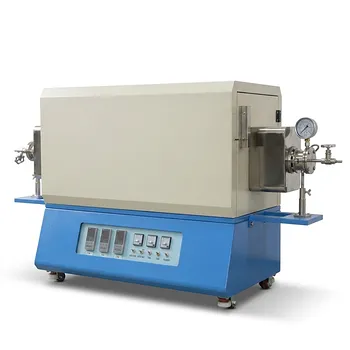
Three Temperature Zone High Temperature Vacuum Tube Furnace for CVD and Material Sintering
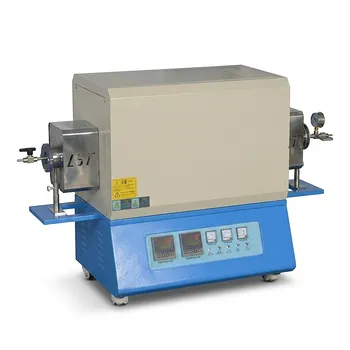
High Temperature Dual Zone Vacuum Tube Furnace for Material Research and CVD Processing