The Architecture of Clouds: Mastering the RF Equilibrium in PECVD
Jul 16, 2026
The Invisible Hand of the Plasma
In the vacuum of a deposition chamber, we are not merely "coating" a surface. We are orchestrating a high-energy dance of radicals and ions.
Atul Gawande often speaks of "the system"—the idea that success is not just about the skill of the actor, but the harmony of the environment. In Plasma-Enhanced Chemical Vapor Deposition (PECVD), the environment is the plasma.
The plasma is a cloud. But it is a cloud with an architecture, built by two primary architects: RF Power and RF Frequency.
To master the film, you must first master the energy that births it.
Frequency: The Inertia of Ions
Frequency is the rhythm of the process. It determines how the heaviest participants in the plasma—the ions—behave.
The Standard Pulse (13.56 MHz)
At the industry-standard high frequency, the ions are too massive to keep up. They see the alternating field as a blur. This creates a stable, gentle environment with moderate energy, ideal for sensitive substrates.
The Impact of the Low (100–400 kHz)
When you slow the rhythm down to low frequencies, the ions find their footing. They begin to follow the field, accelerating with purpose toward the substrate.
- The Result: High-energy bombardment.
- The Benefit: It "packs" the film, increasing density and mechanical robustness.
- The Risk: Physical lattice damage. It is a tool of force, and like all force, it requires restraint.
Power: The Engine of Dissociation
If frequency is the rhythm, power is the volume. It is the raw energy dumped into the system to break chemical bonds.
Radical Generation
High RF power increases the electron temperature. This turns stable precursor gases into reactive radicals. Without enough power, the "deposition" never truly begins; with too much, the chemistry becomes chaotic.
The Stoichiometric Balance
As power increases, the deposition rate climbs. However, the chemistry can shift. In materials like silicon carbide, excessive power might favor one element over another, altering the refractive index and the optical bandgap.
Precision in power—often tuned within a narrow 150W to 300W window—is the difference between a functional semiconductor and a layer of glass.
The Dual-Frequency Paradigm
In engineering, we crave the "independence of variables." We want to change the speed without changing the temperature.
Dual-frequency systems are the engineer’s romantic solution to this problem. By mixing High Frequency (HF) and Low Frequency (LF), you decouple the process:
- HF Source: Controls the radical flux (The growth rate).
- LF Source: Controls ion bombardment energy (The film density).
This allows for the management of internal mechanical stress. You can grow a thick film quickly without it cracking or peeling—a feat that is nearly impossible with a single-frequency setup.
The Logic of Trade-offs
Morgan Housel often notes that "everything has a price, but not all prices are printed on a label." In PECVD, the prices are paid in structural integrity.
| Parameter | Primary Influence | Key Benefit | Potential Trade-off |
|---|---|---|---|
| RF Power | Radical Generation | Higher throughput | Stoichiometric shifts |
| Low Frequency | Ion Bombardment | Film densification | Lattice damage |
| High Frequency | Plasma Stability | Uniformity & safety | Lower density |
| Dual Frequency | Independent Tuning | Stress management | System complexity |
Designing the Solution
Choosing your settings is an exercise in prioritizing goals:
- For Density: Increase the LF component to "hammer" the film into a tighter structure.
- For Throughput: Scale RF power, but watch for shifts in the refractive index.
- For Sensitivity: Stick to 13.56 MHz and low power to protect delicate hexagonal boron nitride (h-BN) or optoelectronic layers.
Precision Thermal Engineering with THERMUNITS
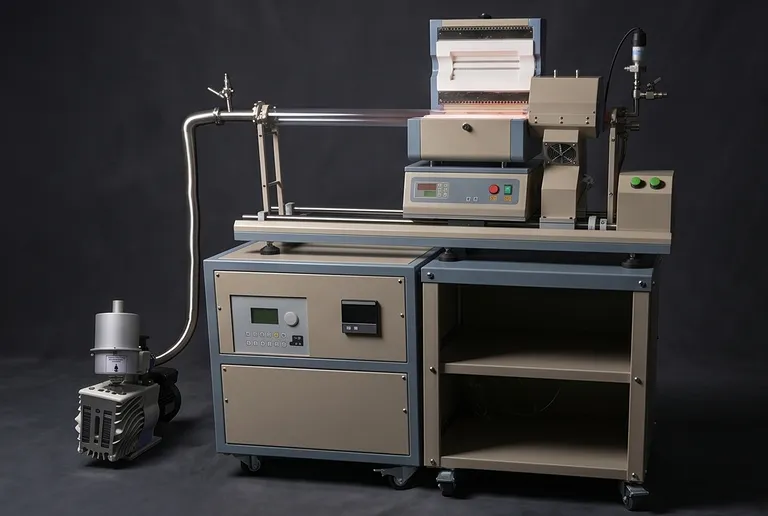
Superior thin-film architecture requires hardware capable of micro-adjustments. At THERMUNITS, we design our CVD and PECVD systems with the understanding that R&D is a game of margins.
Our laboratory equipment is built for the rigors of material science, offering the stability required to explore the interplay of RF dynamics. Beyond deposition, we provide a full spectrum of thermal solutions:
- Vacuum & Atmosphere Furnaces for high-purity processing.
- Hot Press & Rotary Furnaces for advanced material synthesis.
- Vacuum Induction Melting (VIM) for specialized metallurgy.
The system is the solution. To refine your thermal processing and achieve the next breakthrough in material research, Contact Our Experts.
Quick Links
Suggested Products
Chemical Vapor Deposition CVD System Slide PECVD Tube Furnace with Liquid Gasifier PECVD Machine Inclined Rotary Plasma Enhanced Chemical Vapor Deposition PECVD System for Thin Film Deposition and Nanomaterial Synthesis Radio Frequency Plasma Enhanced Chemical Vapor Deposition RF PECVD System for Laboratory and Industrial Thin Film Growth 1200C Max Compact Auto-Sliding PECVD Furnace with 2 Inch Tube and Vacuum Pump 1200C Dual Sliding Tube Furnace with Dual Tubes and Flanges for PECVD ProcessesFurther Reading
The Geometry of Silence: Why Depth Demands a Chemical Solution The Choreography of Carbon: Why CVD Precision Defines the Next Era of Material Science The Architecture of Ions: Decoding the Geometry of Plasma Coupling The Low-Temperature Alchemy: Navigating the Thermal Budget with PECVD The Alchemy of Cold Fire: Decoupling Energy from Temperature in Thin Film Deposition
ThermUnits
Last updated on Apr 14, 2026
Related Products
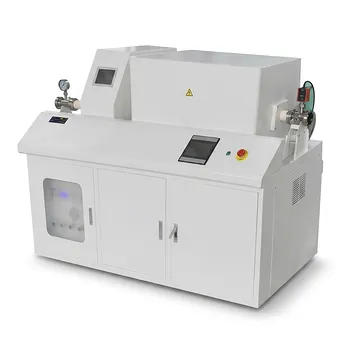
Chemical Vapor Deposition CVD System Slide PECVD Tube Furnace with Liquid Gasifier PECVD Machine
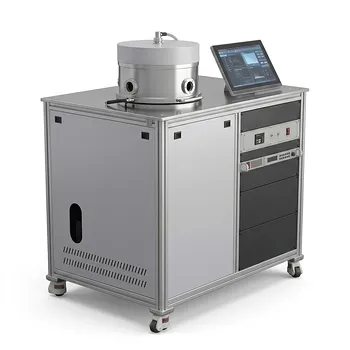
Inclined Rotary Plasma Enhanced Chemical Vapor Deposition PECVD System for Thin Film Deposition and Nanomaterial Synthesis
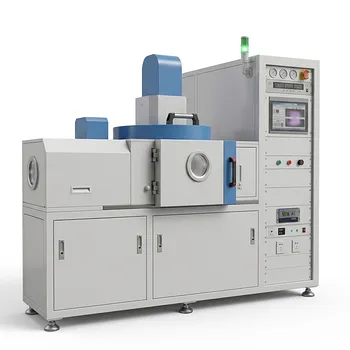
Radio Frequency Plasma Enhanced Chemical Vapor Deposition RF PECVD System for Laboratory and Industrial Thin Film Growth
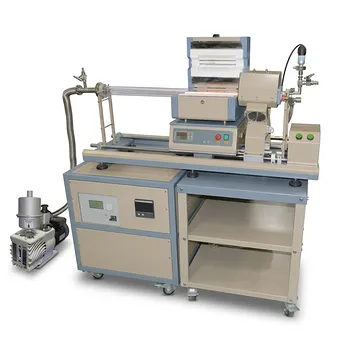
1200C Max Compact Auto-Sliding PECVD Furnace with 2 Inch Tube and Vacuum Pump
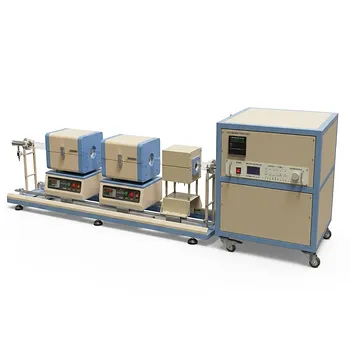
1200C Dual Sliding Tube Furnace with Dual Tubes and Flanges for PECVD Processes
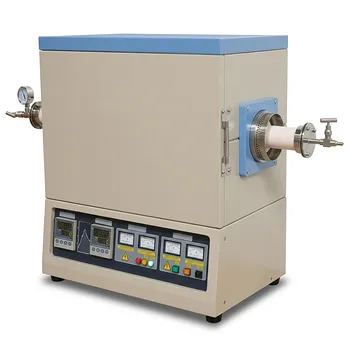
High Temperature 1700C Dual Zone Tube Furnace for Material Science and Industrial Chemical Vapor Deposition Research
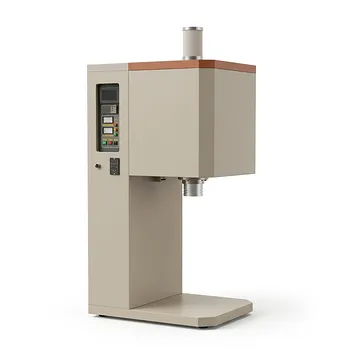
Vertical Openable Tube Furnace 0-1700c High Temperature Laboratory System for CVD and Vacuum Heat Treatment
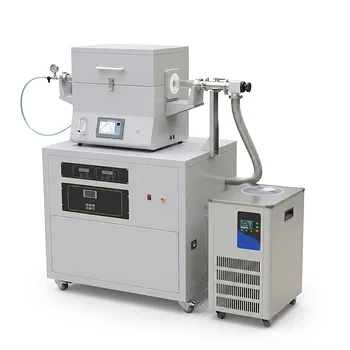
Split Chamber CVD Tube Furnace with Vacuum Station Chemical Vapor Deposition System Machine

High Temperature 1700C Tube Furnace with High Vacuum Turbomolecular Pump System and Multi Channel Mass Flow Controller Gas Mixer
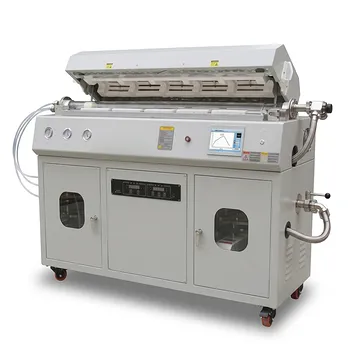
Multi Heating Zones CVD Tube Furnace System for Precision Chemical Vapor Deposition and Advanced Material Synthesis
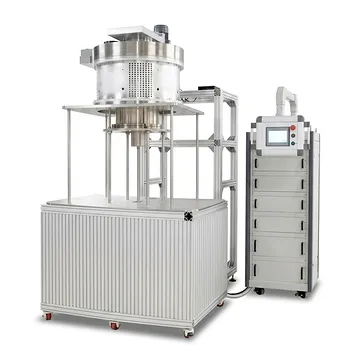
915MHz MPCVD Diamond Machine Microwave Plasma Chemical Vapor Deposition System Reactor
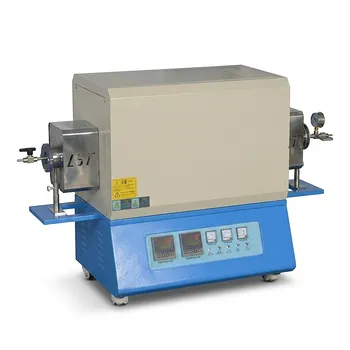
High Temperature Dual Zone Vacuum Tube Furnace for Material Research and CVD Processing
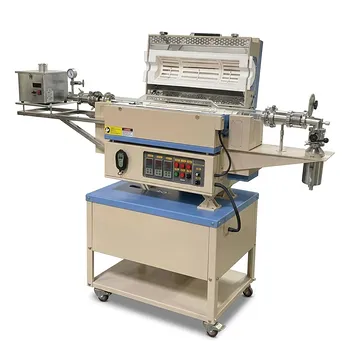
5 Inch Rotary Tube Furnace with Automatic Feeding and Receiving System 1200C Three Zone CVD Powder Processing
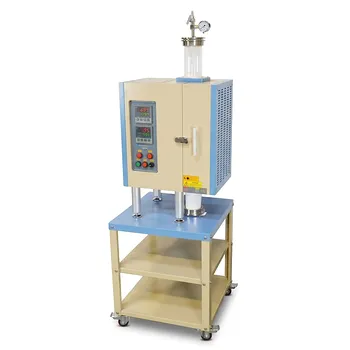
1100°C Dual Zone Split Vertical Tube Furnace with 4 Inch Quartz Tube and Vacuum Sealing Flanges
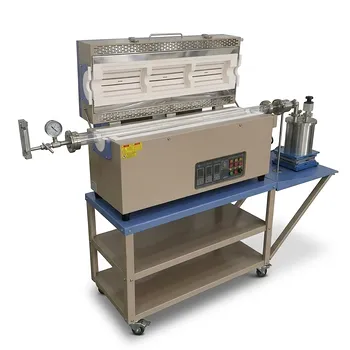
5 Inch Two Zone Rotary Tube Furnace 1100C for Powder CVD and Material Synthesis
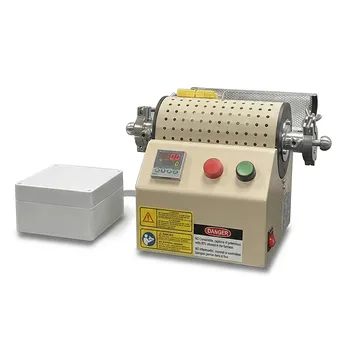
1000C Mini Tube Furnace with 20mm Quartz Tube and Vacuum Flanges for Material Science Research and Controlled Atmosphere Small Sample Processing
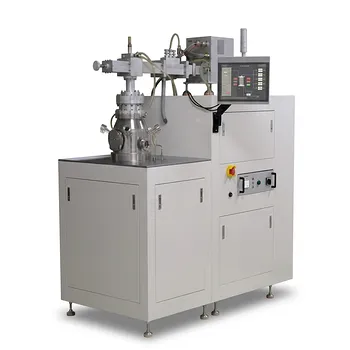
Cylindrical Resonator MPCVD Machine System for Microwave Plasma Chemical Vapor Deposition and Lab Diamond Growth
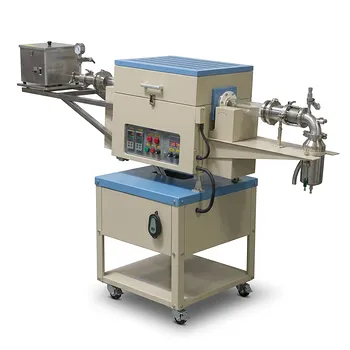
Two Zone Rotary CVD Furnace with Automatic Feeding and Receiving System for Powder Processing
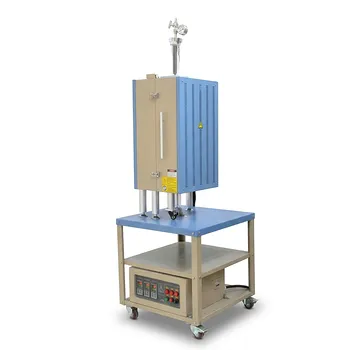
1200C Three Zone Vertical Tube Furnace with 2 Inch Quartz Tube and Vacuum Flanges