How do mixed carrier gases regulate hBN synthesis in CVD? Optimize Ar & H2 for High-Purity sp² Monolayer Growth
Updated 3 months ago
Mixed carrier gases regulate hBN synthesis by balancing physical transport with chemical modification. Argon acts as the inert vehicle that ensures uniform precursor delivery and kinetic control, while hydrogen functions as a reactive agent that cleans the substrate and selectively etches non-crystalline phases. This synergy allows for the precise growth of high-purity, monolayer hexagonal boron nitride (hBN) with an $sp^2$ hybridized structure.
The regulation of hBN synthesis depends on the interplay between Argon’s ability to stabilize the flow field and Hydrogen’s capacity to refine the chemical landscape. By adjusting their ratios, researchers can transition from bulk deposition to the growth of high-quality, atom-thick crystalline layers.
The Role of Argon in Kinetic Control
Precursor Transport and Uniformity
Argon (Ar) serves as a high-purity inert carrier responsible for the stable delivery of decomposed precursor vapors to the reaction zone. Because it does not react with the precursor or the substrate, it ensures that the chemical composition of the growth environment remains predictable. This stability is critical for achieving uniform film thickness across the entire substrate surface.
Modifying Deposition Kinetics
The flow rate of Argon directly influences the deposition kinetics within the CVD furnace. By fine-tuning this flow, operators can control the residence time of precursors in the hot zone, which affects the layer thickness and optical properties of the hBN. In plasma-enhanced processes, Argon also modifies ion bombardment energy, helping to remove surface-adsorbed impurities.
The Dual Chemical Role of Hydrogen
Surface Preparation and Oxide Reduction
During the pre-growth annealing stage, Hydrogen ($H_2$) acts as a reducing agent to remove oxides from the metal substrate, such as copper. This process leads to surface planarization, creating an ideal epitaxial environment for hBN growth. A clean, smooth substrate is essential for the formation of large-domain, high-quality crystalline films.
Selective Etching for Phase Purity
Hydrogen is a decisive factor in determining the crystal structure of the resulting film. It acts as a selective etching agent that removes unstable, amorphous boron nitride phases while leaving the desired $sp^2$ hexagonal domains intact. This inhibits premature oxidation and ensures the growth of high-quality crystalline hBN rather than disordered structures.
Optimizing the Thermal and Gas Environment
Thermal Decomposition and Reaction Stability
The CVD process typically operates between 1000°C and 1300°C to trigger the thermal decomposition of precursors like borane or ammonia. The mixed gas environment must be stable enough to maintain a consistent flow field around the catalyst or substrate. This stability ensures that the chemical reactions occur in an orderly manner, facilitating monolayer growth.
Atmospheric and Flow Ratio Management
Precision in the gas flow ratios of Argon and Hydrogen allows for the growth of specific hBN morphologies, including monolayer films and nanotubes. By adjusting these ratios, the furnace environment can be shifted from a "growth-heavy" regime to an "etching-heavy" regime. This balance is what prevents the accumulation of impurities and promotes the development of layered structures.
Understanding the Trade-offs
Excessive Etching vs. Impurity Accumulation
If the Hydrogen concentration is too high, the etching process can become overly aggressive, preventing the formation of a continuous hBN film or damaging the edges of existing domains. Conversely, a lack of Hydrogen may lead to the accumulation of amorphous BN phases and surface oxides, significantly degrading the film's crystallinity and dielectric properties.
Inertia vs. Transport Efficiency
While Argon provides stability, an excessively high flow rate can dilute the precursors to a point where the growth rate becomes impractically slow. Furthermore, if the Argon flow is too low, the precursor transport may become non-uniform, resulting in "hot spots" of thick, multi-layered hBN interspersed with bare substrate.
How to Apply This to Your Project
Tailoring Gas Ratios to Synthesis Goals
To achieve the best results in hBN synthesis, the gas mixture must be tailored to the specific substrate and desired film thickness.
- If your primary focus is Monolayer Quality: Prioritize a higher Hydrogen ratio during annealing to ensure a clean substrate, followed by a balanced Ar/$H_2$ flow to promote selective $sp^2$ growth.
- If your primary focus is Deposition Speed: Increase the Argon flow rate to transport precursors more rapidly, but monitor the film for amorphous impurities that may require additional Hydrogen etching.
- If your primary focus is Optical Transmittance: Fine-tune the Argon flow to minimize ion bombardment damage and ensure the hBN layers remain thin and highly transparent.
Success in hBN synthesis lies in using Argon to master the physics of transport while using Hydrogen to master the chemistry of the crystal.
Summary Table:
| Carrier Gas | Primary Role | Impact on hBN Growth |
|---|---|---|
| Argon (Ar) | Physical Transport | Ensures uniform precursor delivery and stable deposition kinetics. |
| Hydrogen (H₂) | Chemical Regulation | Cleans the substrate and selectively etches non-crystalline BN phases. |
| Synergistic Effect | Process Balance | Balances growth and etching to achieve high-purity, atom-thick layers. |
| Optimal Ratio | Quality Control | Prevents amorphous phase accumulation while maintaining film continuity. |
Elevate Your Material Research with THERMUNITS
Are you looking to master the synthesis of 2D materials like hexagonal boron nitride? THERMUNITS is a leading manufacturer of high-temperature laboratory equipment designed for material science and industrial R&D. Our advanced CVD/PECVD systems and Tube furnaces provide the precise gas flow and temperature control necessary to balance complex chemical environments.
From Muffle, Vacuum, and Atmosphere furnaces to specialized Rotary, Hot Press, and Vacuum Induction Melting (VIM) furnaces, we offer a comprehensive range of thermal processing solutions. Whether you need standard laboratory heat treatment equipment or custom thermal elements, we deliver the precision your research demands.
Contact our technical experts today to find the perfect furnace for your hBN synthesis and advanced material projects!
References
- Anja Sutorius, Sanjay Mathur. Understanding vapor phase growth of hexagonal boron nitride. DOI: 10.1039/d4nr02624a
Mentioned Products
- Multi Heating Zones CVD Tube Furnace System for Precision Chemical Vapor Deposition and Advanced Material Synthesis
- Chemical Vapor Deposition CVD System Slide PECVD Tube Furnace with Liquid Gasifier PECVD Machine
- High Temperature 1700C Tube Furnace with High Vacuum Turbomolecular Pump System and Multi Channel Mass Flow Controller Gas Mixer
- Dual Tube 100mm 80mm CVD Sliding Furnace with 4 Channel Gas Mixing and Vacuum System
- Split Chamber CVD Tube Furnace with Vacuum Station Chemical Vapor Deposition System Machine
People Also Ask
- How does a sliding rail design benefit the CVD process within a furnace ventilation hood? Enhance Control & Quenching
- How does the deposition process occur within a Chemical Vapor Deposition (CVD) reactor? Explore the 5-Stage Growth Cycle
- What are the primary differences between hot-wall and cold-wall CVD reactors? Choose the Best System for High Purity
- What is the primary function of a CVD system in the synthesis of Bi2O2Se thin films? Master High-Quality Crystal Growth
- What is the core function of a CVD system in FG-FET fabrication? High-Quality Graphene Synthesis for Research

Tech Team · ThermUnits
Last updated on Jun 03, 2026
Related Products
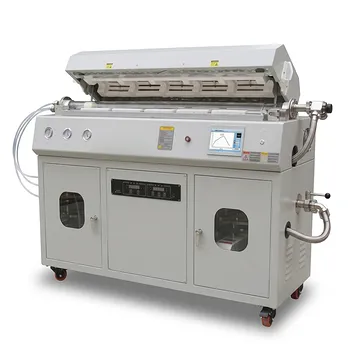
Multi Heating Zones CVD Tube Furnace System for Precision Chemical Vapor Deposition and Advanced Material Synthesis
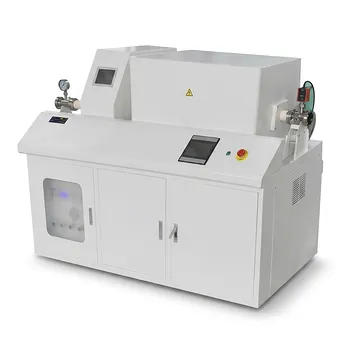
Chemical Vapor Deposition CVD System Slide PECVD Tube Furnace with Liquid Gasifier PECVD Machine

High Temperature 1700C Tube Furnace with High Vacuum Turbomolecular Pump System and Multi Channel Mass Flow Controller Gas Mixer
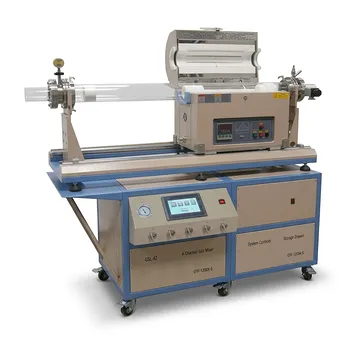
Dual Tube 100mm 80mm CVD Sliding Furnace with 4 Channel Gas Mixing and Vacuum System
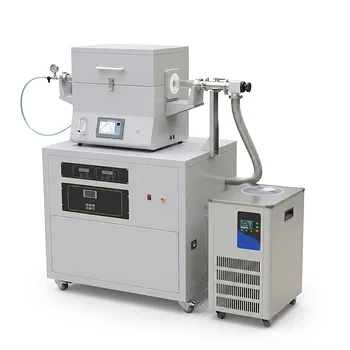
Split Chamber CVD Tube Furnace with Vacuum Station Chemical Vapor Deposition System Machine
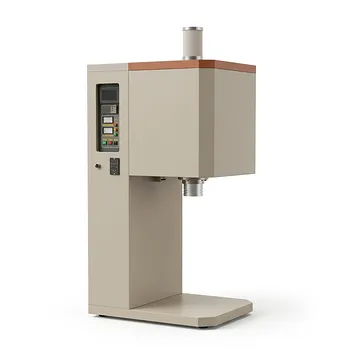
Vertical Openable Tube Furnace 0-1700c High Temperature Laboratory System for CVD and Vacuum Heat Treatment
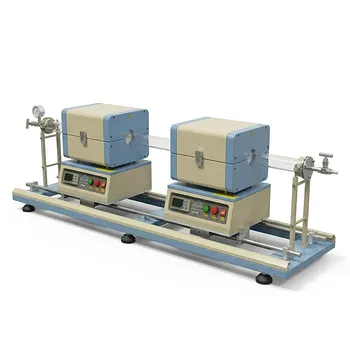
1200C Max Dual Sliding Tube Furnace with 50 mm Tube Flanges for CVD
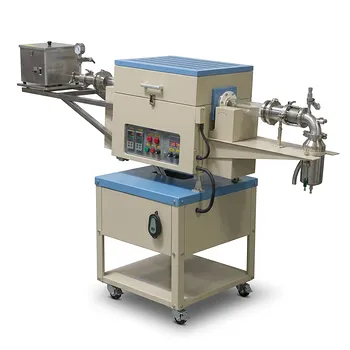
Two Zone Rotary CVD Furnace with Automatic Feeding and Receiving System for Powder Processing
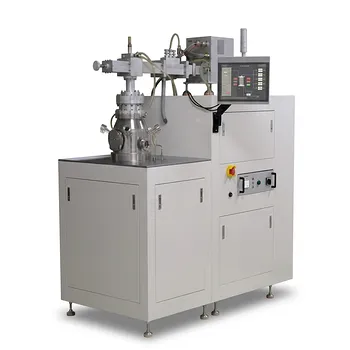
Cylindrical Resonator MPCVD Machine System for Microwave Plasma Chemical Vapor Deposition and Lab Diamond Growth
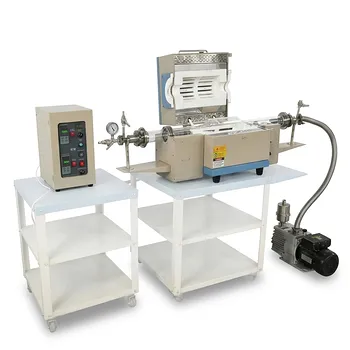
Two Zone Rotary Tube Furnace for Powder CVD Coating and Core Shell Material Synthesis 1100C
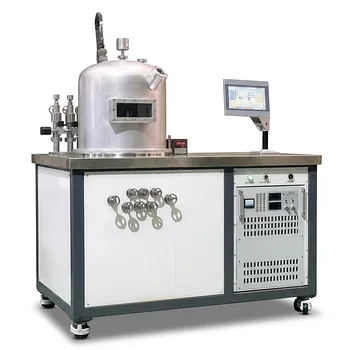
HFCVD Machine System for Nano Diamond Coating on Drawing Dies and Industrial Tools
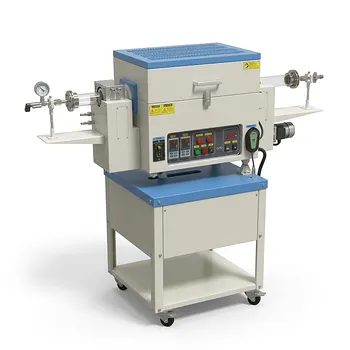
4 Inch Two Zone Rotary CVD Tube Furnace for High Temperature Battery Material Synthesis and Advanced Material Calcination
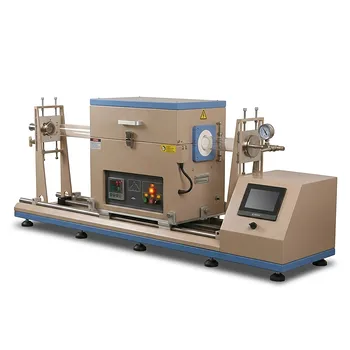
1200C Sliding Tube Furnace for Rapid Thermal Processing and CVD Graphene Growth with 100mm OD Capacity
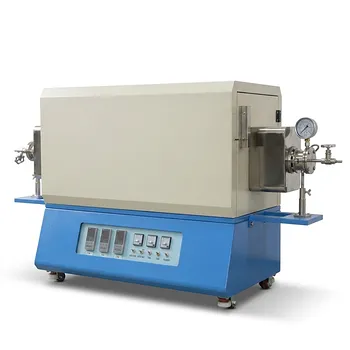
Three Temperature Zone High Temperature Vacuum Tube Furnace for CVD and Material Sintering
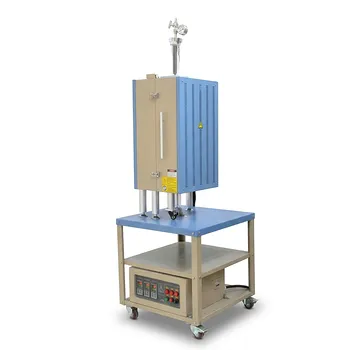
1200C Three Zone Vertical Tube Furnace with 2 Inch Quartz Tube and Vacuum Flanges

5 Inch Three Zone Rotary Tube Furnace with Integrated Gas Delivery System and 1200C Capability for Advanced Material CVD Processing
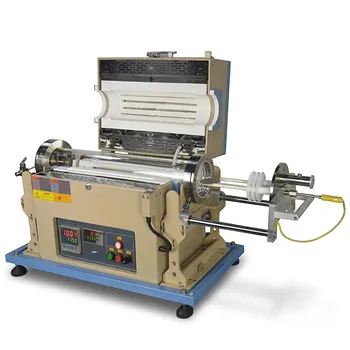
1200°C High Temperature 4 Inch Tube Furnace with Sliding Flange for CVD Systems
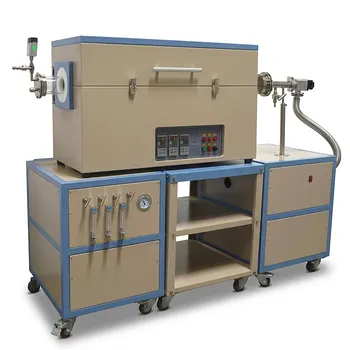
Three Zone Quartz Tube Furnace with 3 Channel Gas Mixer Vacuum Pump and Anti Corrosive Vacuum Gauge
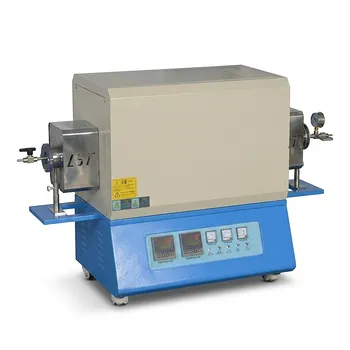
High Temperature Dual Zone Vacuum Tube Furnace for Material Research and CVD Processing