How does a dual-zone gradient furnace facilitate Mn2Ga2S5 growth via CVT? Achieve Superior Single Crystal Quality.
Updated 3 months ago
The dual-zone gradient furnace is the enabling hardware for Chemical Vapor Transport (CVT) because it creates a controlled thermodynamic imbalance between two isolated environments. By maintaining a constant temperature differential—typically 100 K for $Mn_2Ga_2S_5$—the furnace provides the continuous driving force necessary to move material through the gas phase and deposit it as high-quality single crystals at the cooler end of the reaction tube.
Core Takeaway: A dual-zone furnace facilitates crystal growth by establishing a stable temperature gradient that drives chemical precursors from a high-temperature "source" zone to a low-temperature "growth" zone. This precise thermal control ensures slow, steady recrystallization, which is essential for forming high-quality $Mn_2Ga_2S_5$ single crystals with intact mica-like structures.
The Mechanics of Thermal Drive
Establishing the Temperature Gradient
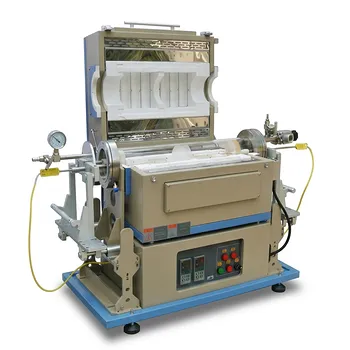
The furnace uses two independently controlled heating elements to create a precise thermal field across a quartz growth tube. In the case of $Mn_2Ga_2S_5$, this usually involves setting one zone (the source) significantly higher than the other (the growth zone) to achieve a $\Delta T$ of approximately 100 K.
The Chemical Reaction Cycle
At the high-temperature source zone, a transport agent (such as iodine) reacts with the solid $Mn_2Ga_2S_5$ precursors to form volatile gaseous complexes. This chemical reaction "lifts" the solid material into the gas phase, allowing it to move freely within the sealed environment of the tube.
Directional Migration and Deposition
The established temperature gradient creates a pressure and concentration differential that forces these gaseous complexes to migrate toward the cooler growth zone. Upon reaching the low-temperature end, the chemical equilibrium shifts, causing the gaseous complexes to decompose and the $Mn_2Ga_2S_5$ to recrystallize onto the tube walls.
Ensuring Crystal Quality and Integrity
Precise Control of Supersaturation
The dual-zone furnace allows for the regulation of "supersaturation," which is the level of vapor concentration relative to the equilibrium state at a given temperature. By stabilizing the thermal field, the furnace ensures that the deposition rate remains slow and steady, preventing the formation of defects or secondary phases.
Preservation of Mica-like Morphology
$Mn_2Ga_2S_5$ crystals are characterized by a delicate, mica-like layered structure that is easily damaged by rapid temperature fluctuations or excessive heat. The independent zone control allows for a "soft" crystallization process that yields sub-millimeter sized single crystals without compromising their structural integrity.
Reproducibility through Hardware Stability
Unlike single-zone furnaces, which rely on natural cooling curves, the dual-zone system maintains a constant environment over several days or weeks. This stability is critical for the growth of crystals with uniform dimensions and consistent electronic or magnetic properties.
Understanding the Trade-offs
The Gradient vs. Quality Dilemma
Increasing the temperature gradient ($\Delta T$) generally increases the transport rate, leading to faster crystal growth. However, excessive speeds often result in smaller, multi-crystalline clusters or high defect densities rather than the desired high-quality single crystals.
Volatility and Thermal Lag
Managing two independent zones requires sophisticated PID controllers to prevent thermal "overshoot" or "lag." If the growth zone accidentally becomes hotter than the source zone, the transport direction can reverse, effectively "cleaning" the growth end and destroying any crystals that had previously formed.
Mechanical Stress and Tube Sealing
Maintaining high temperature differentials puts significant physical stress on the quartz tubes used in CVT. Frequent cycling or extreme gradients can lead to tube failure or leaks, which introduces oxygen or contaminants that can poison the $Mn_2Ga_2S_5$ synthesis process.
Optimizing the Growth Environment
Successfully growing $Mn_2Ga_2S_5$ single crystals requires balancing the thermodynamics of the transport reaction with the physical capabilities of the furnace.
- If your primary focus is crystal size: Prioritize long-term thermal stability over a high temperature gradient to allow the crystal lattice to build slowly and perfectly.
- If your primary focus is structural purity: Ensure the growth zone temperature is precisely calibrated to the specific decomposition point of the gaseous complexes to avoid unwanted co-precipitates.
- If your primary focus is rapid prototyping: Experiment with slightly higher source temperatures to increase vapor pressure, provided the growth zone remains stable enough to prevent amorphous deposition.
By mastering the temperature gradient within a dual-zone furnace, researchers can transform bulk powders into the highly ordered single crystals necessary for advanced materials science.
Summary Table:
| Key Parameter | Function in CVT Process | Impact on Mn2Ga2S5 Quality |
|---|---|---|
| Source Zone | Maintains high temperature to volatilize precursors | Ensures steady supply of gaseous transport agents |
| Growth Zone | Maintains lower temperature for deposition | Facilitates slow, orderly recrystallization |
| Temp Gradient (ΔT) | Typically 100 K differential | Provides the driving force for material migration |
| PID Control | Precisely regulates independent heating zones | Prevents defects and preserves mica-like morphology |
| Quartz Tube | Sealed reaction environment | Protects purity and contains volatile complexes |
Elevate Your Material Research with THERMUNITS
Precision thermal control is the difference between a failed synthesis and a high-quality single crystal. THERMUNITS is a leading manufacturer of high-temperature laboratory equipment, providing the specialized hardware researchers need for advanced material science and industrial R&D.
Whether you are performing Chemical Vapor Transport (CVT), CVD/PECVD processes, or complex heat treatments, our comprehensive range of equipment—including Dual-Zone Tube Furnaces, Vacuum and Atmosphere Furnaces, Muffle Furnaces, and Vacuum Induction Melting (VIM) systems—is engineered for stability and reproducibility.
Ready to optimize your growth parameters? Contact us today to find the perfect thermal solution for your lab!
References
- Ivan V. Chernoukhov, Valeriy Yu. Verchenko. Mn2Ga2S5 and Mn2Al2Se5 van der Waals Chalcogenides: A Source of Atomically Thin Nanomaterials. DOI: 10.3390/molecules29092026
Mentioned Products
- High Temperature Dual Zone Tube Furnace for Material Science Research and Professional Thermal Processing
- Dual Zone Quartz Tube Furnace with 80mm Diameter 1200C Max Temperature 3 Channel Gas Mixer and Vacuum Pump System
- 1200C Dual Zone Split Tube Furnace with Fused Quartz Tube and Vacuum Flanges Available in 60mm 80mm and 100mm Diameters
- Two Zones CSS Furnace for Rapid Thermal Processing Thin Film Coating 3 Inch Diameter 650C
- High Temperature 1700C Dual Zone Tube Furnace for Material Science and Industrial Chemical Vapor Deposition Research
People Also Ask
- Why is it necessary to place MoS2 devices in a dual-zone tube furnace for annealing? Optimize Lattice Repair & Doping
- What is the primary function of an industrial-grade dual-zone tube furnace? Mastering CuInP2S6 CVT Crystal Growth
- What are the advantages of using a dual-zone tube furnace for MoS2 CVD? Optimize Precursor Control and Material Quality
- What are the technical advantages of using a dual-zone tube furnace for growing large PdCoO2 crystals via CVT? Expert Tips
- Why is a dual-zone tube furnace necessary for ReO3-doped Cu2Te CVD? Essential for precise precursor synchronization.

Tech Team · ThermUnits
Last updated on Jun 03, 2026
Related Products
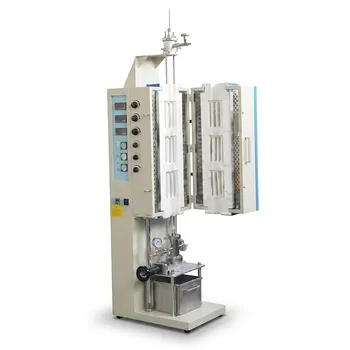
High Temperature Dual Zone Tube Furnace for Material Science Research and Professional Thermal Processing
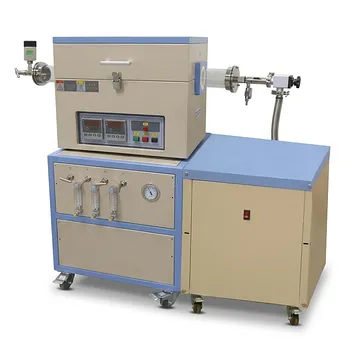
Dual Zone Quartz Tube Furnace with 80mm Diameter 1200C Max Temperature 3 Channel Gas Mixer and Vacuum Pump System
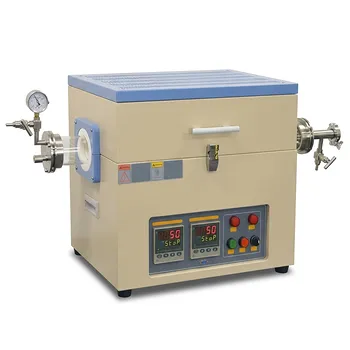
1200C Dual Zone Split Tube Furnace with Fused Quartz Tube and Vacuum Flanges Available in 60mm 80mm and 100mm Diameters
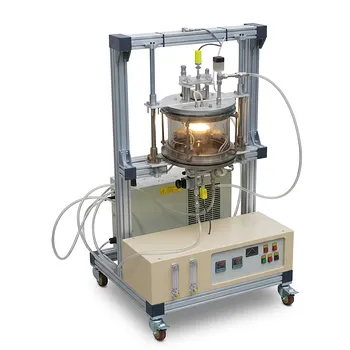
Two Zones CSS Furnace for Rapid Thermal Processing Thin Film Coating 3 Inch Diameter 650C
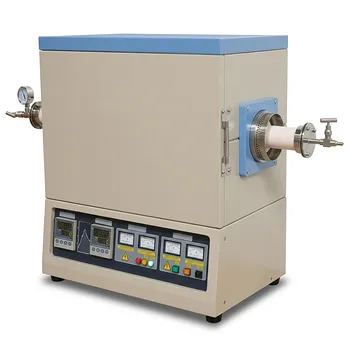
High Temperature 1700C Dual Zone Tube Furnace for Material Science and Industrial Chemical Vapor Deposition Research
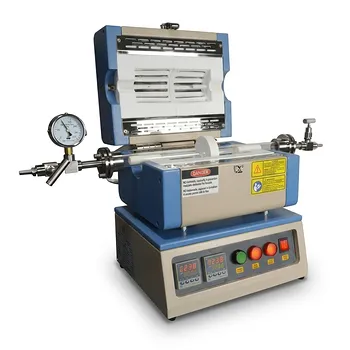
Dual Heating Zone 1200C Compact Split Tube Furnace with Optional 1" - 2" Tube and Vacuum Flanges
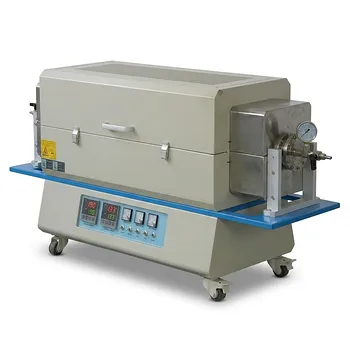
High Temperature Elongated Dual Zone Tube Furnace for Material Research and Industrial Heat Treatment
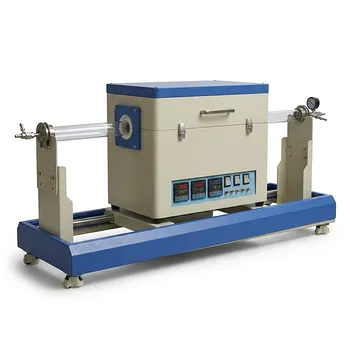
Double Temperature Zone Double Cover Tube Furnace for High Temperature CVD and Vacuum Annealing
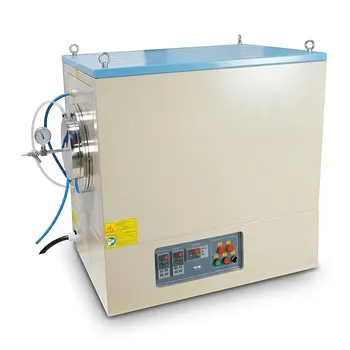
Dual Zone Tube Furnace 1100C with 11 Inch Quartz Tube and Vacuum Flanges for 8 Inch Wafer Processing
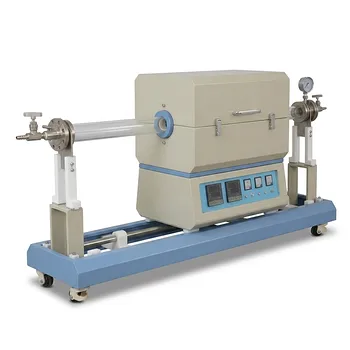
Double Zone Fast Heating Tube Furnace High Temperature Vacuum Atmosphere System
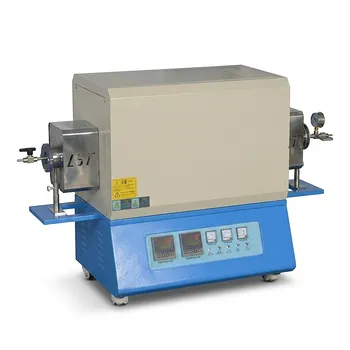
High Temperature Dual Zone Vacuum Tube Furnace for Material Research and CVD Processing
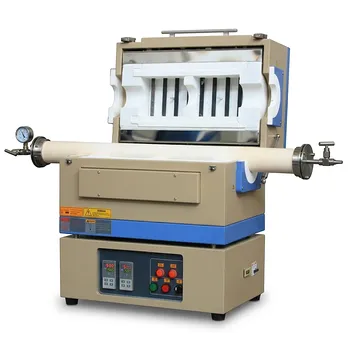
1500C Two Zone Split Tube Furnace with Vacuum Flange and 80mm Alumina Tube
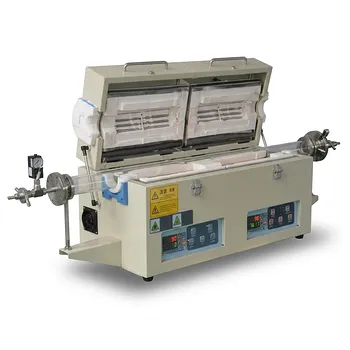
Elongated Two Temperature Zone Pipe Furnace for Industrial Heat Treatment and Material Science Research
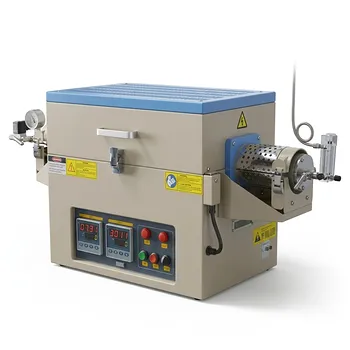
1100C Dual Zone Hydrogen Gas Tube Furnace with Quartz Tube and Integrated H2 Leak Detection System
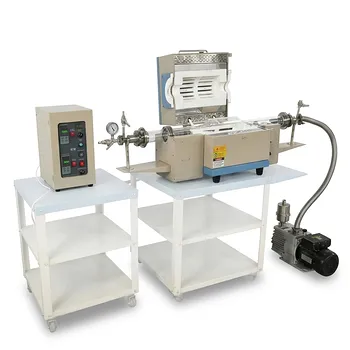
Two Zone Rotary Tube Furnace for Powder CVD Coating and Core Shell Material Synthesis 1100C
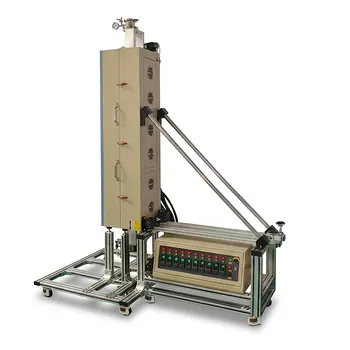
1200°C 10-Zone Split Tube Furnace with Horizontal and Vertical Mounting for Multi-Zone Thermal Gradients and Large Diameter Material Processing
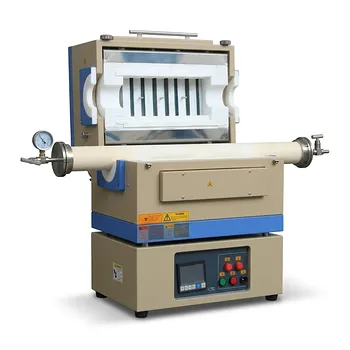
1500C Eight Zone Split Tube Furnace for Thermal Gradient Processing and Advanced Material Research
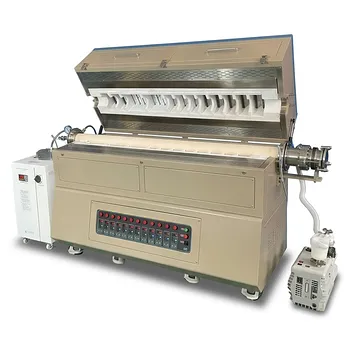
Twelve Zone 1700°C Multi Zone Split Tube Furnace with 100mm Alumina Processing Tube and Independent Temperature Gradient Control
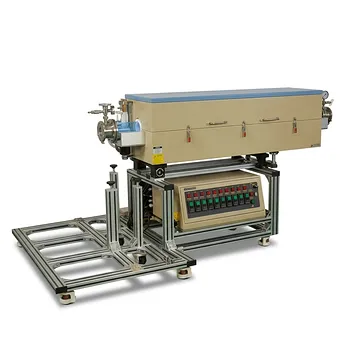
Ten Zone Multi Orientation Laboratory Tube Furnace for 1200C High Temperature Gradient Thermal Processing