How does a high-temperature atmosphere tube furnace contribute to the crystal structure stability of doped NVP?
Updated 3 months ago
A high-temperature atmosphere tube furnace ensures the crystal structure stability of doped sodium vanadium phosphate (NVP) by providing a precisely controlled 700°C thermal field and a continuous nitrogen environment. These conditions facilitate the successful integration of dopant ions like Magnesium, Titanium, and Manganese into the NVP lattice and enable the in-situ coating of carbon nanotubes, which significantly enhances crystallinity and prevents structural degradation.
Core Takeaway: The furnace acts as a controlled reactor that manages chemical kinetics and atmospheric purity, allowing dopants to occupy specific lattice sites while preventing the oxidation of vanadium, ultimately creating a robust and highly ordered crystal structure.
Atmospheric Protection and Phase Purity
Prevention of Multivalent Vanadium Oxidation
The furnace maintains a high-purity nitrogen atmosphere to create an inert environment. This is critical for preventing the oxidation of vanadium, a multi-valent element that must remain in a specific oxidation state to form the stable NVP phase.
Decomposition of Organic Precursors
During the 450°C pre-sintering stage, the controlled atmosphere facilitates the preliminary decomposition of organic components. By removing these impurities before the final high-temperature soak, the furnace ensures the purity of the final crystal phase.
Kinetic Optimization for Dopant Integration
Driving Ions into Lattice Sites
At the peak temperature of 700°C, the furnace provides the necessary thermal energy for dopant ions such as Mg/Ti or Mn/Ti to migrate into the NVP lattice. This temperature is high enough to overcome kinetic barriers, allowing dopants to settle into specific atomic sites that stabilize the overall framework.
Promoting Long-Range Atomic Ordering
Precise control over the cooling process—often as slow as 0.5 K/min—helps eliminate internal thermal stresses. This slow transition allows atoms to arrange themselves into a highly ordered lattice, resulting in crystals with high crystallinity and a significant reduction in structural defects.
In-Situ Coating and Structural Reinforcement
The Carbon Nanotube (CNT) Effect
The furnace environment is essential for the in-situ coating of carbon nanotubes onto the NVP particles. This carbon network acts as a structural scaffold, improving the mechanical stability of the crystals and enhancing the material's overall crystallinity.
Grain Size and Phase Transition Control
By maintaining a steady heating rate (typically 5°C/min), the furnace manages the speed of the phase transition. This prevents rapid, uncontrolled grain growth, ensuring that the dopant distribution remains uniform throughout the polycrystalline structure.
Understanding the Trade-offs
Cooling Rate Sensitivity
While extremely slow cooling rates promote high crystallinity, they significantly increase processing time and energy consumption. Finding the balance between structural perfection for research (like X-ray diffraction) and industrial throughput is a constant challenge.
Atmospheric Flow Dynamics
The rate at which nitrogen or other gases flow over the sample surface must be constant and precise. Variations in flow can lead to uneven thermal fields or localized oxidation, which compromises the homogeneity of the doped NVP batch.
How to Apply This to Your Project
Depending on your specific research or production requirements, the furnace parameters should be adjusted to prioritize different structural outcomes.
- If your primary focus is Maximum Crystallinity: Utilize the slowest possible cooling rates (0.5 K/min) and ensure a multi-stage sintering process to maximize long-range atomic ordering.
- If your primary focus is Dopant Uniformity: Maintain a strictly controlled 700°C dwell time and ensure the nitrogen flow is sufficient to prevent any localized atmospheric stagnation.
- If your primary focus is Structural Longevity: Prioritize the in-situ carbon coating process by optimizing the precursor mixture and maintaining an oxygen-free environment throughout the heating cycle.
By masterfully controlling the thermal and atmospheric variables of a tube furnace, you can transform NVP into a robust, high-performance material with a precisely engineered crystal structure.
Summary Table:
| Furnace Parameter | Optimal Condition | Impact on NVP Crystal Structure |
|---|---|---|
| Atmosphere | High-purity Nitrogen | Prevents vanadium oxidation; ensures phase purity. |
| Peak Temperature | 700°C | Facilitates dopant ion (Mg, Ti, Mn) lattice integration. |
| Cooling Rate | 0.5 K/min | Promotes long-range atomic ordering and reduces defects. |
| Heating Rate | 5°C/min | Manages phase transition speed and prevents grain growth. |
| Process Type | In-situ Carbon Coating | Acts as a structural scaffold for mechanical stability. |
Optimize Your Material Research with THERMUNITS
Achieving the perfect crystal structure for doped NVP requires more than just heat—it requires precise atmospheric and thermal control. THERMUNITS is a leading manufacturer of high-performance thermal processing solutions tailored for material science and industrial R&D.
From Atmosphere Tube Furnaces and CVD/PECVD systems to specialized Vacuum Induction Melting (VIM) and Hot Press furnaces, our equipment is engineered to provide the stability and uniformity your research demands. Whether you are developing advanced battery materials or conducting complex heat treatments, we provide the tools to ensure your success.
Ready to enhance your lab's capabilities? Contact our technical experts today to find the ideal furnace solution for your specific application.
References
- Bo Pei, Li Guo. Research on the Thermal Safety of Ion-Doped Na3V2(PO4)3 for Sodium-Ion Batteries. DOI: 10.3390/met14121453
Mentioned Products
- 1750°C High Temperature Benchtop Vacuum Atmosphere Tube Furnace with Kanthal Super 1800 Heating Elements and 60mm Alumina Processing Tube
- High Temperature 1200C Split Tube Furnace for CVD Research and Vacuum Atmosphere Heat Treatment
- High Temperature Split Tube Furnace 1500C for Material Research Vacuum and Atmosphere Thermal Processing
- 1700C High Temperature Alumina Tube Furnace with 18 Inch Heated Zone and Vacuum Sealing Flanges
- High Temperature Vertical Atmosphere Controlled Furnace with Automatic Bottom Loading and 1700°C Capacity for Advanced Material Research
People Also Ask
- What core functions does a high-temperature vacuum tube furnace provide? Optimize np-CuSn Sintering & Joint Integrity
- What is the role of a high-temperature tube furnace in the calcination process of ZnO/In2O3 nanocomposites?
- What role does a high-temperature tube furnace play in the sulfidation heat treatment of CoS@C/MXene nanocomposites? Guide
- Why is a high-temperature tube furnace required for CuAlO2 heat treatment? Master Phase Transformation Today
- What role does a high-temperature tube furnace play in executing nitrogen absorption kinetic experiments? Expert Insights

Tech Team · ThermUnits
Last updated on Jun 03, 2026
Related Products

1750°C High Temperature Benchtop Vacuum Atmosphere Tube Furnace with Kanthal Super 1800 Heating Elements and 60mm Alumina Processing Tube
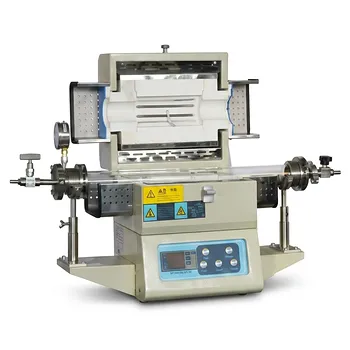
High Temperature 1200C Split Tube Furnace for CVD Research and Vacuum Atmosphere Heat Treatment
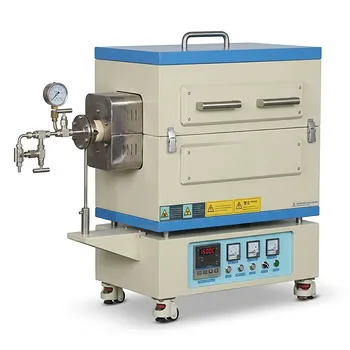
High Temperature Split Tube Furnace 1500C for Material Research Vacuum and Atmosphere Thermal Processing
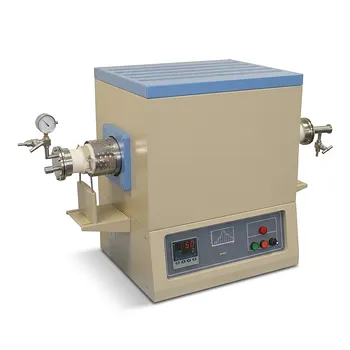
1700C High Temperature Alumina Tube Furnace with 18 Inch Heated Zone and Vacuum Sealing Flanges
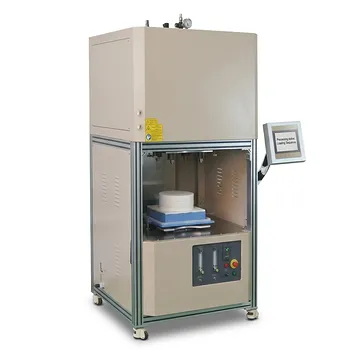
High Temperature Vertical Atmosphere Controlled Furnace with Automatic Bottom Loading and 1700°C Capacity for Advanced Material Research
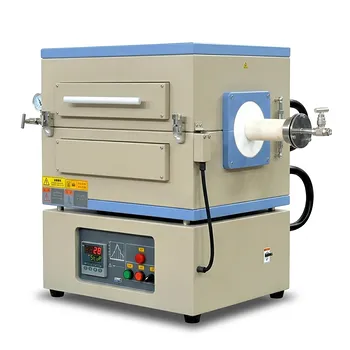
1500°C Split Tube Furnace with Alumina Tube and Vacuum Sealing Flanges for Material Research

High Temperature Tube Furnace 1500C with Sliding Flanges and 50mm OD for Rapid Thermal Processing Fast Heating and Cooling

High Temperature 1700C Tube Furnace with High Vacuum Turbomolecular Pump System and Multi Channel Mass Flow Controller Gas Mixer
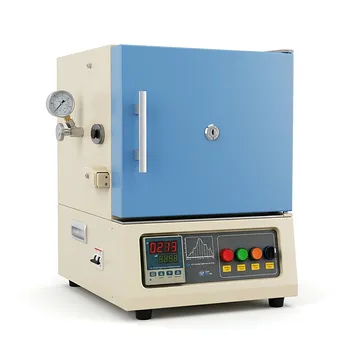
1200C Hybrid Muffle and Tube Furnace for Material Research with Dual Atmosphere Control Quartz Tubes
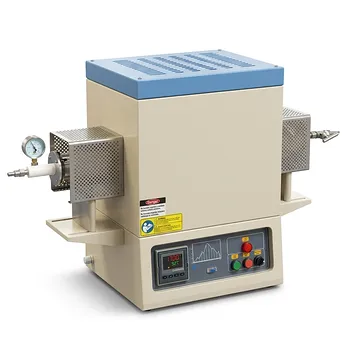
High Temperature Three Zone Tube Furnace 1700C with Alumina Tube and Water Cooled Flanges

Vertical 1700C Vacuum and Atmosphere Tube Furnace with 80mm Alumina Tube

Compact High Temperature 1600C Tube Furnace with 50mm Alumina Tube and Vacuum Flanges for Material Sintering
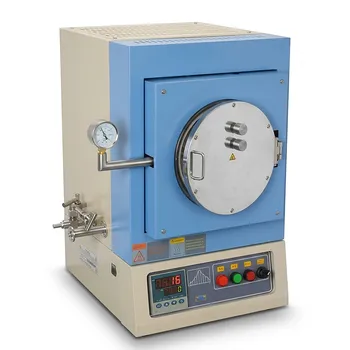
1100°C High Temperature Quartz Chamber Furnace 8 Inch OD with 7.6 Liter Capacity and Vacuum Atmosphere Capability

High Temperature 1700C Benchtop Tube Furnace with 5 Inch Heating Zone High Purity Alumina Tube and Vacuum Sealing Flanges

1800C High Temperature Compact Vacuum Tube Furnace with 60mm OD Alumina Tube and Kanthal MoSi2 Heating Elements

High Temperature 1700C Vertical Tube Furnace for Powder Spherification and Material Sintering
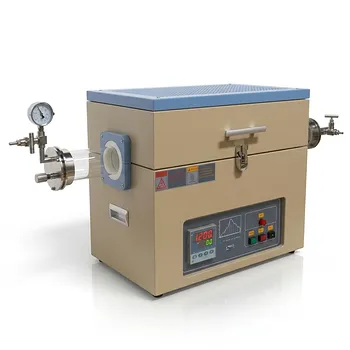
High Temperature 1200C Split Tube Furnace with Optional Quartz Tube Sizes and Vacuum Sealing Flanges for Material Science Research

High Temperature 1700C Tube Furnace with 4 Inch OD Alumina Tube and Vacuum Sealing Flanges

High Temperature 1700C Six Zone Split Tube Furnace with Alumina Tube and Water Cooled Flanges
