How does a high-temperature tube atmosphere furnace ensure the quality of 8YSZ coatings during annealing? Expert Guide
Updated 3 months ago
A high-temperature tube atmosphere furnace ensures 8YSZ coating quality by synchronizing precise thermal energy with a chemically controlled environment. Specifically, it maintains temperatures between 1000°C and 1200°C to promote diffusion bonding and "necking" between particles while utilizing inert gas flows, such as Argon, to prevent the oxidation of sensitive substrate components. This dual-action process significantly enhances the coating’s hardness, Young’s modulus, and overall structural integrity.
The furnace acts as a precision-controlled reactor that balances thermal activation for material bonding with atmospheric isolation to prevent chemical degradation. By managing these variables, the system transforms a porous deposit into a dense, high-performance protective layer.
Atmospheric Integrity and Oxidation Control
Protecting Sensitive Substrate Components
In many composite applications, the substrate or reinforcement materials, such as carbon nanotubes, are highly susceptible to oxidation at elevated temperatures. The tube furnace maintains a stable flow of high-purity argon (often around 100 L/h) to displace oxygen and create an inert environment. This protection ensures that the underlying structural properties of the component remain intact while the coating undergoes heat treatment.
Preventing Disordered Oxidation
Beyond protecting the substrate, the atmosphere control prevents the disordered oxidation of metal sources or activators within the coating itself. By maintaining specific gas chemistry, the furnace ensures that elements like chromium or silicon can diffuse smoothly into the surface. This controlled environment is essential for forming a dense protective layer rather than a brittle, oxidized crust.
Facilitating Chemical Reduction
In specific cases like Ni-8YSZ electrodes, the furnace can be used to introduce reducing atmospheres (such as a hydrogen-nitrogen mix). This process converts oxides back into metallic forms, establishing a standardized starting microstructure. This level of chemical control is impossible in standard air-annealing environments.
Thermal Dynamics and Microstructural Evolution
Promoting Diffusion Bonding and Necking
At temperatures between 1000°C and 1200°C, the furnace provides sufficient thermal energy to induce physicochemical transformations. Atoms gain enough energy for thermal diffusion, leading to "neck formation" between 8YSZ particles. This process effectively welds the particles together at the molecular level, bridging gaps in the deposited layer.
Enhancing Mechanical Performance
The primary result of this controlled heating is a significant increase in hardness and Young's modulus. By driving grain growth and reducing voids, the furnace transforms the coating from a loose collection of particles into a monolithic glass-like or ceramic layer. This transformation is critical for coatings intended to withstand high-stress environments like gas turbines.
Managing Sintering and Pore Evolution
Precise temperature control allows researchers to quantitatively analyze grain growth rates and pore evolution. By simulating high-temperature service conditions (up to 1500°C in some models), the furnace helps evaluate the sintering resistance of the 8YSZ. This ensures the coating remains stable and does not become overly dense or brittle during its actual operational lifespan.
Structural Integrity and Stress Management
Precision Heating and Cooling Rates
One of the most critical factors in coating quality is the management of thermal stress. Advanced tube furnaces allow for programmed, slow heating and cooling rates (e.g., 100 K/h). This gradual transition prevents the "thermal shock" that typically causes delamination or cracking in ceramic coatings.
Lattice Rearrangement and Stress Relief
Annealing provides the energy required for lattice rearrangement, which eliminates internal stresses generated during the initial deposition or sputtering process. This relaxation of the crystal structure improves the electrical stability and optical transparency of the film. It ensures that the coating is not "pre-stressed" before it even enters service.
Understanding the Trade-offs
The Risk of Over-Sintering
While high temperatures are necessary for bonding, excessive heat can lead to uncontrolled grain growth. This may reduce the toughness of the coating, making it more prone to brittle failure. Finding the "sweet spot" between bonding and grain size is the primary challenge in 8YSZ annealing.
Atmosphere Purity vs. Cost
Maintaining a high-flow inert atmosphere is essential for quality but increases operational costs. If the argon purity or flow rate fluctuates, the resulting oxidation can cause the coating to fail prematurely. Therefore, the furnace must have highly reliable flow meters and airtight seals to justify the resource expenditure.
How to Apply This to Your Project
Recommendations for Success
- If your primary focus is maximum mechanical hardness: Prioritize a higher temperature range (1200°C+) to maximize diffusion bonding and neck formation between 8YSZ particles.
- If your primary focus is preventing coating cracks: Utilize the furnace’s programmable controller to enforce a slow cooling rate of no more than 100 K/h to release internal thermal stresses.
- If your primary focus is protecting oxygen-sensitive substrates: Ensure a pre-purge cycle of argon is completed before ramping up temperatures to 500°C or higher.
- If your primary focus is sintering resistance: Conduct a series of tests at incremental temperatures (1100°C to 1500°C) to map the rate of grain growth and pore closure.
By mastering the intersection of thermal energy and atmospheric chemistry, you can consistently produce 8YSZ coatings that meet the rigorous demands of high-temperature industrial applications.
Summary Table:
| Feature | Function in Annealing | Impact on 8YSZ Coating |
|---|---|---|
| Temperature (1000-1200°C) | Induces thermal diffusion & necking | Enhances hardness and Young’s modulus |
| Inert Atmosphere (Argon) | Prevents oxidation of substrates | Maintains structural and chemical integrity |
| Controlled Cooling (≤100 K/h) | Manages thermal stress | Prevents delamination and surface cracking |
| Reducing Atmosphere (H2/N2) | Facilitates chemical reduction | Establishes standardized starting microstructures |
| Atmospheric Isolation | Eliminates disordered oxidation | Ensures a dense, protective ceramic layer |
Elevate Your Material Research with THERMUNITS Precision
As a leading manufacturer of high-temperature laboratory equipment, THERMUNITS provides the specialized thermal solutions required for advanced material science and industrial R&D. Our high-performance Tube and Atmosphere Furnaces are engineered to deliver the precise atmospheric integrity and thermal stability necessary for superior 8YSZ coating results.
From Muffle, Vacuum, and Rotary furnaces to advanced CVD/PECVD systems, Hot Press furnaces, and Vacuum Induction Melting (VIM) units, we offer a comprehensive range of equipment tailored to your specific heat treatment needs. Whether you are working on gas turbine coatings or dental ceramics, our expertise ensures your project benefits from maximum structural integrity and repeatable performance.
Ready to optimize your thermal processing? Contact our engineering team today to find the perfect furnace solution for your laboratory.
References
- Maria Wiśniewska, Dariusz Garbiec. Aerosol-Deposited 8YSZ Coating for Thermal Shielding of 3YSZ/CNT Composites. DOI: 10.3390/coatings14091186
Mentioned Products
- High Temperature 1800C Atmosphere Tube Furnace for CVD Research and Vacuum Sintering Precision Heat Treatment
- High Temperature Vertical Atmosphere Controlled Furnace with Automatic Bottom Loading and 1700°C Capacity for Advanced Material Research
- 1100°C High Temperature Quartz Chamber Furnace 8 Inch OD with 7.6 Liter Capacity and Vacuum Atmosphere Capability
- 1750°C High Temperature Benchtop Vacuum Atmosphere Tube Furnace with Kanthal Super 1800 Heating Elements and 60mm Alumina Processing Tube
- High Temperature 1700C 4 Channel Tube Furnace 1 Inch Alumina Tube for Hi-Throughput Annealing
People Also Ask
- Why is an atmosphere tube furnace considered core equipment for CVD? Essential for Precision Thin-Film & 2D Materials
- Why is a Tube Furnace typically utilized for CVD? Achieve Precision in Graphene and 2D Material Synthesis
- What core function does the high-temperature tube furnace perform in MWCNT synthesis? Essential for CVD Precision
- Why is a high-temperature tube furnace with precise gas flow control required for CVD? Optimize Carbon Nanotube Synthesis
- What role does a high-precision tube furnace play in the CVD process of WS2? Optimize Growth and Film Quality

Tech Team · ThermUnits
Last updated on Jun 02, 2026
Related Products
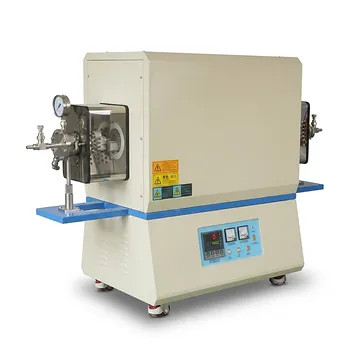
High Temperature 1800C Atmosphere Tube Furnace for CVD Research and Vacuum Sintering Precision Heat Treatment
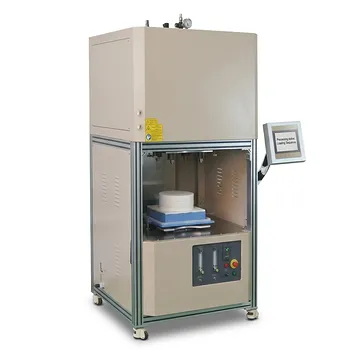
High Temperature Vertical Atmosphere Controlled Furnace with Automatic Bottom Loading and 1700°C Capacity for Advanced Material Research
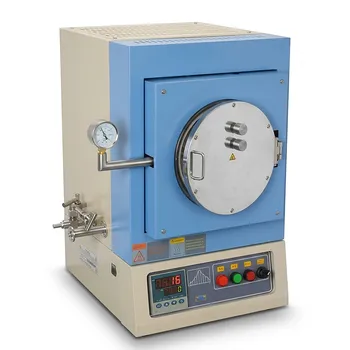
1100°C High Temperature Quartz Chamber Furnace 8 Inch OD with 7.6 Liter Capacity and Vacuum Atmosphere Capability

1750°C High Temperature Benchtop Vacuum Atmosphere Tube Furnace with Kanthal Super 1800 Heating Elements and 60mm Alumina Processing Tube
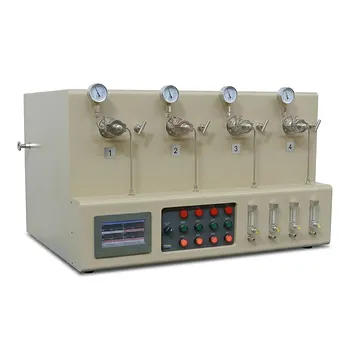
High Temperature 1700C 4 Channel Tube Furnace 1 Inch Alumina Tube for Hi-Throughput Annealing
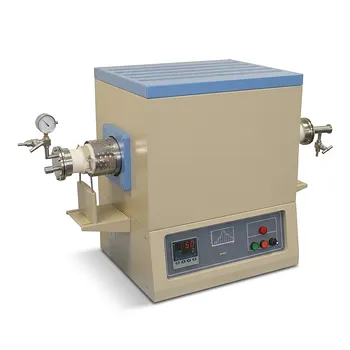
1700C High Temperature Alumina Tube Furnace with 18 Inch Heated Zone and Vacuum Sealing Flanges
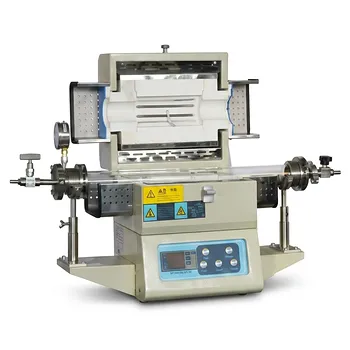
High Temperature 1200C Split Tube Furnace for CVD Research and Vacuum Atmosphere Heat Treatment
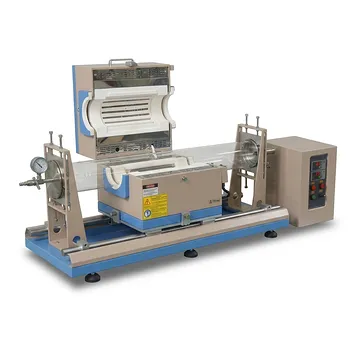
1200C High Temperature 5 Inch Sliding Tube Furnace for Rapid Thermal Processing RTP and Wafer Annealing
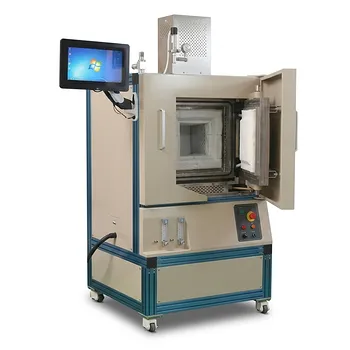
High Temperature Oxygen and Inert Atmosphere Controlled Furnace 8 Liter 1700C Sintering System for Advanced Materials RD

Vertical 1700C Vacuum and Atmosphere Tube Furnace with 80mm Alumina Tube

High Temperature Tube Furnace 1500C with Sliding Flanges and 50mm OD for Rapid Thermal Processing Fast Heating and Cooling

High Temperature 1700C Vertical Tube Furnace for Powder Spherification and Material Sintering
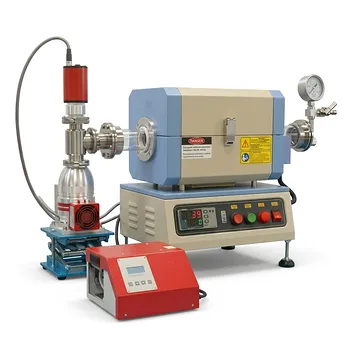
High Vacuum Compact Tube Furnace 1200C with Integrated Turbo Pump System and 8 Inch Heating Zone
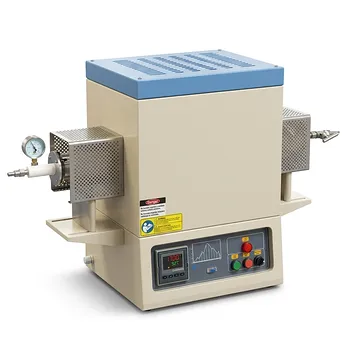
High Temperature Three Zone Tube Furnace 1700C with Alumina Tube and Water Cooled Flanges
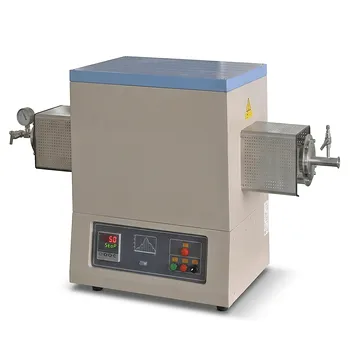
High Temperature 1700C Tube Furnace with 4 Inch OD Alumina Tube and Vacuum Sealing Flanges

High Temperature 1700C Tube Furnace with High Vacuum Turbomolecular Pump System and Multi Channel Mass Flow Controller Gas Mixer

High Temperature 1700C Benchtop Tube Furnace with 5 Inch Heating Zone High Purity Alumina Tube and Vacuum Sealing Flanges

High Temperature 1500C Benchtop Muffle Furnace 3.6L Alumina Fiber Chamber Programmable Controller Sintering Annealing Carbonization Thermal Processing System

1200C High Throughput Multi Channel Tube Furnace with 50mm Quartz Tubes for Annealing and Material Phase Diagram Research