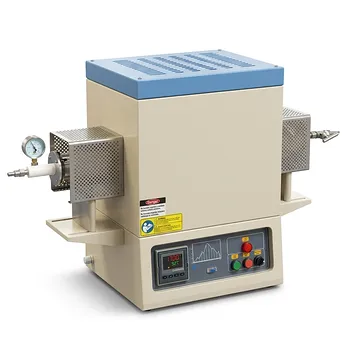
What core function does the high-temperature tube furnace perform in MWCNT synthesis? Essential for CVD Precision
Updated 3 months ago
The high-temperature tube furnace acts as the primary thermal reactor in the Chemical Vapor Deposition (CVD) process. Its core function is to provide a stable, high-temperature environment—typically at 973 K (700 °C)—to facilitate the thermal decomposition (pyrolysis) of carbon-source gases, such as acetylene. This controlled energy allows carbon atoms to liberate themselves from the precursor gas and deposit onto a pre-set catalyst to grow into ordered multi-walled carbon nanotube (MWCNT) structures.
The tube furnace is the "engine" of the CVD process, providing the precise thermal energy required to break chemical bonds in precursor gases and the controlled environment needed for carbon atoms to crystallize into nanotubes. Its performance directly dictates the yield, morphology, and structural purity of the synthesized nanomaterials.
The Catalyst for Chemical Transformation
Driving the Pyrolysis of Precursor Gases
The most critical role of the furnace is providing the activation energy required for pyrolysis. At temperatures like 973 K, carbon-rich gases (such as acetylene, methane, or alcohol vapors) become chemically unstable. The heat forces these molecules to crack, releasing free carbon atoms that serve as the building blocks for the nanotubes.
Facilitating Catalyst Activation and Growth
The furnace maintains the thermal energy necessary for the catalyst particles (often transition metals like iron or nickel) to remain in an active state. As the carbon source decomposes, the furnace's heat enables these carbon atoms to diffuse into or onto the catalyst surface. This process allows the atoms to rearrange and "extrude" into the characteristic tubular shape of MWCNTs.
Environmental and Structural Control
Precision of the Thermal Field
A high-temperature tube furnace is designed to create a uniform hot zone within the reaction tube. This uniformity ensures that the growth rate of the MWCNTs is consistent throughout the substrate. If the temperature fluctuates, the resulting nanotubes may suffer from structural defects or variations in diameter and length.
Atmospheric Integrity and Sealing
The furnace provides a hermetically sealed environment that is essential for maintaining an oxygen-free atmosphere. By using inert carrier gases like Nitrogen (N2) or Argon, the furnace prevents the carbon nanotubes and the metal catalysts from oxidizing. This sealing integrity is a primary factor in determining the overall yield and chemical stability of the final product.
Understanding the Trade-offs
Temperature Uniformity vs. Throughput
While increasing the length of the heating zone can improve throughput, it often introduces temperature gradients. These gradients can lead to non-uniform MWCNT growth, where tubes at the edges of the zone have different physical properties than those in the center.
Precision Control vs. Equipment Cost
Higher precision in temperature control (using multi-zone heating) significantly improves the crystal quality of the nanotubes. However, this increases the complexity of the CVD system and the operational costs, requiring a balance between the desired material grade and the available budget.
Sealing Risks and Contamination
Even minor leaks in the furnace seals can introduce oxygen, which leads to the combustion of the carbon source rather than its deposition. This not only ruins the batch but can also contaminate the internal furnace tube, requiring extensive cleaning or replacement.
How to Apply This to Your Project
When selecting or operating a tube furnace for MWCNT synthesis, your specific goals should dictate your focus:
- If your primary focus is high structural purity: Prioritize a furnace with high-precision temperature controllers and multi-zone heating to ensure a perfectly uniform thermal field.
- If your primary focus is maximum production yield: Focus on the sealing integrity and the ability to maintain a stable 973 K environment over long durations to ensure consistent gas decomposition.
- If your primary focus is specialized morphology (like coils or bamboo-structures): Use the furnace's ability to create specific temperature gradients to influence how the carbon atoms crystallize on the catalyst.
The high-temperature tube furnace is the foundational tool that transforms gaseous precursors into high-value solid-state nanostructures through precise thermal and atmospheric management.
Summary Table:
| Core Function | Technical Role | Impact on MWCNT Quality |
|---|---|---|
| Thermal Decomposition | Provides activation energy for gas pyrolysis (e.g., Acetylene) | Ensures steady supply of carbon building blocks |
| Catalyst Activation | Maintains transition metals (Fe/Ni) in an active state | Determines nanotube diameter and growth morphology |
| Thermal Uniformity | Creates a stable and consistent hot zone | Reduces structural defects and ensures uniform length |
| Atmosphere Control | Provides oxygen-free, hermetically sealed environment | Prevents oxidation and improves chemical stability |
Elevate Your Nanomaterial Research with THERMUNITS
As a global leader in high-temperature laboratory equipment, THERMUNITS provides the precision thermal technology required to master complex processes like CVD/PECVD. Whether you are synthesizing multi-walled carbon nanotubes or developing advanced material coatings, our high-performance furnaces deliver the stability and accuracy your R&D demands.
Our comprehensive range includes:
- Advanced CVD/PECVD Systems & High-Temperature Tube Furnaces
- Vacuum & Atmosphere Furnaces for controlled environments
- Muffle, Rotary, and Hot Press Furnaces
- Vacuum Induction Melting (VIM) & Dental Furnaces
- Premium Thermal Elements and customized heat treatment solutions
Don't let temperature fluctuations compromise your yields. Contact our technical experts today to find the perfect thermal processing solution for your laboratory or industrial application.
References
- Zohreh Khoshraftar, Alireza Hemmati. Comprehensive investigation of isotherm, RSM, and ANN modeling of CO2 capture by multi-walled carbon nanotube. DOI: 10.1038/s41598-024-55836-6
Mentioned Products
- High Temperature 1800C Atmosphere Tube Furnace for CVD Research and Vacuum Sintering Precision Heat Treatment
- High Temperature 1200C Split Tube Furnace for CVD Research and Vacuum Atmosphere Heat Treatment
- 1200°C High Temperature 4 Inch Tube Furnace with Sliding Flange for CVD Systems
- High Temperature 1700C Tube Furnace with High Vacuum Turbomolecular Pump System and Multi Channel Mass Flow Controller Gas Mixer
- Vertical Openable Tube Furnace 0-1700c High Temperature Laboratory System for CVD and Vacuum Heat Treatment
People Also Ask
- Why is an atmosphere tube furnace considered core equipment for CVD? Essential for Precision Thin-Film & 2D Materials
- Why is a Tube Furnace typically utilized for CVD? Achieve Precision in Graphene and 2D Material Synthesis
- Why is a high-temperature tube furnace with precise gas flow control required for CVD? Optimize Carbon Nanotube Synthesis
- What role does a high-precision tube furnace play in the CVD process of WS2? Optimize Growth and Film Quality
- What role does a high-precision tube heating system play in CVD or PECVD? Master Precision for Advanced Material Growth.

Tech Team · ThermUnits
Last updated on Jun 03, 2026
Related Products
High Temperature 1800C Atmosphere Tube Furnace for CVD Research and Vacuum Sintering Precision Heat Treatment
High Temperature 1200C Split Tube Furnace for CVD Research and Vacuum Atmosphere Heat Treatment
1200°C High Temperature 4 Inch Tube Furnace with Sliding Flange for CVD Systems

High Temperature 1700C Tube Furnace with High Vacuum Turbomolecular Pump System and Multi Channel Mass Flow Controller Gas Mixer
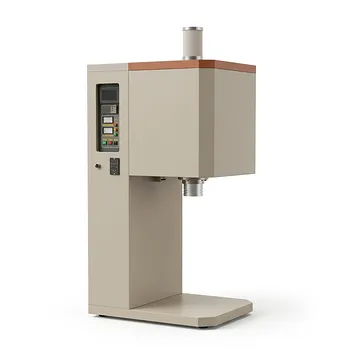
Vertical Openable Tube Furnace 0-1700c High Temperature Laboratory System for CVD and Vacuum Heat Treatment
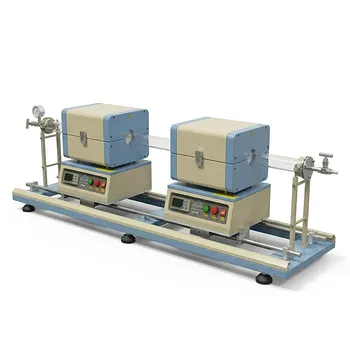
1200C Max Dual Sliding Tube Furnace with 50 mm Tube Flanges for CVD

High Temperature 1700C Benchtop Tube Furnace with 5 Inch Heating Zone High Purity Alumina Tube and Vacuum Sealing Flanges
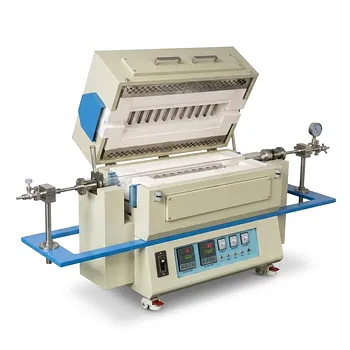
High Temperature Dual Zone Rotating Tube Furnace 1500C Silicon Carbide Heating for Advanced Material Synthesis
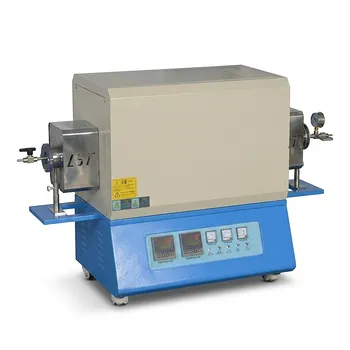
High Temperature Dual Zone Vacuum Tube Furnace for Material Research and CVD Processing
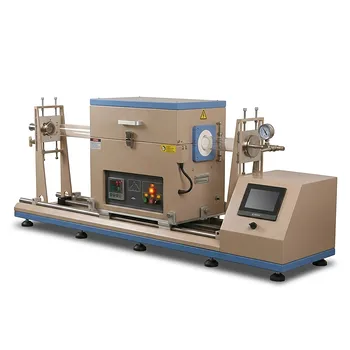
1200C Sliding Tube Furnace for Rapid Thermal Processing and CVD Graphene Growth with 100mm OD Capacity
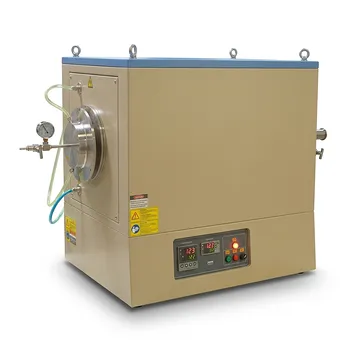
1100°C Large Diameter Quartz Tube Furnace with 24 Inch Heating Zone and Water Cooled Flanges
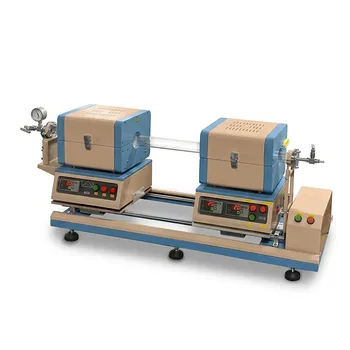
High Temperature 1200C Automatic Sliding Dual Zone Tube Furnace for 2D Transition Metal Dichalcogenides Growth and Material Sublimation Research
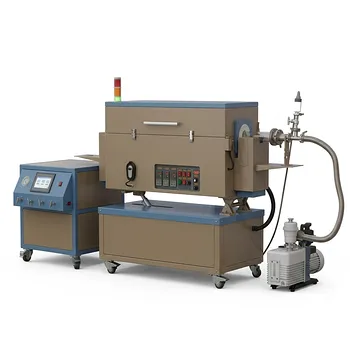
5 Inch Three Zone Rotary Tube Furnace with Integrated Gas Delivery System and 1200C Capability for Advanced Material CVD Processing

High Temperature 1700C Vertical Tube Furnace for Powder Spherification and Material Sintering

1100°C High Temperature Quartz Chamber Furnace 8 Inch OD with 7.6 Liter Capacity and Vacuum Atmosphere Capability

High Temperature Tube Furnace 1500C with Sliding Flanges and 50mm OD for Rapid Thermal Processing Fast Heating and Cooling
High Temperature 1700C Vertical Split Tube Furnace for Material Quenching and Single Crystal Growth

1800C High Temperature Compact Vacuum Tube Furnace with 60mm OD Alumina Tube and Kanthal MoSi2 Heating Elements

1750°C High Temperature Benchtop Vacuum Atmosphere Tube Furnace with Kanthal Super 1800 Heating Elements and 60mm Alumina Processing Tube