How does a high vacuum system contribute to the growth quality of hBN in LP-CVD? Achieve High-Purity 2D Film Growth.
Updated 3 months ago
A high vacuum system is the foundational component for producing high-quality hexagonal boron nitride (hBN) because it eliminates environmental impurities while maximizing the efficiency of precursor delivery. By reducing the background pressure, the system increases the mean free path of precursor molecules from the nanometer scale to the meter scale, ensuring that they reach the substrate without undergoing premature collisions or parasitic side reactions.
Core Takeaway: High vacuum systems improve hBN quality by creating a pristine, low-collision environment that enables precise control over molecular transport, resulting in films with higher phase purity, better structural integrity, and uniform layer thickness.
Enhancing Molecular Transport and Reaction Precision
Extending the Mean Free Path
In a high vacuum environment, the distance a molecule travels before colliding with another—the mean free path—increases dramatically. This allows precursor vapors to travel directly to the substrate surface without being diverted by gas-phase collisions.
Minimizing Parasitic Side Reactions
By reducing the density of gas molecules in the chamber, the system prevents precursor molecules from reacting with each other before they reach the growth zone. This ensures that the chemical reaction occurs specifically on the copper substrate, leading to more orderly film deposition.
Optimizing Growth Kinetics
Precise vacuum regulation, typically between 10 Pa and 110 Pa, allows operators to fine-tune the growth rate and film thickness. This level of control is essential for achieving the conformal growth of single-layer hBN across complex geometries.
Achieving Chemical Purity and Integrity
Eliminating Atmospheric Contamination
High vacuum systems effectively exclude oxygen and moisture from the reaction zone, which are the primary sources of defects in hBN. This exclusion prevents the oxidative loss of essential elements and ensures the resulting film achieves a high degree of phase purity.
Improving Structural Crystallinity
Controlled vacuum pressure directly influences the Full Width at Half Maximum (FWHM) of Raman peaks, a key metric for crystalline quality. Lower background interference allows for a more perfect lattice structure, resulting in superior optical band gaps and structural density.
Real-Time Environment Stability
Using tools like a Residual Gas Analyzer (RGA) within a vacuum system allows for the real-time monitoring of precursor partial pressures. This feedback loop ensures that the growth environment remains stable, which is critical for the repeatability of high-quality hBN synthesis.
Understanding the Trade-offs
Growth Rate vs. Quality
While higher vacuum levels generally improve film purity, they can also lead to a slower deposition rate. Finding the balance between a low-pressure environment for quality and a sufficient precursor flux for efficiency is a primary challenge in LP-CVD.
System Complexity and Maintenance
Maintaining a high-vacuum environment requires sophisticated pumping systems and high-integrity seals. Any minor leak can introduce oxygen interference, instantly degrading the quality of the hBN film and potentially damaging the heating elements of the furnace.
Precursor Utilization Efficiency
At very low pressures, a significant portion of the precursor gas may bypass the substrate entirely and be pulled into the vacuum pump. This can lead to higher material costs and the need for specialized cold traps to protect the vacuum equipment from corrosive byproducts.
How to Apply This to Your Project
When configuring an LP-CVD system for hBN growth, your vacuum strategy should align with your specific material requirements:
- If your primary focus is single-layer uniformity: Prioritize a system that can maintain stable pressures around 900 mTorr with precise mass flow controllers for hydrogen and argon.
- If your primary focus is maximum phase purity: Invest in a high-vacuum system capable of reaching base pressures in the $10^{-6}$ Torr range before growth to ensure all residual moisture and oxygen are removed.
- If your primary focus is process repeatability: Integrate a Residual Gas Analyzer (RGA) to monitor precursor concentrations and detect atmospheric leaks in real-time.
A properly calibrated high vacuum system transforms the CVD process from an unpredictable chemical reaction into a precise molecular assembly tool.
Summary Table:
| Feature | Impact on hBN Growth Quality |
|---|---|
| Extended Mean Free Path | Enables direct molecular transport to substrate, avoiding gas-phase collisions. |
| Atmospheric Exclusion | Eliminates oxygen and moisture to prevent oxidative loss and ensure phase purity. |
| Precise Pressure Control | Regulates deposition rate (10-110 Pa) for uniform, conformal single-layer thickness. |
| RGA Integration | Real-time monitoring of precursor stability and detection of trace atmospheric leaks. |
Elevate Your Material Research with THERMUNITS
Are you looking to achieve superior repeatability in your 2D material synthesis? THERMUNITS is a leading manufacturer of high-temperature laboratory equipment dedicated to material science and industrial R&D. We provide the precision tools necessary for advanced research, including high-performance CVD/PECVD systems, Vacuum furnaces, and Tube furnaces specifically engineered for hBN and graphene growth.
Our comprehensive range of thermal processing solutions includes:
- Laboratory Furnaces: Muffle, Atmosphere, Rotary, and Hot Press furnaces.
- Specialized Systems: Vacuum induction melting (VIM) furnaces, Dental furnaces, and electric rotary kilns.
- Components: High-quality Thermal Elements and heat treatment accessories.
Don't let environmental impurities compromise your results. Partner with THERMUNITS for cutting-edge thermal technology designed for excellence.
Contact our technical experts today to discuss your project requirements!
References
- Anja Sutorius, Sanjay Mathur. Understanding vapor phase growth of hexagonal boron nitride. DOI: 10.1039/d4nr02624a
Mentioned Products
- Radio Frequency Plasma Enhanced Chemical Vapor Deposition RF PECVD System for Laboratory and Industrial Thin Film Growth
- Chemical Vapor Deposition CVD System Slide PECVD Tube Furnace with Liquid Gasifier PECVD Machine
- 915MHz MPCVD Diamond Machine Microwave Plasma Chemical Vapor Deposition System Reactor
- Split Chamber CVD Tube Furnace with Vacuum Station Chemical Vapor Deposition System Machine
- Cylindrical Resonator MPCVD Machine System for Microwave Plasma Chemical Vapor Deposition and Lab Diamond Growth
People Also Ask
- What are the advantages of PECVD systems for nano flame retardant films? Protect Heat-Sensitive Polymers with Precision
- How does PECVD differ from conventional thermal CVD? Key Advantages of Low-Temperature Deposition for R&D
- What is the role of CVD/PECVD systems in the research of optoelectronic materials and functional coatings? Expert Guide
- What are the benefits of using PECVD for optical and photonic coatings? Achieve High-Precision Thin-Film Deposition
- How do RF frequency and power settings influence the characteristics of a PECVD process? Master Quality & Efficiency

Tech Team · ThermUnits
Last updated on Jun 03, 2026
Related Products
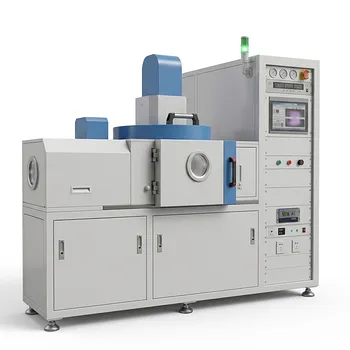
Radio Frequency Plasma Enhanced Chemical Vapor Deposition RF PECVD System for Laboratory and Industrial Thin Film Growth
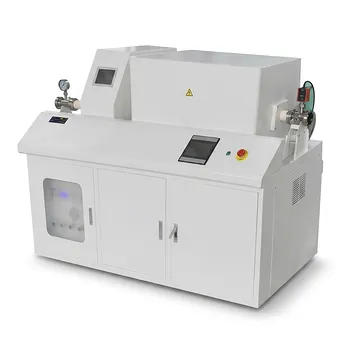
Chemical Vapor Deposition CVD System Slide PECVD Tube Furnace with Liquid Gasifier PECVD Machine
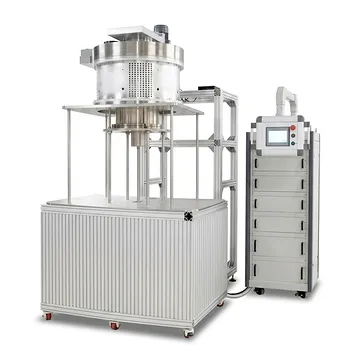
915MHz MPCVD Diamond Machine Microwave Plasma Chemical Vapor Deposition System Reactor
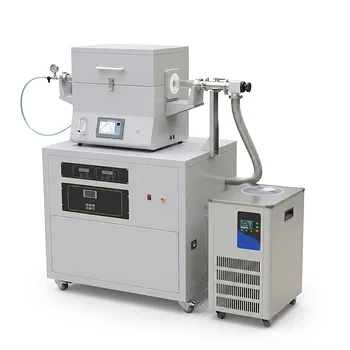
Split Chamber CVD Tube Furnace with Vacuum Station Chemical Vapor Deposition System Machine
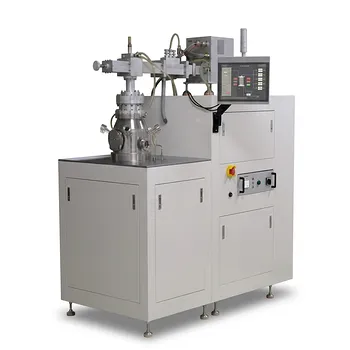
Cylindrical Resonator MPCVD Machine System for Microwave Plasma Chemical Vapor Deposition and Lab Diamond Growth
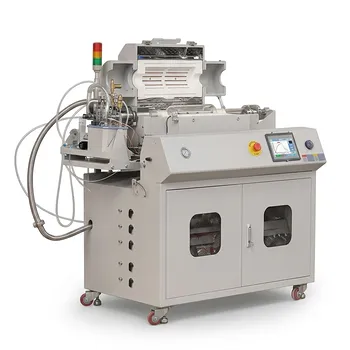
Versatile Chemical Vapor Deposition Tube Furnace System for Advanced Material Research and Industrial Coating Processes
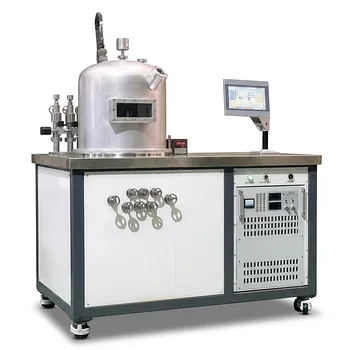
HFCVD Machine System for Nano Diamond Coating on Drawing Dies and Industrial Tools
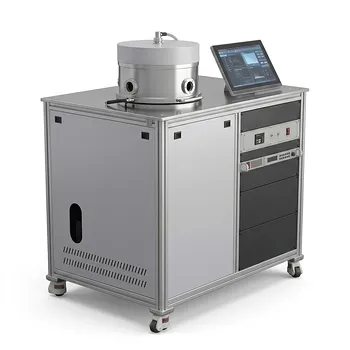
Inclined Rotary Plasma Enhanced Chemical Vapor Deposition PECVD System for Thin Film Deposition and Nanomaterial Synthesis
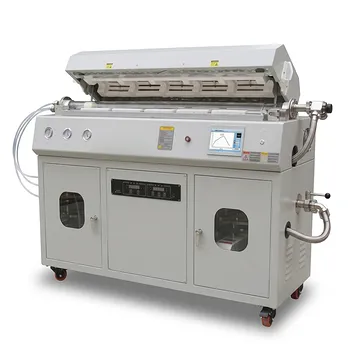
Multi Heating Zones CVD Tube Furnace System for Precision Chemical Vapor Deposition and Advanced Material Synthesis
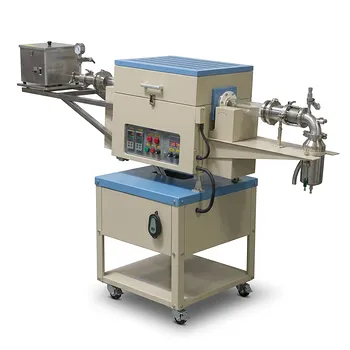
Two Zone Rotary CVD Furnace with Automatic Feeding and Receiving System for Powder Processing
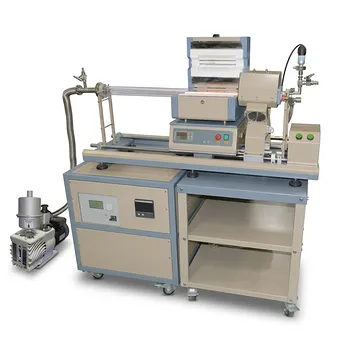
1200C Max Compact Auto-Sliding PECVD Furnace with 2 Inch Tube and Vacuum Pump
High Temperature 1700C Dual Zone Tube Furnace for Material Science and Industrial Chemical Vapor Deposition Research
1000C Mini Tube Furnace with 20mm Quartz Tube and Vacuum Flanges for Material Science Research and Controlled Atmosphere Small Sample Processing
Dual Tube 100mm 80mm CVD Sliding Furnace with 4 Channel Gas Mixing and Vacuum System
5 Inch Rotary Tube Furnace with Automatic Feeding and Receiving System 1200C Three Zone CVD Powder Processing
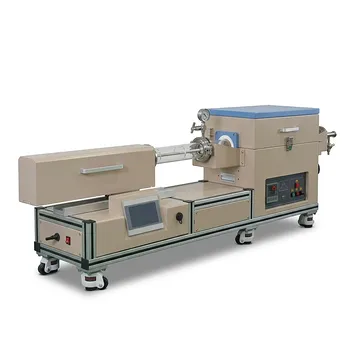
1200C Sliding Internal Crucible Tube Furnace for Controlled Atmosphere Thin Film Deposition and Material Sublimation Research
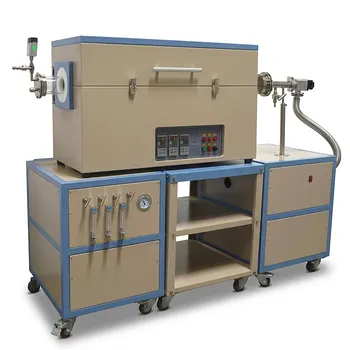
Three Zone Quartz Tube Furnace with 3 Channel Gas Mixer Vacuum Pump and Anti Corrosive Vacuum Gauge
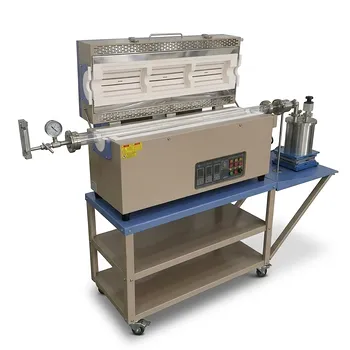
5 Inch Two Zone Rotary Tube Furnace 1100C for Powder CVD and Material Synthesis
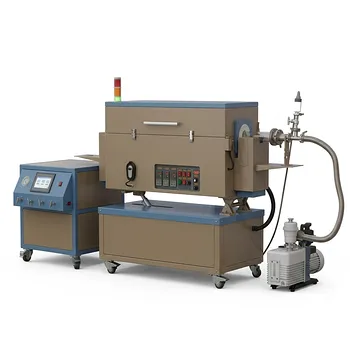
5 Inch Three Zone Rotary Tube Furnace with Integrated Gas Delivery System and 1200C Capability for Advanced Material CVD Processing