How does a vacuum tube furnace achieve simultaneous sintering and pore formation? Expert Guide to Advanced Alloys
Updated 3 months ago
The vacuum tube furnace facilitates simultaneous sintering and pore formation through a precisely controlled environment that triggers two distinct physical processes: solid-state diffusion and sacrificial volatilization. As temperatures rise to levels such as 1373 K, alloy particles bond to form a structural skeleton, while the high-vacuum atmosphere causes pore-forming agents (such as sodium chloride) to evaporate directly from the matrix. This synchronized "in-situ" method results in a porous alloy with high connectivity and robust mechanical stability.
The core mechanism relies on a dual-action environment where high heat drives metallurgical bonding (sintering) while a high vacuum removes sacrificial spacers (volatilization). This synchronization ensures the material achieves both structural integrity and high porosity within a single, contamination-free thermal cycle.
The Mechanics of Structural Formation
Solid-State Diffusion and Sintering Necks
At the core of the process is the application of high-temperature thermal treatment, often reaching 1373 K or higher. This heat promotes solid-state diffusion, a process where atoms move between adjacent alloy particles to bridge the gaps between them.
The result is the formation of strong sintering necks, which act as the "welds" of the microscopic world. These necks transform a loose collection of powder into a rigid, three-dimensional skeleton capable of supporting its own weight and resisting mechanical stress.
The Role of the High-Vacuum Environment
The vacuum is not merely a protective shield; it is a fundamental driver of the chemical reaction. By maintaining a high-vacuum environment, the furnace prevents oxidation and nitrogen contamination, which is critical for reactive metals like titanium or nickel-based alloys.
This oxygen-free atmosphere ensures that the surfaces of the particles remain clean and metallic. This purity allows for superior metallurgical bonding, ensuring the resulting porous structure is not brittle and maintains high electrical or thermal conductivity.
The Dynamics of Pore Creation
In-Situ Volatilization of Sacrificial Agents
To create pores, a sacrificial material—often sodium chloride (NaCl)—is mixed with the alloy powder. In a standard atmosphere, this salt would remain solid, but the vacuum furnace effectively reduces the vapor pressure of the agent.
This reduction allows the pore-forming agent to undergo thermal volatilization directly at the sintering temperature. As the salt evaporates "in-situ," it leaves behind a network of interconnected voids that perfectly mirror the space it once occupied.
Segmented Heating for Precise Control
The process is often divided into a low-temperature removal stage and a high-temperature sintering stage. The initial stage (e.g., 1083 K) focuses on the complete removal of moisture and low-boiling-point impurities to establish the initial pore sites.
Once the pores are established, the temperature is ramped up to drive the final sintering. This segmented heat treatment ensures that the pore structure is fully formed and "locked in" by the developing metal skeleton before the material reaches its final density.
Understanding the Trade-offs
Pore Connectivity vs. Structural Strength
There is an inherent tension between the amount of pore-forming agent used and the final strength of the alloy. While higher concentrations of agents like NaCl increase porosity and permeability, they also reduce the total contact area available for sintering necks.
If the volume of the sacrificial agent is too high, the resulting skeleton may be too thin to support mechanical loads. Finding the "sweet spot" requires precise calibration of the powder-to-agent ratio and the vacuum level.
Volatilization Rate and Material Purity
If the vacuum is too high or the temperature rises too rapidly, the pore-forming agent may volatilize explosively. This rapid gas release can cause micro-cracks or structural warping in the metal skeleton.
Conversely, if the volatilization is incomplete, residual salts or impurities can remain trapped within the pores. These residues can compromise the biocompatibility or corrosion resistance of the final alloy, particularly in medical or aerospace applications.
How to Apply This to Your Project
When utilizing a vacuum tube furnace for porous alloy production, your primary goal dictates your specific furnace parameters and material preparation.
- If your primary focus is Maximum Permeability: Prioritize a high-volume fraction of pore-forming agents and a long, low-temperature vacuum hold to ensure all "spacers" are removed before the metal skeleton fully densifies.
- If your primary focus is Mechanical Load-Bearing: Opt for higher sintering temperatures (e.g., 1150°C to 1280°C) and longer soak times to maximize the thickness and strength of the sintering necks between particles.
- If your primary focus is Chemical Purity or Conductivity: Ensure a strict high-vacuum environment throughout the entire cycle to prevent any surface oxidation, which would otherwise inhibit atomic diffusion and degrade performance.
By mastering the balance between vacuum-induced evaporation and thermal bonding, you can engineer materials that possess both the lightness of a sponge and the strength of a solid metal.
Summary Table:
| Process Phase | Key Mechanism | Resulting Benefit |
|---|---|---|
| Pore Creation | Sacrificial Volatilization (e.g., NaCl) | High connectivity and interconnected voids |
| Structural Bonding | Solid-State Diffusion (Sintering) | Strong sintering necks and mechanical stability |
| Atmosphere Control | High-Vacuum Environment | Contamination-free cycles and superior purity |
| Thermal Management | Segmented Heating Stages | Precise pore locking and optimized alloy density |
Elevate Your Material Research with THERMUNITS
Precision is the backbone of innovation in material science. As a leading manufacturer of high-temperature laboratory equipment, THERMUNITS provides the advanced thermal processing solutions required for complex techniques like simultaneous sintering and pore formation.
Whether your R&D involves Muffle, Vacuum, Atmosphere, or Tube furnaces, or specialized systems like CVD/PECVD and Vacuum Induction Melting (VIM), our equipment is designed to deliver the contamination-free, high-vacuum environments your alloys demand.
Ready to optimize your heat treatment process? Contact our experts today to discuss how our comprehensive range of furnaces—from dental and rotary kilns to hot press systems—can empower your laboratory's success.
References
- Xinyue Li, Jie Zhu. Mechanical and Magnetic Properties of Porous Ni50Mn28Ga22 Shape Memory Alloy. DOI: 10.3390/met14030291
Mentioned Products
- 1800C High Temperature Compact Vacuum Tube Furnace with 60mm OD Alumina Tube and Kanthal MoSi2 Heating Elements
- High Vacuum Compact Tube Furnace 1200C with Integrated Turbo Pump System and 8 Inch Heating Zone
- 500C Vacuum Vertical Tube Furnace 84mm OD Sample Rotation Lifting System
- 1750°C High Temperature Benchtop Vacuum Atmosphere Tube Furnace with Kanthal Super 1800 Heating Elements and 60mm Alumina Processing Tube
- 1200C High Temperature 5 Inch Split Vacuum Tube Furnace with 12 Inch Heating Zone and Separated PID Controller
People Also Ask
- What core functions does a high-temperature vacuum tube furnace provide? Optimize np-CuSn Sintering & Joint Integrity
- What is the primary function of a high-temperature tube furnace in Cu1-N-C synthesis? Precision Thermal Control.
- What impact does the heating rate of a tube furnace have on biochar microstructure? Optimize Your Material R&D.
- Role of Tube Furnace in KNNLST Ceramic Synthesis: Achieve High Phase Purity and Thermal Uniformity
- What is the role of a high-temperature tube furnace in the preparation of S-C3N4? Master Precision Material Synthesis

Tech Team · ThermUnits
Last updated on Jun 03, 2026
Related Products

1800C High Temperature Compact Vacuum Tube Furnace with 60mm OD Alumina Tube and Kanthal MoSi2 Heating Elements

High Vacuum Compact Tube Furnace 1200C with Integrated Turbo Pump System and 8 Inch Heating Zone
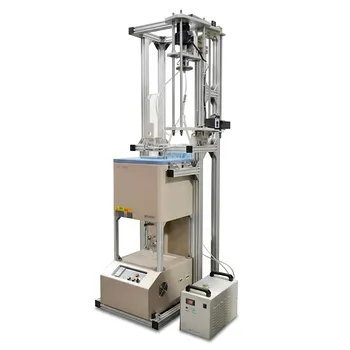
500C Vacuum Vertical Tube Furnace 84mm OD Sample Rotation Lifting System

1750°C High Temperature Benchtop Vacuum Atmosphere Tube Furnace with Kanthal Super 1800 Heating Elements and 60mm Alumina Processing Tube
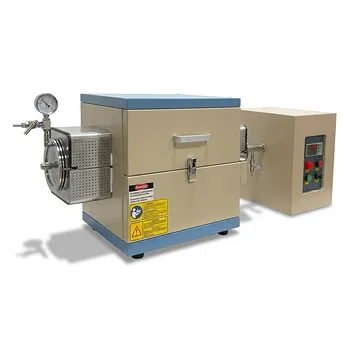
1200C High Temperature 5 Inch Split Vacuum Tube Furnace with 12 Inch Heating Zone and Separated PID Controller
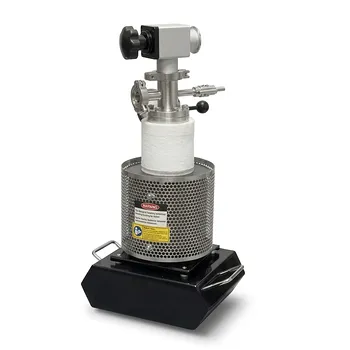
High Temperature 1100C Compact Top Loading Vertical Vacuum Tube Furnace for High Vacuum Noble Metal Melting and Material Research
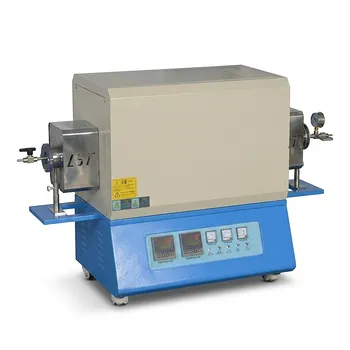
High Temperature Dual Zone Vacuum Tube Furnace for Material Research and CVD Processing

High Temperature 1700C Tube Furnace with High Vacuum Turbomolecular Pump System and Multi Channel Mass Flow Controller Gas Mixer

Vertical 1700C Vacuum and Atmosphere Tube Furnace with 80mm Alumina Tube
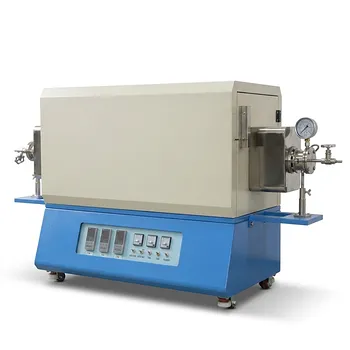
Three Temperature Zone High Temperature Vacuum Tube Furnace for CVD and Material Sintering

1100C Tube Furnace with Vacuum Flange and Programmable Temperature Controller for Material Science and Industrial Heat Treatment
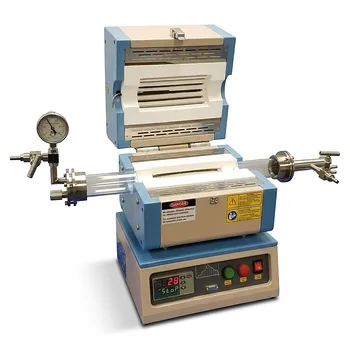
Compact Split Tube Furnace with Integrated Vacuum System and Precision Temperature Calibrator
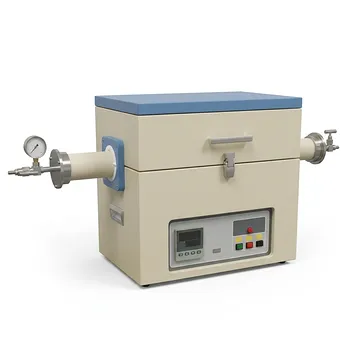
1250C Split Tube Furnace with 3 Inch Mullite Tube and Vacuum Sealing Flanges for Precision Thermal Processing
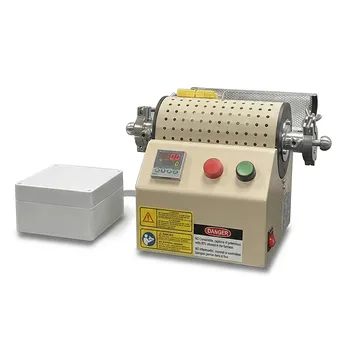
1000C Mini Tube Furnace with 20mm Quartz Tube and Vacuum Flanges for Material Science Research and Controlled Atmosphere Small Sample Processing

Compact High Temperature 1600C Tube Furnace with 50mm Alumina Tube and Vacuum Flanges for Material Sintering

Compact Vertical Split Quartz Tube Furnace with Stainless Steel Vacuum Flanges for Rapid Thermal Quenching and Controlled Atmosphere Material Processing
Vertical Openable Tube Furnace 0-1700c High Temperature Laboratory System for CVD and Vacuum Heat Treatment
Split Vertical Tube Furnace with 1200C Quartz Tube and Stainless Steel Vacuum Flanges for Rapid Thermal Processing

High Temperature 1700C Six Zone Split Tube Furnace with Alumina Tube and Water Cooled Flanges
