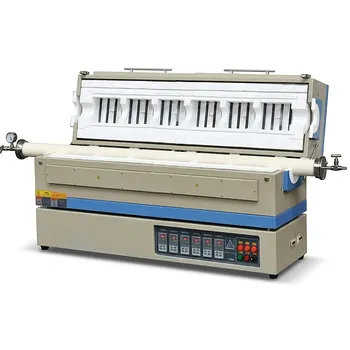
How a vacuum tube furnace treats FTO(p)/ZnS(p) heterojunctions: Optimize Purity & Ohmic Contact
Updated 3 months ago
The vacuum tube furnace creates a high-purity, thermally controlled environment that isolates the FTO(p)/ZnS(p) heterojunction from atmospheric interference. By maintaining a constant temperature of 150°C and an extremely low pressure of 0.001 mbar, the furnace facilitates a specific chemical and physical refinement of the thin films. This process is essential for purging contaminants and ensuring the structural integrity of the interface.
The vacuum tube furnace provides a dual-action environment of high heat and low pressure to prevent oxidation while simultaneously relieving internal stresses. This controlled post-treatment is the critical step in optimizing the crystal quality and ohmic contact characteristics of the FTO(p)/ZnS(p) heterojunction.
Establishing Atmospheric Purity
Prevention of Oxidation and Impurities
The primary role of the vacuum pump is to evacuate air from the furnace tube, creating a chemically inert environment. This prevents the FTO(p) and ZnS(p) layers from reacting with oxygen or moisture at elevated temperatures, which would otherwise introduce unwanted oxides or impurities into the thin-film structure.
Thermal Desorption of Interfacial Volatiles
At a pressure of 0.001 mbar, the furnace effectively drives the physical desorption of residual water molecules and solvent residues trapped between the layers. Removing these adsorbed gases is vital for eliminating background interference and ensuring that the two materials achieve intimate contact at the atomic level.
Driving Structural and Electrical Refinement
Elimination of Internal Film Stresses
As the heterojunction is held at 150°C, the thermal energy allows the atoms within the thin films to reorganize, which eliminates internal stresses caused during the initial deposition. This stress relief prevents cracking or delamination, ensuring the long-term mechanical stability of the composite sample.
Optimization of Ohmic Contact
The furnace environment facilitates the refinement of the interface between the FTO and ZnS layers. By improving the crystal quality and reducing interfacial stress gradients, the treatment optimizes the ohmic contact characteristics, which is essential for efficient charge carrier transport across the heterojunction.
Crystallinity and Grain Reorganization
Controlled heating induces grain merging and reorganization within the thin films. This modification of the grain boundary density helps to stabilize the material's electrical properties and can improve the overall crystallinity, leading to better device performance in optoelectronic applications.
Understanding the Trade-offs
The Risk of Thermal Over-Processing
While heat treatment is beneficial, excessive temperatures or prolonged exposure can lead to the unwanted diffusion of atoms across the interface. This can blur the heterojunction boundary and degrade the device's switching or conductive properties.
Vacuum Maintenance and Leakage
Maintaining a consistent pressure of 0.001 mbar requires high-quality seals and reliable vacuum pumps. Any micro-leaks during the annealing process can introduce oxygen, leading to localized oxidation that compromises the uniformity of the thin film and ruins the ohmic contact.
How to Apply This to Your Project
Recommendations for Post-Treatment Success
Successful post-treatment requires balancing the vacuum depth with precise temperature soaking times to achieve the desired material characteristics.
- If your primary focus is maximizing electrical conductivity: Prioritize the optimization of the ohmic contact by ensuring the furnace maintains a stable 150°C to facilitate proper interface refinement.
- If your primary focus is material purity: Ensure the vacuum system reaches the 0.001 mbar threshold before initiating the heating cycle to guarantee the complete removal of moisture and solvents.
- If your primary focus is structural longevity: Focus on the slow cooling of the samples within the vacuum environment to prevent the re-introduction of thermal stresses during the ramp-down phase.
By precisely controlling the vacuum and thermal energy, the tube furnace transforms a raw composite into a high-performance heterojunction.
Summary Table:
| Feature | Process Action | Research Benefit |
|---|---|---|
| Vacuum (0.001 mbar) | Removal of air and volatiles | Prevents oxidation and ensures high-purity interfaces |
| Thermal Control (150°C) | Reorganization of atoms | Eliminates internal film stress and prevents delamination |
| Atmosphere Purity | Inert experimental environment | Removes moisture to ensure atomic-level contact |
| Structural Refinement | Grain merging and growth | Optimizes ohmic contact and electrical performance |
Elevate Your Material Research with THERMUNITS
As a leading manufacturer of high-temperature laboratory equipment for material science and industrial R&D, THERMUNITS provides the precision thermal solutions required for advanced thin-film post-treatments. Our comprehensive range of equipment ensures the vacuum integrity and thermal stability necessary for optimizing FTO(p)/ZnS(p) heterojunctions.
Our Specialized Solutions Include:
- Furnaces: Muffle, Vacuum, Atmosphere, Tube, Rotary, and Hot Press furnaces.
- Advanced Systems: CVD/PECVD systems and Vacuum Induction Melting (VIM) furnaces.
- Specialty Equipment: Dental Furnaces, electric rotary kilns, and high-quality Thermal Elements.
Ready to achieve superior crystalline quality and interface stability in your experiments? Contact us today to discuss your specific heat treatment requirements!
References
- Ahmad Aljader. Fabrication of FTO(P)/ZNS(P)/SI(N) Heterojunction and Study of Its Structural, Optical and Electrical Properties. DOI: 10.52783/pst.953
Mentioned Products
- 1800C High Temperature Compact Vacuum Tube Furnace with 60mm OD Alumina Tube and Kanthal MoSi2 Heating Elements
- High Vacuum Compact Tube Furnace 1200C with Integrated Turbo Pump System and 8 Inch Heating Zone
- 500C Vacuum Vertical Tube Furnace 84mm OD Sample Rotation Lifting System
- 1750°C High Temperature Benchtop Vacuum Atmosphere Tube Furnace with Kanthal Super 1800 Heating Elements and 60mm Alumina Processing Tube
- 1200C High Temperature 5 Inch Split Vacuum Tube Furnace with 12 Inch Heating Zone and Separated PID Controller
People Also Ask
- What core functions does a high-temperature vacuum tube furnace provide? Optimize np-CuSn Sintering & Joint Integrity
- What is the primary function of a high-temperature tube furnace in Cu1-N-C synthesis? Precision Thermal Control.
- What impact does the heating rate of a tube furnace have on biochar microstructure? Optimize Your Material R&D.
- Role of Tube Furnace in KNNLST Ceramic Synthesis: Achieve High Phase Purity and Thermal Uniformity
- What is the role of a high-temperature tube furnace in the preparation of S-C3N4? Master Precision Material Synthesis

Tech Team · ThermUnits
Last updated on Jun 03, 2026
Related Products

1800C High Temperature Compact Vacuum Tube Furnace with 60mm OD Alumina Tube and Kanthal MoSi2 Heating Elements
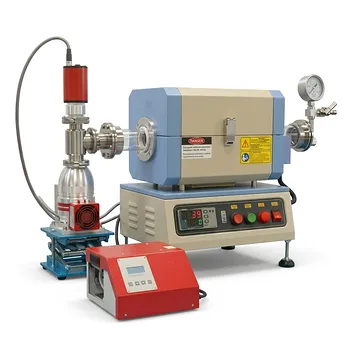
High Vacuum Compact Tube Furnace 1200C with Integrated Turbo Pump System and 8 Inch Heating Zone
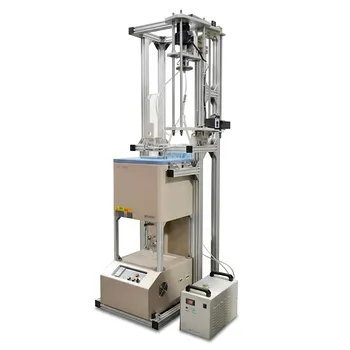
500C Vacuum Vertical Tube Furnace 84mm OD Sample Rotation Lifting System
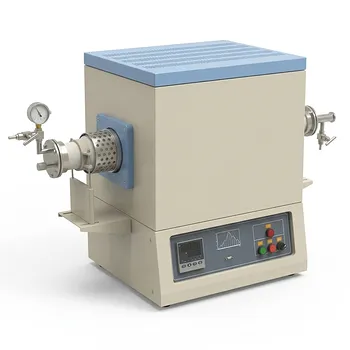
1750°C High Temperature Benchtop Vacuum Atmosphere Tube Furnace with Kanthal Super 1800 Heating Elements and 60mm Alumina Processing Tube
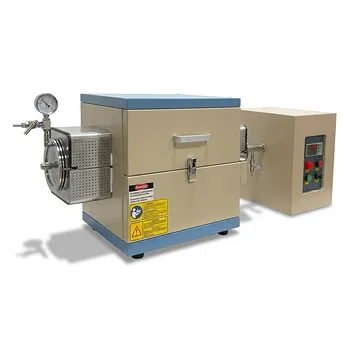
1200C High Temperature 5 Inch Split Vacuum Tube Furnace with 12 Inch Heating Zone and Separated PID Controller
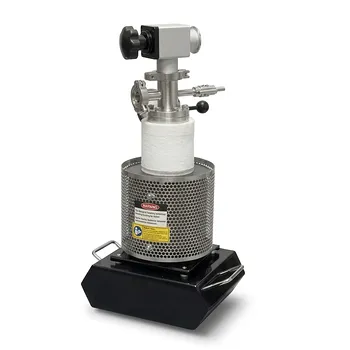
High Temperature 1100C Compact Top Loading Vertical Vacuum Tube Furnace for High Vacuum Noble Metal Melting and Material Research
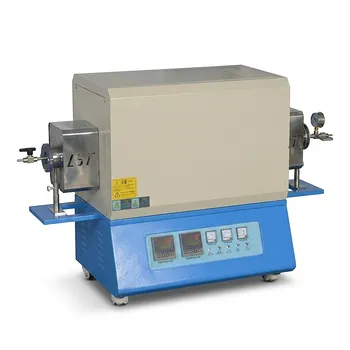
High Temperature Dual Zone Vacuum Tube Furnace for Material Research and CVD Processing
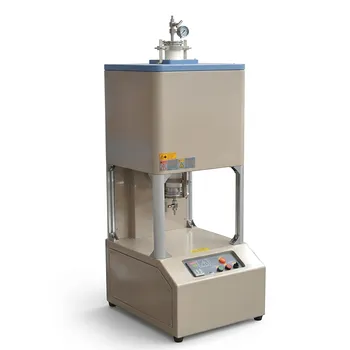
Vertical 1700C Vacuum and Atmosphere Tube Furnace with 80mm Alumina Tube

High Temperature 1700C Tube Furnace with High Vacuum Turbomolecular Pump System and Multi Channel Mass Flow Controller Gas Mixer
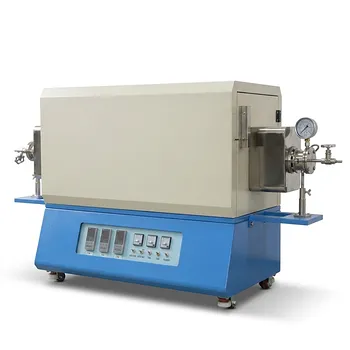
Three Temperature Zone High Temperature Vacuum Tube Furnace for CVD and Material Sintering

1100C Tube Furnace with Vacuum Flange and Programmable Temperature Controller for Material Science and Industrial Heat Treatment
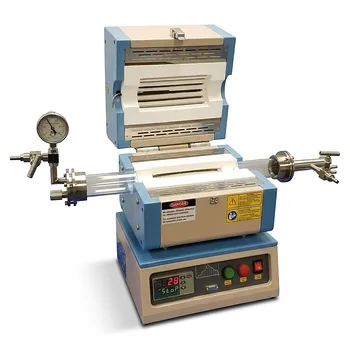
Compact Split Tube Furnace with Integrated Vacuum System and Precision Temperature Calibrator
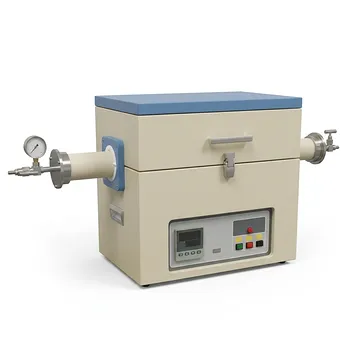
1250C Split Tube Furnace with 3 Inch Mullite Tube and Vacuum Sealing Flanges for Precision Thermal Processing
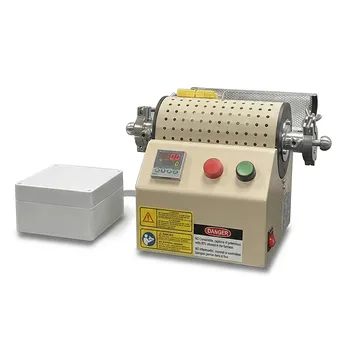
1000C Mini Tube Furnace with 20mm Quartz Tube and Vacuum Flanges for Material Science Research and Controlled Atmosphere Small Sample Processing

Compact High Temperature 1600C Tube Furnace with 50mm Alumina Tube and Vacuum Flanges for Material Sintering
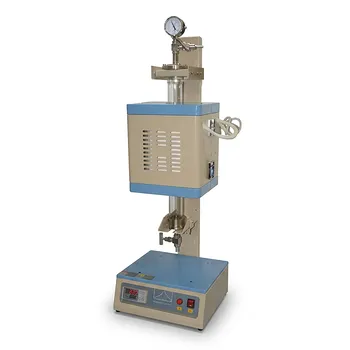
Compact Vertical Split Quartz Tube Furnace with Stainless Steel Vacuum Flanges for Rapid Thermal Quenching and Controlled Atmosphere Material Processing
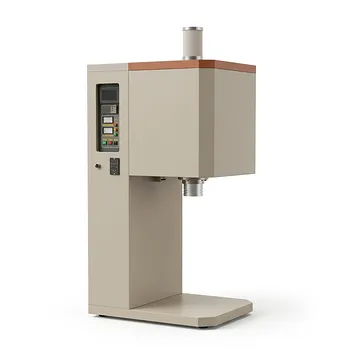
Vertical Openable Tube Furnace 0-1700c High Temperature Laboratory System for CVD and Vacuum Heat Treatment
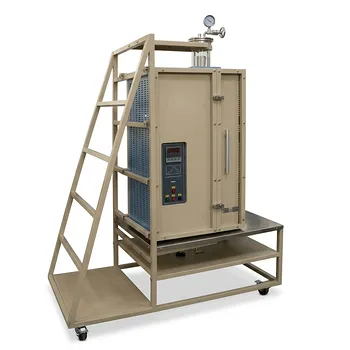
Split Vertical Tube Furnace with 1200C Quartz Tube and Stainless Steel Vacuum Flanges for Rapid Thermal Processing

High Temperature 1700C Vertical Tube Furnace for Powder Spherification and Material Sintering