How does an Atmosphere Control Tube Furnace facilitate the conversion of Lithium Cobalt Oxide? Expert Recovery Guide
Updated 3 months ago
The Atmosphere Control Tube Furnace (ACTF) acts as a high-precision thermal reactor that enables the sustainable reduction of Lithium Cobalt Oxide (LiCoO2) by creating a strictly controlled, oxygen-free environment. By maintaining a stable nitrogen atmosphere at temperatures between 400 °C and 800 °C, the furnace facilitates the pyrolysis of biomass—such as spent coffee grounds—into active reducing agents. These agents, including biochar, hydrogen, and carbon monoxide, interact directly with the LiCoO2 to convert it into Lithium Carbonate (Li2CO3) and Cobalt or Cobalt Oxide (Co/CoO) through efficient gas-solid synergy.
The core takeaway is that the Atmosphere Control Tube Furnace provides the essential inert environment and thermal stability required to harness biomass-derived reducing agents, lowering the energy threshold for lithium and cobalt recovery while preventing the unintended oxidation of reaction products.
The Role of Atmospheric Precision in Biomass Reduction
Creating an Inert Shield for Pyrolysis
The furnace utilizes a high-purity nitrogen atmosphere to displace oxygen within the reaction chamber. This is critical because it prevents the biomass (spent coffee grounds) from undergoing simple combustion, which would otherwise consume the carbon content before it could react with the lithium.
By excluding oxygen, the furnace ensures the biomass undergoes thermal degradation, increasing its elemental carbon content and forming a preliminary microporous structure. This environment allows the organic components to transform into a stable carbon skeleton rather than ash.
Generating In-Situ Reducing Agents
Within the temperature range of 400 °C to 800 °C, the ACTF drives the pyrolysis of biomass to produce a specific suite of chemicals. These include biochar, hydrogen (H2), and carbon monoxide (CO), all of which are potent reducing agents.
Because the furnace is a closed system with precise flow control, these gases are held in direct contact with the Lithium Cobalt Oxide. This "gas-solid synergy" is the mechanism that allows the chemical conversion to occur more efficiently than it would in a standard furnace.
Facilitating Phase Transformation
The ACTF's ability to maintain a specific chemical reducing atmosphere is vital for adjusting the phase composition of the final material. As the reducing agents interact with the LiCoO2, they strip away oxygen, facilitating the transition of the lithium into a carbonate form and the cobalt into a metallic or oxide state.
This controlled environment also manages oxygen partial pressure, which is necessary to prevent the transition metals from reverting to undesirable oxidation states. The result is a high-yield recovery of battery-grade materials with specific, target crystal structures.
Understanding the Trade-offs and Challenges
Temperature Sensitivity and Material Integrity
Operating at the lower end of the spectrum (near 400 °C) may result in incomplete conversion, while the higher end (800 °C) can lead to reductive exsolution. This can generate highly dispersed metallic nanoparticles, which may be beneficial for catalysis but can complicate certain recycling separation processes.
Precise control of the heating rate is also necessary to prevent the loss of carbon materials too early in the process. If the temperature rises too quickly, the volatile impurities may escape before they can contribute to the reduction of the Lithium Cobalt Oxide.
Management of Reaction Byproducts
The reduction process inherently generates byproducts such as carbon dioxide (CO2) and water vapor. If these are not managed by the furnace's atmosphere control system, they can interfere with the sintering environment and stall the reduction reaction.
Continuous regulation is required to ensure these byproducts are removed from the environment. Failure to do so can shift the chemical equilibrium, leading to a final product with inconsistent stoichiometry or morphology.
Implementing Effective Reduction Strategies
How to Apply This to Your Project
To achieve the most efficient conversion of Lithium Cobalt Oxide using an Atmosphere Control Tube Furnace, consider your specific material recovery goals:
- If your primary focus is maximizing lithium recovery: Target the 400-600 °C range with a high-purity nitrogen flow to ensure the formation of stable Lithium Carbonate without excessive sintering.
- If your primary focus is producing metallic cobalt nanoparticles: Operate at higher temperatures (approximately 800 °C) using a hydrogen/nitrogen gas mixture to induce reductive exsolution and structural transformation.
- If your primary focus is biomass efficiency: Utilize a slow heating rate (ramping up to 450 °C) to maximize the initial formation of the porous carbon skeleton before reaching peak reduction temperatures.
By masterfully balancing thermal energy with precise atmospheric chemistry, the Atmosphere Control Tube Furnace transforms spent biomass into a powerful tool for high-value mineral recovery.
Summary Table:
| Key Feature | Functional Role in Conversion | Benefit/Outcome |
|---|---|---|
| Inert Atmosphere | Displaces oxygen using high-purity nitrogen | Prevents biomass combustion; enables pyrolysis |
| Temperature Control | Stable range between 400°C and 800°C | Facilitates phase transformation & stoichiometry |
| Gas-Solid Synergy | Maintains contact with biochar, H2, and CO | Efficient reduction of LiCoO2 into Li2CO3 and Co |
| Byproduct Removal | Continuous regulation of CO2 and water vapor | Prevents reaction stalling; ensures material purity |
| Heating Rate Control | Managed thermal ramping | Maximizes carbon skeleton formation and yield |
Elevate Your Material Recovery with THERMUNITS Precision
Are you looking to optimize your biomass reduction processes or mineral recovery yields? THERMUNITS is a leading manufacturer of high-temperature laboratory equipment specifically designed for advanced material science and industrial R&D. Our high-precision Atmosphere Control Tube Furnaces provide the critical thermal stability and atmospheric purity required for complex chemical conversions like Lithium Cobalt Oxide reduction.
Beyond tube furnaces, we offer a comprehensive suite of thermal processing solutions tailored to your research needs:
- Furnace Types: Muffle, Vacuum, Atmosphere, Rotary, Hot Press, and Dental Furnaces.
- Advanced Systems: CVD/PECVD systems, Vacuum Induction Melting (VIM) furnaces, and Electric Rotary Kilns.
- Support: High-quality Thermal Elements and specialized heat treatment accessories.
Ready to enhance your lab's efficiency and achieve battery-grade recovery results?
Contact THERMUNITS Today to Discuss Your Project
References
- Md. Anik Hasan, Veena Sahajwalla. Sustainable regeneration of cathode active materials from spent lithium-ion batteries by repurposing waste coffee powder. DOI: 10.1039/d4gc05048g
Mentioned Products
- 1200°C Atmosphere Controlled Automatic Bottom Loading Furnace with 6 Inch Quartz Tube
- Compact Vertical Split Quartz Tube Furnace with Stainless Steel Vacuum Flanges for Rapid Thermal Quenching and Controlled Atmosphere Material Processing
- Compact Hybrid Muffle and Tube Furnace for 1000C Controlled Atmosphere Laboratory Material Sintering
- 1700C Compact Hybrid Furnace with Dual Layer Box Sintering and Controlled Atmosphere Alumina Tubes
- 1700C High Temperature Alumina Tube Furnace with 18 Inch Heated Zone and Vacuum Sealing Flanges
People Also Ask
- Why is a tube furnace required for FGM-PhG structural color ceramics? Key to Carbon Preservation & Vibrant Color
- Why is an atmosphere-controlled tube furnace required for the pre-sulfidation of NiMo/gamma-Al2O3 catalysts?
- Why is an atmosphere-controlled tube furnace required for 800 °C CNF annealing? Essential for Oxidative Protection.
- Why is an atmosphere-controlled tube furnace required for [email protected]/C preparation? Key for Purity & Structure
- Why is an atmosphere-controlled tube furnace required for single-atom sensor calcination? Ensure Atomic Dispersion.

Tech Team · ThermUnits
Last updated on Jun 03, 2026
Related Products
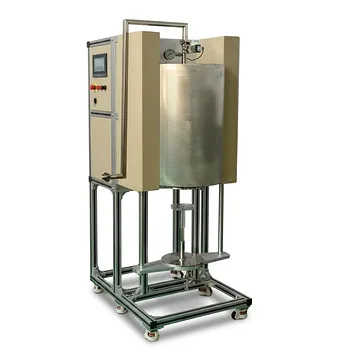
1200°C Atmosphere Controlled Automatic Bottom Loading Furnace with 6 Inch Quartz Tube

Compact Vertical Split Quartz Tube Furnace with Stainless Steel Vacuum Flanges for Rapid Thermal Quenching and Controlled Atmosphere Material Processing
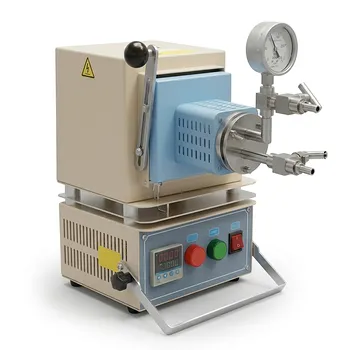
Compact Hybrid Muffle and Tube Furnace for 1000C Controlled Atmosphere Laboratory Material Sintering
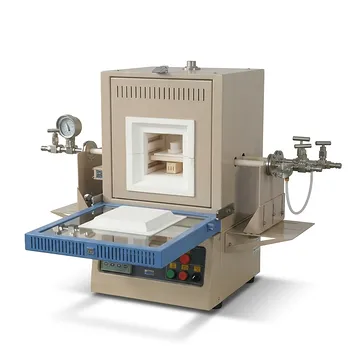
1700C Compact Hybrid Furnace with Dual Layer Box Sintering and Controlled Atmosphere Alumina Tubes
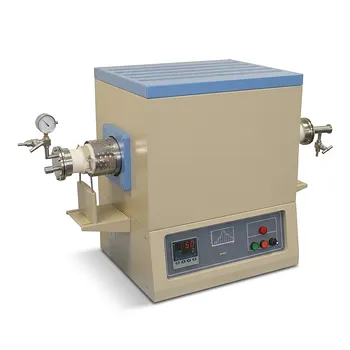
1700C High Temperature Alumina Tube Furnace with 18 Inch Heated Zone and Vacuum Sealing Flanges
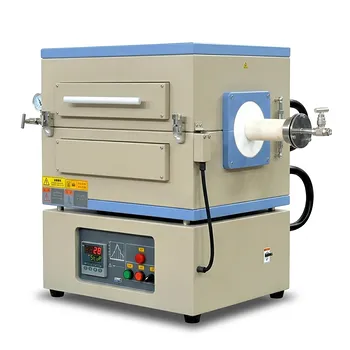
1500°C Split Tube Furnace with Alumina Tube and Vacuum Sealing Flanges for Material Research

Vertical 1700C Vacuum and Atmosphere Tube Furnace with 80mm Alumina Tube
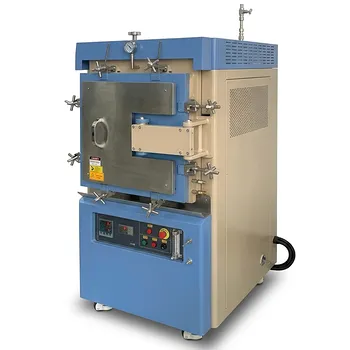
Atmosphere Controlled Muffle Furnace 1700C Maximum Temperature 80L High Capacity Vacuum Inert Gas Box Furnace
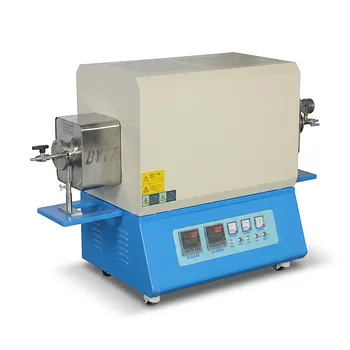
High Temperature Dual Zone Split Tube Furnace for Advanced Atmosphere Sintering and Vacuum CVD Applications

Three Zone Tube Furnace with 11 Inch or 15 Inch Quartz Tube and Hinged Flanges for Vacuum Atmosphere Heat Treatment
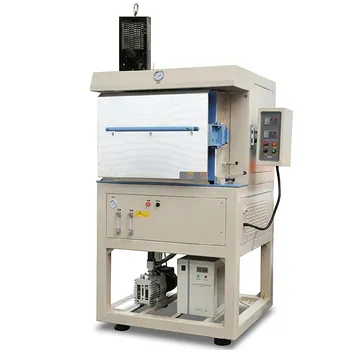
1200C Hydrogen Atmosphere Box Furnace with 5 Heated Sides and 64L Chamber
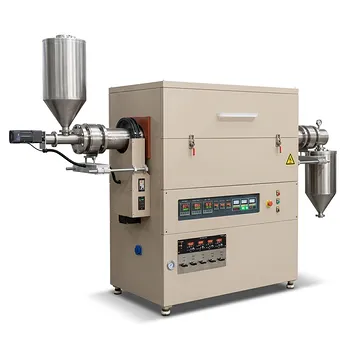
High Temperature Tilting Rotary Tube Furnace with Integrated Mass Flow Control and Multi Zone Heating
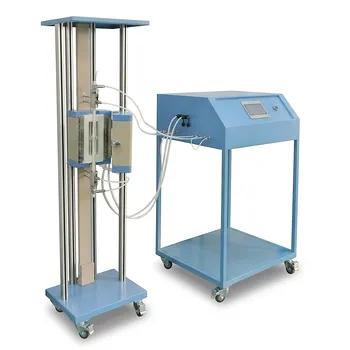
High Temperature Vertical Tube Furnace for Small Solid Oxide Fuel Cell Testing with Four Channel Gas Control

High Temperature 1700C Tube Furnace with High Vacuum Turbomolecular Pump System and Multi Channel Mass Flow Controller Gas Mixer
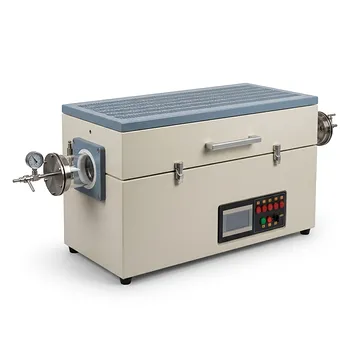
Five Zone 1200C High Temperature Split Tube Furnace with Touch Screen Controller and Multiple Quartz Tube Options
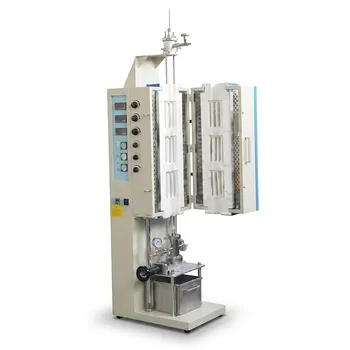
High Temperature Dual Zone Tube Furnace for Material Science Research and Professional Thermal Processing
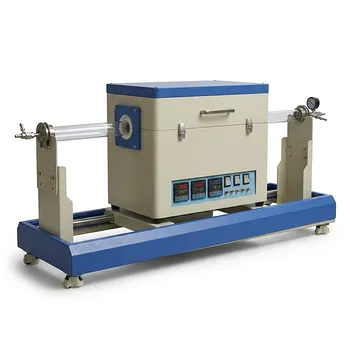
Double Temperature Zone Double Cover Tube Furnace for High Temperature CVD and Vacuum Annealing

High Temperature 1700C Vertical Tube Furnace for Powder Spherification and Material Sintering
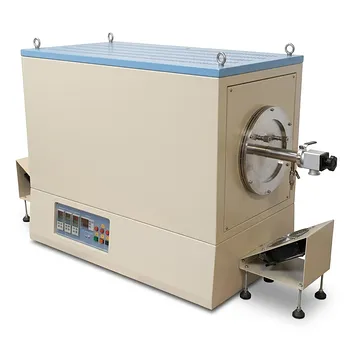
Four Zone Tube Furnace 1100C with 600mm Large Diameter Quartz Tube and Vacuum Flanges
