How does a tube furnace facilitate copper outflow in Cu/W nano-multilayers? Precision Heating for Nano-Engineering
Updated 3 months ago
The precision of an industrial-grade laboratory tube furnace is the catalyst that enables copper atoms to escape their structural confinement. By providing a stable thermal environment at specific temperatures—typically around 500°C—the furnace supplies the exact activation energy required for copper atoms to migrate from the internal nano-multilayers toward the surface.
An industrial-grade tube furnace facilitates the directional outflow of copper by acting as a highly controlled energy source. It creates a specific thermal and atmospheric state that triggers solid-state diffusion, allowing copper atoms to move through the tungsten layers without compromising the overall material integrity.
The Mechanism of Thermal Activation
Overcoming the Energy Barrier
Copper atoms within a Cu/W nano-multilayer are held in place by atomic bonds that require a specific threshold of energy to break. The tube furnace provides precise thermal energy that allows these atoms to overcome their bonding constraints and begin the process of diffusion.
The Role of Temperature Maintenance
Consistency is critical, as a stable temperature of 500°C provides the sustained kinetic energy necessary for atoms to travel through the lattice. If the temperature fluctuates, the diffusion process may stall or become non-uniform, leading to structural defects in the nano-layers.
Time-Dependent Migration
The duration of the heat treatment, often reaching 100 minutes, ensures that the copper atoms have sufficient time to reach the surface. This prolonged exposure at a steady state allows for a complete and predictable "outflow" rather than a chaotic or partial migration.
Environmental Control and Material Integrity
Prevention of Matrix Oxidation
Industrial-grade furnaces utilize controlled gas atmospheres, such as argon or vacuum environments, to protect the samples during heating. This is vital because copper is highly susceptible to oxidation at high temperatures, which would create an oxide layer and block the directional flow of atoms.
Ensuring Microstructural Uniformity
The stable temperature control system of a tube furnace ensures that the evolution of the microstructure occurs evenly across the entire sample. By avoiding thermal gradients, the furnace ensures that the copper atoms migrate at a consistent rate from all parts of the multilayer structure.
Facilitating Metallurgical Bonding
At higher temperatures, such as those used in sintering (up to 900°C), the furnace promotes atomic diffusion and metallurgical bonding. While the goal in nano-multilayers is often surface migration, the furnace's ability to manage these high-energy states is what allows for the dense, solid formation of the remaining composite.
Understanding the Trade-offs
Temperature Overshoot and Degradation
Exceeding the required temperature can lead to the total breakdown of the nano-multilayer structure rather than a controlled outflow. If the heat is too intense, the tungsten layers may lose their structural definition, causing the materials to alloy prematurely.
Atmospheric Contamination
If the furnace seals are compromised or the gas purity is low, trace oxygen can halt the diffusion process. Surface oxidation acts as a physical barrier, effectively "trapping" the copper atoms inside the tungsten matrix and ruining the intended surface enrichment.
Duration vs. Structural Stability
While 100 minutes is a standard benchmark, excessive time in the furnace can lead to grain growth. This can change the mechanical properties of the Cu/W composite, potentially making the material more brittle or less effective for its intended application.
How to Apply This to Your Project
When utilizing a tube furnace for atomic diffusion in nano-composites, your approach must align with your specific metallurgical goals.
- If your primary focus is surface enrichment: Maintain a strict 500°C threshold for approximately 100 minutes to ensure copper atoms migrate outward without altering the underlying tungsten layers.
- If your primary focus is material density and bonding: Increase the furnace temperature toward 900°C within an argon-protected atmosphere to facilitate sintering and metallurgical bonding.
- If your primary focus is preventing contamination: Prioritize a furnace with high-vacuum capabilities or ultra-high purity gas flow to eliminate the risk of copper oxidation during the migration phase.
By precisely balancing temperature, time, and atmosphere, the laboratory tube furnace transforms from a simple heater into a precision tool for atomic-scale engineering.
Summary Table:
| Parameter | Optimal Condition | Role in Cu/W Processing |
|---|---|---|
| Migration Temp | 500°C | Provides activation energy for copper atom diffusion |
| Sintering Temp | Up to 900°C | Promotes metallurgical bonding and material density |
| Treatment Time | ~100 Minutes | Ensures complete, uniform migration to the surface |
| Atmosphere | Argon / Vacuum | Prevents oxidation and ensures structural integrity |
Elevate Your Material Science R&D with THERMUNITS
Precision is paramount in nano-scale engineering. As a leading manufacturer of high-temperature laboratory equipment, THERMUNITS provides the advanced thermal solutions required for complex processes like atomic diffusion, sintering, and CVD/PECVD.
Our comprehensive range—including Tube, Vacuum, Atmosphere, and Hot Press furnaces, as well as VIM and Rotary kilns—is designed to deliver the stable thermal environments and strict atmospheric control your research demands. Don't let thermal instability or oxidation compromise your material integrity. Partner with THERMUNITS to achieve consistent, high-quality results in your heat treatment applications.
Contact our thermal processing experts today!
References
- Giacomo Lorenzin, Claudia Cancellieri. Controlled Directional Cu Outflow in Cu/W Nanomultilayers. DOI: 10.1007/s11665-024-09763-2
Mentioned Products
- High Throughput 1200C Four Channel Tube Furnace with 3 Inch Quartz Tubes for Multi Zone Annealing and Material Research
- 1200C High Throughput Multi Channel Tube Furnace with 50mm Quartz Tubes for Annealing and Material Phase Diagram Research
- 1100°C High Temperature Quartz Chamber Furnace 8 Inch OD with 7.6 Liter Capacity and Vacuum Atmosphere Capability
- Dual Zone Tube Furnace 1100C with 11 Inch Quartz Tube and Vacuum Flanges for 8 Inch Wafer Processing
- 1100°C Large Diameter Quartz Tube Furnace with 24 Inch Heating Zone and Water Cooled Flanges
People Also Ask
- Why is high-purity alumina selected for sample trays? Key to High-Throughput Sintering Success
- How does a high-throughput tube furnace achieve precise sulfurization? Expert Control for CoS2–Co(OH)F Nanostructures
- Why is a quartz tube furnace necessary for phosphorus-doped MoS2/GO preparation? Ensure Purity & Precise Synthesis
- Why is high-purity argon used as a flowing atmosphere during the catalyst carbonization process in a tube furnace? Role
- What role does an industrial programmable tube furnace play in preparing MXene/MWCNTs@C-Co microspheres? Expert Guide

Tech Team · ThermUnits
Last updated on Jun 02, 2026
Related Products
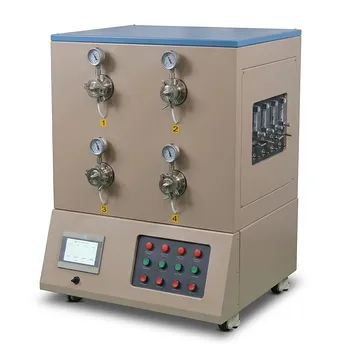
High Throughput 1200C Four Channel Tube Furnace with 3 Inch Quartz Tubes for Multi Zone Annealing and Material Research

1200C High Throughput Multi Channel Tube Furnace with 50mm Quartz Tubes for Annealing and Material Phase Diagram Research
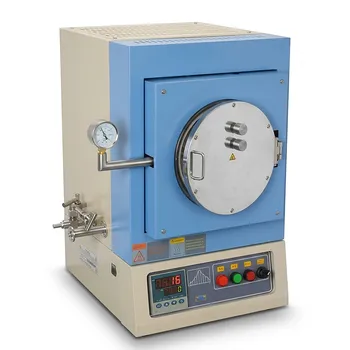
1100°C High Temperature Quartz Chamber Furnace 8 Inch OD with 7.6 Liter Capacity and Vacuum Atmosphere Capability
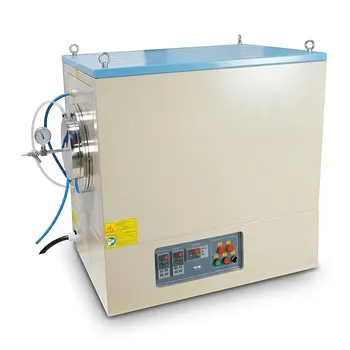
Dual Zone Tube Furnace 1100C with 11 Inch Quartz Tube and Vacuum Flanges for 8 Inch Wafer Processing
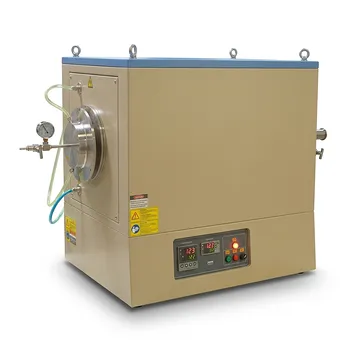
1100°C Large Diameter Quartz Tube Furnace with 24 Inch Heating Zone and Water Cooled Flanges

1200°C 5 Inch Vertical Quartz Tube Furnace with Stainless Steel Vacuum Flanges
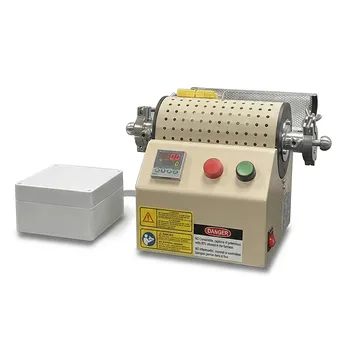
1000C Mini Tube Furnace with 20mm Quartz Tube and Vacuum Flanges for Material Science Research and Controlled Atmosphere Small Sample Processing
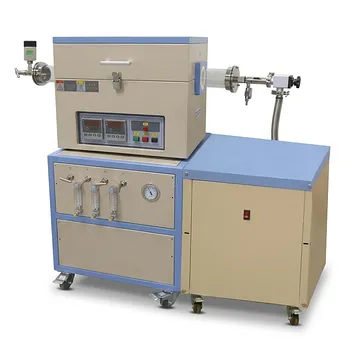
Dual Zone Quartz Tube Furnace with 80mm Diameter 1200C Max Temperature 3 Channel Gas Mixer and Vacuum Pump System
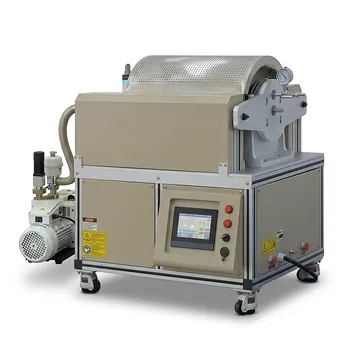
Automated 1200 C Tube Furnace for AI Material Research with 6 Inch OD and Sliding Flange
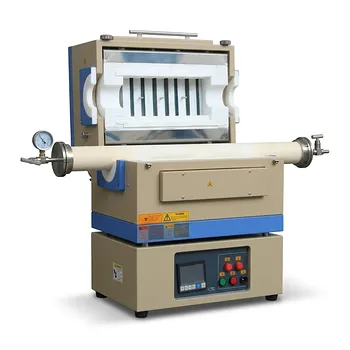
1500C Eight Zone Split Tube Furnace for Thermal Gradient Processing and Advanced Material Research
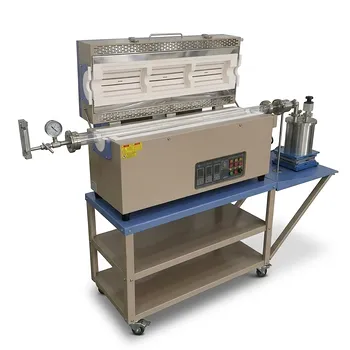
5 Inch Two Zone Rotary Tube Furnace 1100C for Powder CVD and Material Synthesis
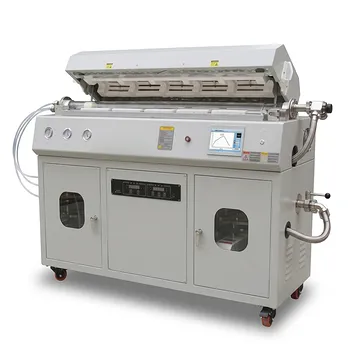
Multi Heating Zones CVD Tube Furnace System for Precision Chemical Vapor Deposition and Advanced Material Synthesis
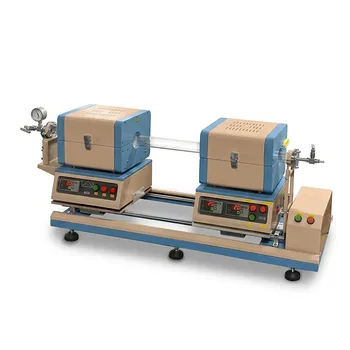
High Temperature 1200C Automatic Sliding Dual Zone Tube Furnace for 2D Transition Metal Dichalcogenides Growth and Material Sublimation Research
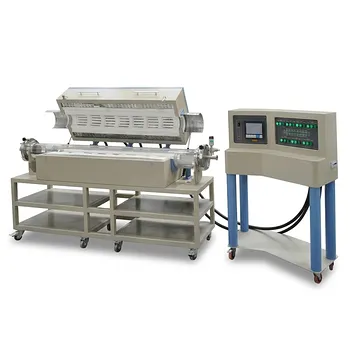
Seven Zone 1200C Split Tube Furnace with Precision Temperature Controller and Quick Flange Vacuum System

5 Inch Three Zone Rotary Tube Furnace with Integrated Gas Delivery System and 1200C Capability for Advanced Material CVD Processing
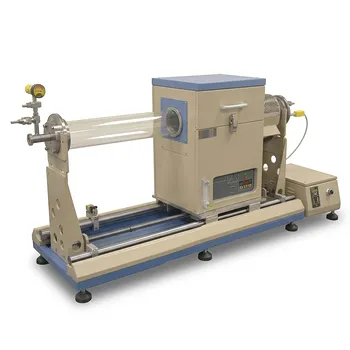
Rapid Thermal Processing Sliding Tube Furnace with 4 Inch OD Quartz Tube and 900C IR Heating
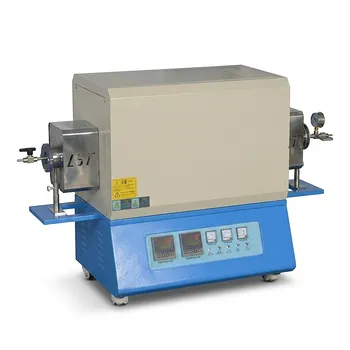
High Temperature Dual Zone Vacuum Tube Furnace for Material Research and CVD Processing
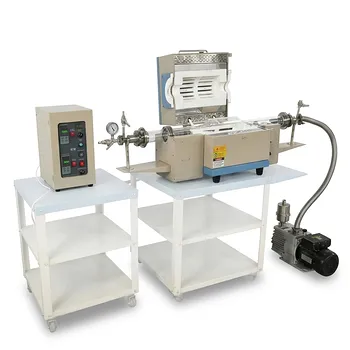
Two Zone Rotary Tube Furnace for Powder CVD Coating and Core Shell Material Synthesis 1100C

Three Zone Tube Furnace with 11 Inch or 15 Inch Quartz Tube and Hinged Flanges for Vacuum Atmosphere Heat Treatment
