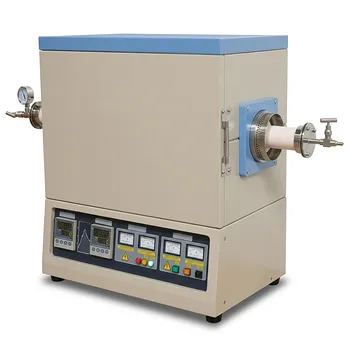
How does the temperature control precision of a programmable laboratory tube furnace affect the growth of beta-Yb2CdSb2 single crystals? Ensure Structural Purity
Updated 5 months ago
Precise temperature control in a programmable tube furnace is the fundamental requirement for the phase formation and structural integrity of $\beta$-Yb$_2$CdSb$_2$ single crystals. By meticulously regulating heating rates and maintaining isothermal stability, the furnace facilitates the necessary solid-state diffusion required for the atoms to arrange into a high-quality, periodic lattice suitable for X-ray structural characterization.
The core takeaway is that temperature precision serves as a kinetic regulator; it ensures that the energy levels within the furnace remain within the narrow window required for complete crystal development while preventing the formation of secondary phases or structural defects.
The Role of Precision in Solid-State Diffusion
Facilitating Atomic Migration
For $\beta$-Yb$_2$CdSb$_2$, high-precision control allows the furnace to maintain specific temperatures for extended durations. This "soaking" period is critical because it provides the thermal energy necessary for solid-state diffusion, where atoms move through the solid matrix to occupy their correct positions in the crystal lattice.
Ensuring Phase Purity
Without stable temperature maintenance, the material may not reach a state of equilibrium. Precise programming ensures that the transition to the $\beta$-phase is complete, preventing the "freezing in" of disordered structures or unwanted precursor phases that can degrade the sample quality.
Maximizing Sample Quality for Analysis
The primary goal of this thermal precision is the production of crystals high enough in quality for X-ray structural characterization. A stable thermal environment leads to well-defined crystal faces and a lack of internal voids, which are essential for accurate diffraction data.
Regulating Growth Kinetics and Nucleation
Managing the Thermal Processing Curve
A programmable furnace allows for a multi-stage heating program, which is essential for complex ternary compounds. By strictly executing specific holding temperatures, the furnace governs the kinetics of phase transformations, ensuring each component reacts in the correct sequence.
Controlling Supersaturation and Growth
In single crystal growth, the cooling rate is as vital as the heating rate. High-precision systems can achieve linear cooling rates as slow as 1°C to 5°C per hour. This slow decline inhibits "explosive nucleation"—where too many small crystals form at once—and instead promotes the steady growth of large, millimeter-scale single crystals.
Maintaining Thermal Field Stability
A high-precision furnace provides a stable thermal field, which is the spatial distribution of temperature within the tube. Stability in this field prevents localized temperature fluctuations that could cause the crystal to re-melt or crack during the delicate solidification process.
Minimizing Internal Structural Defects
Reducing Thermal Stress
Rapid or fluctuating temperature changes introduce internal thermal stress into the growing crystal lattice. Precision programming ensures that the transition from high temperatures to room temperature is gradual, significantly reducing the likelihood of cracks or fractures.
Inhibiting Dislocations
By maintaining a stable growth environment, the furnace minimizes dislocation defects—misalignments in the atomic rows. Low dislocation densities are a hallmark of high-quality crystals and are directly influenced by the linearity and precision of the furnace's cooling curve.
Achieving Smooth Surface Morphology
Crystals grown under precise thermal conditions typically exhibit flat surfaces and sharp edges. This superior morphology is a result of the crystal developing slowly along specific crystallographic directions without the interference of thermal turbulence.
Understanding the Trade-offs
Equipment Sensitivity and Calibration
High-precision programming is only as effective as the furnace's thermocouple calibration. If the sensor is slightly out of alignment or aged, the furnace may report a stable temperature that does not reflect the actual conditions inside the crucible, leading to failed growth despite "precise" settings.
Time vs. Throughput
Achieving the highest quality $\beta$-Yb$_2$CdSb$_2$ crystals often requires extremely long processing times, sometimes spanning several days or weeks. While this maximizes quality, it creates a bottleneck in laboratory throughput and increases the risk of equipment wear or power-related interruptions.
Ambient Influence
Even the most precise programmable furnaces can be affected by the ambient laboratory environment. If the room's cooling system cycles on and off, it can create micro-fluctuations in the furnace's insulation efficiency, which the control system must constantly work to counteract.
How to Apply This to Your Growth Project
Recommendations for Success
To achieve the best results when growing $\beta$-Yb$_2$CdSb$_2$ or similar complex crystals, your approach should be dictated by your specific research requirements.
- If your primary focus is X-ray diffraction and structural refinement: Prioritize the longest possible soaking times and the slowest cooling rates (1-2°C/h) to ensure maximum lattice perfection.
- If your primary focus is rapid phase identification: Utilize a multi-stage program with shorter holding times at intermediate temperatures to observe how the crystal structure evolves during the diffusion process.
- If your primary focus is large-scale physical property measurement: Focus on maintaining a highly stable thermal field within the furnace to grow millimeter-scale plate-like crystals with smooth surfaces.
Mastering the precision of your thermal curve is the single most effective way to transition from producing polycrystalline powders to high-quality, characterization-ready single crystals.
Summary Table:
| Impact Factor | Effect on Crystal Growth | Resulting Benefit |
|---|---|---|
| Temperature Precision | Regulates solid-state diffusion kinetics | High structural integrity and lattice perfection |
| Cooling Rate Control | Prevents explosive nucleation (1-5°C/h) | Growth of large, millimeter-scale single crystals |
| Thermal Stability | Reduces internal thermal stress and dislocations | Flat surfaces and superior crystal morphology |
| Soaking Period | Facilitates complete atomic migration | High-quality samples for X-ray characterization |
Elevate Your Material Research with THERMUNITS
Are you struggling with phase impurities or structural defects in your complex crystal growth? THERMUNITS is a leading manufacturer of high-temperature laboratory equipment dedicated to material science and industrial R&D. We provide the precision-engineered thermal solutions required to master delicate growth kinetics.
Our comprehensive range includes:
- Tube Furnaces & Rotary Kilns: Ideal for precise single crystal growth and solid-state diffusion.
- CVD/PECVD Systems: For advanced thin-film and nanomaterial synthesis.
- Specialized Units: Muffle, Vacuum, Atmosphere, Hot Press, and Dental furnaces.
- Advanced Equipment: Vacuum induction melting (VIM) and high-quality thermal elements.
Whether you are refining structural data or scaling physical property measurements, our equipment ensures the stability your research demands. Contact us today to find your ideal heat treatment solution!
References
- Spencer R. Watts, Sviatoslav Baranets. β-Yb2CdSb2—A Complex Non-Centrosymmetric Zintl Polymorph. DOI: 10.3390/cryst14110920
Mentioned Products
- High Temperature 1700C Vertical Split Tube Furnace for Material Quenching and Single Crystal Growth
- 1200C Dual Temperature Zone Slidable Tube Furnace for 2D Material Growth and TCVD Synthesis
- 1250C Compact Split Tube Furnace with 8 Inch Heating Zone and Programmable Controller
- High Temperature 1200C Automatic Sliding Dual Zone Tube Furnace for 2D Transition Metal Dichalcogenides Growth and Material Sublimation Research
- Multi Position Tube Furnace 1100C for Laboratory Material Research and Advanced Industrial Thermal Processing
People Also Ask
- What is the primary function of a high-temperature split tube furnace in nitrogen metastable particle research? Expert Guide
- What role does a high-temperature vertical tube furnace play in simulating high-carbon ferromanganese slag formation?
- Why integrate a vertical split tube furnace with hydraulic loading for HSECC? Essential for In-Situ Fire Simulation.
- What functions does a vertical high-temperature tube furnace perform? Master Industrial Sintering & R&D Simulation
- What is the role of a split vertical tube furnace during flash sintering of 8YSZ and 20SDC? Master Ultra-Fast R&D

Tech Team · ThermUnits
Last updated on Apr 14, 2026
Related Products
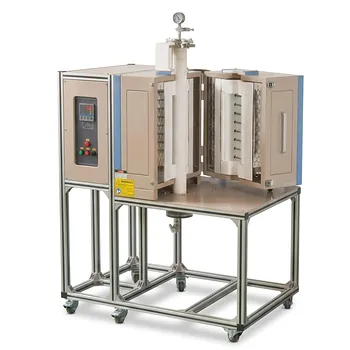
High Temperature 1700C Vertical Split Tube Furnace for Material Quenching and Single Crystal Growth
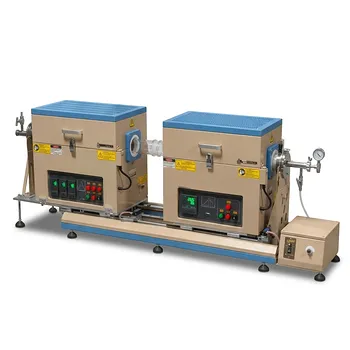
1200C Dual Temperature Zone Slidable Tube Furnace for 2D Material Growth and TCVD Synthesis
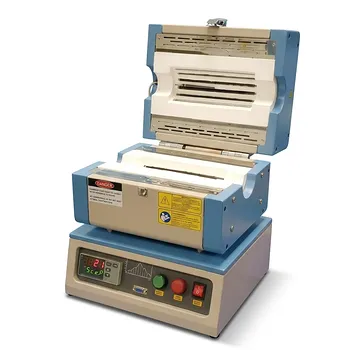
1250C Compact Split Tube Furnace with 8 Inch Heating Zone and Programmable Controller
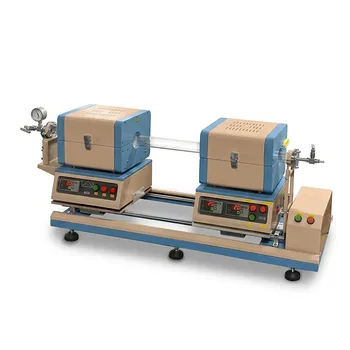
High Temperature 1200C Automatic Sliding Dual Zone Tube Furnace for 2D Transition Metal Dichalcogenides Growth and Material Sublimation Research
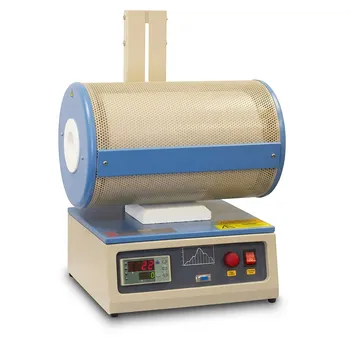
Multi Position Tube Furnace 1100C for Laboratory Material Research and Advanced Industrial Thermal Processing
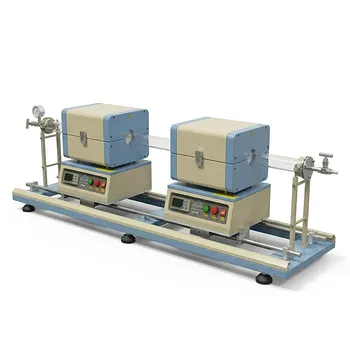
1200C Max Dual Sliding Tube Furnace with 50 mm Tube Flanges for CVD
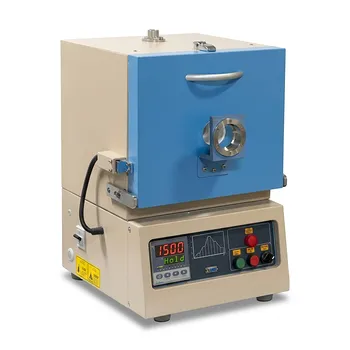
1500C Hybrid Muffle Tube Furnace 1.7L Box with 2 Inch Mullite Tube and Programmable PID Controller
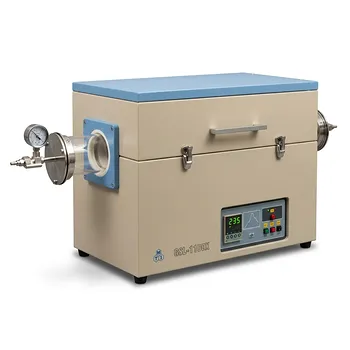
Single Zone Tube Furnace 5 Inch Quartz Tube 36 Inch Heating Zone Vacuum Flanges
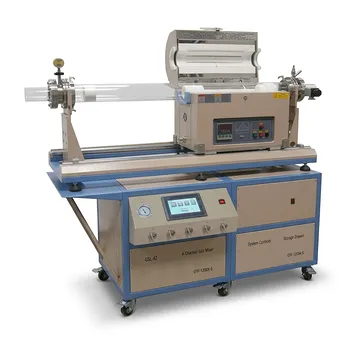
Dual Tube 100mm 80mm CVD Sliding Furnace with 4 Channel Gas Mixing and Vacuum System
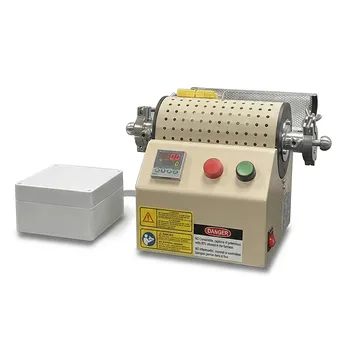
1000C Mini Tube Furnace with 20mm Quartz Tube and Vacuum Flanges for Material Science Research and Controlled Atmosphere Small Sample Processing
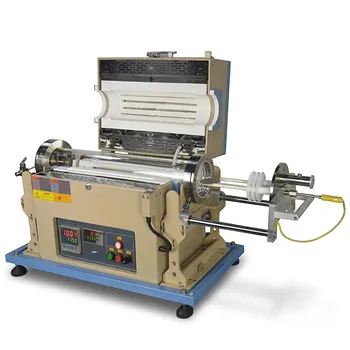
1200°C High Temperature 4 Inch Tube Furnace with Sliding Flange for CVD Systems
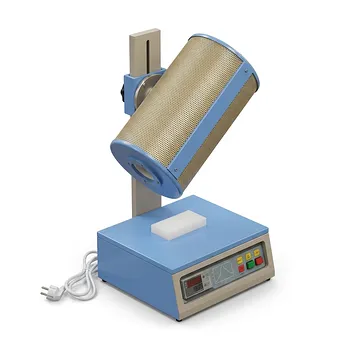
1100°C Vertical Laboratory Furnace for DIY Tubular Reactors with PID Temperature Controller

1800C High Temperature Compact Vacuum Tube Furnace with 60mm OD Alumina Tube and Kanthal MoSi2 Heating Elements
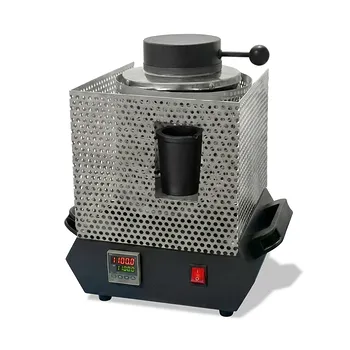
Compact Crucible Melting Furnace 1100C Programmable Temperature Controller Metal Sintering Equipment
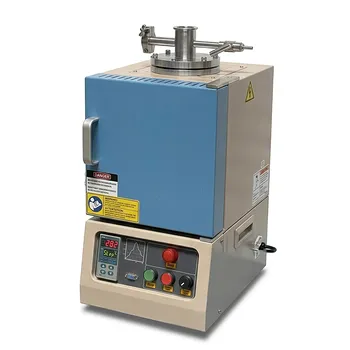
High Temperature Hybrid Muffle and Tube Furnace with Vacuum Capability and PID Control
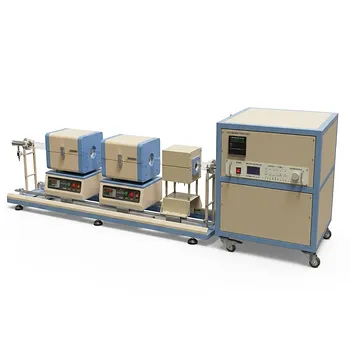
1200C Dual Sliding Tube Furnace with Dual Tubes and Flanges for PECVD Processes
1700C High Temperature Alumina Tube Furnace with 18 Inch Heated Zone and Vacuum Sealing Flanges
1200C Tube Furnace with Internal Magnetic Sample Sliding for Direct Vaporizing Deposition and Rapid Thermal Processing

High Temperature 1700C Vertical Tube Furnace for Powder Spherification and Material Sintering