What are the advantages of using a quartz tube furnace for TiOx annealing? Ensure Purity & Precise Interface Control
Updated 3 months ago
A quartz tube furnace is the industry standard for TiOx annealing because it provides a hermetically sealed, chemically inert environment that simultaneously prevents contamination and allows for the precise manipulation of interface chemistry. By leveraging either an inert nitrogen ($N_2$) or a reducing forming gas (FGA) atmosphere, these furnaces enable the activation of chemical and field-effect passivation while inducing the specific oxygen vacancies required for optimal electron selectivity in semiconductor applications.
A quartz tube furnace acts as a high-purity reactor that facilitates the delicate atomic-level repairs needed to optimize TiOx coatings. Its primary value lies in its ability to maintain a strictly controlled thermal and gaseous field, which is essential for transforming a raw coating into a high-performance functional layer.
Superior Atmospheric Integrity and Purity
Prevention of Unwanted Oxidation
The primary advantage of a quartz tube furnace is its ability to function as a sealed chamber, isolating the $TiO_x$ film from ambient oxygen. This is critical because $TiO_x$ and underlying silicon interfaces are highly sensitive to uncontrolled oxidation, which can degrade the film’s electrical properties.
Chemical Inertness of Fused Quartz
Fused quartz tubes offer exceptional chemical inertness, ensuring that no impurities from the furnace walls leach into the $TiO_x$ coating at high temperatures. This high-purity environment is vital for maintaining the integrity of the thin film, especially when using high-purity $N_2$ to prevent phase transitions or unintended chemical reactions.
Thermal Shock Resistance and Monitoring
Quartz possesses excellent thermal shock resistance, allowing for stable performance during the rapid heating or cooling cycles often required in thin-film processing. Additionally, the transparency of the quartz allows researchers to visually monitor the crucible or the physical state of the materials without breaching the vacuum or internal atmosphere.
Precision Interface Engineering
Activation of Passivation Mechanisms
Annealing in a quartz tube furnace facilitates both chemical and field-effect passivation at the $Si/SiO_x/TiO_x$ interface. This process is essential for reducing the density of interface states, which directly impacts the efficiency of the finished component.
Repairing Dangling Bond Defects
When utilizing Forming Gas Annealing (FGA)—typically a mixture of hydrogen and argon or nitrogen—the furnace promotes the diffusion of hydrogen atoms to the $TiO_x$ and silicon interface. These hydrogen atoms "passivate" or repair dangling bond defects, a critical step for extending carrier lifetimes in films prepared via precursors like TTIP.
Induction of Oxygen Vacancies
The controlled environment allows for the precise induction of oxygen vacancies within the $TiO_x$ lattice. These vacancies are not defects in this context; rather, they are necessary architectural features that optimize electron selectivity, allowing the coating to function effectively as a contact layer.
Thermal Uniformity and Structural Control
Stable Morphological Development
The "thermal field" control within a tube furnace ensures that the temperature remains uniform across the entire sample. For $TiO_x$ coatings, this stability allows for the development of a consistent porous morphology during dehydration, which can maximize the availability of active sites.
Phase Transformation Stability
Precise temperature regulation (typically between 300°C and 600°C) is required to control grain growth and stabilize specific phases within the material. The preheated nature of a tube furnace ensures that samples reach their target temperature immediately, providing high thermal efficiency for short-duration processes.
Understanding the Trade-offs
Temperature Limitations
While quartz is excellent for purity, it has lower maximum operating temperatures compared to ceramic materials like alumina. Above 1200°C, quartz may begin to soften or devitrify, making it unsuitable for ultra-high-temperature metallurgical processes, though it remains ideal for most $TiO_x$ applications.
Physical Fragility
Quartz tubes are highly susceptible to mechanical failure if handled improperly. Furthermore, while they resist thermal shock well, they can be etched by certain chemicals (such as hydrofluoric acid) or contaminated by alkali metals, which can lead to premature tube failure or "clouding."
Sealing Complexity
Achieving a true high-vacuum or high-purity atmosphere necessitates specialized vacuum flanges and seals. If these seals are not maintained, the advantages of the inert atmosphere are lost, potentially leading to the very oxidation the furnace was intended to prevent.
How to Apply This to Your Project
Recommendations for Optimization
Depending on your specific goals for $TiO_x$ coatings, your approach to using a quartz tube furnace should vary:
- If your primary focus is maximizing carrier lifetime: Prioritize Forming Gas Annealing (FGA) to repair dangling bonds at the $Si$ interface.
- If your primary focus is electron selectivity: Carefully regulate the reduction environment to induce a specific density of oxygen vacancies.
- If your primary focus is film purity: Ensure the use of high-purity (99.999%) $N_2$ and perform a pre-treatment "bake-out" of the quartz tube to remove any residual moisture or volatiles.
- If your primary focus is structural uniformity: Utilize a preheated furnace setup to ensure the sample experiences a constant, uniform temperature from the moment of insertion.
By precisely controlling the intersection of temperature and gas chemistry, the quartz tube furnace transforms $TiO_x$ from a simple deposit into a high-performance electronic interface.
Summary Table:
| Key Feature | Benefit for TiOx Annealing | Industrial Impact |
|---|---|---|
| Hermetic Sealing | Isolates samples from ambient oxygen | Prevents degradation of electrical properties |
| Chemical Inertness | Fused quartz prevents wall-leaching impurities | Maintains ultra-high film purity |
| Atmospheric Control | Allows N2 or Reducing Forming Gas (FGA) | Activates field-effect passivation & repairs bonds |
| Thermal Uniformity | Stable heat distribution (300°C - 600°C) | Ensures consistent morphology and grain growth |
| Transparency | Direct visual monitoring of the process | Increases safety and process validation without leaks |
Elevate Your Material Synthesis with THERMUNITS Precision Solutions
Optimizing TiOx coatings requires the highest level of atmospheric control and thermal stability. THERMUNITS is a global leader in manufacturing advanced high-temperature laboratory equipment specifically designed for material science and industrial R&D.
We provide a comprehensive range of solutions, including high-purity Tube Furnaces (Quartz & Alumina), CVD/PECVD systems, Muffle, Vacuum, and Atmosphere furnaces. Whether you need Rotary, Hot Press, or Vacuum Induction Melting (VIM) furnaces, or even specialized Dental Furnaces and Electric Rotary Kilns, our equipment ensures your research achieves peak efficiency and repeatability.
Ready to upgrade your laboratory’s heat treatment capabilities? Contact our experts today to discuss your specific TiOx annealing requirements and find the perfect thermal processing system for your project.
References
- Naser Beyraghi, Selçuk Yerci. Optimization of a Solution-Processed TiO<sub><i>x</i></sub>/(n)c-Si Electron-Selective Interface by Pre- and Postdeposition Treatments. DOI: 10.1021/acsami.3c18134
Mentioned Products
- 1200C High Throughput Multi Channel Tube Furnace with 50mm Quartz Tubes for Annealing and Material Phase Diagram Research
- High Throughput 1200C Four Channel Tube Furnace with 3 Inch Quartz Tubes for Multi Zone Annealing and Material Research
- 900 ºC Max Sliding RTP Tube Furnace with Rapid IR Heating and 4 Inch OD Quartz Tube
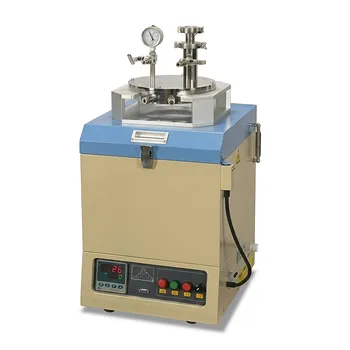
- Compact Vertical Split Quartz Tube Furnace with Stainless Steel Vacuum Flanges for Rapid Thermal Quenching and Controlled Atmosphere Material Processing
- 1100°C Large Diameter Quartz Tube Furnace with 24 Inch Heating Zone and Water Cooled Flanges
People Also Ask
- Why is high-purity alumina selected for sample trays? Key to High-Throughput Sintering Success
- How does a high-throughput tube furnace achieve precise sulfurization? Expert Control for CoS2–Co(OH)F Nanostructures
- How does the precise temperature control of a tube furnace influence the formation of V2AlC MAX phase? Expert Insights.
- What is the function of argon gas flow within a tube furnace during the selenization of MOFs? Essential Process Guide
- Why is precision temperature programming in a tube furnace critical for the synthesis of molybdenum-based metal nitrides?

Tech Team · ThermUnits
Last updated on Jun 03, 2026
Related Products

1200C High Throughput Multi Channel Tube Furnace with 50mm Quartz Tubes for Annealing and Material Phase Diagram Research
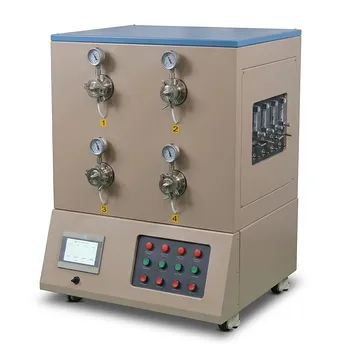
High Throughput 1200C Four Channel Tube Furnace with 3 Inch Quartz Tubes for Multi Zone Annealing and Material Research
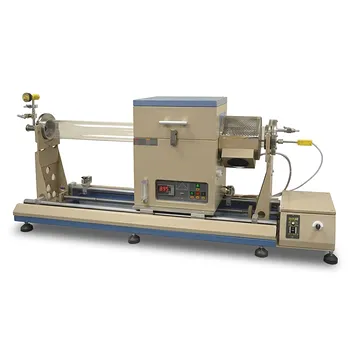
900 ºC Max Sliding RTP Tube Furnace with Rapid IR Heating and 4 Inch OD Quartz Tube

Compact Vertical Split Quartz Tube Furnace with Stainless Steel Vacuum Flanges for Rapid Thermal Quenching and Controlled Atmosphere Material Processing
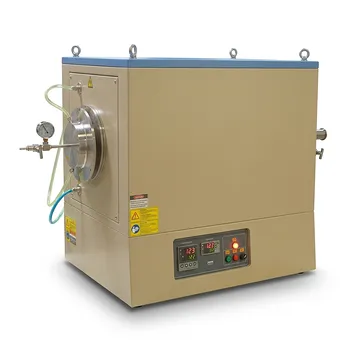
1100°C Large Diameter Quartz Tube Furnace with 24 Inch Heating Zone and Water Cooled Flanges

1200°C 5 Inch Vertical Quartz Tube Furnace with Stainless Steel Vacuum Flanges
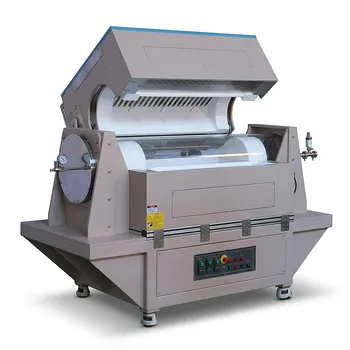
Three Zone Tube Furnace with 11 Inch or 15 Inch Quartz Tube and Hinged Flanges for Vacuum Atmosphere Heat Treatment
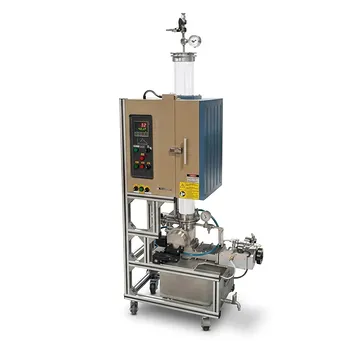
1200C High Temperature Atmosphere Controlled Vertical Quenching Tube Furnace with 4 Inch Quartz Tube
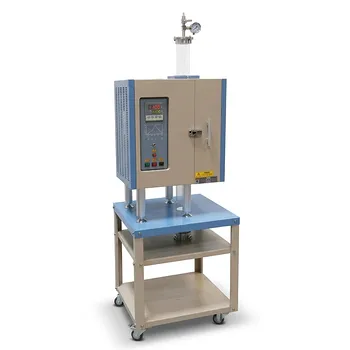
1100°C Split Vertical Tube Furnace with 80mm Quartz Tube and Stainless Steel Vacuum Flanges
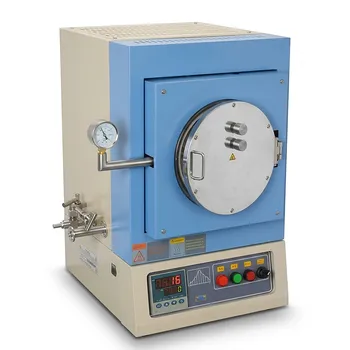
1100°C High Temperature Quartz Chamber Furnace 8 Inch OD with 7.6 Liter Capacity and Vacuum Atmosphere Capability
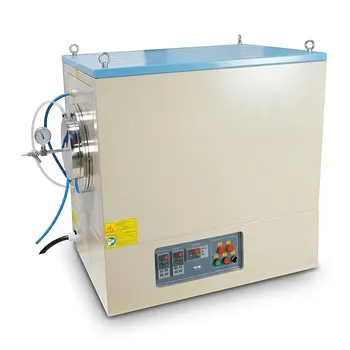
Dual Zone Tube Furnace 1100C with 11 Inch Quartz Tube and Vacuum Flanges for 8 Inch Wafer Processing
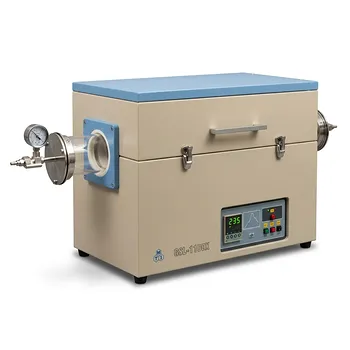
Single Zone Tube Furnace 5 Inch Quartz Tube 36 Inch Heating Zone Vacuum Flanges
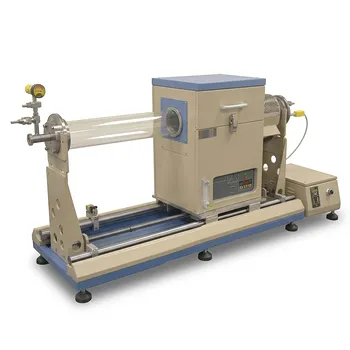
Rapid Thermal Processing Sliding Tube Furnace with 4 Inch OD Quartz Tube and 900C IR Heating
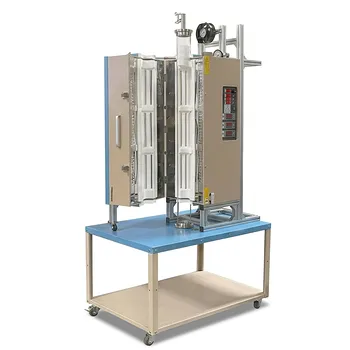
1200C Three Zone Split Vertical Tube Furnace 4 Inch Quartz Tube Stainless Steel Vacuum Flanges
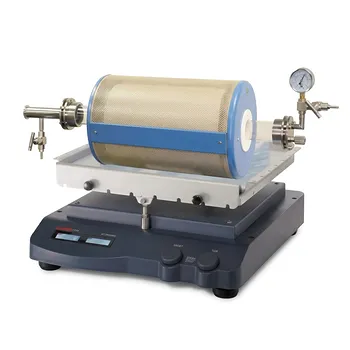
High Temperature Rocking Tube Furnace with Quartz Tube and Vacuum Flange for Materials Synthesis
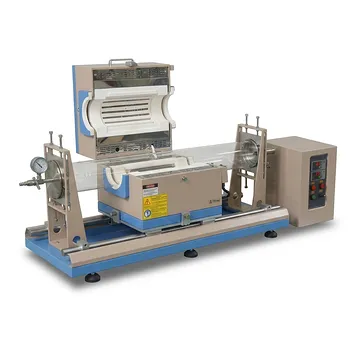
1200C High Temperature 5 Inch Sliding Tube Furnace for Rapid Thermal Processing RTP and Wafer Annealing
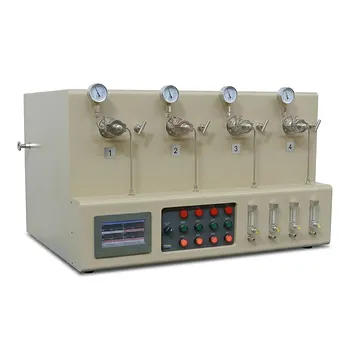
High Temperature 1700C 4 Channel Tube Furnace 1 Inch Alumina Tube for Hi-Throughput Annealing

High Temperature Automated 5 Inch Tube Furnace for Autonomous Material Research and Advanced Laboratory R&D
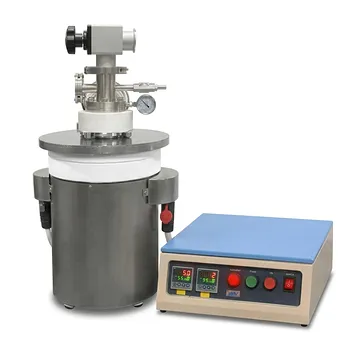
1100C High Temperature Vacuum Crucible Furnace with Quartz Chamber for Thermal Processing and Sintering