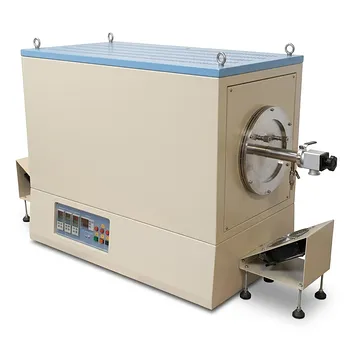
What are the advantages of atmosphere-controlled tube furnaces for U3O8 to UO2 reduction? Achieve High-Purity Fuel.
Updated 3 months ago
The use of an atmosphere-controlled tube furnace provides the precise chemical and thermal conditions necessary to transform triuranium octoxide ($U_3O_8$) into high-purity uranium dioxide ($UO_2$) microspheres. By integrating a regulated reducing atmosphere with an accurate temperature control system, these furnaces prevent structural defects while ensuring the final microparticles maintain a high degree of sphericity and phase purity.
Core Takeaway: Atmosphere-controlled tube furnaces are essential for the production of nuclear-grade $UO_2$ because they allow for simultaneous control over thermodynamic reduction and physical morphology, preventing grain growth and morphological collapse.
Precise Regulation of the Reducing Environment
Tailored Gas Composition for Uranium Reduction
The primary advantage lies in the ability to introduce specific reducing gas mixtures, such as Hydrogen/Argon ($H_2/Ar$) or Hydrogen/Nitrogen ($H_2/N_2$). This allows for the high-valence uranium oxides to be reduced systematically at high temperatures, ensuring that the chemical transition from $U_3O_8$ to $UO_2$ is complete and uniform.
Thermodynamic Control and Phase Composition
Precise atmosphere regulation utilizes thermodynamic principles to maintain the desired oxidation state of the uranium. This control is critical for adjusting the phase composition and isotopic characteristics of the final nuclear fuel product, ensuring it meets strict regulatory standards.
Prevention of Unwanted Oxidation
By strictly controlling the gas flow and excluding oxygen, the furnace inhibits any re-oxidation of the $UO_2$ during the cooling phase. This environment also helps in de-fluorination and dehydration processes, which are necessary when converting uranium ore concentrates into stable oxides.
Morphological Preservation and Uniformity
Preventing Morphological Collapse
High-temperature reduction can often lead to the structural failure of microspheres. The atmosphere-controlled tube furnace ensures uniform gas flow over the samples, which, when paired with accurate temperature monitoring, prevents the morphological collapse of the delicate microparticles.
Inhibiting Excessive Grain Growth
Uncontrolled heating often results in large, irregular grains that degrade the quality of the fuel. The furnace’s control system maintains a steady environment that limits grain growth, resulting in a fine-grained microstructure that is ideal for nuclear fuel applications.
Achieving Superior Sphericity
For microspheres used in specific fuel designs, such as TRISO particles, excellent sphericity is non-negotiable. The stable environment within the tube furnace allows the particles to retain their shape throughout the reduction process, leading to high-purity $UO_2$ with consistent physical dimensions.
Understanding Technical Trade-offs
Complexity of Gas Handling
Operating these furnaces requires sophisticated gas delivery and monitoring systems to ensure the safety and efficacy of the hydrogen mixtures. Any fluctuation in gas pressure or flow rate can lead to incomplete reduction or variations in the final density of the $UO_2$ microspheres.
Thermal Lag and Scalability
While tube furnaces provide excellent control for small to medium batches, they can experience thermal gradients if the tube diameter is too large. This requires careful calibration to ensure that the core of the sample bed reaches the same temperature as the exterior, preventing "cold spots" that result in non-uniform particles.
How to Apply This to Your Production Goals
Depending on your specific requirements for the final $UO_2$ product, your focus on furnace parameters will shift:
- If your primary focus is Maximum Phase Purity: Prioritize the precision of the $H_2$ concentration and the stability of the reducing atmosphere to ensure all $U_3O_8$ is converted.
- If your primary focus is Morphological Consistency: Focus on the uniformity of the gas flow and the ramp rate of the temperature control system to prevent microsphere deformation.
- If your primary focus is Interface Engineering: Utilize the furnace’s ability to introduce specific humidified gas mixtures to inhibit interdiffusion or unwanted chemical reactions at the particle surface.
Through the strategic management of thermal and chemical variables, atmosphere-controlled tube furnaces transform raw uranium oxides into the high-quality, spherical fuel precursors required for modern nuclear reactors.
Summary Table:
| Key Feature | Benefit for $UO_2$ Microsphere Production |
|---|---|
| Precise Gas Control | Enables $H_2/Ar$ mixtures for complete thermodynamic reduction of $U_3O_8$. |
| Uniform Gas Flow | Prevents morphological collapse and ensures excellent particle sphericity. |
| Thermal Stability | Inhibits excessive grain growth, resulting in ideal high-density microstructures. |
| Oxygen Exclusion | Prevents re-oxidation during cooling to maintain strict nuclear-grade purity. |
| De-fluorination | Facilitates the removal of impurities during the conversion process. |
Precision Thermal Solutions for Advanced Material R&D
As a leading manufacturer of high-temperature laboratory equipment, THERMUNITS provides the precision and reliability required for critical processes like nuclear fuel synthesis and advanced material science. Our atmosphere-controlled systems are specifically engineered to maintain the strict chemical and thermal environments necessary for high-purity results.
Whether your research involves Atmosphere, Tube, Vacuum, or Muffle furnaces, or complex systems like CVD/PECVD, Hot Press furnaces, and Vacuum Induction Melting (VIM), we offer a comprehensive range of solutions tailored to industrial R&D.
Ready to elevate your lab's capabilities? Contact our expert team today to discuss your specific heat treatment requirements and discover how THERMUNITS can optimize your production goals.
References
- Harry Jang, Frédéric Poineau. Tailoring Triuranium Octoxide into Multidimensional Uranyl Fluoride Micromaterials. DOI: 10.1021/acsomega.4c02554
Mentioned Products
- 1200°C Atmosphere Controlled Automatic Bottom Loading Furnace with 6 Inch Quartz Tube
- Compact Vertical Split Quartz Tube Furnace with Stainless Steel Vacuum Flanges for Rapid Thermal Quenching and Controlled Atmosphere Material Processing
- Compact Hybrid Muffle and Tube Furnace for 1000C Controlled Atmosphere Laboratory Material Sintering
- 1700C High Temperature Alumina Tube Furnace with 18 Inch Heated Zone and Vacuum Sealing Flanges
- Vertical 1700C Vacuum and Atmosphere Tube Furnace with 80mm Alumina Tube
People Also Ask
- Why is a tube furnace required for FGM-PhG structural color ceramics? Key to Carbon Preservation & Vibrant Color
- Why is an atmosphere-controlled tube furnace required for the pre-sulfidation of NiMo/gamma-Al2O3 catalysts?
- Why is an atmosphere-controlled tube furnace required for 800 °C CNF annealing? Essential for Oxidative Protection.
- Why is an atmosphere-controlled tube furnace required for [email protected]/C preparation? Key for Purity & Structure
- Why is an atmosphere-controlled tube furnace required for single-atom sensor calcination? Ensure Atomic Dispersion.

Tech Team · ThermUnits
Last updated on Jun 02, 2026
Related Products
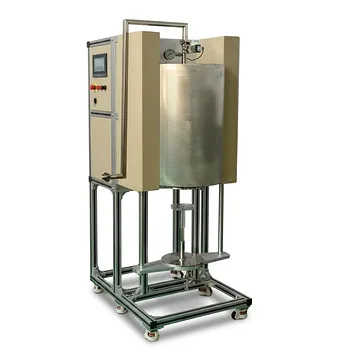
1200°C Atmosphere Controlled Automatic Bottom Loading Furnace with 6 Inch Quartz Tube
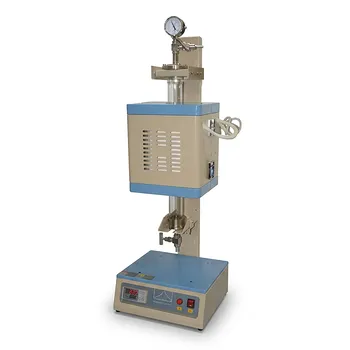
Compact Vertical Split Quartz Tube Furnace with Stainless Steel Vacuum Flanges for Rapid Thermal Quenching and Controlled Atmosphere Material Processing
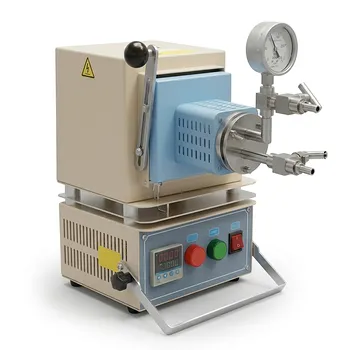
Compact Hybrid Muffle and Tube Furnace for 1000C Controlled Atmosphere Laboratory Material Sintering
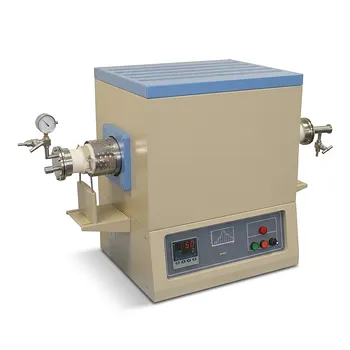
1700C High Temperature Alumina Tube Furnace with 18 Inch Heated Zone and Vacuum Sealing Flanges

Vertical 1700C Vacuum and Atmosphere Tube Furnace with 80mm Alumina Tube
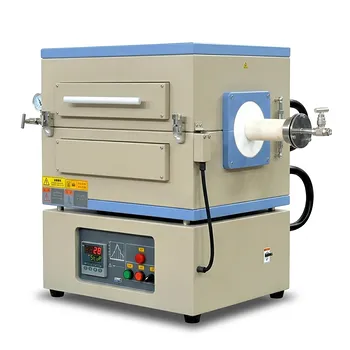
1500°C Split Tube Furnace with Alumina Tube and Vacuum Sealing Flanges for Material Research
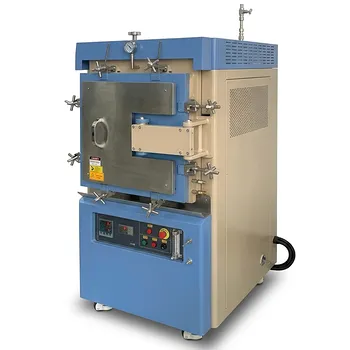
Atmosphere Controlled Muffle Furnace 1700C Maximum Temperature 80L High Capacity Vacuum Inert Gas Box Furnace
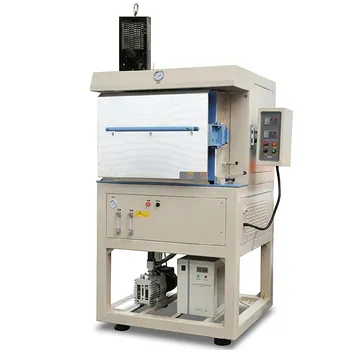
1200C Hydrogen Atmosphere Box Furnace with 5 Heated Sides and 64L Chamber
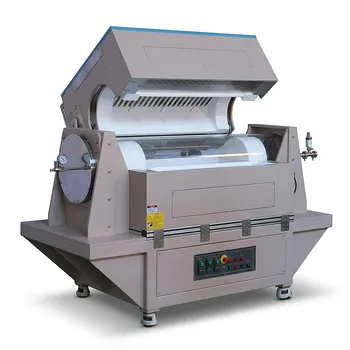
Three Zone Tube Furnace with 11 Inch or 15 Inch Quartz Tube and Hinged Flanges for Vacuum Atmosphere Heat Treatment
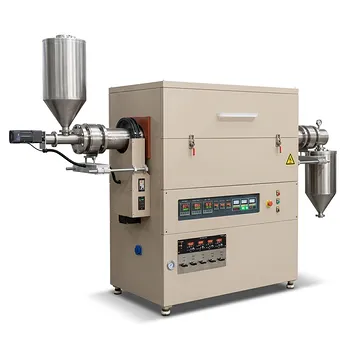
High Temperature Tilting Rotary Tube Furnace with Integrated Mass Flow Control and Multi Zone Heating
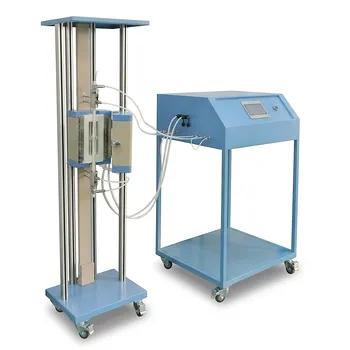
High Temperature Vertical Tube Furnace for Small Solid Oxide Fuel Cell Testing with Four Channel Gas Control
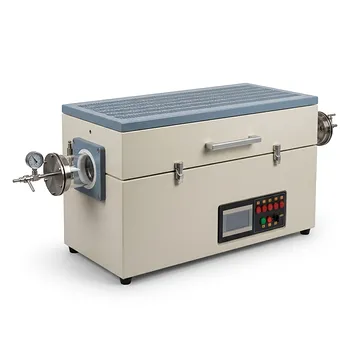
Five Zone 1200C High Temperature Split Tube Furnace with Touch Screen Controller and Multiple Quartz Tube Options
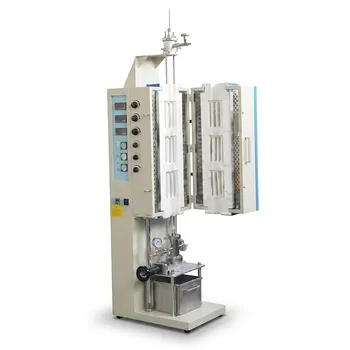
High Temperature Dual Zone Tube Furnace for Material Science Research and Professional Thermal Processing

High Temperature 1700C Tube Furnace with High Vacuum Turbomolecular Pump System and Multi Channel Mass Flow Controller Gas Mixer

High Temperature 1700C Vertical Tube Furnace for Powder Spherification and Material Sintering
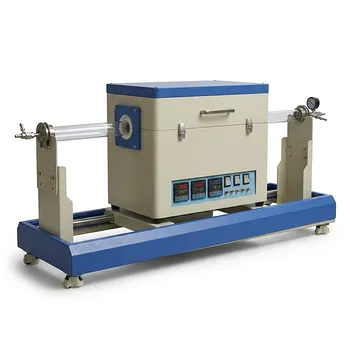
Double Temperature Zone Double Cover Tube Furnace for High Temperature CVD and Vacuum Annealing

High Temperature Automated 5 Inch Tube Furnace for Autonomous Material Research and Advanced Laboratory R&D
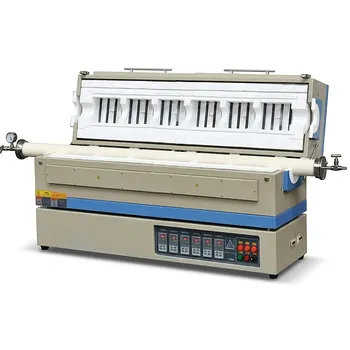
High Temperature 1700C Six Zone Split Tube Furnace with Alumina Tube and Water Cooled Flanges
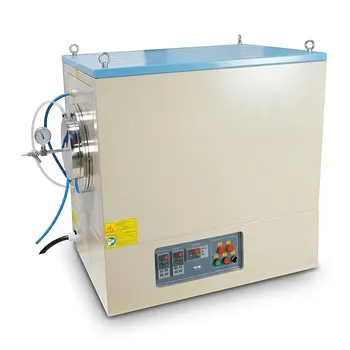
Dual Zone Tube Furnace 1100C with 11 Inch Quartz Tube and Vacuum Flanges for 8 Inch Wafer Processing