What are the advantages of fluidized bed CVD for Si/C production? Achieve Superior Material Uniformity at Scale
Updated 3 months ago
The shift toward fluidized bed CVD technology is driven by the need for extreme material uniformity at scale. For the industrial production of Silicon/Carbon (Si/C) materials, fluidized bed CVD equipment offers superior gas-solid contact and heat-mass exchange compared to fixed-bed furnaces. This results in a final product where silicon content and coating thickness are consistent across every particle, eliminating the "inlet effect" that plagues traditional methods.
Core Takeaway: Fluidized bed CVD solves the fundamental problem of axial non-uniformity by keeping particles in constant, dynamic motion. This ensures that every particle experiences identical reaction conditions, which is critical for the high-performance consistency required in battery-grade Si/C composites.
Overcoming the Limitations of Fixed-Bed Systems
The Problem of Axial Non-Uniformity
In a traditional fixed-bed tube furnace, powders remain stationary. As the precursor gas (such as silane) enters the tube, the particles closest to the inlet consume the gas preferentially.
Inconsistent Coating Thickness
This preferential consumption creates a concentration gradient along the length of the furnace. Particles near the gas inlet receive a heavy coating of silicon, while those further downstream may be under-coated, leading to a product with highly variable electrochemical performance.
Static Heating Challenges
Fixed beds often suffer from poor internal heat distribution. Because the powder mass is stagnant, heat must conduct through the material slowly, often resulting in "hot spots" or "cold zones" that further degrade the quality of the Si/C composite.
The Advantages of Fluidized Motion
Uniform Gas-Solid Contact
In a fluidized bed reactor, gas is pumped upward through the powder bed at a velocity sufficient to suspend the particles. This state of "fluidization" ensures that every single carbon particle is surrounded by fresh precursor gas.
Dynamic Mixing and Consistency
Because the particles are in constant motion, positional differences are eliminated. No single particle remains at the "inlet" or "outlet" of the deposition zone; instead, all particles share the same average environment over the course of the process.
Superior Heat and Mass Exchange
The rapid movement of particles within the gas stream greatly enhances heat transfer efficiency. This precise temperature control prevents localized over-heating and ensures the silicon deposition occurs at an optimal, uniform rate throughout the batch.
Industrial Scalability and Continuous Production
High Throughput for Large-Scale Manufacturing
Fluidized bed systems are inherently better suited for large-scale production. Their ability to handle high volumes of powder while maintaining tight quality tolerances makes them the industry standard for high-performance battery materials.
Potential for Continuous Processing
Unlike the batch-heavy nature of tube furnaces, fluidized bed designs can be adapted for continuous production. This allows for a steady feed of raw carbon and a consistent output of finished Si/C material, significantly lowering operational costs over time.
Supporting Advanced Material Synthesis
The efficiency of these reactors is not limited to Si/C; they are also highly effective for growing Carbon Nanotubes (CNTs). This versatility allows manufacturers to produce complex, multi-layered support structures with uniform structures that are ideal for subsequent doping or chemical treatments.
Understanding the Trade-offs
System Complexity and Initial Cost
Fluidized bed CVD equipment is significantly more complex than a standard tube furnace. It requires precise control of gas flow velocities and specialized reactor designs to prevent powder "clumping" or the loss of fine particles into the exhaust system.
Maintenance and Material Handling
The high-velocity movement of abrasive particles can lead to internal wear and tear on the reactor walls. Additionally, managing the flow of ultra-fine powders in a fluidized state requires sophisticated filtration and handling systems to avoid material loss and ensure safety.
Making the Right Choice for Your Goal
To determine if the transition to fluidized bed technology is appropriate for your facility, consider your primary production objectives:
- If your primary focus is consistent material quality at scale: Fluidized bed CVD is the necessary choice to ensure every particle meets the required silicon coating specifications.
- If your primary focus is minimizing initial capital expenditure: Traditional tube furnaces may be acceptable for small-scale R&D or low-volume specialty powders where some variability can be tolerated.
- If your primary focus is long-term operational efficiency: Investing in fluidized bed systems provides the path toward continuous production and lower per-kilogram processing costs for high-volume manufacturing.
While the technical complexity of fluidized bed CVD is higher, the resulting consistency in particle morphology and silicon distribution is indispensable for modern industrial Si/C production.
Summary Table:
| Feature | Traditional Fixed-Bed Furnace | Fluidized Bed CVD Equipment |
|---|---|---|
| Gas-Solid Contact | Static; leads to axial non-uniformity | Dynamic; ensuring every particle is suspended |
| Coating Consistency | Variable thickness due to gas gradients | High consistency across every particle |
| Heat Exchange | Slow conduction; potential hot spots | Rapid and uniform heat transfer |
| Production Mode | Primarily batch-based | Ideal for high-throughput continuous production |
| Material Quality | Lower uniformity; "inlet effect" issues | Exceptional consistency for battery-grade Si/C |
Elevate Your Si/C Material Production with THERMUNITS
Are you looking to overcome the limitations of traditional heat treatment and achieve superior material consistency? THERMUNITS is a leading manufacturer of high-temperature laboratory equipment specifically designed for material science and industrial R&D.
We provide a comprehensive range of high-performance thermal processing solutions, including:
- Advanced CVD/PECVD Systems for precise coating and synthesis.
- Rotary & Fluidized Bed Solutions for uniform particle processing.
- Muffle, Vacuum, Atmosphere, and Tube Furnaces for versatile R&D.
- Vacuum Induction Melting (VIM) & Hot Press Furnaces for specialized metallurgy.
Whether you are developing next-generation battery materials or scaling up industrial production, our engineering expertise ensures you get the exact thermal environment your materials require.
Ready to optimize your lab's efficiency and product quality?
Contact our technical experts today to discuss your specific requirements and discover the THERMUNITS advantage.
References
- Zhinan Han, Yuan Yang. Modeling Silane Deposition in Nanoporous Carbon for High-Capacity Si/C Composite Anodes. DOI: 10.34133/energymatadv.0111
Mentioned Products
- High Temperature Dual Zone Rotating Tube Furnace 1500C Silicon Carbide Heating for Advanced Material Synthesis
- Versatile Chemical Vapor Deposition Tube Furnace System for Advanced Material Research and Industrial Coating Processes
- HFCVD Machine System for Nano Diamond Coating on Drawing Dies and Industrial Tools
- Chemical Vapor Deposition CVD System Slide PECVD Tube Furnace with Liquid Gasifier PECVD Machine
- Multi Heating Zones CVD Tube Furnace System for Precision Chemical Vapor Deposition and Advanced Material Synthesis
People Also Ask
- What is the function of CVD furnaces in graphene prep? Enhancing Photodetector Charge Transport
- Why use CVD and a tube furnace for Pd3P0.95/NC catalyst phosphidation? Ensure high phase purity and performance.
- CVD Tube Furnace Advantages for Pd-P Catalyst Durability: Precision Control for 40,000+ Cycles
- How does a rotary tube furnace improve the processing of granular materials? Enhance Uniformity and Reaction Kinetics
- How does a Chemical Vapor Deposition (CVD) tube furnace facilitate synchronized nitridation? Precision Nano-Engineering.

Tech Team · ThermUnits
Last updated on Jun 03, 2026
Related Products
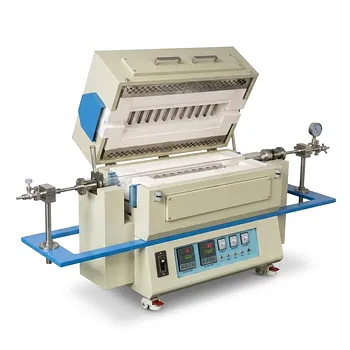
High Temperature Dual Zone Rotating Tube Furnace 1500C Silicon Carbide Heating for Advanced Material Synthesis
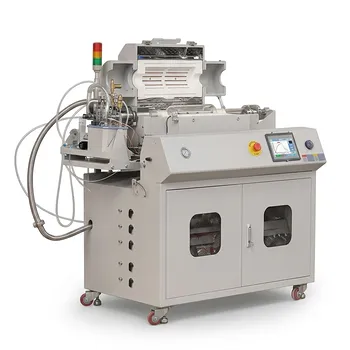
Versatile Chemical Vapor Deposition Tube Furnace System for Advanced Material Research and Industrial Coating Processes
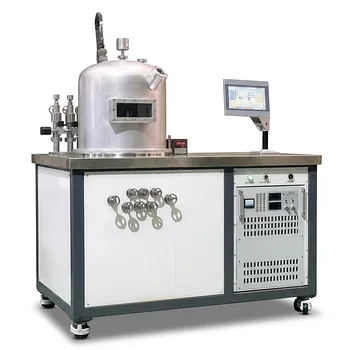
HFCVD Machine System for Nano Diamond Coating on Drawing Dies and Industrial Tools
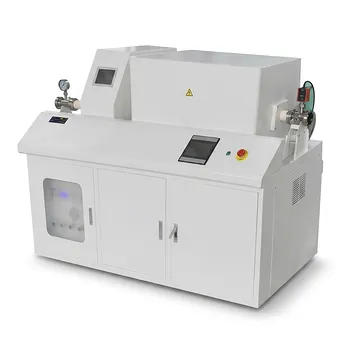
Chemical Vapor Deposition CVD System Slide PECVD Tube Furnace with Liquid Gasifier PECVD Machine
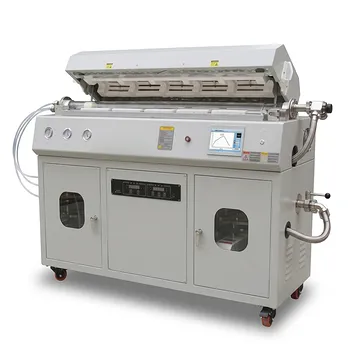
Multi Heating Zones CVD Tube Furnace System for Precision Chemical Vapor Deposition and Advanced Material Synthesis
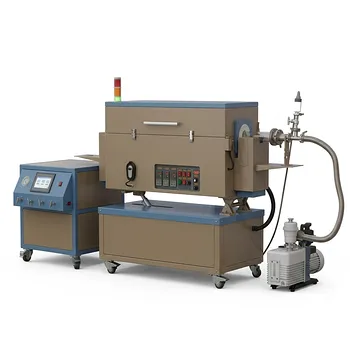
5 Inch Three Zone Rotary Tube Furnace with Integrated Gas Delivery System and 1200C Capability for Advanced Material CVD Processing
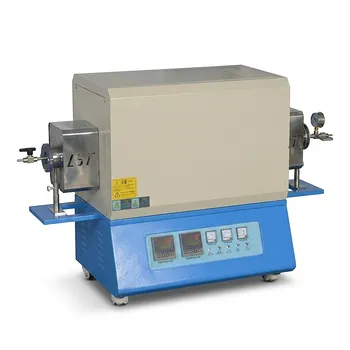
High Temperature Dual Zone Vacuum Tube Furnace for Material Research and CVD Processing
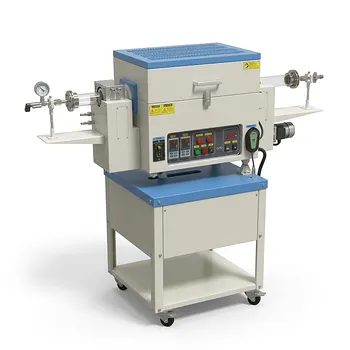
4 Inch Two Zone Rotary CVD Tube Furnace for High Temperature Battery Material Synthesis and Advanced Material Calcination
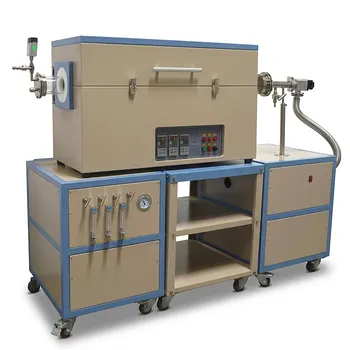
Three Zone Quartz Tube Furnace with 3 Channel Gas Mixer Vacuum Pump and Anti Corrosive Vacuum Gauge
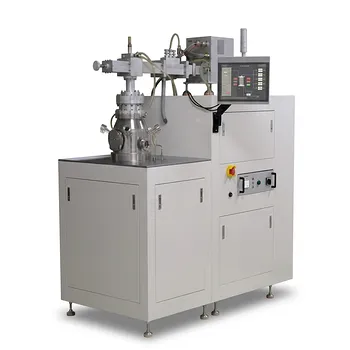
Cylindrical Resonator MPCVD Machine System for Microwave Plasma Chemical Vapor Deposition and Lab Diamond Growth
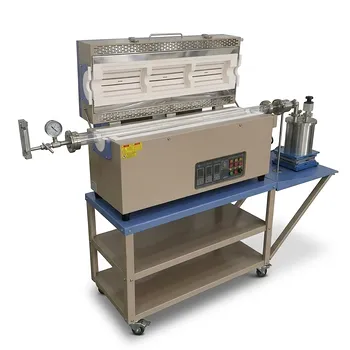
5 Inch Two Zone Rotary Tube Furnace 1100C for Powder CVD and Material Synthesis
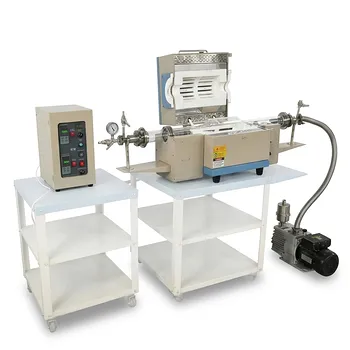
Two Zone Rotary Tube Furnace for Powder CVD Coating and Core Shell Material Synthesis 1100C
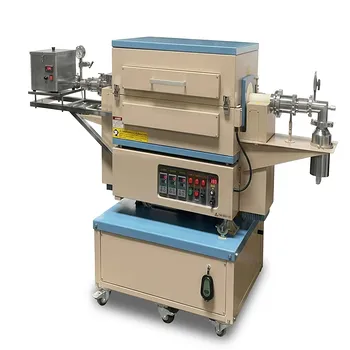
1500C 3-Zone Rotary Tube Furnace 60mm with Automatic Powder Feeding and Receiving System for Continuous Material Synthesis
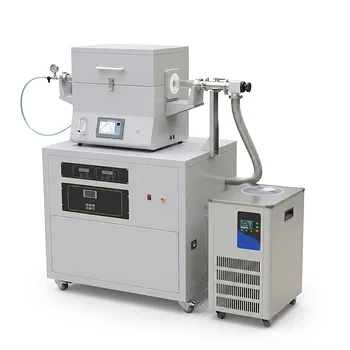
Split Chamber CVD Tube Furnace with Vacuum Station Chemical Vapor Deposition System Machine
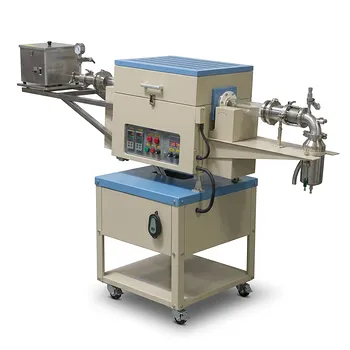
Two Zone Rotary CVD Furnace with Automatic Feeding and Receiving System for Powder Processing
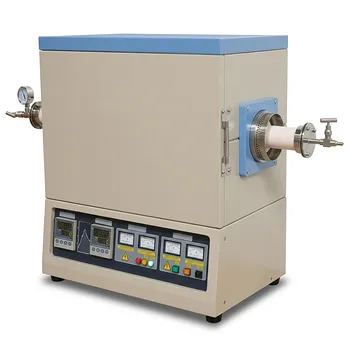
High Temperature 1700C Dual Zone Tube Furnace for Material Science and Industrial Chemical Vapor Deposition Research
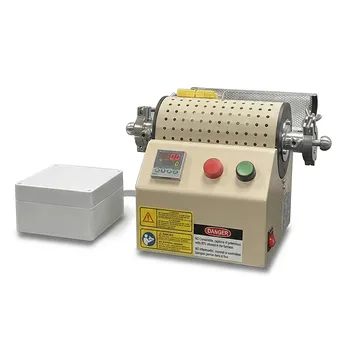
1000C Mini Tube Furnace with 20mm Quartz Tube and Vacuum Flanges for Material Science Research and Controlled Atmosphere Small Sample Processing
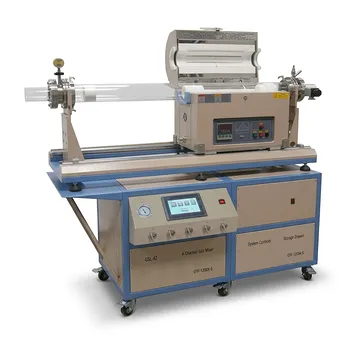
Dual Tube 100mm 80mm CVD Sliding Furnace with 4 Channel Gas Mixing and Vacuum System
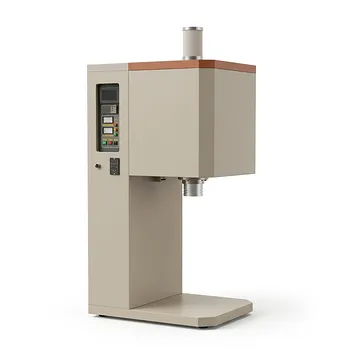
Vertical Openable Tube Furnace 0-1700c High Temperature Laboratory System for CVD and Vacuum Heat Treatment