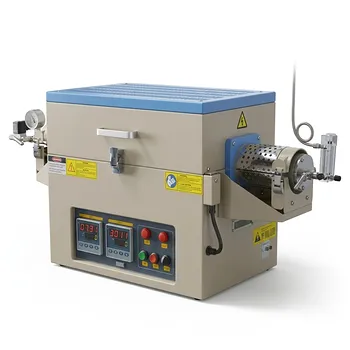
What are the primary advantages of a Drop Tube Furnace (DTF) vs. TGA? Master Industrial Combustion Simulation.
Updated 3 months ago
The primary advantage of a Drop Tube Furnace (DTF) over Thermogravimetric Analysis (TGA) is its ability to replicate the extreme thermal environments of industrial boilers. While TGA is limited by slow heating rates, a DTF achieves heating rates of $10^4$ to $10^5$ K/s and residence times of less than five seconds. This enables the accurate simulation of ignition, burnout, and pollutant kinetics for coal and biomass blends under realistic suspension combustion conditions.
A Drop Tube Furnace acts as a high-fidelity bridge between laboratory experiments and industrial reality. It provides the high-speed heating and dynamic reaction environments necessary to predict slagging, fouling, and real-time combustion behavior that TGA's static nature cannot capture.
Simulating Industrial Thermal Gradients
High-Velocity Heating Rates
A DTF subjects biomass and coal particles to heating rates between $10^4$ and $10^5$ K/s. This mimics the near-instantaneous thermal shock fuel particles experience when injected into a utility boiler's flame zone. TGA heating rates are typically much lower, failing to trigger the rapid devolatilization and "flash pyrolysis" characteristic of industrial processes.
Ultra-Short Residence Times
The reaction window in a DTF is extremely brief, often under five seconds. This short duration allows researchers to study the microsecond-scale thermal decomposition of blended fuels. In contrast, TGA experiments often last minutes or hours, which does not reflect the rapid transit of fuel through a burner.
Isothermal Precision at Scale
Modern DTFs utilize high-purity furnace tubes to maintain stable isothermal environments up to 1500°C. This high-temperature capability is essential for studying the intense reactions of high-sulfur coal and biomass wastes like sawdust or rice husks.
Analyzing Dynamic Combustion Phenomena
Real-Time Slagging and Fouling
Unlike static ash analysis, a DTF allows for the real-time observation of ash deposition on probes. Researchers can directly measure ash melting, adhesion characteristics, and capture efficiency. This provides a dynamic assessment of slagging risks that empirical indices from TGA or static ovens cannot provide.
Complex Flue Gas Atmospheres
DTFs are equipped with precise gas distribution systems to simulate specific air-fuel ratios and flue gas compositions. This setup allows for the study of how different fuel blends interact with nitrogen, sulfur, and oxygen levels found in real-world combustion.
Pollutant and Aerosol Monitoring
The quasi-one-dimensional reaction environment of a DTF simplifies the measurement of pollutant emissions and aerosol formation. This structure provides a clear "axisymmetric" view of the reaction, making it easier to validate kinetic models for co-firing sawdust and coal.
Understanding the Trade-offs
Operational Complexity and Cost
A DTF is significantly more complex and expensive to operate than a TGA system. It requires specialized high-purity tubes, sophisticated gas preheating, and advanced diagnostic tools to capture data at a microsecond scale.
Sample Volume and Particle Size
DTFs require finely pulverized fuel to ensure proper suspension and transport through the reaction zone. This can be a limitation if the research goal requires testing large, non-uniform biomass chunks that do not behave like pulverized fuel.
Data Interpretation Challenges
Because the reactions in a DTF happen so quickly, the resulting data is highly complex. Researchers must account for particle trajectories and velocity fluctuations, which adds layers of difficulty to the analysis compared to the straightforward mass-loss curves of TGA.
Making the Right Choice for Your Goal
To determine whether a Drop Tube Furnace is the correct tool for your combustion research, consider your primary objective:
- If your primary focus is industrial performance: Use a DTF to simulate the high heating rates and short residence times required to predict actual boiler behavior.
- If your primary focus is slagging and fouling risks: Prioritize DTF experiments to observe real-time ash deposition and melting characteristics of fuel blends.
- If your primary focus is basic kinetic screening: Use TGA for a cost-effective, simplified analysis of a fuel's intrinsic reactivity and moisture content.
- If your primary focus is bio-oil or char yields: Utilize a DTF's flash pyrolysis capabilities to maximize the yield of specific thermal decomposition products.
By selecting the Drop Tube Furnace for co-firing studies, you ensure that your laboratory findings are technically relevant and scalable to the high-intensity environment of industrial power generation.
Summary Table:
| Feature | Drop Tube Furnace (DTF) | Thermogravimetric Analysis (TGA) |
|---|---|---|
| Heating Rate | Ultra-high ($10^4$ - $10^5$ K/s) | Low/Static |
| Residence Time | < 5 Seconds (Dynamic) | Minutes to Hours (Static) |
| Simulation Goal | Industrial Boiler Realism | Basic Kinetic Screening |
| Temperature Range | Up to 1500°C (Isothermal) | Variable (Programmed) |
| Ash Analysis | Real-time Slagging/Fouling | Static Mass Loss Only |
Elevate Your Material Research with THERMUNITS Thermal Solutions
As a leading manufacturer of high-temperature laboratory equipment, THERMUNITS empowers researchers in material science and industrial R&D with precision-engineered systems. Whether you are simulating complex combustion in a specialized Tube Furnace, scaling processes with an Electric Rotary Kiln, or exploring advanced synthesis via CVD/PECVD and Vacuum Induction Melting (VIM), our comprehensive range—including Muffle, Atmosphere, and Hot Press furnaces—delivers the reliability your innovation demands.
Contact THERMUNITS Today to discuss your specific heat treatment requirements and discover how our expertise can accelerate your project success.
References
- Garikai T. Marangwanda, Daniel M. Madyira. Experimental investigation on the effect of blending bituminous coal with pinus sawdust on combustion performance parameters. DOI: 10.1016/j.heliyon.2024.e27287
Mentioned Products
- 1200C Sliding Tube Furnace for Rapid Thermal Processing and CVD Graphene Growth with 100mm OD Capacity
- Compact Vertical Split Quartz Tube Furnace with Stainless Steel Vacuum Flanges for Rapid Thermal Quenching and Controlled Atmosphere Material Processing
- 1250C Split Tube Furnace with 3 Inch Mullite Tube and Vacuum Sealing Flanges for Precision Thermal Processing
- 1200C Tube Furnace with Internal Magnetic Sample Sliding for Direct Vaporizing Deposition and Rapid Thermal Processing
- High Temperature 1700C Six Zone Split Tube Furnace with Alumina Tube and Water Cooled Flanges
People Also Ask
- Why is a Tube Furnace typically utilized for CVD? Achieve Precision in Graphene and 2D Material Synthesis
- CVD Tube Furnace Advantages for Pd-P Catalyst Durability: Precision Control for 40,000+ Cycles
- What is the function of CVD furnaces in graphene prep? Enhancing Photodetector Charge Transport
- Why use CVD and a tube furnace for Pd3P0.95/NC catalyst phosphidation? Ensure high phase purity and performance.
- How does a tube furnace system equipped with gas mass flow controllers facilitate the MCW process? Optimize Graphene Yield

Tech Team · ThermUnits
Last updated on Jun 03, 2026
Related Products
1200C Sliding Tube Furnace for Rapid Thermal Processing and CVD Graphene Growth with 100mm OD Capacity

Compact Vertical Split Quartz Tube Furnace with Stainless Steel Vacuum Flanges for Rapid Thermal Quenching and Controlled Atmosphere Material Processing
1250C Split Tube Furnace with 3 Inch Mullite Tube and Vacuum Sealing Flanges for Precision Thermal Processing
1200C Tube Furnace with Internal Magnetic Sample Sliding for Direct Vaporizing Deposition and Rapid Thermal Processing

High Temperature 1700C Six Zone Split Tube Furnace with Alumina Tube and Water Cooled Flanges
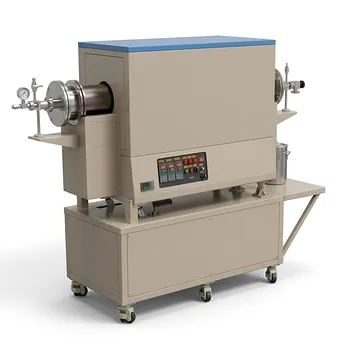
900°C Max Rotary Tube Furnace with 8 Inch 310S Alloy Tube and Optional Multi Zone Heating for Industrial Material Calcination

1100C Tube Furnace with Vacuum Flange and Programmable Temperature Controller for Material Science and Industrial Heat Treatment

Vertical 1700C Vacuum and Atmosphere Tube Furnace with 80mm Alumina Tube
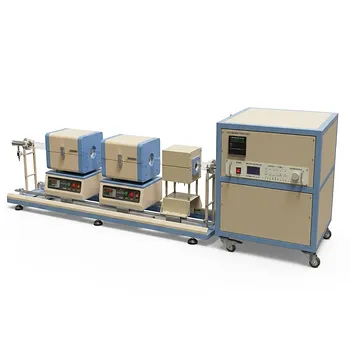
1200C Dual Sliding Tube Furnace with Dual Tubes and Flanges for PECVD Processes

1800C High Temperature Compact Vacuum Tube Furnace with 60mm OD Alumina Tube and Kanthal MoSi2 Heating Elements

1200°C 5 Inch Vertical Quartz Tube Furnace with Stainless Steel Vacuum Flanges

High Temperature 1700C Tube Furnace with High Vacuum Turbomolecular Pump System and Multi Channel Mass Flow Controller Gas Mixer

High Temperature 1700C Benchtop Tube Furnace with 5 Inch Heating Zone High Purity Alumina Tube and Vacuum Sealing Flanges

5 Inch Three Zone Rotary Tube Furnace with Integrated Gas Delivery System and 1200C Capability for Advanced Material CVD Processing
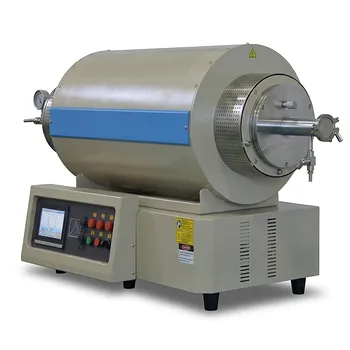
1200C Max Three Zone Tube Furnace 6 Inch OD Max with Tube and Flange
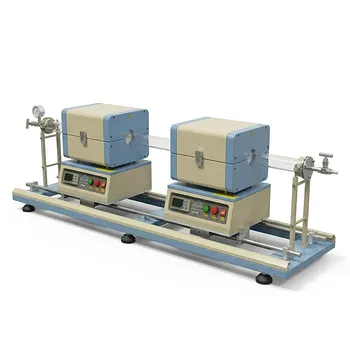
1200C Max Dual Sliding Tube Furnace with 50 mm Tube Flanges for CVD
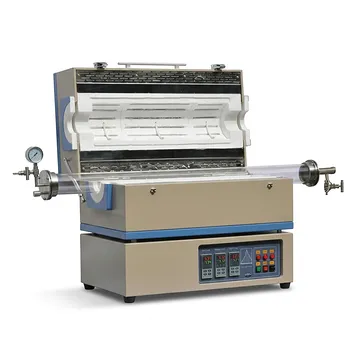
24 Inch Three Zone Split Tube Furnace with Optional Quartz Tube and Vacuum Flange System for High Temperature Material Synthesis
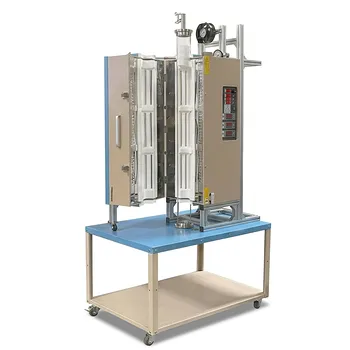
1200C Three Zone Split Vertical Tube Furnace 4 Inch Quartz Tube Stainless Steel Vacuum Flanges
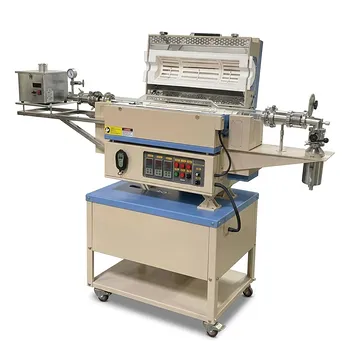
5 Inch Rotary Tube Furnace with Automatic Feeding and Receiving System 1200C Three Zone CVD Powder Processing