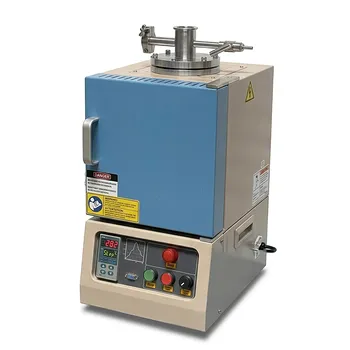
What are the primary process objectives of using a high vacuum tube furnace for the pre-treatment of WS2? Optimize Surface Energy
Updated 3 months ago
The primary objectives for using a high vacuum tube furnace in the pre-treatment of tungsten disulfide (WS2) are surface decontamination and surface energy optimization. This process employs thermal annealing under high vacuum to desorb organic residues and airborne molecular contaminants, effectively preparing the material for subsequent processing.
Core Takeaway: Pre-treatment in a high vacuum tube furnace serves as a critical cleaning and conditioning step that increases the surface energy of WS2 while maintaining its structural integrity through precise temperature and vacuum control.
Surface Decontamination and Molecular Cleaning
Desorption of Organic Residues
The most immediate objective is to provide sufficient thermal energy to strip away unwanted organic materials from the WS2 surface. These residues often accumulate during handling or storage and can interfere with the material's chemical reactivity.
Eliminating Airborne Molecular Contaminants
High vacuum conditions—specifically those better than 4×10⁻³ mbar—are required to remove moisture and airborne molecules that naturally adhere to the material. By removing these layers, the furnace ensures the WS2 surface is chemically "clean" at the atomic level.
Uniform Long-Term Heating
Unlike rapid thermal processing, the tube furnace provides stable, uniform heating over extended periods, such as one hour. This duration is necessary to ensure that contaminants are thoroughly desorbed from every part of the sample.
Surface Property Optimization
Reducing the Water Contact Angle (WCA)
A primary goal of this pre-treatment is to reduce the water contact angle of the WS2. A lower WCA indicates that the surface has become more hydrophilic, which is often a prerequisite for successful coating or further layer deposition.
Increasing Surface Energy
By removing surface contaminants, the pre-treatment significantly increases the surface energy of the WS2. This makes the material more "active" and improves its ability to bond with other materials in a stacked or heterostructure configuration.
Preparing for High-Quality Synthesis
Cleaned surfaces are essential for the epitaxial growth and sulfurization processes described in supplementary synthesis methods. Without this pre-treatment, impurities can lead to defects in the crystal lattice or poor adhesion to the substrate.
Thermal and Structural Management
Preserving Material Integrity
A critical constraint of pre-treatment is maintaining a temperature below 400°C. This ensures that while the surface is being cleaned, the underlying crystal structure of the WS2 remains stable and does not undergo unwanted phase changes or degradation.
Managing Vapor Pressure
The vacuum system allows for the precise regulation of the internal environment, preventing the unintended evaporation of the material itself. This balance is vital for maintaining the stoichiometry and thickness of ultra-thin WS2 films.
Scalability through Isothermal Zones
Using furnaces with larger diameters (2 inches or more) provides a large effective isothermal zone. This allows for the simultaneous pre-treatment of multiple or large-scale substrates, which is a physical prerequisite for wafer-level fabrication.
Understanding the Trade-offs
Temperature vs. Degradation
While higher temperatures might clean the surface faster, exceeding the 400°C threshold during pre-treatment risks damaging the WS2 structure. Operators must balance the need for cleanliness with the thermal budget of the 2D material.
Vacuum Depth vs. Process Time
Achieving a vacuum better than 4×10⁻³ mbar requires high-performance pumping systems and significant "soak" time. Reducing this time or using a lower vacuum level may result in incomplete desorption, leaving residual contaminants that can ruin downstream synthesis.
How to Apply This to Your Project
To achieve the best results with WS2 pre-treatment, align your furnace parameters with your specific production goals:
- If your primary focus is improving adhesion: Prioritize the reduction of the Water Contact Angle (WCA) by maintaining the vacuum at its maximum depth for at least one hour.
- If your primary focus is maintaining crystal quality: Ensure your temperature control system is strictly calibrated to stay below 400°C to avoid structural instability.
- If your primary focus is scaling for production: Utilize a furnace with a large isothermal zone to ensure uniform surface energy across the entire wafer or batch.
A properly executed high vacuum pre-treatment is the foundation for high-performance tungsten disulfide electronics and high-quality 2D film growth.
Summary Table:
| Objective | Action | Key Parameter |
|---|---|---|
| Surface Decontamination | Desorption of organic residues and moisture | Vacuum level > 4×10⁻³ mbar |
| Surface Optimization | Increasing surface energy & reducing Water Contact Angle | 1-hour isothermal soaking |
| Structural Integrity | Maintaining WS2 crystal stability | Temperature < 400°C |
| Scalability | Uniform pre-treatment for multiple substrates | Large isothermal zone (2"+ diameter) |
Elevate Your Material Research with THERMUNITS Precision Furnaces
High-performance 2D materials like Tungsten Disulfide (WS2) demand uncompromising thermal precision. THERMUNITS is a leading manufacturer of high-temperature laboratory equipment, providing the tools necessary for advanced material science and industrial R&D.
Whether you require high vacuum tube furnaces for surface optimization or specialized CVD/PECVD systems for epitaxial growth, our solutions ensure stable, uniform heating and precise environment control. Our comprehensive range includes:
- Tube, Vacuum, & Atmosphere Furnaces (Perfect for WS2 pre-treatment)
- Muffle & Rotary Furnaces
- Hot Press & Vacuum Induction Melting (VIM) Furnaces
- Dental Furnaces and Thermal Elements
Ready to optimize your heat treatment process? Contact our engineering team today to discuss your specific requirements and discover how THERMUNITS can enhance your lab's efficiency and results.
References
- Zaoyang Lin, Annelies Delabie. Impact of monolayer WS2 surface properties on the gate dielectrics formation by atomic layer deposition. DOI: 10.1116/6.0003894
Mentioned Products
- Vertical Openable Tube Furnace 0-1700c High Temperature Laboratory System for CVD and Vacuum Heat Treatment
- 1100C Tube Furnace with Vacuum Flange and Programmable Temperature Controller for Material Science and Industrial Heat Treatment
- High Temperature 1100C Compact Top Loading Vertical Vacuum Tube Furnace for High Vacuum Noble Metal Melting and Material Research
- High Temperature Dual Zone Vacuum Tube Furnace for Material Research and CVD Processing
- 1800C High Temperature Compact Vacuum Tube Furnace with 60mm OD Alumina Tube and Kanthal MoSi2 Heating Elements
People Also Ask
- Why is a Tube Furnace typically utilized for CVD? Achieve Precision in Graphene and 2D Material Synthesis
- What role does a high-temperature vertical tube furnace play in simulating high-carbon ferromanganese slag formation?
- What functions does a vertical high-temperature tube furnace perform? Master Industrial Sintering & R&D Simulation
- How does a vertical tube furnace facilitate thermoelectric alloy melting? Precision synthesis for material homogeneity.
- How is an industrial-grade vertical tube furnace utilized in smelting leaching residues? Enhance Metal Recovery Efficiency

Tech Team · ThermUnits
Last updated on Jun 02, 2026
Related Products
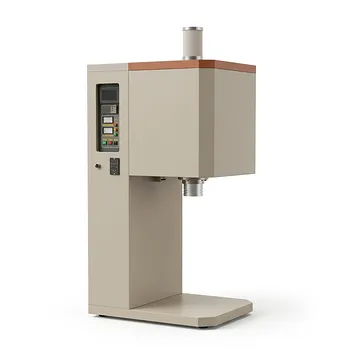
Vertical Openable Tube Furnace 0-1700c High Temperature Laboratory System for CVD and Vacuum Heat Treatment

1100C Tube Furnace with Vacuum Flange and Programmable Temperature Controller for Material Science and Industrial Heat Treatment
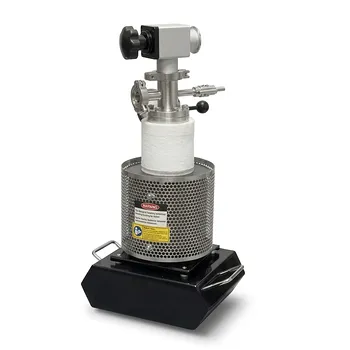
High Temperature 1100C Compact Top Loading Vertical Vacuum Tube Furnace for High Vacuum Noble Metal Melting and Material Research
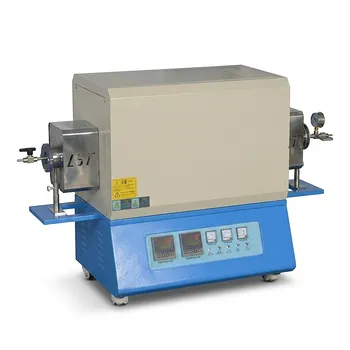
High Temperature Dual Zone Vacuum Tube Furnace for Material Research and CVD Processing

1800C High Temperature Compact Vacuum Tube Furnace with 60mm OD Alumina Tube and Kanthal MoSi2 Heating Elements
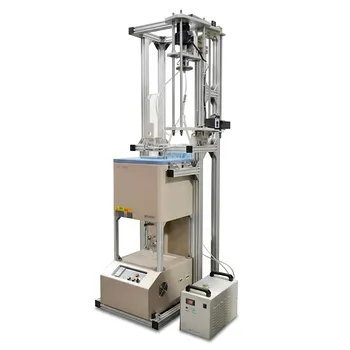
500C Vacuum Vertical Tube Furnace 84mm OD Sample Rotation Lifting System

High Temperature 1700C Vertical Tube Furnace for Powder Spherification and Material Sintering

High Temperature 1700C Tube Furnace with High Vacuum Turbomolecular Pump System and Multi Channel Mass Flow Controller Gas Mixer

1750°C High Temperature Benchtop Vacuum Atmosphere Tube Furnace with Kanthal Super 1800 Heating Elements and 60mm Alumina Processing Tube
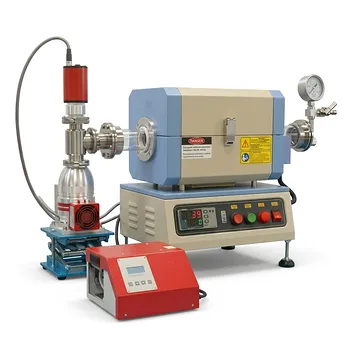
High Vacuum Compact Tube Furnace 1200C with Integrated Turbo Pump System and 8 Inch Heating Zone
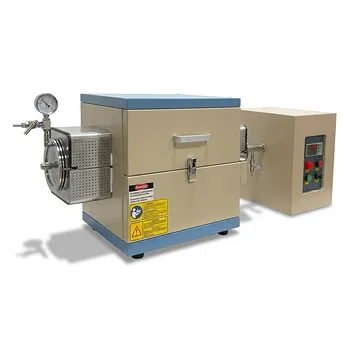
1200C High Temperature 5 Inch Split Vacuum Tube Furnace with 12 Inch Heating Zone and Separated PID Controller
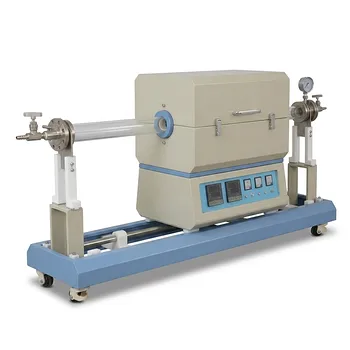
Double Zone Fast Heating Tube Furnace High Temperature Vacuum Atmosphere System
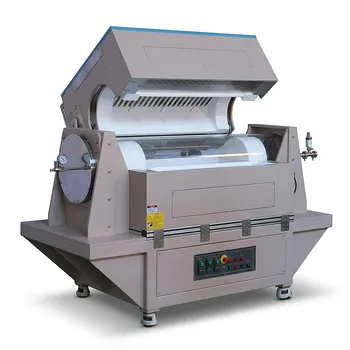
Three Zone Tube Furnace with 11 Inch or 15 Inch Quartz Tube and Hinged Flanges for Vacuum Atmosphere Heat Treatment
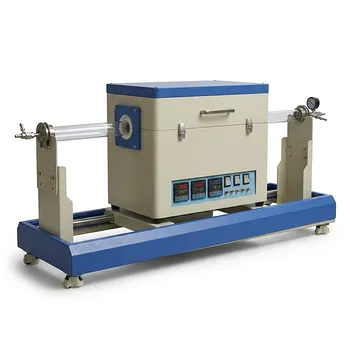
Double Temperature Zone Double Cover Tube Furnace for High Temperature CVD and Vacuum Annealing

High Temperature 1700C Tube Furnace with 4 Inch OD Alumina Tube and Vacuum Sealing Flanges
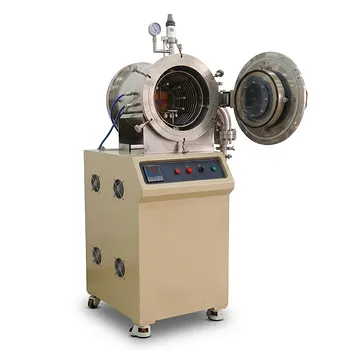
High Temperature Cold Wall High Vacuum Chamber Furnace 1400C for Advanced Material Processing

High Temperature Automated 5 Inch Tube Furnace for Autonomous Material Research and Advanced Laboratory R&D

Vertical 1700C Vacuum and Atmosphere Tube Furnace with 80mm Alumina Tube
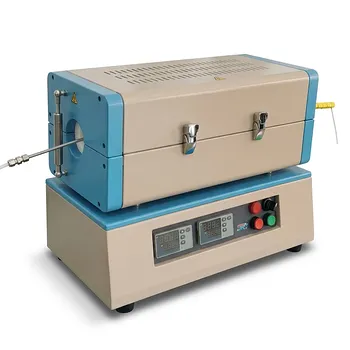
Gas Pre-Heating Tube Furnace for High Temperature Pyrolysis Reactors and Material Science Research