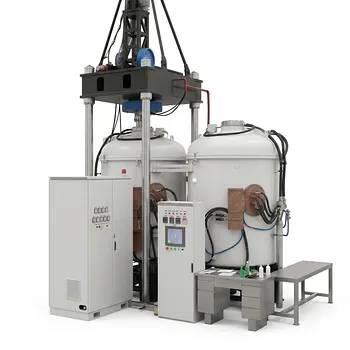
What are the technical advantages of using a high-vacuum oven compared to a conventional oven for drying electrode sheets?
Updated 3 months ago
The primary technical advantage of a high-vacuum oven lies in its ability to facilitate deep solvent removal at significantly lower temperatures. By reducing ambient pressure, these ovens lower the boiling points of high-boiling-point solvents like N-methyl-pyrrolidone (NMP), enabling thorough drying while shielding oxygen-sensitive materials from thermal and oxidative degradation.
High-vacuum drying is a critical process for preserving the chemical and structural integrity of battery electrodes. It ensures the complete removal of moisture and solvents from micropores while preventing the oxidation of current collectors and active materials, which is essential for long-term electrochemical performance.
Enhancing Solvent and Moisture Removal
Lowering Boiling Points for Heat-Sensitive Slurries
Conventional ovens require high heat to evaporate solvents like NMP, which has a boiling point of approximately 202°C at atmospheric pressure. High-vacuum environments drastically lower these boiling points, allowing for efficient evaporation at temperatures as low as 60°C to 80°C.
Deep Dehydration of Micropores
Trace moisture can remain trapped deep within the electrode's microporous structure in a conventional oven. Vacuum drying pulls these molecules out more effectively than forced air, preventing subsequent electrolyte decomposition and improving initial coulombic efficiency (ICE).
Accelerating Process Timelines
Despite the lower temperatures used, the negative pressure environment allows solvents to evaporate more rapidly than in a standard oven. This shortens the overall drying time for complex coatings, particularly those using thick active material layers.
Protecting Material and Structural Integrity
Preventing Oxidation of Current Collectors
At elevated temperatures in a conventional oven, aluminum and copper foils react with atmospheric oxygen. The vacuum environment eliminates oxygen, ensuring the current collector maintains its conductivity and structural strength without forming resistive oxide layers.
Preserving Active Material Chemistry
Sensitive materials, such as MXenes or specific carbon compounds, can oxidize and lose their electrochemical activity when heated in air. Vacuum drying isolates these materials, preventing the formation of unwanted oxides (like Titanium Dioxide) that would otherwise degrade the electrode's performance.
Maintaining Sensitive Crystal Structures
High heat can sometimes trigger phase changes or damage the delicate crystal structures of advanced battery precursors. By operating at lower temperatures under vacuum, the structural stability of the active materials is maintained, ensuring consistent electrochemical behavior.
Improving Mechanical and Electrochemical Performance
Enhancing Interface Adhesion
Residual solvents left behind by conventional drying can cause the active material to peel or delaminate during battery cycling. Vacuum thermal treatment improves the bonding strength between the slurry and the metal foil, ensuring the electrode survives repeated charge-discharge cycles.
Optimizing Pore Purity for Electrolyte Infiltration
By completely clearing solvents and moisture from the electrode’s internal pores, the vacuum process ensures the maximum available surface area. This allows the electrolyte to fully infiltrate the structure, maximizing specific capacitance and overall power density.
Understanding the Trade-offs
Equipment Complexity and Cost
High-vacuum ovens involve higher capital expenditures and require regular maintenance of vacuum pumps and seals. They are generally more expensive to purchase and operate than standard convection ovens.
Heat Transfer Limitations
In a vacuum, there is no air to facilitate convective heat transfer, which is the primary heating method in conventional ovens. Heating must rely on conduction and radiation, which requires careful shelf design to ensure uniform temperature distribution across all electrode sheets.
Batch vs. Continuous Processing
While conventional ovens are easily integrated into continuous "roll-to-roll" production lines, high-vacuum drying is often a batch process. This can create a bottleneck in high-volume manufacturing if not managed with sophisticated load-lock systems.
Applying This to Your Project
- If your primary focus is high-capacity lithium or sodium-ion batteries: Use high-vacuum drying at 80°C to ensure all trace moisture is removed, as even minimal water can trigger electrolyte decomposition.
- If your primary focus is working with oxygen-sensitive 2D materials like MXenes: Prioritize a high-vacuum environment to prevent the transition of conductive nanosheets into resistive oxides like TiO2.
- If your primary focus is improving mechanical durability and cycle life: Utilize extended vacuum thermal treatment to maximize the adhesion of the active material layer to the current collector and prevent delamination.
Transitioning to high-vacuum drying is a fundamental requirement for achieving the purity and structural stability necessary for next-generation, high-performance energy storage.
Summary Table:
| Feature | Conventional Oven | High-Vacuum Oven |
|---|---|---|
| Drying Temp (NMP) | High (~202°C) | Low (60°C - 80°C) |
| Oxygen Levels | Atmospheric (High) | Near Zero (Protective) |
| Moisture Removal | Surface-level | Deep Micropore Extraction |
| Material Safety | Risk of Oxidation/Damage | Preserves Chemical Integrity |
| Heat Transfer | Convection (Air) | Conduction & Radiation |
Optimize Your Electrode Processing with THERMUNITS
Precision thermal treatment is the backbone of high-performance battery R&D. THERMUNITS is a leading manufacturer of high-temperature laboratory equipment, providing advanced solutions to ensure your materials achieve maximum electrochemical efficiency.
Whether you need high-vacuum ovens for solvent removal, CVD/PECVD systems for surface engineering, or Muffle, Atmosphere, and Vacuum Induction Melting (VIM) furnaces for material synthesis, we offer the technical expertise to support your research. From dental and rotary kilns to hot press systems, our equipment is designed for durability and accuracy.
Ready to enhance your lab's capabilities? Contact our thermal processing experts today to find the ideal furnace solution for your material science needs.
References
- Xu Zhang, Haijun Yu. High‐Energy Earth‐Abundant Cathodes with Enhanced Cationic/Anionic Redox for Sustainable and Long‐Lasting Na‐Ion Batteries. DOI: 10.1002/adma.202310659
Mentioned Products
- High Temperature Cold Wall High Vacuum Chamber Furnace 1400C for Advanced Material Processing
- High Temperature 1000C Vacuum Furnace with 8 Inch ID Chamber for Material Sintering and Research Annealing
- High Vacuum Compact Tube Furnace 1200C with Integrated Turbo Pump System and 8 Inch Heating Zone
- Ultra High Temperature Induction Heated Vacuum Furnace with Molten Salt Electrolysis Capability and 3000 Degree Precision Control
- High Temperature Vacuum Lamination Hot Press Furnace Machine for Semiconductor Wafer Bonding and Advanced Composite Thermal Processing
People Also Ask
- What is the function of high-vacuum furnaces in (Mo2/3V1/3)n+1AlCn MAX phase synthesis? Ensure Purity & Diffusion.
- Why must MoS2 samples undergo high vacuum dehydration? Key to a-IGZO Heterojunction Stability
- Why is a vacuum oven required for Si-C composite drying? Achieve total decontamination & prevent oxidation.
- How do vacuum furnaces facilitate high purity in the electronics and semiconductor industry? Elevate Material Standards
- What is the structural significance of the cold-wall design in a vacuum furnace? Enhance Safety & Performance

Tech Team · ThermUnits
Last updated on Jun 02, 2026
Related Products
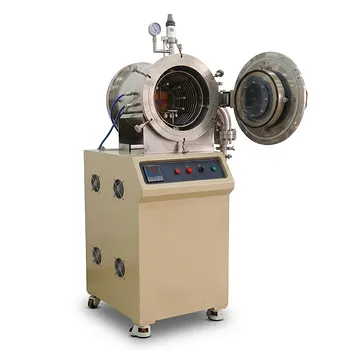
High Temperature Cold Wall High Vacuum Chamber Furnace 1400C for Advanced Material Processing
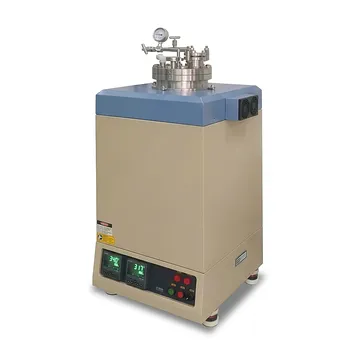
High Temperature 1000C Vacuum Furnace with 8 Inch ID Chamber for Material Sintering and Research Annealing
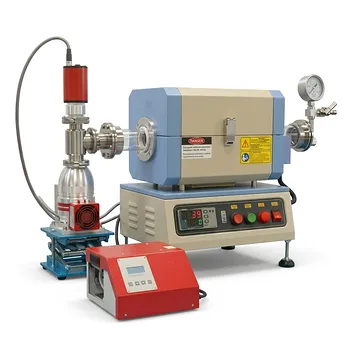
High Vacuum Compact Tube Furnace 1200C with Integrated Turbo Pump System and 8 Inch Heating Zone
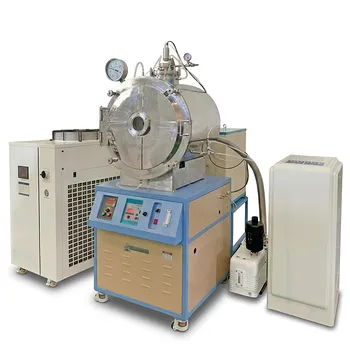
Ultra High Temperature Induction Heated Vacuum Furnace with Molten Salt Electrolysis Capability and 3000 Degree Precision Control
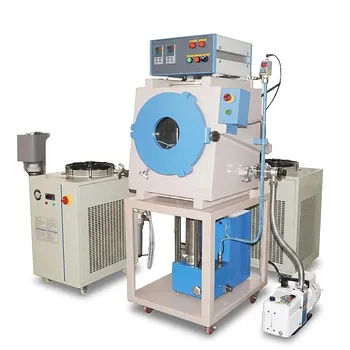
High Temperature Vacuum Lamination Hot Press Furnace Machine for Semiconductor Wafer Bonding and Advanced Composite Thermal Processing

Vertical 1700C Vacuum and Atmosphere Tube Furnace with 80mm Alumina Tube
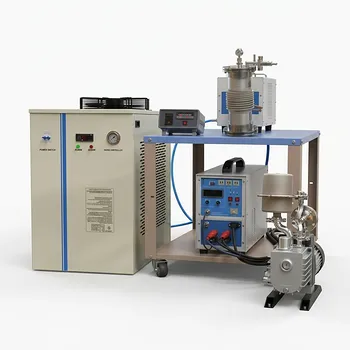
Induction Heating System with Temperature Control for High Temperature Vacuum Sintering and Melting
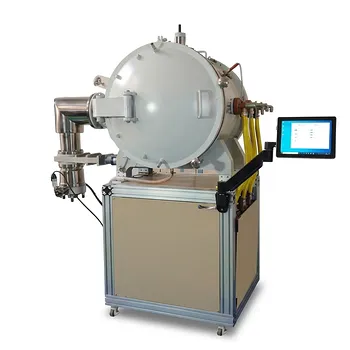
High Temperature Cold Wall Vacuum Furnace for Advanced Material Sintering and Annealing 1600C Heating Area 200x200x300mm
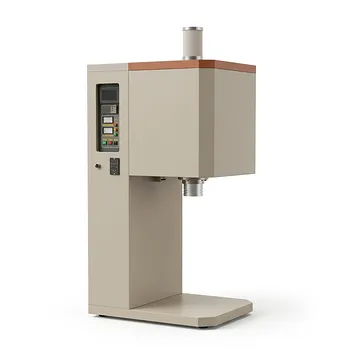
Vertical Openable Tube Furnace 0-1700c High Temperature Laboratory System for CVD and Vacuum Heat Treatment
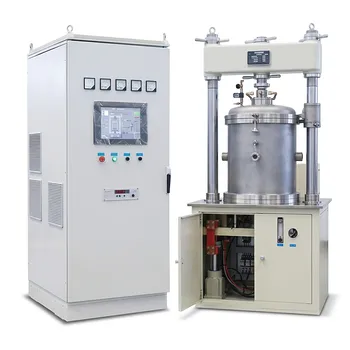
Industrial Vacuum Hot Press Furnace Machine and High Temperature Heated Vacuum Press for Advanced Material Sintering
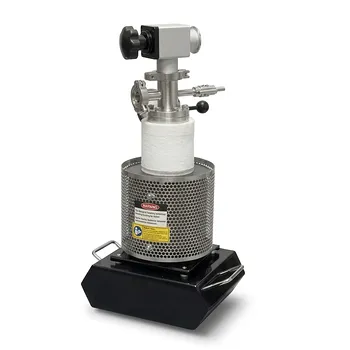
High Temperature 1100C Compact Top Loading Vertical Vacuum Tube Furnace for High Vacuum Noble Metal Melting and Material Research
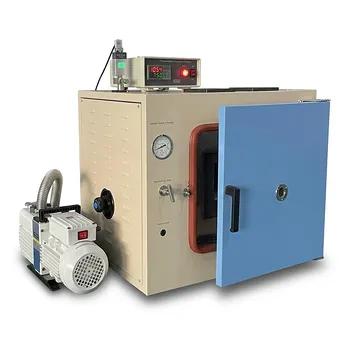
Compact High Vacuum Box Furnace 1050C Max 6.2L Ceramic Chamber Stainless Steel Shell Programmable Temperature Controller for Material Science Research
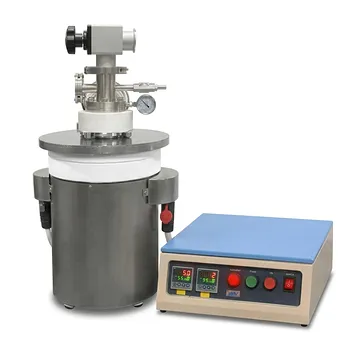
1100C High Temperature Vacuum Crucible Furnace with Quartz Chamber for Thermal Processing and Sintering

1800C High Temperature Compact Vacuum Tube Furnace with 60mm OD Alumina Tube and Kanthal MoSi2 Heating Elements
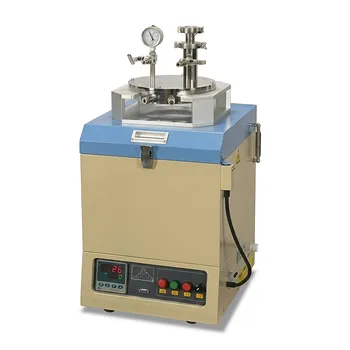
Vertical Vacuum Furnace 1100C High Temperature 8 Inch Quartz Chamber Water Cold Flange System
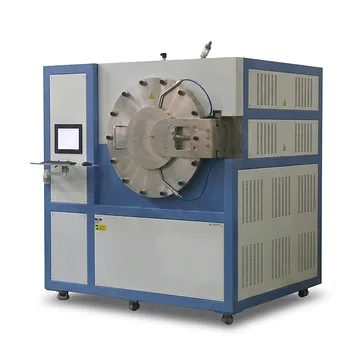
High Vacuum Pressure Chamber Furnace 800C 3.5 Bar Sintering System for Superconducting Materials
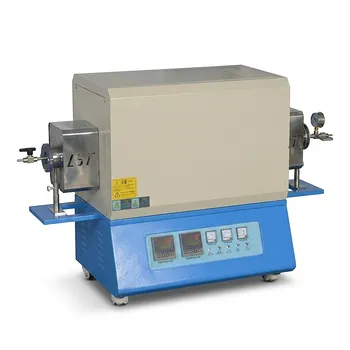
High Temperature Dual Zone Vacuum Tube Furnace for Material Research and CVD Processing
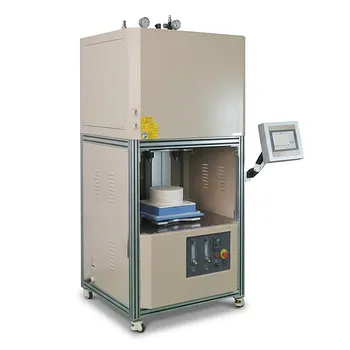
High Temperature Vertical Atmosphere Controlled Furnace 1700C Automatic Bottom Loading 13 Liter Vacuum Thermal System

1750°C High Temperature Benchtop Vacuum Atmosphere Tube Furnace with Kanthal Super 1800 Heating Elements and 60mm Alumina Processing Tube