Why is a vacuum oven required for Si-C composite drying? Achieve total decontamination & prevent oxidation.
Updated 3 months ago
For drying carbon matrix samples prepared from silicon-carbon (Si-C) composites, a high-temperature vacuum oven is required to achieve total decontamination of the material's intricate pore structure. This process removes residual moisture, solvents, and adsorbed gases that are trapped deep within micropores, which standard drying methods cannot reach. By operating under a vacuum, the system also prevents the oxidation of both the carbon and silicon components and enables the removal of oxygen-containing functional groups.
Core Takeaway: High-temperature vacuum drying is the only method capable of stripping moisture and adsorbed gases from internal micropores while simultaneously preventing the oxidative degradation of the carbon-silicon interface, ensuring the chemical purity and structural integrity of the composite.
The Challenge of Internal Decontamination
Eliminating Moisture from Micropores
Carbon matrix materials often possess high surface areas and complex micropores that naturally trap moisture and gases. Standard atmospheric drying is frequently insufficient because surface tension and ambient pressure prevent the escape of fluids from these tiny channels.
The use of high-temperature (typically 120°C to 150°C) provides the thermal energy necessary to break the bonds of residual moisture and adsorbed gas molecules. This is critical for ensuring the accuracy of subsequent physical characterization, such as surface area analysis (BET) or density testing.
Removal of High-Boiling Point Solvents
During the preparation of Si-C composites, solvents like NMP (N-Methyl-2-pyrrolidone) or ethanol are often used. These substances have high boiling points or get trapped within the carbon matrix via capillary action.
A high-vacuum environment lowers the boiling point of these solvents, allowing for efficient evaporation at lower temperatures than would otherwise be required. This ensures that the final sample is free of organic contaminants that could interfere with electrochemical performance.
Protecting Material Integrity
Preventing Surface Oxidation
Both carbon and silicon are highly sensitive to oxygen when heated. In an ambient atmosphere, high temperatures would lead to the formation of a silicon oxide layer or the "burn-off" of carbon nanotubes and powders.
The vacuum environment removes oxygen from the chamber, providing a non-oxidizing atmosphere. This allows the sample to reach the temperatures needed for drying without triggering chemical reactions that would degrade the cleanness and activity of the silicon-carbon interface.
Removing Oxygen-Containing Functional Groups
In some advanced treatments, temperatures exceeding 1000°C are used to deeply remove functional groups like carboxyl and hydroxyl groups from the carbon surface. This thermal decomposition increases the fixed carbon content and enhances electrical conductivity.
By stripping these groups under vacuum, the researcher ensures that the carbon matrix maintains high structural stability. This is a prerequisite for successful chemical vapor deposition (CVD) or sintering processes.
The Impact on Performance and Testing
Ensuring Data Accuracy
If moisture or gases remain adsorbed on the surface of the carbon matrix, they will occupy active sites. This leads to false readings during characterization, making the material appear to have a lower surface area or different density than it actually possesses.
Thorough vacuum heat treatment ensures that all surface sites are "clean." This provides a "blank slate" for testing, ensuring that property data is both reproducible and accurate.
Optimizing Electrochemical Activity
In battery applications, residual moisture can react with electrolytes to cause decomposition or gas evolution. This degrades the Initial Coulombic Efficiency (ICE) of the battery.
Vacuum drying at precise temperatures ensures that the Si-C composite can be integrated into an electrode without introducing impurities. This results in a final component with high ionic conductivity and chemical purity.
Understanding the Trade-offs
Balancing Temperature and Phase Stability
While higher temperatures improve drying efficiency, exceeding certain thresholds (such as 1300°C+) can trigger unwanted sintering or grain boundary migration. This may inadvertently change the morphology of the carbon matrix or the silicon particles.
Vacuum Integrity and Leak Risks
Maintaining a high-vacuum level is technically demanding. Even a minor leak at high temperatures can introduce enough oxygen to cause significant carbon oxidation, potentially ruining the sample before the drying cycle is complete.
How to Apply This to Your Project
Recommendations Based on Your Objectives
- If your primary focus is Physical Characterization (BET/Density): Dry the samples between 120°C and 150°C in a high-vacuum oven to ensure all adsorbed gases are removed for accurate surface area measurements.
- If your primary focus is CVD Preparation: Utilize a high-vacuum environment to remove all traces of ethanol or moisture from silicon pores to prevent the formation of an interfacial oxide layer during the CVD process.
- If your primary focus is Conductivity and Purity: Use an atmosphere or vacuum furnace at extreme temperatures (up to 1500°C) to thermally decompose oxygen-containing functional groups and maximize fixed carbon content.
- If your primary focus is Battery Electrode Performance: Perform deep drying at a minimum of 80°C under vacuum to eliminate high-boiling point solvents like NMP, which ensures electrochemical stability and high efficiency.
Maintaining a rigorous vacuum drying protocol is the technical foundation for preserving the unique physicochemical properties of silicon-carbon composite materials.
Summary Table:
| Key Challenge | Vacuum Drying Solution | Impact on Si-C Composite |
|---|---|---|
| Micropore Moisture | High-temp (120-150°C) + Vacuum | Breaks capillary bonds for total decontamination |
| Residual Solvents | Low-pressure evaporation | Removes high-boiling point NMP/ethanol efficiently |
| Surface Oxidation | Oxygen-free environment | Prevents carbon burn-off and silicon oxide layers |
| Functional Groups | High-temp (>1000°C) treatment | Removes -COOH and -OH to increase fixed carbon |
| Data Accuracy | Complete surface cleaning | Ensures reproducible BET and density test results |
Elevate Your Material Research with THERMUNITS
Precision thermal processing is critical for the success of silicon-carbon (Si-C) composite development. THERMUNITS is a leading manufacturer of high-temperature laboratory equipment, providing specialized solutions for material science and industrial R&D.
Our comprehensive range of equipment includes:
- Vacuum & Atmosphere Furnaces for oxidation-free drying.
- Tube & Rotary Furnaces for uniform sample treatment.
- CVD/PECVD Systems for advanced coating applications.
- Muffle, Hot Press, and Vacuum Induction Melting (VIM) Furnaces for diverse heat treatment needs.
Whether you are removing high-boiling point solvents or performing deep thermal decomposition of functional groups, THERMUNITS offers the reliability and temperature control required for high-performance battery materials.
Ready to optimize your drying and heat treatment process?
Contact THERMUNITS today to discuss your project requirements!
References
- Divya Rathore, J. R. Dahn. Characterizing Structure and Electrochemical Properties of Advanced Si/C Anode Materials. DOI: 10.1149/1945-7111/ada370
Mentioned Products
- High Temperature 1000C Vacuum Furnace with 8 Inch ID Chamber for Material Sintering and Research Annealing
- High Temperature Cold Wall High Vacuum Chamber Furnace 1400C for Advanced Material Processing
- 1200C High Temperature 5 Inch Split Vacuum Tube Furnace with 12 Inch Heating Zone and Separated PID Controller
- High Vacuum Compact Tube Furnace 1200C with Integrated Turbo Pump System and 8 Inch Heating Zone
- Ultra High Temperature Induction Heated Vacuum Furnace with Molten Salt Electrolysis Capability and 3000 Degree Precision Control
People Also Ask
- How does the temperature control precision of a high-temperature sintering furnace affect Na1+xLa1-xZr2O6-δ ceramics?
- How does a high-temperature sintering furnace environment enhance NdFeB magnets? Achieve 98%+ density with precision.
- What role does a high-temperature annealing furnace play in forming ordered Pt3(CoNi) intermetallic catalysts?
- What is the function of high-vacuum furnaces in (Mo2/3V1/3)n+1AlCn MAX phase synthesis? Ensure Purity & Diffusion.
- How does a vacuum or atmosphere sintering furnace contribute to the congener-welding process of carbon nitride membranes?

Tech Team · ThermUnits
Last updated on Jun 02, 2026
Related Products
High Temperature 1000C Vacuum Furnace with 8 Inch ID Chamber for Material Sintering and Research Annealing
High Temperature Cold Wall High Vacuum Chamber Furnace 1400C for Advanced Material Processing
1200C High Temperature 5 Inch Split Vacuum Tube Furnace with 12 Inch Heating Zone and Separated PID Controller

High Vacuum Compact Tube Furnace 1200C with Integrated Turbo Pump System and 8 Inch Heating Zone
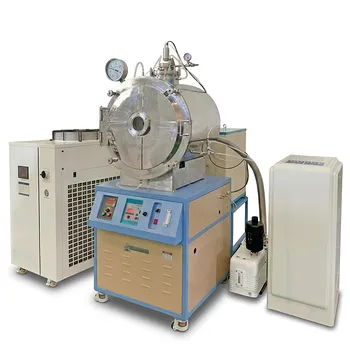
Ultra High Temperature Induction Heated Vacuum Furnace with Molten Salt Electrolysis Capability and 3000 Degree Precision Control
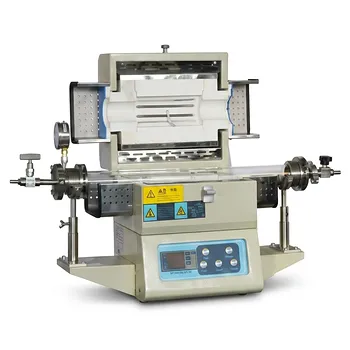
High Temperature 1200C Split Tube Furnace for CVD Research and Vacuum Atmosphere Heat Treatment
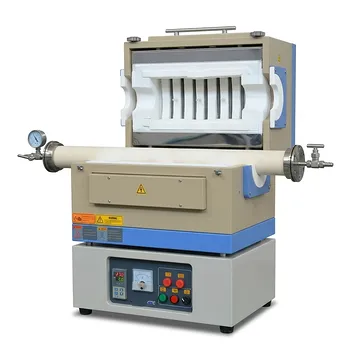
High Temperature 1600C Split Tube Furnace Vacuum Flanges Valves Optional 60mm 80mm Alumina Tube
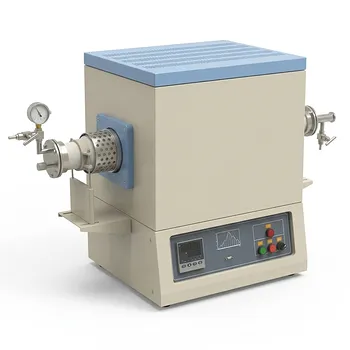
1750°C High Temperature Benchtop Vacuum Atmosphere Tube Furnace with Kanthal Super 1800 Heating Elements and 60mm Alumina Processing Tube
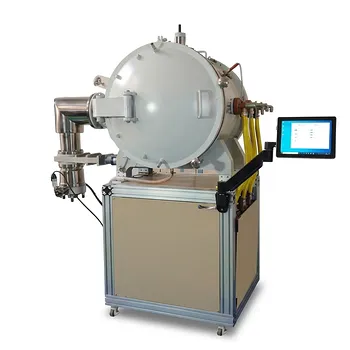
High Temperature Cold Wall Vacuum Furnace for Advanced Material Sintering and Annealing 1600C Heating Area 200x200x300mm
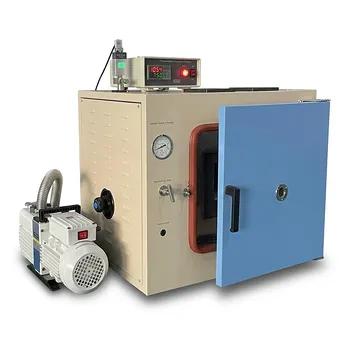
Compact High Vacuum Box Furnace 1050C Max 6.2L Ceramic Chamber Stainless Steel Shell Programmable Temperature Controller for Material Science Research

1800C High Temperature Compact Vacuum Tube Furnace with 60mm OD Alumina Tube and Kanthal MoSi2 Heating Elements
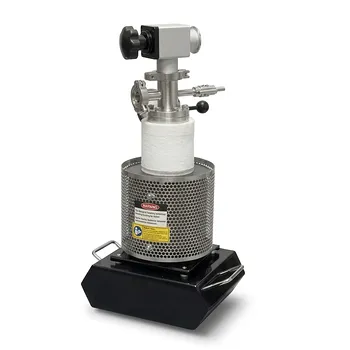
High Temperature 1100C Compact Top Loading Vertical Vacuum Tube Furnace for High Vacuum Noble Metal Melting and Material Research

Vertical 1700C Vacuum and Atmosphere Tube Furnace with 80mm Alumina Tube
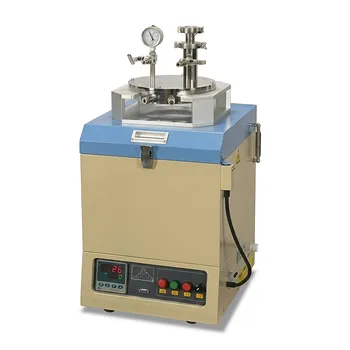
Vertical Vacuum Furnace 1100C High Temperature 8 Inch Quartz Chamber Water Cold Flange System
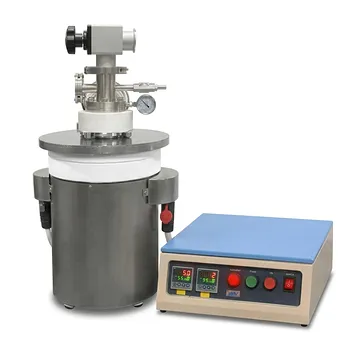
1100C High Temperature Vacuum Crucible Furnace with Quartz Chamber for Thermal Processing and Sintering
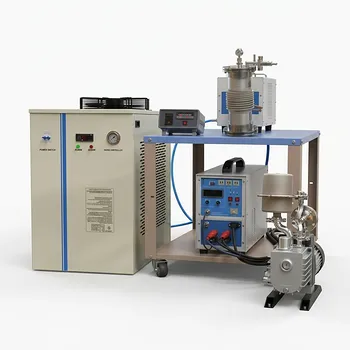
Induction Heating System with Temperature Control for High Temperature Vacuum Sintering and Melting
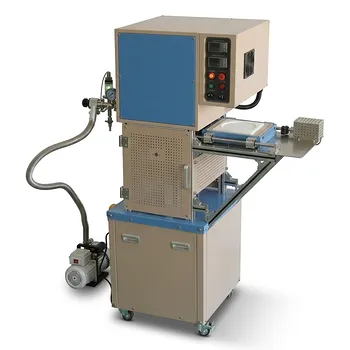
1200°C Bottom Loading Vacuum Furnace with Rapid Gas Cooling and 8.6 Inch Diameter Quartz Chamber

High Temperature 1700C Tube Furnace with High Vacuum Turbomolecular Pump System and Multi Channel Mass Flow Controller Gas Mixer
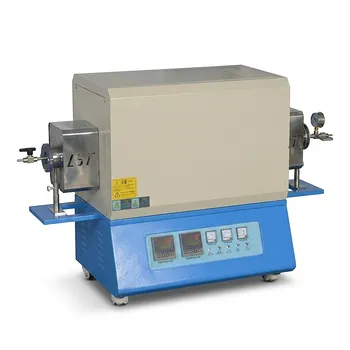
High Temperature Dual Zone Vacuum Tube Furnace for Material Research and CVD Processing