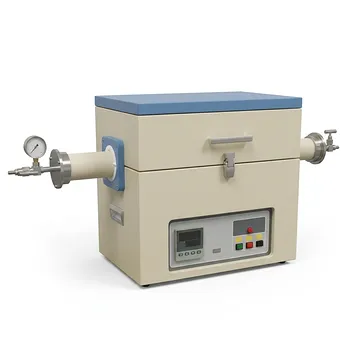
What are the technical advantages of using a Vacuum Tube Furnace for biochar production? Optimize Yield and Porosity
Updated 3 months ago
The fundamental advantage of a Vacuum Tube Furnace in biochar production is its ability to maintain a strictly oxygen-free, reductive environment. This prevents the oxidative combustion of raw materials at high temperatures, ensuring that biomass is carbonized into high-quality biochar rather than being consumed by fire or reduced to ash.
Core Takeaway: By combining vacuum capabilities with a continuous nitrogen flow, a tube furnace provides superior protection of the carbon skeleton and enables the development of highly porous, chemically stable structures that are unattainable in traditional, air-exposed muffle furnaces.
Superior Atmospheric Integrity and Carbon Preservation
Absolute Exclusion of Oxygen
A vacuum tube furnace allows for the complete evacuation of air before the introduction of high-purity nitrogen. This dual-stage purging ensures that even trace amounts of oxygen are removed, preventing aerobic combustion of the biomass at high temperatures, such as 900°C.
Maximizing Biochar Yield
In a traditional muffle furnace, slight oxygen leakage or trapped air can lead to "burn-off," where carbon reacts with oxygen to form CO2. The inert atmosphere of a tube furnace minimizes these oxidation losses, preserving the carbon skeleton and resulting in a significantly higher yield of fixed carbon.
Enhanced Pore Development
The absence of oxygen allows the material to undergo controlled pyrolysis, where volatiles are removed without collapsing the delicate cellular structure of the biomass. This leads to biochar with more developed pores and a higher surface area, which is critical for its performance as an adsorbent or catalyst.
Chemical and Structural Precision
Promotion of Aromatic Structures
The controlled reductive environment, often enhanced by chemical modifiers, more effectively induces the formation of aromatic structures. This transition is essential for converting high-viscosity residues into high-performance adsorbent carbon materials with superior chemical stability.
Purity Through Volatile Removal
The vacuum capability of a tube furnace facilitates the efficient removal of outgassed volatiles and impurities during the heating process. This results in a cleaner carbon matrix and prevents the re-deposition of tars that can clog the newly formed pores.
Nano-scale Reorganization
In advanced applications, such as nitrogen-doping, the tube furnace environment allows carbon and nitrogen sources to reorganize at the nanoscale. This creates a highly conductive carbon matrix and introduces specific functional sites that are vital for electrochemical applications.
Understanding the Trade-offs
Equipment Complexity and Cost
Vacuum tube furnaces are significantly more complex to operate and maintain than traditional muffle furnaces. They require specialized vacuum pumps, gas flow controllers, and high-purity gas supplies, which increases the initial capital investment and operational costs.
Throughput and Sample Geometry
The cylindrical geometry of a tube furnace inherently limits the volume of material that can be processed at once compared to the boxy chamber of a muffle furnace. Additionally, the tube's diameter restricts the size and shape of the crucibles or boats used to hold the biomass.
Maintenance of Airtight Seals
Maintaining the integrity of the vacuum seals at high temperatures is a constant challenge. Any degradation in the O-rings or fittings can introduce oxygen, compromising the entire batch and potentially damaging the heating elements or the sample.
Choosing the Right Furnace for Your Research
How to Apply This to Your Project
To determine which furnace best suits your biochar production goals, consider the specific requirements of your end product.
- If your primary focus is high-performance adsorbents or electronics: Use a vacuum tube furnace to ensure maximum surface area, high purity, and the development of specific aromatic structures.
- If your primary focus is basic soil amendment or large-scale yield studies: A traditional muffle furnace with basic atmosphere control may be more cost-effective for processing larger volumes at lower temperatures.
- If your primary focus is high-precision laboratory analysis: The vacuum tube furnace is the definitive choice for ensuring experimental reproducibility and the preservation of the material's integrity.
A vacuum tube furnace transforms biochar production from simple burning into a precise chemical engineering process.
Summary Table:
| Feature | Vacuum Tube Furnace (N₂ Atmosphere) | Traditional Muffle Furnace |
|---|---|---|
| Atmosphere Control | Absolute oxygen exclusion (Vacuum + Purge) | Limited; prone to air leakage/oxidation |
| Biochar Yield | High; prevents carbon "burn-off" | Lower; carbon often lost to CO₂ |
| Pore Structure | Highly developed; maintains cell skeleton | Potential structural collapse/clogging |
| Product Purity | High; efficient removal of volatiles | Lower; potential tar re-deposition |
| Best For | Advanced adsorbents, catalysts, electronics | Basic soil amendments, large-scale studies |
Elevate Your Material Research with THERMUNITS Precision Engineering
Choosing the right thermal environment is critical for the success of your high-performance material synthesis. As a leading manufacturer of high-temperature laboratory equipment, THERMUNITS provides the advanced technology required for rigorous material science and industrial R&D.
Whether you are developing next-generation biochar, advanced catalysts, or specialized electronic materials, our comprehensive range of equipment is designed to meet your exact specifications:
- Precision Furnaces: Muffle, Vacuum, Atmosphere, Tube, and Rotary Furnaces.
- Advanced Systems: CVD/PECVD systems, Hot Press Furnaces, and Vacuum Induction Melting (VIM) units.
- Specialized Tools: Dental Furnaces, Electric Rotary Kilns, and high-quality Thermal Elements.
Don't let atmospheric contamination compromise your results. Contact THERMUNITS today to discuss your project requirements with our experts and find the perfect heat treatment solution for your laboratory.
References
- Sha Zhang, Shuge Tian. Spectral characterization of the impact of modifiers and different prepare temperatures on snow lotus medicinal residue-biochar and dissolved organic matter. DOI: 10.1038/s41598-024-57553-6
Mentioned Products
- Compact Vertical Split Quartz Tube Furnace with Stainless Steel Vacuum Flanges for Rapid Thermal Quenching and Controlled Atmosphere Material Processing
- Vertical 1700C Vacuum and Atmosphere Tube Furnace with 80mm Alumina Tube
- 1000C Mini Tube Furnace with 20mm Quartz Tube and Vacuum Flanges for Material Science Research and Controlled Atmosphere Small Sample Processing
- Compact Split Tube Furnace with Integrated Vacuum System and Precision Temperature Calibrator
- 1750°C High Temperature Benchtop Vacuum Atmosphere Tube Furnace with Kanthal Super 1800 Heating Elements and 60mm Alumina Processing Tube
People Also Ask
- Why integrate a vertical split tube furnace with hydraulic loading for HSECC? Essential for In-Situ Fire Simulation.
- What is the role of a split vertical tube furnace during flash sintering of 8YSZ and 20SDC? Master Ultra-Fast R&D
- What is the primary engineering purpose for using a customized ventilation hood when operating a split tube furnace? RCF Safety
- Why is a quartz tube furnace necessary for phosphorus-doped MoS2/GO preparation? Ensure Purity & Precise Synthesis
- What is the primary function of a Quartz Tube Furnace in ZnO VLS growth? Master High-Precision Nanowire Synthesis

Tech Team · ThermUnits
Last updated on Jun 02, 2026
Related Products

Compact Vertical Split Quartz Tube Furnace with Stainless Steel Vacuum Flanges for Rapid Thermal Quenching and Controlled Atmosphere Material Processing

Vertical 1700C Vacuum and Atmosphere Tube Furnace with 80mm Alumina Tube
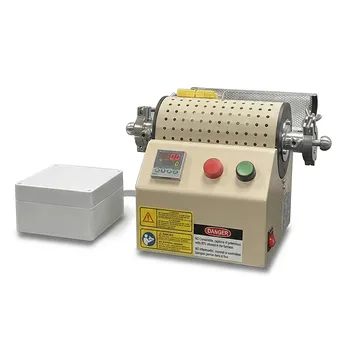
1000C Mini Tube Furnace with 20mm Quartz Tube and Vacuum Flanges for Material Science Research and Controlled Atmosphere Small Sample Processing
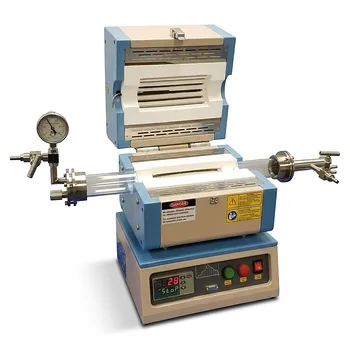
Compact Split Tube Furnace with Integrated Vacuum System and Precision Temperature Calibrator

1750°C High Temperature Benchtop Vacuum Atmosphere Tube Furnace with Kanthal Super 1800 Heating Elements and 60mm Alumina Processing Tube
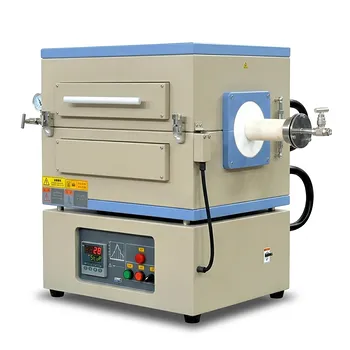
1500°C Split Tube Furnace with Alumina Tube and Vacuum Sealing Flanges for Material Research

1100°C High Temperature Quartz Chamber Furnace 8 Inch OD with 7.6 Liter Capacity and Vacuum Atmosphere Capability
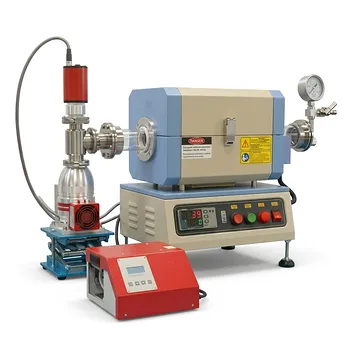
High Vacuum Compact Tube Furnace 1200C with Integrated Turbo Pump System and 8 Inch Heating Zone

High Temperature 1700C Tube Furnace with High Vacuum Turbomolecular Pump System and Multi Channel Mass Flow Controller Gas Mixer
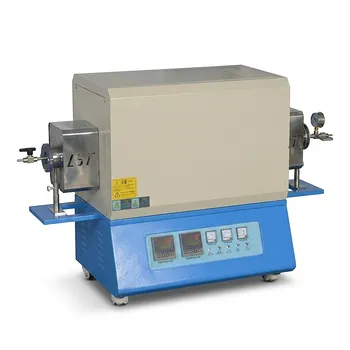
High Temperature Dual Zone Vacuum Tube Furnace for Material Research and CVD Processing
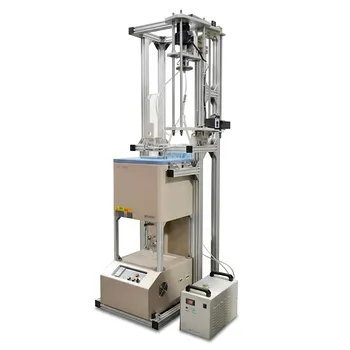
500C Vacuum Vertical Tube Furnace 84mm OD Sample Rotation Lifting System
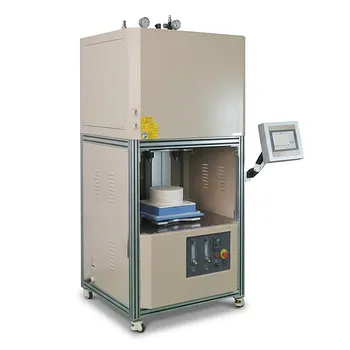
High Temperature Vertical Atmosphere Controlled Furnace 1700C Automatic Bottom Loading 13 Liter Vacuum Thermal System

High Temperature 1700C Vertical Tube Furnace for Powder Spherification and Material Sintering
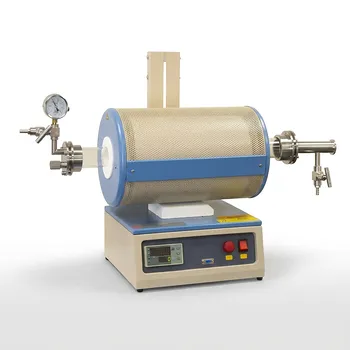
1100C Tube Furnace with Vacuum Flange and Programmable Temperature Controller for Material Science and Industrial Heat Treatment
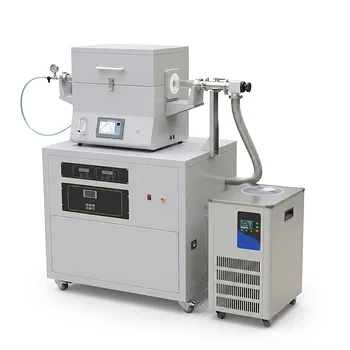
Split Chamber CVD Tube Furnace with Vacuum Station Chemical Vapor Deposition System Machine

High Temperature Automated 5 Inch Tube Furnace for Autonomous Material Research and Advanced Laboratory R&D

1800C High Temperature Compact Vacuum Tube Furnace with 60mm OD Alumina Tube and Kanthal MoSi2 Heating Elements
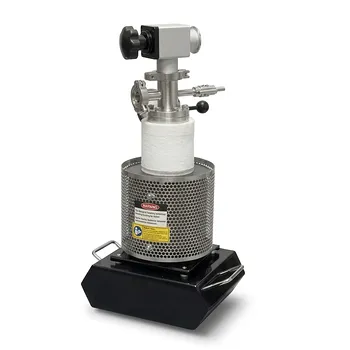
High Temperature 1100C Compact Top Loading Vertical Vacuum Tube Furnace for High Vacuum Noble Metal Melting and Material Research
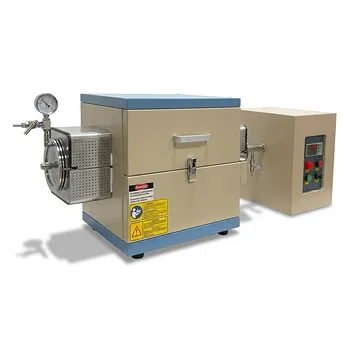
1200C High Temperature 5 Inch Split Vacuum Tube Furnace with 12 Inch Heating Zone and Separated PID Controller