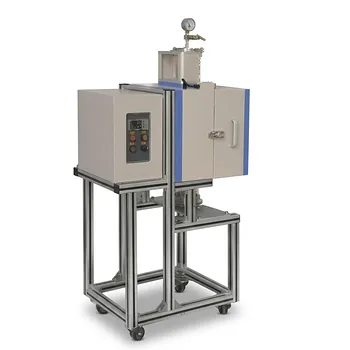
What core conditions does a tube furnace provide for lignin graphitization? Key Factors for High-Quality Graphene
Updated 3 months ago
A high-purity tube furnace serves as a controlled chemical reactor that provides a stable 1000 °C thermal environment and a high-purity argon protective atmosphere. These core conditions are essential for the catalytic graphitization of lignin, enabling carbon atoms to dissolve into metal nanoparticles and precipitate as uniform metal-core/graphene-shell (M@G) structures while preventing any oxidation of the carbon source.
Core Takeaway: The high-purity tube furnace is the critical enabler of the lignin-to-graphene transformation by providing the precise thermal energy and atmospheric isolation required to drive atomic-level carbon rearrangement into ordered crystalline structures.
Precise Thermal Dynamics for Carbon Transformation
Managing High-Temperature Stability
The furnace maintains a consistent 1000 °C isothermal zone, which provides the thermal energy necessary to overcome atomic diffusion energy barriers. This stable heat allows lignin-derived carbon atoms to move freely and integrate into the metallic catalysts.
Controlling Heating and Cooling Rates
Precise control over heating rates (typically 10 °C to 20 °C per minute) ensures that deoxygenation and carbonization occur predictably. Gradual heating prevents structural collapse and allows for the steady gasification of templates or impurities.
Facilitating Carbon Dissolution
At these specific temperatures, the furnace enables the dissolution-precipitation mechanism. Carbon atoms from the lignin source dissolve into metal nanoparticles and subsequently precipitate to form the protective graphene shells that characterize the M@G structure.
Atmospheric Integrity and Chemical Protection
The Role of High-Purity Argon
The use of high-purity argon creates a strictly inert environment that is superior for sensitive catalytic processes. This atmosphere prevents the uncontrolled combustion of lignin and protects the nascent graphene layers from oxygen contamination.
Precision Sealing and Vacuum Integrity
The furnace’s sealing system is critical for maintaining the purity of the internal environment. High-quality seals prevent the ingress of ambient oxygen, which would otherwise oxidize the carbon source and degrade the quality of the final graphitized product.
Removal of Volatile By-products
The atmosphere control system also manages the removal of decomposition products, such as those from polystyrene hard templates or soft templates. This continuous purging ensures that the resulting biomass-derived carbon membrane maintains high conductivity and an interconnected pore structure.
Understanding the Trade-offs
Chemical Corrosion vs. Structural Longevity
Processes involving chemical activation agents (like K2CO3 or ZnCl2) can release corrosive vapors at high temperatures. While these agents improve pore distribution, they can damage standard quartz tubes, requiring the use of alumina crucibles or specialized corrosion-resistant components.
Inert Gas Selection: Argon vs. Nitrogen
While nitrogen is often used for general carbonization due to its lower cost, argon is preferred for high-purity catalytic graphitization. Argon is completely inert, whereas nitrogen can sometimes react with certain metal catalysts or form nitrides at extreme temperatures, potentially altering the chemical signature of the M@G structure.
Thermal Gradients and Uniformity
In larger tube furnaces, maintaining a perfectly uniform temperature across the entire sample can be challenging. Variations in the isothermal zone can lead to uneven graphene layer growth, resulting in a mix of graphitized and amorphous carbon regions within the same batch.
How to Apply This to Your Project
When selecting or operating a tube furnace for lignin graphitization, your configuration should match your specific material goals:
- If your primary focus is high-quality M@G structures: Prioritize a furnace with high-precision temperature controllers and utilize high-purity argon to ensure uniform graphene shell growth.
- If your primary focus is pore size regulation and surface chemistry: Focus on a system equipped for chemical activation that includes robust exhaust treatment to handle corrosive by-products safely.
- If your primary focus is large-scale carbonization for biochar: A horizontal tube furnace using high-purity nitrogen may be the most cost-effective solution for achieving stable deoxygenation.
By mastering these environmental variables, you can precisely transition lignin from a raw biomass precursor into a high-value, long-range ordered crystalline graphite material.
Summary Table:
| Core Condition | Role in Lignin Graphitization | Key Benefit |
|---|---|---|
| 1000°C Isothermal Zone | Facilitates carbon dissolution into metal catalysts | Ensures uniform M@G structure growth |
| Inert Argon Atmosphere | Prevents carbon oxidation and contamination | Produces high-purity crystalline carbon |
| Precise Ramp Rates | Controls deoxygenation and carbonization stages | Prevents structural collapse of precursors |
| Vacuum-Tight Sealing | Maintains atmospheric integrity during reaction | Protects nascent graphene layers from oxygen |
Elevate Your Material Research with THERMUNITS
As a leading manufacturer of high-temperature laboratory equipment, THERMUNITS provides the precision and reliability required for advanced material science and industrial R&D. Our high-purity Tube Furnaces are specifically engineered to maintain the rigorous isothermal zones and atmospheric integrity necessary for lignin-to-graphene transformation.
Beyond tube furnaces, we offer a comprehensive range of thermal processing solutions, including:
- Muffle, Vacuum, and Atmosphere Furnaces
- Rotary and Hot Press Furnaces
- CVD/PECVD Systems and Dental Furnaces
- Electric Rotary Kilns and Vacuum Induction Melting (VIM) Furnaces
- Thermal Elements and high-end laboratory heat treatment accessories.
Whether you are focusing on catalytic graphitization, pore size regulation, or large-scale carbonization, our expert team is ready to help you find the perfect system.
Contact THERMUNITS today to optimize your heat treatment process!
References
- Qiangu Yan, Zhiyong Cai. Tuning thermal and graphitization behaviors of lignin <i>via</i> complexation with transition metal ions for the synthesis of multilayer graphene-based materials. DOI: 10.1039/d3ra05881f
Mentioned Products
- High Temperature 1700C Benchtop Tube Furnace with 5 Inch Heating Zone High Purity Alumina Tube and Vacuum Sealing Flanges
- High Temperature Vertical Atmosphere Controlled Furnace with Automatic Bottom Loading and 1700°C Capacity for Advanced Material Research
- 1200C Max 6 Channel High Cleanliness Hydrogen Furnace for High Throughput Annealing
- High Vacuum Compact Tube Furnace 1200C with Integrated Turbo Pump System and 8 Inch Heating Zone
- 1200C High Throughput Multi Channel Tube Furnace with 50mm Quartz Tubes for Annealing and Material Phase Diagram Research
People Also Ask
- How are high-temperature tube furnaces utilized to repair etching damage? Precision Lattice Restoration Solutions
- What is the function of a high-temperature tube furnace in the synthesis of g-C3N4? Optimize Thermal Polycondensation
- What impact does the heating rate of a tube furnace have on biochar microstructure? Optimize Your Material R&D.
- What is the role of a high-temperature tube furnace in the calcination process of ZnO/In2O3 nanocomposites?
- Conditions for nZVI Synthesis in Tube Furnaces? Learn to Optimize Thermal and Atmospheric Control for High Purity.

Tech Team · ThermUnits
Last updated on Jun 02, 2026
Related Products

High Temperature 1700C Benchtop Tube Furnace with 5 Inch Heating Zone High Purity Alumina Tube and Vacuum Sealing Flanges
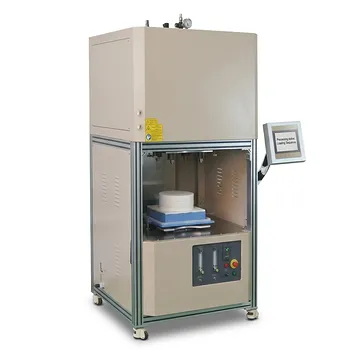
High Temperature Vertical Atmosphere Controlled Furnace with Automatic Bottom Loading and 1700°C Capacity for Advanced Material Research
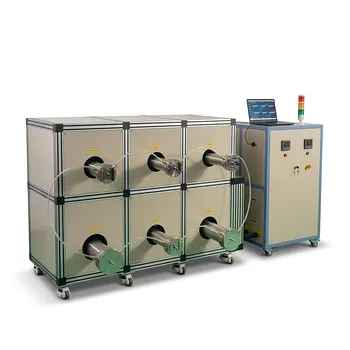
1200C Max 6 Channel High Cleanliness Hydrogen Furnace for High Throughput Annealing
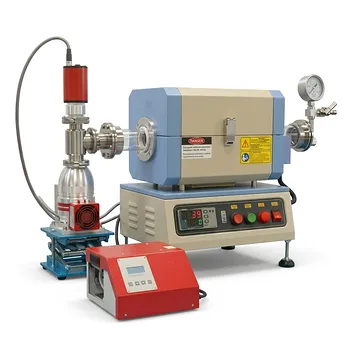
High Vacuum Compact Tube Furnace 1200C with Integrated Turbo Pump System and 8 Inch Heating Zone
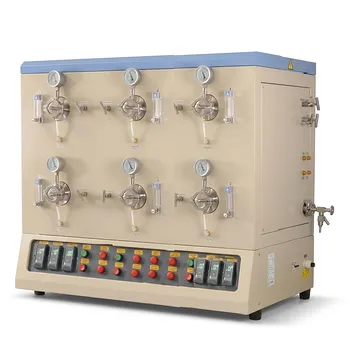
1200C High Throughput Multi Channel Tube Furnace with 50mm Quartz Tubes for Annealing and Material Phase Diagram Research

Compact High Temperature 1600C Tube Furnace with 50mm Alumina Tube and Vacuum Flanges for Material Sintering
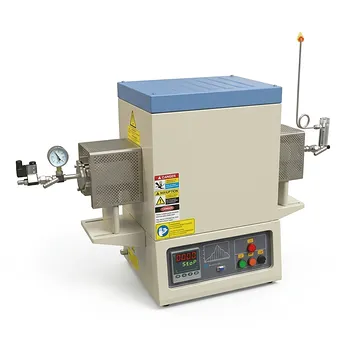
1700C Hydrogen Gas Tube Furnace with 60mm Alumina Process Tube and Integrated Hydrogen Safety Detector

High Temperature Automated 5 Inch Tube Furnace for Autonomous Material Research and Advanced Laboratory R&D
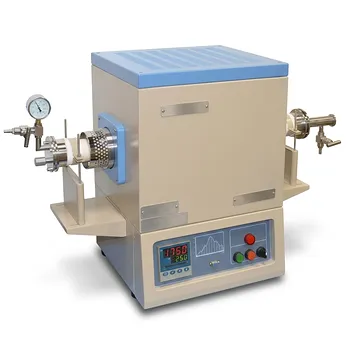
High Temperature Compact Vacuum Tube Furnace 1750C Max 60mm OD Alumina Tube

High Temperature 1700C Tube Furnace with High Vacuum Turbomolecular Pump System and Multi Channel Mass Flow Controller Gas Mixer
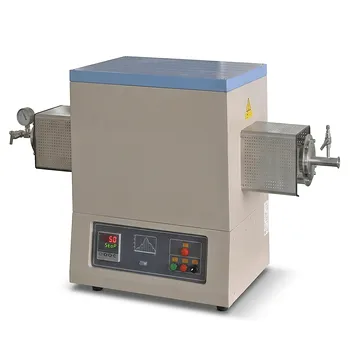
High Temperature 1700C Tube Furnace with 4 Inch OD Alumina Tube and Vacuum Sealing Flanges

Vertical 1700C Vacuum and Atmosphere Tube Furnace with 80mm Alumina Tube

High Temperature 1700C Vertical Tube Furnace for Powder Spherification and Material Sintering
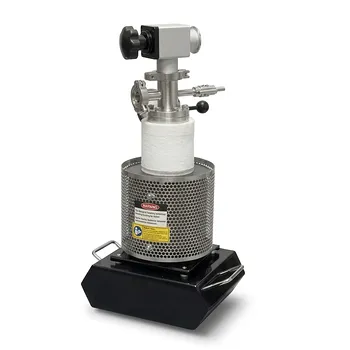
High Temperature 1100C Compact Top Loading Vertical Vacuum Tube Furnace for High Vacuum Noble Metal Melting and Material Research

1800C High Temperature Compact Vacuum Tube Furnace with 60mm OD Alumina Tube and Kanthal MoSi2 Heating Elements
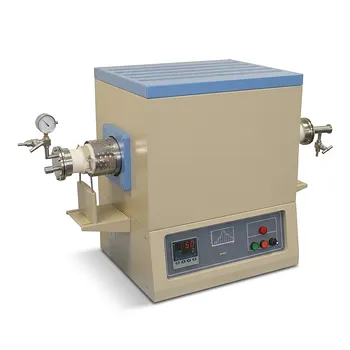
1700C High Temperature Alumina Tube Furnace with 18 Inch Heated Zone and Vacuum Sealing Flanges
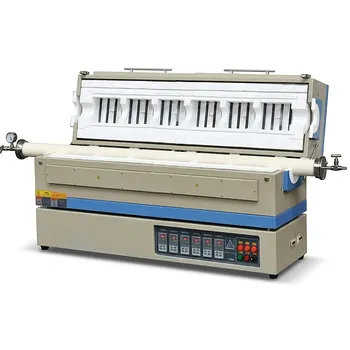
High Temperature 1700C Six Zone Split Tube Furnace with Alumina Tube and Water Cooled Flanges
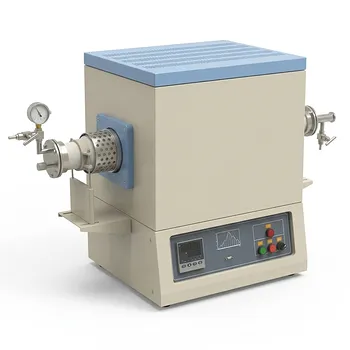
1750°C High Temperature Benchtop Vacuum Atmosphere Tube Furnace with Kanthal Super 1800 Heating Elements and 60mm Alumina Processing Tube
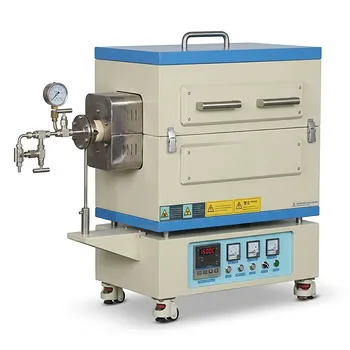
High Temperature Split Tube Furnace 1500C for Material Research Vacuum and Atmosphere Thermal Processing