What core process conditions does a laboratory vacuum tube furnace provide for Fe3Al powder? Optimize D03 Phase Purity
Updated 3 months ago
For the ordering treatment of Fe₃Al powder, a laboratory vacuum tube furnace provides a high-vacuum environment (10⁻³ Pa), a precise argon protective atmosphere, and a stable 500°C thermal field. These conditions collectively eliminate oxidation risks while providing the thermal energy necessary for disordered solid solutions to transition into an ordered Fe₃Al phase characterized by a D0₃ superlattice structure.
The laboratory vacuum tube furnace functions as a controlled environment that balances atmospheric purity with precise thermal energy. By suppressing chemical reactivity and driving long-range atomic migration, it facilitates the critical phase transformation required to optimize the magnetic and structural properties of Fe₃Al powders.
Atmospheric Integrity and Oxidation Prevention
The Role of High-Vacuum Environments
The furnace maintains a vacuum level as deep as 10⁻³ Pa, which is essential for handling reactive metal powders. At the 500°C temperatures required for annealing, even trace amounts of oxygen can lead to surface oxidation, which degrades the purity and performance of the Fe₃Al powder.
Argon Atmosphere Protection
Beyond the initial vacuum, the furnace provides a precise argon protective atmosphere to further shield the powder. This inert gas environment prevents the oxidation of active elements like aluminum, ensuring the chemical composition of the powder remains stable throughout the heating cycle.
Eliminating Surface Contamination
By removing reactive gases, the furnace ensures that the powder's surface remains "clean" during the treatment. This is vital for subsequent processes, as any oxide layer formed during annealing would interfere with the material's functional performance or secondary manufacturing steps like laser cladding.
Thermal Dynamics of Atomic Ordering
Facilitating Long-Range Atomic Migration
The core of the ordering treatment is the stable temperature field provided by the furnace. At a constant 500°C, the furnace provides sufficient kinetic energy to trigger long-range atomic migration, allowing atoms to move into their thermodynamically preferred positions.
Formation of the D0₃ Superlattice
This atomic movement enables the transition from a disordered solid solution into a highly organized Fe₃Al phase. The resulting D0₃ superlattice structure is the primary driver behind the material’s optimized magnetic and mechanical properties.
Uniformity and Phase Purity
The linear heating space of the tube furnace ensures that the entire powder batch experiences a uniform temperature field. This consistency is necessary to achieve a high degree of phase purity, preventing the localized formation of undesirable phases or residual disordered regions.
Understanding the Trade-offs
Thermal Inertia and Cooling Rates
While tube furnaces offer excellent temperature stability, they often suffer from high thermal inertia. This means that cooling the powder back to room temperature can be slow, which may lead to unintended grain growth if the cooling rate is not strictly managed.
Batch Size and Scaling Constraints
Laboratory tube furnaces are designed for precision rather than volume. While they provide the perfect environment for researching phase transition kinetics, they are typically limited to small batch sizes, making them less efficient for large-scale production compared to industrial vacuum furnaces.
Material Compatibility
The choice of the furnace tube (quartz vs. ceramic) is a critical trade-off. While quartz offers high purity and transparency, it has a lower temperature limit than ceramic tubes, which may be required if the process needs to exceed standard annealing temperatures for other alloy systems.
How to Apply These Conditions to Your Project
Recommendations for Process Optimization
- If your primary focus is maximizing magnetic performance: Prioritize the duration of the 500°C soak to ensure complete transformation into the D0₃ superlattice structure.
- If your primary focus is preventing surface oxidation: Ensure the vacuum reaches at least 10⁻³ Pa before introducing argon and beginning the heating ramp.
- If your primary focus is grain size control: Monitor the heating and cooling rates closely to prevent excessive solid-state diffusion and moderate grain growth.
- If your primary focus is chemical purity: Use a high-purity argon gas (99.999%) and a clean ceramic or quartz tube to avoid elemental doping or contamination from the furnace environment.
By precisely controlling the vacuum-thermal environment, you can transform raw Fe₃Al powder into a high-performance material with a stable, ordered crystalline structure.
Summary Table:
| Parameter | Ideal Condition | Impact on Fe₃Al Treatment |
|---|---|---|
| Vacuum Level | 10⁻³ Pa | Eliminates oxygen to prevent surface oxidation/degradation. |
| Atmosphere | Argon (Inert) | Protects active elements (Al) and ensures chemical stability. |
| Thermal Field | Constant 500°C | Triggers long-range atomic migration for ordering. |
| Target Phase | D0₃ Superlattice | Optimizes magnetic and mechanical structural properties. |
| Tube Material | Quartz / Ceramic | Ensures high purity and prevents elemental contamination. |
Precision Thermal Processing for Material Science Excellence
Unlock the full potential of your alloy research with high-performance laboratory equipment from THERMUNITS. As a leading manufacturer of high-temperature solutions, we provide the vacuum integrity and thermal stability essential for complex processes like the ordering treatment of Fe₃Al powder.
Our comprehensive range of equipment is engineered for industrial R&D and academic precision, including:
- Vacuum & Atmosphere Tube Furnaces (Ideal for Fe₃Al ordering)
- Muffle, Rotary, and Hot Press Furnaces
- CVD/PECVD Systems for advanced coating
- Vacuum Induction Melting (VIM) & Dental Furnaces
Whether you are focusing on phase transition kinetics or enhancing magnetic performance, THERMUNITS offers the reliable heating space and atmospheric control your project demands.
Ready to elevate your lab's capabilities?
Contact THERMUNITS Today to consult with our experts for a tailored heat treatment solution.
References
- Xixi Luo, Ziyan Liu. Enhanced microwave absorption performance of Fe<sub>3</sub>Al flakes by optimizing the carbon nanotube coatings. DOI: 10.1039/d4ra00955j
Mentioned Products
- 1800C High Temperature Compact Vacuum Tube Furnace with 60mm OD Alumina Tube and Kanthal MoSi2 Heating Elements
- High Temperature 1200C Split Tube Furnace with Hinged Vacuum Flanges and 4 Inch Quartz Tube for Laboratory Research
- Compact Split Tube Furnace with Integrated Vacuum System and Precision Temperature Calibrator
- 1000C Mini Tube Furnace with 20mm Quartz Tube and Vacuum Flanges for Material Science Research and Controlled Atmosphere Small Sample Processing
- High Temperature Automated 5 Inch Tube Furnace for Autonomous Material Research and Advanced Laboratory R&D
People Also Ask
- What core functions does a high-temperature vacuum tube furnace provide? Optimize np-CuSn Sintering & Joint Integrity
- What is the primary function of a high-temperature tube furnace in Cu1-N-C synthesis? Precision Thermal Control.
- What impact does the heating rate of a tube furnace have on biochar microstructure? Optimize Your Material R&D.
- How is a high-temperature tube furnace utilized to convert a nickel/carbon coating into a porous nickel Microporous Layer?
- What is the function of a high-temperature tube furnace in the annealing of Ni-N-C composites? Optimize Catalyst Synthesis

Tech Team · ThermUnits
Last updated on Jun 03, 2026
Related Products

1800C High Temperature Compact Vacuum Tube Furnace with 60mm OD Alumina Tube and Kanthal MoSi2 Heating Elements
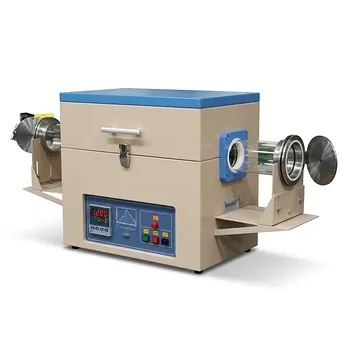
High Temperature 1200C Split Tube Furnace with Hinged Vacuum Flanges and 4 Inch Quartz Tube for Laboratory Research
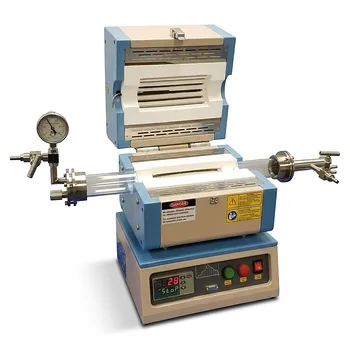
Compact Split Tube Furnace with Integrated Vacuum System and Precision Temperature Calibrator
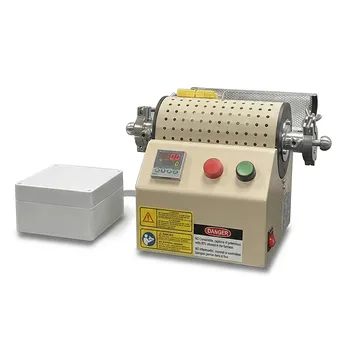
1000C Mini Tube Furnace with 20mm Quartz Tube and Vacuum Flanges for Material Science Research and Controlled Atmosphere Small Sample Processing

High Temperature Automated 5 Inch Tube Furnace for Autonomous Material Research and Advanced Laboratory R&D
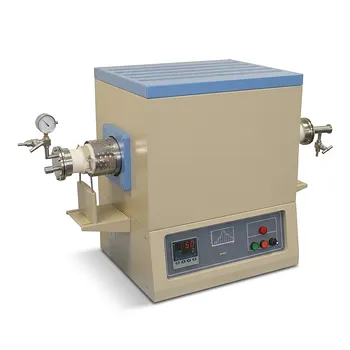
1700C High Temperature Alumina Tube Furnace with 18 Inch Heated Zone and Vacuum Sealing Flanges
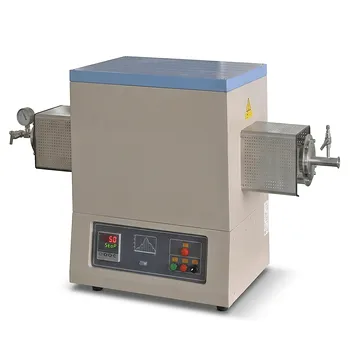
High Temperature 1700C Tube Furnace with 4 Inch OD Alumina Tube and Vacuum Sealing Flanges
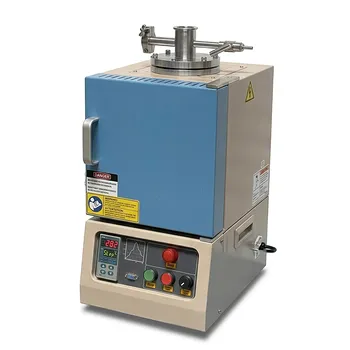
High Temperature Hybrid Muffle and Tube Furnace with Vacuum Capability and PID Control
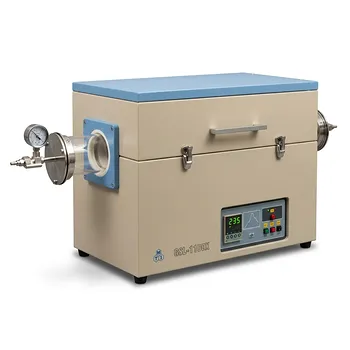
Single Zone Tube Furnace 5 Inch Quartz Tube 36 Inch Heating Zone Vacuum Flanges
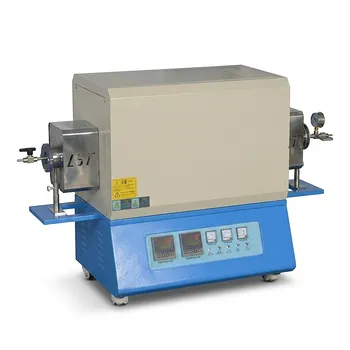
High Temperature Dual Zone Vacuum Tube Furnace for Material Research and CVD Processing
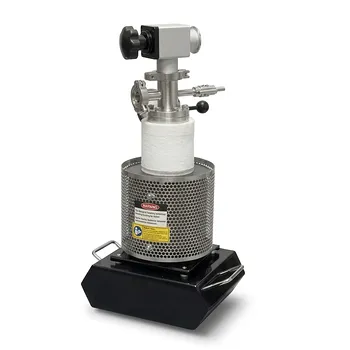
High Temperature 1100C Compact Top Loading Vertical Vacuum Tube Furnace for High Vacuum Noble Metal Melting and Material Research
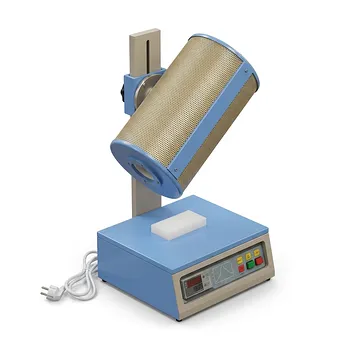
1100°C Vertical Laboratory Furnace for DIY Tubular Reactors with PID Temperature Controller

1100C Tube Furnace with Vacuum Flange and Programmable Temperature Controller for Material Science and Industrial Heat Treatment
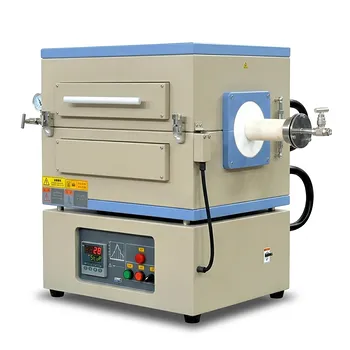
1500°C Split Tube Furnace with Alumina Tube and Vacuum Sealing Flanges for Material Research
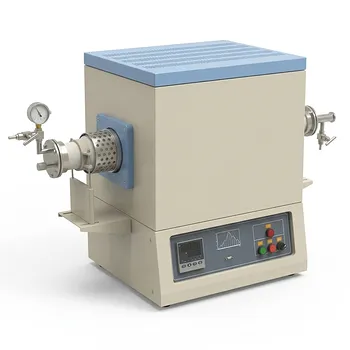
1750°C High Temperature Benchtop Vacuum Atmosphere Tube Furnace with Kanthal Super 1800 Heating Elements and 60mm Alumina Processing Tube
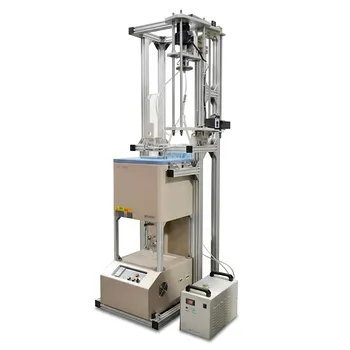
500C Vacuum Vertical Tube Furnace 84mm OD Sample Rotation Lifting System

Compact Vertical Split Quartz Tube Furnace with Stainless Steel Vacuum Flanges for Rapid Thermal Quenching and Controlled Atmosphere Material Processing

High Temperature 1700C Tube Furnace with High Vacuum Turbomolecular Pump System and Multi Channel Mass Flow Controller Gas Mixer

High Temperature 1700C Vertical Tube Furnace for Powder Spherification and Material Sintering
