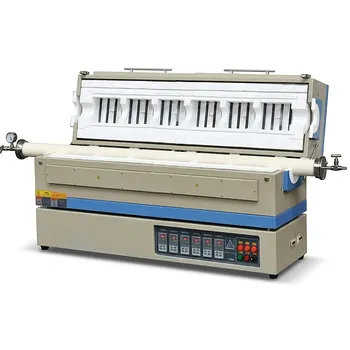
What core role does a vacuum tube furnace play in Fe3O4@CSAC preparation? Ensure Precise Phase & Structural Integrity
Updated 3 months ago
The vacuum tube furnace is the indispensable reactor for the final synthesis of the $Fe_3O_4@CSAC$ catalyst. It provides the high-temperature reduction and pyrolysis environment (typically 500 °C) required to transform iron salt precursors into magnetic nanoparticles while simultaneously preserving the structural integrity of the carbon support.
Core Takeaway: The vacuum tube furnace enables the precise thermochemical conversion of iron salts into magnetic $Fe_3O_4$ nanoparticles within a protected, oxygen-free environment, ensuring the catalyst achieves its required magnetic phase without destroying the carbon carrier.
Facilitating Phase Transformation and Nanoparticle Formation
In-Situ Thermal Decomposition
The furnace drives the thermal decomposition of iron salt precursors that have been adsorbed onto the carbon surface. At a controlled temperature of 500 °C, these precursors undergo a specific chemical transition to form magnetic $Fe_3O_4$ nanoparticles.
Precision Crystalline Development
By maintaining a stable thermal environment, the tube furnace ensures the iron oxide reaches the required magnetic phase. This precision is critical because slight variations in temperature or atmosphere could result in non-magnetic phases or different oxidation states that would compromise the catalyst's performance.
Seeding Within the Pore Network
The high-temperature environment facilitates the movement of precursors into the activated carbon pores. As the transformation occurs, the $Fe_3O_4$ nanoparticles become firmly embedded within these pores, creating a stable and high-surface-area heterostructure.
Protecting the Catalyst Architecture
Prevention of Oxidative Damage
The vacuum condition is essential for protecting the carbon carrier (CSAC). In an oxygen-rich environment, the carbon support would undergo oxidative damage or combustion at 500 °C; the vacuum ensures the carbon framework remains intact to serve as a conductive and porous support.
Controlling the Reaction Atmosphere
The quartz tube structure of the furnace provides a pure reaction environment, free from atmospheric contaminants. This isolation allows for the specific reduction reactions required for $Fe_3O_4$ formation without interference from moisture or unwanted gases.
Facilitating Multi-Stage Processing
Advanced furnaces allow for multi-stage programmed temperature rises, which can be used to control the rate of decomposition. Slow, programmed heating prevents the rapid release of gases that might otherwise rupture the delicate pore structure of the activated carbon.
Understanding the Trade-offs
Temperature Sensitivity
Operating at 500 °C is a delicate balance. If the temperature is too low, the iron precursors may not fully convert to the $Fe_3O_4$ phase; however, excessively high temperatures can lead to the sintering of nanoparticles, reducing the active surface area and catalytic efficiency.
Vacuum Integrity Risks
Maintaining a strict vacuum is technically demanding. Any leak in the system introduces oxygen, which can cause the partial oxidation of $Fe_3O_4$ into less magnetic $Fe_2O_3$ or result in the significant loss of the carbon support through gasification.
Scaling Constraints
While tube furnaces offer exceptional precision for laboratory-scale catalyst preparation, they often face throughput limitations. Achieving the same level of temperature uniformity and vacuum depth in larger industrial batches presents significant engineering challenges.
How to Apply This to Your Project
Recommendations for Optimal Synthesis
- If your primary focus is maximizing magnetism: Ensure the furnace maintains a strict vacuum and a stable dwell time at 500 °C to promote the complete formation of the $Fe_3O_4$ phase.
- If your primary focus is preserving pore structure: Utilize a multi-stage programmed temperature rise (e.g., 2 °C/min) to allow for the gentle decomposition of precursors without damaging the activated carbon framework.
- If your primary focus is catalyst stability: Focus on the "in-situ" embedding process by ensuring the precursors are thoroughly adsorbed into the carbon pores before the final thermal treatment begins.
The vacuum tube furnace serves as the "thermal crucible" where the final identity and functional properties of the $Fe_3O_4@CSAC$ catalyst are permanently established.
Summary Table:
| Function | Key Parameter | Purpose & Benefit |
|---|---|---|
| Phase Transformation | 500 °C Control | Converts iron salt precursors into magnetic $Fe_3O_4$ nanoparticles. |
| Atmosphere Control | Vacuum Environment | Prevents oxidative damage to the carbon support (CSAC) and ensures purity. |
| Structural Seeding | Pore Embedding | Facilitates the migration and fixation of nanoparticles within the pore network. |
| Thermal Stability | Programmed Heating | Prevents pore rupture and nanoparticle sintering through multi-stage control. |
Optimize Your Catalyst Synthesis with THERMUNITS
As a leading manufacturer of high-temperature laboratory equipment for material science and industrial R&D, THERMUNITS provides the precision and reliability required for advanced thermal processing. Whether you are synthesizing $Fe_3O_4@CSAC$ catalysts or developing new nanomaterials, our specialized range of Vacuum, Tube, and Atmosphere furnaces, as well as CVD/PECVD systems, ensures consistent results and structural integrity for your samples.
Why Choose THERMUNITS?
- Precision Control: Master your phase transformations with multi-stage programmed temperature rises.
- Vacuum Integrity: Protect sensitive carbon frameworks and prevent unwanted oxidation with high-performance sealing.
- Versatile Solutions: From Muffle and Rotary furnaces to Vacuum Induction Melting (VIM) and Hot Press systems, we support every stage of your research.
Ready to elevate your laboratory's heat treatment capabilities? Contact our technical experts today to find the ideal thermal solution for your specific project needs.
References
- Ke Zhang, Yuntao Yan. Preparation of Fe<sub>3</sub>O<sub>4</sub>@CSAC catalyst and its degradation performance and heat release mechanisms in sewage degradation. DOI: 10.1039/d4ra00080c
Mentioned Products
- 1800C High Temperature Compact Vacuum Tube Furnace with 60mm OD Alumina Tube and Kanthal MoSi2 Heating Elements
- High Vacuum Compact Tube Furnace 1200C with Integrated Turbo Pump System and 8 Inch Heating Zone
- 1750°C High Temperature Benchtop Vacuum Atmosphere Tube Furnace with Kanthal Super 1800 Heating Elements and 60mm Alumina Processing Tube
- 500C Vacuum Vertical Tube Furnace 84mm OD Sample Rotation Lifting System
- 1200C High Temperature 5 Inch Split Vacuum Tube Furnace with 12 Inch Heating Zone and Separated PID Controller
People Also Ask
- What core functions does a high-temperature vacuum tube furnace provide? Optimize np-CuSn Sintering & Joint Integrity
- What is the primary function of a high-temperature tube furnace in Cu1-N-C synthesis? Precision Thermal Control.
- What impact does the heating rate of a tube furnace have on biochar microstructure? Optimize Your Material R&D.
- Role of Tube Furnace in KNNLST Ceramic Synthesis: Achieve High Phase Purity and Thermal Uniformity
- What is the role of a high-temperature tube furnace in the preparation of S-C3N4? Master Precision Material Synthesis

Tech Team · ThermUnits
Last updated on Jun 02, 2026
Related Products

1800C High Temperature Compact Vacuum Tube Furnace with 60mm OD Alumina Tube and Kanthal MoSi2 Heating Elements
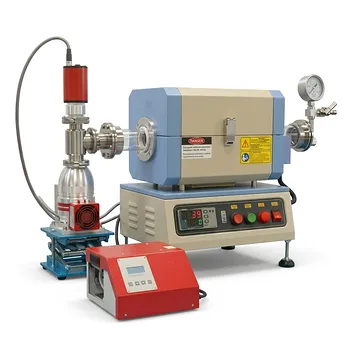
High Vacuum Compact Tube Furnace 1200C with Integrated Turbo Pump System and 8 Inch Heating Zone
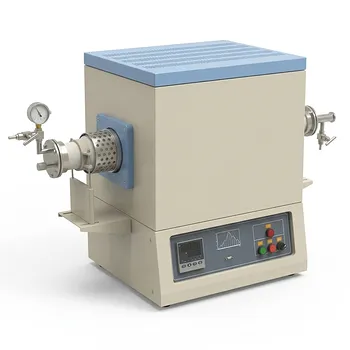
1750°C High Temperature Benchtop Vacuum Atmosphere Tube Furnace with Kanthal Super 1800 Heating Elements and 60mm Alumina Processing Tube
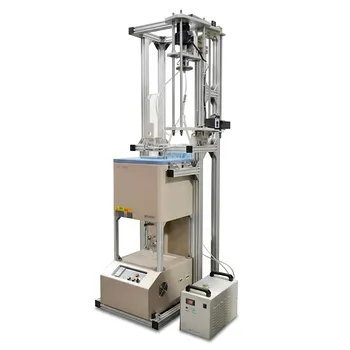
500C Vacuum Vertical Tube Furnace 84mm OD Sample Rotation Lifting System
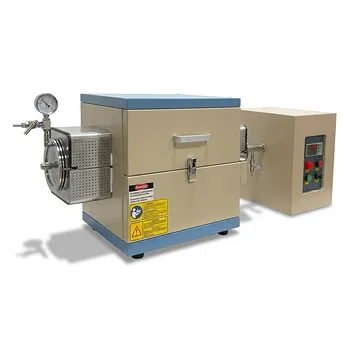
1200C High Temperature 5 Inch Split Vacuum Tube Furnace with 12 Inch Heating Zone and Separated PID Controller
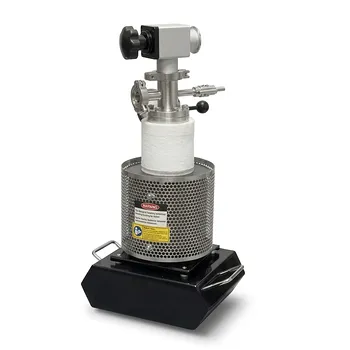
High Temperature 1100C Compact Top Loading Vertical Vacuum Tube Furnace for High Vacuum Noble Metal Melting and Material Research
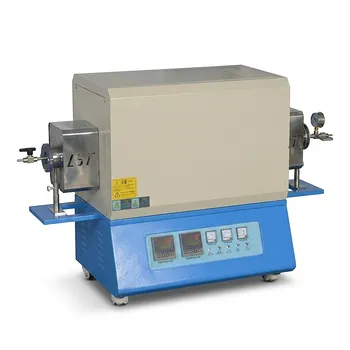
High Temperature Dual Zone Vacuum Tube Furnace for Material Research and CVD Processing

Vertical 1700C Vacuum and Atmosphere Tube Furnace with 80mm Alumina Tube

High Temperature 1700C Tube Furnace with High Vacuum Turbomolecular Pump System and Multi Channel Mass Flow Controller Gas Mixer
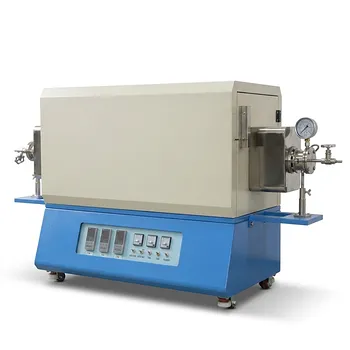
Three Temperature Zone High Temperature Vacuum Tube Furnace for CVD and Material Sintering
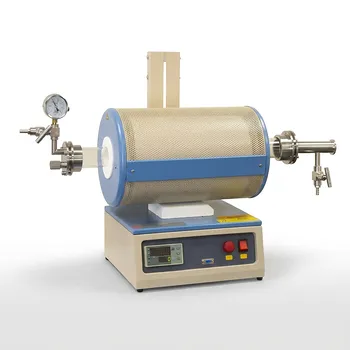
1100C Tube Furnace with Vacuum Flange and Programmable Temperature Controller for Material Science and Industrial Heat Treatment
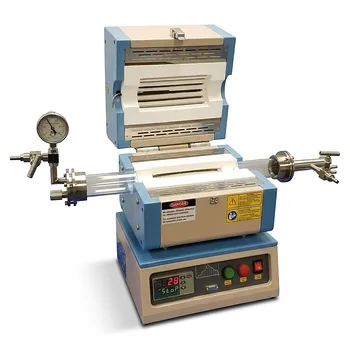
Compact Split Tube Furnace with Integrated Vacuum System and Precision Temperature Calibrator
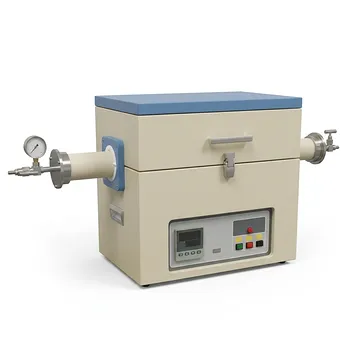
1250C Split Tube Furnace with 3 Inch Mullite Tube and Vacuum Sealing Flanges for Precision Thermal Processing
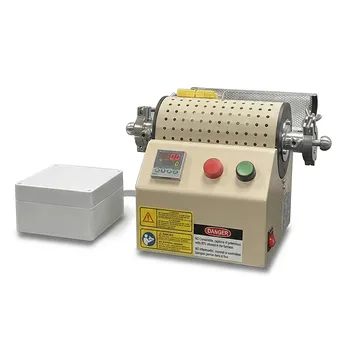
1000C Mini Tube Furnace with 20mm Quartz Tube and Vacuum Flanges for Material Science Research and Controlled Atmosphere Small Sample Processing

Compact High Temperature 1600C Tube Furnace with 50mm Alumina Tube and Vacuum Flanges for Material Sintering
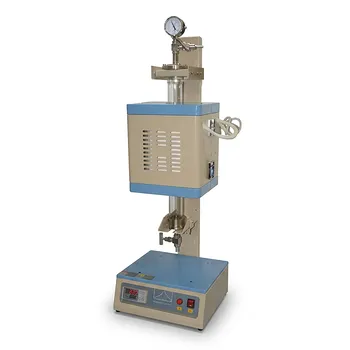
Compact Vertical Split Quartz Tube Furnace with Stainless Steel Vacuum Flanges for Rapid Thermal Quenching and Controlled Atmosphere Material Processing
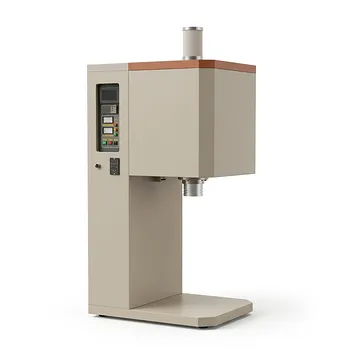
Vertical Openable Tube Furnace 0-1700c High Temperature Laboratory System for CVD and Vacuum Heat Treatment
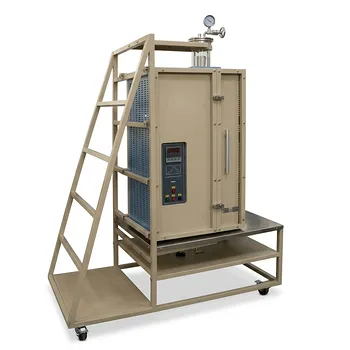
Split Vertical Tube Furnace with 1200C Quartz Tube and Stainless Steel Vacuum Flanges for Rapid Thermal Processing

High Temperature 1700C Vertical Tube Furnace for Powder Spherification and Material Sintering