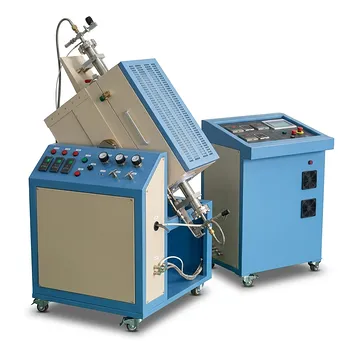
What function does a high-temperature tube furnace perform in graphene doping? Achieve precision material synthesis.
Updated 5 months ago
The high-temperature tube furnace acts as the primary thermal reactor, providing the precise energy and atmospheric control required to incorporate foreign atoms into the graphene lattice. By maintaining temperatures typically around 900°C and providing a stable nitrogen (N2) protective atmosphere, the furnace facilitates the chemical bonding and structural reorganization necessary to transition from pure carbon structures to functionalized, heteroatom-doped materials.
This equipment is the critical engine for "doping," using controlled thermal energy to break existing carbon bonds and replace them with p-block elements like nitrogen or phosphorus while preventing unwanted oxidation or structural collapse.
The Role of Controlled Thermal Activation
Breaking Bonds and Creating Active Sites
The furnace provides the intense thermal energy needed to fracture unstable oxygen-containing groups or existing carbon bonds at edge sites. This process is essential because it generates in-situ active sites, which serve as the "docking points" for dopant atoms like nitrogen or phosphorus.
Facilitating Kinetic Energy for Doping
At temperatures reaching 900°C to 1050°C, the kinetic energy within the system is sufficient to allow for crystal structure reorganization. This ensures that as the heteroatoms enter the system, they can successfully form covalent bonds with the graphene lattice rather than simply resting on the surface.
Promoting Precursor Decomposition
In processes like Chemical Vapor Deposition (CVD), the furnace facilitates the thermal decomposition (pyrolysis) of precursor gases such as methane. This releases carbon atoms that can then dehydrogenate and rearrange into high-quality structures alongside the introduced dopant atoms.
Atmospheric Management and Chemical Protection
Providing a Stable Protective Environment
The tube furnace maintains a stable nitrogen (N2) protective atmosphere, which is vital for preventing the graphene from burning or oxidizing at high temperatures. This inert environment ensures that the thermal energy is used exclusively for chemical bonding and lattice modification rather than combustion.
Managing Complex Gas Ratios
Advanced tube furnaces allow for the precision vacuum and flow control of multi-component gases, such as hydrogen (H2), methane (CH4), and dopant precursors. By regulating these flows, the furnace ensures that the dopants are distributed uniformly across the graphene sheets, resulting in a consistent chemical profile.
Regulating Internal Pressure and Exfoliation
During the thermal reduction of graphene oxide, the furnace applies a "thermal shock" that causes functional groups to decompose and release gases. This creates internal pressure that expands the interlayer spacing, forming reduced graphene oxide with the specific defects needed for high-performance applications.
Understanding the Trade-offs
Balancing Temperature and Lattice Integrity
While high temperatures are required to activate the doping process, excessive heat can lead to lattice degradation or unwanted grain growth. Finding the "sweet spot"—often around 900°C to 1000°C—is necessary to ensure doping occurs without destroying the graphene's inherent electrical conductivity.
Contamination and Precursor Residue
If the furnace environment is not perfectly controlled, or if the cooling phase is too slow, residual precursors or contaminants can settle on the graphene surface. These impurities can mask the effects of the heteroatom doping, leading to inconsistent material properties in the final product.
How to Optimize Your Doping Process
Making the Right Choice for Your Goal
To achieve the best results in heteroatom doping, you must align your furnace parameters with your specific material objectives.
- If your primary focus is Nitrogen or Phosphorus doping: Operate the furnace at approximately 900°C under a nitrogen atmosphere to facilitate stable covalent bonding into the p-block sites.
- If your primary focus is large-area bilayer synthesis: Utilize temperatures closer to 1050°C with a copper-nickel catalyst to ensure uniform catalytic decomposition and layer growth.
- If your primary focus is creating active defects: Use rapid thermal shock protocols to maximize internal gas pressure and expand the interlayer spacing of the graphene oxide.
The high-temperature tube furnace is the indispensable tool that transforms inert carbon sheets into chemically active, heteroatom-doped materials through the precise application of heat and chemistry.
Summary Table:
| Key Function | Operational Parameter | Impact on Graphene Doping |
|---|---|---|
| Thermal Activation | 900°C – 1050°C | Fractures carbon bonds to create active "docking sites" for dopants. |
| Atmospheric Control | N2 / H2 Protective Gas | Prevents oxidation and allows for uniform chemical vapor deposition (CVD). |
| Structural Reorganization | Precise Kinetic Energy | Ensures stable covalent bonding of N or P atoms into the carbon lattice. |
| Lattice Expansion | Thermal Shock | Increases interlayer spacing for high-performance reduced graphene oxide. |
Optimize Your Graphene Synthesis with THERMUNITS
Elevate your research with THERMUNITS, a leading manufacturer of high-temperature laboratory equipment specifically designed for material science and industrial R&D. Our advanced Tube Furnaces and CVD/PECVD systems provide the rigorous thermal stability and atmospheric precision necessary for successful heteroatom doping and complex material functionalization.
Our comprehensive range of thermal processing solutions includes:
- Furnaces: Muffle, Vacuum, Atmosphere, Tube, Rotary, and Hot Press.
- Specialized Systems: CVD/PECVD, Dental Furnaces, Electric Rotary Kilns, and Vacuum Induction Melting (VIM) furnaces.
- Support: Premium Thermal Elements and custom laboratory heat treatment equipment.
Don't let equipment limitations hinder your innovation. Contact THERMUNITS today to find the ideal furnace solution for your laboratory and ensure consistent, high-quality results for your high-temperature research.
References
- Yong Gao, Hongge Pan. Experimentally validated design principles of heteroatom-doped-graphene-supported calcium single-atom materials for non-dissociative chemisorption solid-state hydrogen storage. DOI: 10.1038/s41467-024-45082-9
Mentioned Products
- High Temperature Tube Furnace 1500C with Sliding Flanges and 50mm OD for Rapid Thermal Processing Fast Heating and Cooling
- High Temperature 1700C Tube Furnace with High Vacuum Turbomolecular Pump System and Multi Channel Mass Flow Controller Gas Mixer
- 1750°C High Temperature Benchtop Vacuum Atmosphere Tube Furnace with Kanthal Super 1800 Heating Elements and 60mm Alumina Processing Tube
- High Temperature 1700C Benchtop Tube Furnace with 5 Inch Heating Zone High Purity Alumina Tube and Vacuum Sealing Flanges
- High Temperature Split Tube Furnace 1500C for Material Research Vacuum and Atmosphere Thermal Processing
People Also Ask
- How are high-temperature tube furnaces utilized to repair etching damage? Precision Lattice Restoration Solutions
- What role does a high-temperature tube furnace play in CVD synthesis of silicon nanowires? Master VLS Growth Precision.
- What core conditions does a high-temperature tube furnace provide for rGO aerogels? Mastering Precision Synthesis.
- What role does a high-temperature tube furnace play in the sulfidation heat treatment of CoS@C/MXene nanocomposites? Guide
- How does precision tube furnace control influence CoFe nanoparticle formation? Master Your Bimetallic Synthesis.

Tech Team · ThermUnits
Last updated on Apr 14, 2026
Related Products

High Temperature Tube Furnace 1500C with Sliding Flanges and 50mm OD for Rapid Thermal Processing Fast Heating and Cooling

High Temperature 1700C Tube Furnace with High Vacuum Turbomolecular Pump System and Multi Channel Mass Flow Controller Gas Mixer

1750°C High Temperature Benchtop Vacuum Atmosphere Tube Furnace with Kanthal Super 1800 Heating Elements and 60mm Alumina Processing Tube

High Temperature 1700C Benchtop Tube Furnace with 5 Inch Heating Zone High Purity Alumina Tube and Vacuum Sealing Flanges
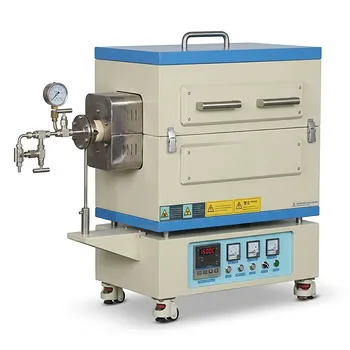
High Temperature Split Tube Furnace 1500C for Material Research Vacuum and Atmosphere Thermal Processing

1700C High Temperature Alumina Tube Furnace with 18 Inch Heated Zone and Vacuum Sealing Flanges

1800C High Temperature Compact Vacuum Tube Furnace with 60mm OD Alumina Tube and Kanthal MoSi2 Heating Elements

Compact High Temperature 1600C Tube Furnace with 50mm Alumina Tube and Vacuum Flanges for Material Sintering
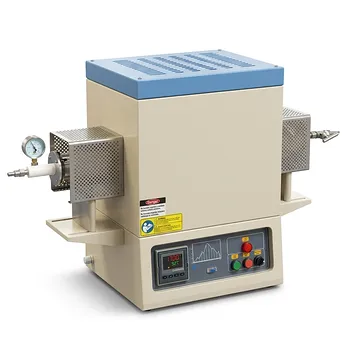
High Temperature Three Zone Tube Furnace 1700C with Alumina Tube and Water Cooled Flanges
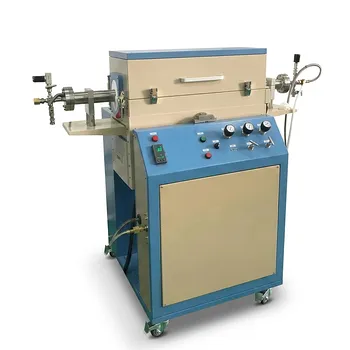
High Temperature Rocking Tube Furnace 1700°C Alumina Processing Tube with Precision Oscillation for Material Synthesis

High Temperature 1700C Tube Furnace with 4 Inch OD Alumina Tube and Vacuum Sealing Flanges

High Temperature 1700C Vertical Tube Furnace for Powder Spherification and Material Sintering
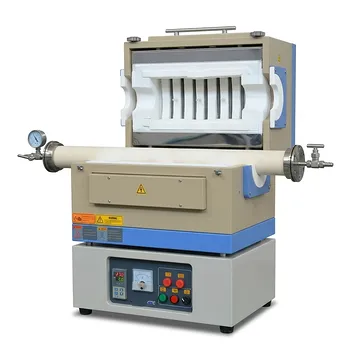
High Temperature 1600C Split Tube Furnace Vacuum Flanges Valves Optional 60mm 80mm Alumina Tube

High Temperature Automated 5 Inch Tube Furnace for Autonomous Material Research and Advanced Laboratory R&D

High Temperature 1700C Six Zone Split Tube Furnace with Alumina Tube and Water Cooled Flanges
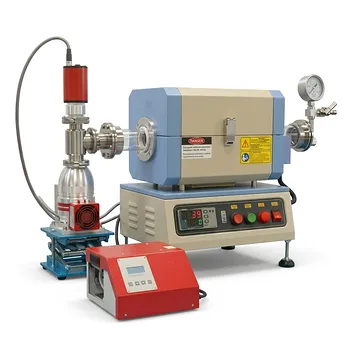
High Vacuum Compact Tube Furnace 1200C with Integrated Turbo Pump System and 8 Inch Heating Zone
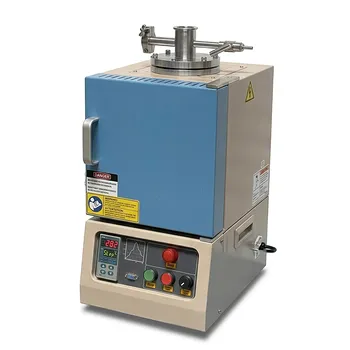
High Temperature Hybrid Muffle and Tube Furnace with Vacuum Capability and PID Control

1100°C High Temperature Quartz Chamber Furnace 8 Inch OD with 7.6 Liter Capacity and Vacuum Atmosphere Capability

1100C Tube Furnace with Vacuum Flange and Programmable Temperature Controller for Material Science and Industrial Heat Treatment