What is the core role of a Vacuum Tube Furnace in the preparation of herb residue biochar? Optimize Pyrolysis Quality
Updated 3 months ago
The Vacuum Tube Furnace is the fundamental hardware foundation for the thermochemical conversion of herb residue. It provides a highly controllable, high-temperature environment and precise atmosphere protection required to facilitate slow pyrolysis. By maintaining an oxygen-free state, the furnace ensures that herb residue undergoes stable dehydration, degassing, and carbonization within a specific range of 200–600 °C, rather than simply combusting.
Core Takeaway: The Vacuum Tube Furnace acts as a high-precision reactor that enables the anaerobic degradation of biomass. It is essential for transforming raw herb residue into a stable, carbon-rich biochar with engineered pore structures and specific chemical activities.
The Mechanism of Controlled Thermal Transformation
Precise Temperature Regulation (200–600 °C)
Herb residue requires a specific thermal window to transition from organic matter to biochar. The vacuum tube furnace allows for the exact regulation of heating rates and peak temperatures, typically between 200 °C and 600 °C, to ensure uniform carbonization.
Facilitating Slow Pyrolysis
Unlike rapid heating methods, this equipment supports slow pyrolysis, allowing for a gradual breakdown of the material's macromolecular structure. This controlled residence time is critical for the thorough chemical degradation of components like hemicellulose, cellulose, and lignin.
Orderly Carbon Transformation
The stable thermal field provided by the furnace ensures the orderly transformation of biomass from amorphous carbon to crystalline carbon. This transition is vital for determining the final aromatization degree and structural stability of the biochar.
Atmospheric Integrity and Material Protection
Maintaining an Oxygen-Free Environment
The "Vacuum" and "Tube" aspects of the furnace work together to exclude oxygen, often through a combination of vacuum extraction and continuous nitrogen (N2) flow. This anaerobic environment is the primary safeguard that prevents the herb residue from burning into ash.
Chemical Degradation vs. Combustion
By strictly limiting oxygen, the furnace forces the biomass to undergo thermochemical decomposition rather than oxidation. This process preserves the fixed carbon content and ensures the resulting material retains its value as a functional biochar.
Atmosphere-Driven Functionalization
Beyond simple protection, the controlled atmosphere allows for the preservation or enrichment of surface functional groups. These chemical markers are essential for the biochar’s future performance in applications like adsorption or catalysis.
Engineering the Microstructure
Pore Structure Development
The vacuum tube furnace is the primary tool for regulating the physical foundation of the biochar. As volatile gases are driven off during the degassing phase, a complex network of micropores and mesopores is formed within the carbon matrix.
Maximizing Specific Surface Area
Through precise control of the peak pyrolysis temperature, the furnace helps maximize the specific surface area of the herb residue biochar. A higher surface area directly correlates to better performance in environmental remediation and filtration tasks.
Consistency and Product Quality
The enclosed nature of the quartz or ceramic tube ensures that the entire sample experiences a uniform thermal field. This consistency is necessary to produce biochar with predictable chemical activities and physical properties across different batches.
Understanding the Trade-offs
Equipment Complexity and Cost
Vacuum tube furnaces offer superior control compared to standard muffle furnaces, but they come with higher operational costs and complexity. Maintaining vacuum seals and managing gas flow rates requires technical expertise and regular maintenance.
Processing Scale Limitations
The tubular design inherently limits the volume of material that can be processed at one time. While ideal for laboratory-scale preparation and precise herb residue research, scaling this specific setup for industrial-level biochar production can be challenging.
Potential for Over-Carbonization
If the temperature or residence time is not perfectly calibrated, there is a risk of pore collapse or excessive loss of functional groups. Precise control is a double-edged sword; it allows for high quality but requires exact parameters to avoid degrading the material’s utility.
How to Apply This to Your Project
Making the Right Choice for Your Goal
- If your primary focus is maximizing adsorption capacity: Use the furnace to maintain a steady temperature near 450-500 °C to optimize the specific surface area and pore volume.
- If your primary focus is high fixed carbon content: Utilize a slower heating rate and a higher peak temperature (up to 600 °C) to ensure the complete removal of volatile matter and stable carbonization.
- If your primary focus is preserving surface functional groups: Limit the peak pyrolysis temperature to the lower end of the spectrum (300–400 °C) to prevent the total degradation of oxygen-containing groups.
The Vacuum Tube Furnace is the indispensable tool that bridges the gap between raw herb waste and high-performance functional biochar.
Summary Table:
| Key Feature | Functional Role | Benefit to Biochar Production |
|---|---|---|
| Precise Thermal Control | Regulates heating at 200–600 °C | Ensures uniform carbonization and stable chemical structure |
| Anaerobic Environment | Vacuum and N2 atmosphere protection | Prevents combustion; preserves fixed carbon and functional groups |
| Slow Pyrolysis Support | Controlled residence time | Facilitates orderly transformation from amorphous to crystalline carbon |
| Microstructure Engineering | Efficient degassing and volatile removal | Maximizes specific surface area and develops complex pore networks |
Elevate Your Material Research with THERMUNITS Precision
Are you looking to transform herb residue or other biomass into high-performance functional materials? THERMUNITS is a leading manufacturer of high-temperature laboratory equipment specifically designed for material science and industrial R&D.
We provide a comprehensive range of thermal processing solutions to meet your exact specifications, including:
- Tube & Vacuum Furnaces: Perfect for precise biochar pyrolysis and atmosphere-controlled experiments.
- Advanced Systems: CVD/PECVD systems, Rotary kilns, and Vacuum Induction Melting (VIM) furnaces.
- Specialized Equipment: Muffle, Atmosphere, Dental, and Hot Press furnaces, plus high-quality thermal elements.
Our equipment ensures the atmospheric integrity and temperature uniformity required for cutting-edge research and consistent production.
Ready to optimize your thermal processing? Contact our expert team today to find your solution!
References
- Sha Zhang, Shuge Tian. Spectral characterization of the impact of modifiers and different prepare temperatures on snow lotus medicinal residue-biochar and dissolved organic matter. DOI: 10.1038/s41598-024-57553-6
Mentioned Products
- 1800C High Temperature Compact Vacuum Tube Furnace with 60mm OD Alumina Tube and Kanthal MoSi2 Heating Elements
- High Vacuum Compact Tube Furnace 1200C with Integrated Turbo Pump System and 8 Inch Heating Zone
- 1750°C High Temperature Benchtop Vacuum Atmosphere Tube Furnace with Kanthal Super 1800 Heating Elements and 60mm Alumina Processing Tube
- 500C Vacuum Vertical Tube Furnace 84mm OD Sample Rotation Lifting System
- 1200C High Temperature 5 Inch Split Vacuum Tube Furnace with 12 Inch Heating Zone and Separated PID Controller
People Also Ask
- What core functions does a high-temperature vacuum tube furnace provide? Optimize np-CuSn Sintering & Joint Integrity
- What is the primary function of a high-temperature tube furnace in Cu1-N-C synthesis? Precision Thermal Control.
- What impact does the heating rate of a tube furnace have on biochar microstructure? Optimize Your Material R&D.
- Role of Tube Furnace in KNNLST Ceramic Synthesis: Achieve High Phase Purity and Thermal Uniformity
- What is the role of a high-temperature tube furnace in the preparation of S-C3N4? Master Precision Material Synthesis

Tech Team · ThermUnits
Last updated on Jun 02, 2026
Related Products

1800C High Temperature Compact Vacuum Tube Furnace with 60mm OD Alumina Tube and Kanthal MoSi2 Heating Elements
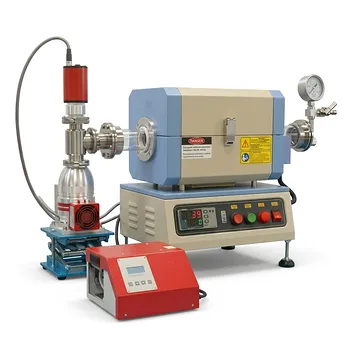
High Vacuum Compact Tube Furnace 1200C with Integrated Turbo Pump System and 8 Inch Heating Zone
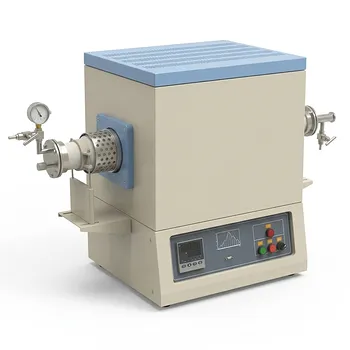
1750°C High Temperature Benchtop Vacuum Atmosphere Tube Furnace with Kanthal Super 1800 Heating Elements and 60mm Alumina Processing Tube
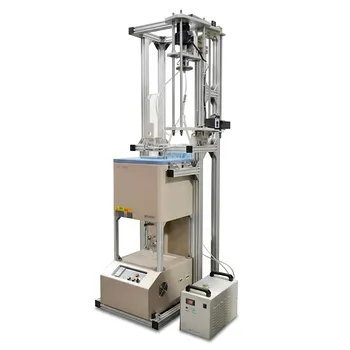
500C Vacuum Vertical Tube Furnace 84mm OD Sample Rotation Lifting System
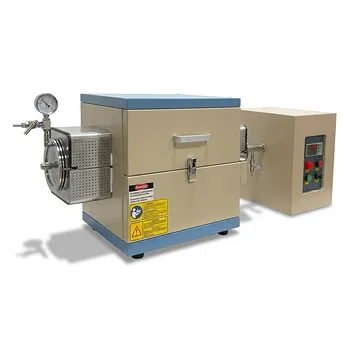
1200C High Temperature 5 Inch Split Vacuum Tube Furnace with 12 Inch Heating Zone and Separated PID Controller
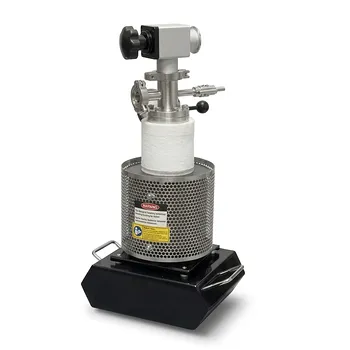
High Temperature 1100C Compact Top Loading Vertical Vacuum Tube Furnace for High Vacuum Noble Metal Melting and Material Research
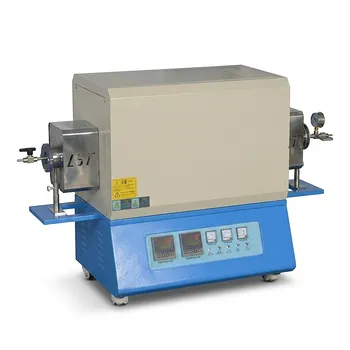
High Temperature Dual Zone Vacuum Tube Furnace for Material Research and CVD Processing

Vertical 1700C Vacuum and Atmosphere Tube Furnace with 80mm Alumina Tube

High Temperature 1700C Tube Furnace with High Vacuum Turbomolecular Pump System and Multi Channel Mass Flow Controller Gas Mixer
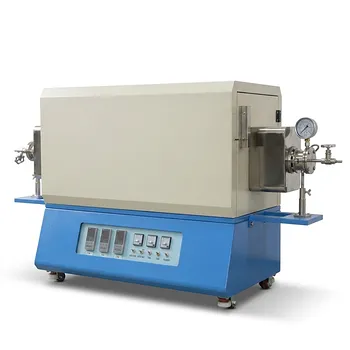
Three Temperature Zone High Temperature Vacuum Tube Furnace for CVD and Material Sintering

1100C Tube Furnace with Vacuum Flange and Programmable Temperature Controller for Material Science and Industrial Heat Treatment
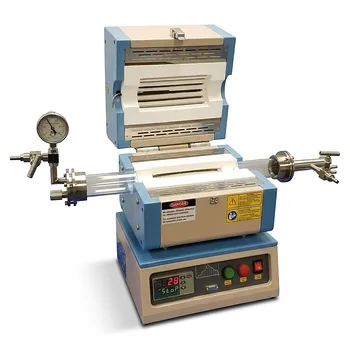
Compact Split Tube Furnace with Integrated Vacuum System and Precision Temperature Calibrator
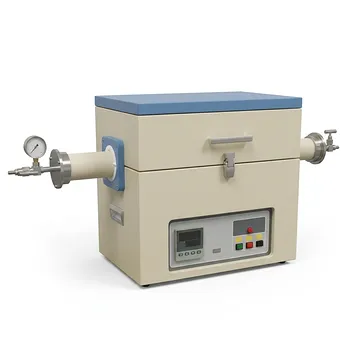
1250C Split Tube Furnace with 3 Inch Mullite Tube and Vacuum Sealing Flanges for Precision Thermal Processing
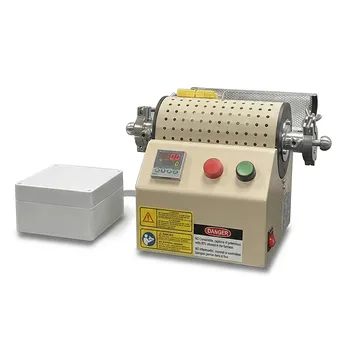
1000C Mini Tube Furnace with 20mm Quartz Tube and Vacuum Flanges for Material Science Research and Controlled Atmosphere Small Sample Processing

Compact High Temperature 1600C Tube Furnace with 50mm Alumina Tube and Vacuum Flanges for Material Sintering

Compact Vertical Split Quartz Tube Furnace with Stainless Steel Vacuum Flanges for Rapid Thermal Quenching and Controlled Atmosphere Material Processing
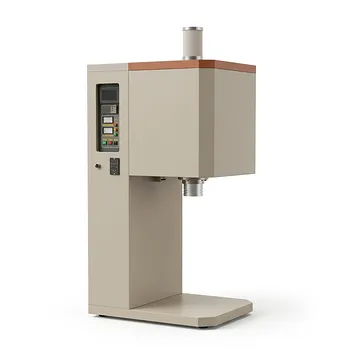
Vertical Openable Tube Furnace 0-1700c High Temperature Laboratory System for CVD and Vacuum Heat Treatment
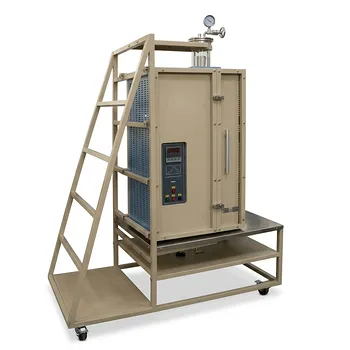
Split Vertical Tube Furnace with 1200C Quartz Tube and Stainless Steel Vacuum Flanges for Rapid Thermal Processing

High Temperature 1700C Six Zone Split Tube Furnace with Alumina Tube and Water Cooled Flanges
