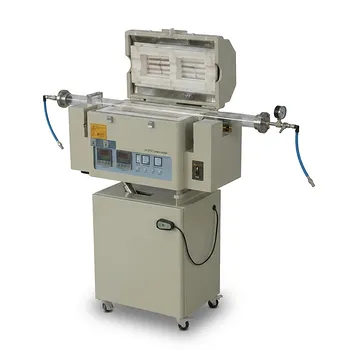
What is the function of a dual-zone tube furnace in CVT? Master Precision Crystal Growth & Purity for RuO2 Synthesis
Updated 3 months ago
In Chemical Vapor Transport (CVT) synthesis, a dual-zone tube furnace functions as the primary engine for crystal growth by establishing and maintaining a precise temperature gradient. This thermal gradient allows a transport agent to react with raw materials at a high-temperature "source zone" to form gaseous intermediates. These gases then diffuse to a lower-temperature "growth zone," where they re-precipitate and crystallize into high-purity materials like $RuO_2$.
The dual-zone furnace provides the essential thermodynamic driving force and supersaturation environment required to transform solid precursors into high-quality single crystals via a controlled gas-phase reaction.
Establishing the Thermodynamic Driving Force
Creating the Temperature Gradient
The most critical function of the dual-zone furnace is the creation of a stable temperature gradient between two distinct points in a reaction tube. By heating the "source" end and the "growth" end independently, the furnace creates a physical environment where chemical equilibrium is spatially shifted.
Facilitating Gaseous Diffusion
This temperature difference acts as the pump for the entire system, forcing gaseous products to move from the hot end to the cold end. Without this precise gradient, the transport agent would reach an equilibrium state within the tube, and no material would be deposited at the target site.
Inducing Supersaturation and Precipitation
As the gaseous intermediates reach the cooler zone, the reduction in temperature causes the vapor to become supersaturated. This drop in energy forces the material to leave the gas phase and deposit onto the tube walls or a seed crystal, forming the solid $RuO_2$ structure.
Precision Control of Precursor Dynamics
Managing Independent Vapor Pressures
Dual-zone control is vital when precursors have different thermal properties or sublimation points. It ensures that each material reaches its ideal vapor pressure at the correct rate, preventing one precursor from exhausting before the other can react.
Optimizing Transport Agent Interaction
The furnace allows for the fine-tuning of the reaction between the raw material and the transport agent (such as $Cl_2$, $I_2$, or $TeCl_4$). Precise temperature management in Zone 1 ensures the formation of the gaseous intermediate is efficient and consistent over long synthesis periods.
Enhancing Material Purity
The CVT process inherently acts as a purification method because only the desired material and the transport agent enter the vapor phase. The dual-zone setup ensures that heavier, non-volatile impurities remain at the hot end, resulting in centimeter-scale single crystals of exceptional purity.
Understanding the Trade-offs and Pitfalls
Gradient Steepness vs. Crystal Quality
If the temperature gradient is too steep, the supersaturation levels become too high, often leading to "snowing" or the formation of many tiny, low-quality polycrystals. Conversely, a gradient that is too shallow may result in extremely slow growth rates that are impractical for laboratory or industrial use.
Thermal Stability Requirements
Fluctuations in the independent zones can disrupt the growth front of the crystal, leading to lattice defects or inclusions. Maintaining a high-precision thermal field is more difficult than in a single-zone furnace, requiring sophisticated PID controllers to prevent "overshooting" the target temperatures.
Chemical Compatibility
The choice of transport agent must be perfectly matched to the temperature capabilities of the furnace. If the furnace cannot reach the temperature required to volatilize the intermediate, the transport process will fail entirely, regardless of the gradient.
How to Apply This to Your Project
Making the Right Choice for Your Goal
- If your primary focus is high-purity single crystals: Ensure your dual-zone furnace has high-precision PID controllers to maintain a very stable, gentle gradient over several days or weeks.
- If your primary focus is rapid material screening: Use a steeper temperature gradient to accelerate the transport rate, acknowledging that this may result in smaller or polycrystalline samples.
- If your primary focus is synthesizing complex doped materials: Utilize the independent zones to precisely control the evaporation rates of different precursors to ensure a uniform stoichiometric ratio in the final product.
By mastering the independent control of these thermal zones, researchers can dictate the morphology, purity, and size of synthesized materials with remarkable consistency.
Summary Table:
| Component/Feature | Role in CVT Synthesis | Impact on Material Quality |
|---|---|---|
| Source Zone | Heats raw materials & transport agents | Ensures efficient formation of gaseous intermediates. |
| Growth Zone | Maintains lower temperature for deposition | Induces supersaturation for high-purity crystallization. |
| Thermal Gradient | Creates thermodynamic driving force | Powers gaseous diffusion from source to growth site. |
| Independent PID Control | Manages precise temperature stability | Prevents lattice defects and ensures uniform stoichiometry. |
Elevate Your Material Research with THERMUNITS
Precision is the heartbeat of successful Chemical Vapor Transport (CVT). At THERMUNITS, we provide the high-performance thermal tools needed to achieve centimeter-scale, high-purity single crystals. As a leading manufacturer of advanced laboratory equipment, we offer a comprehensive range of solutions including Dual-Zone Tube Furnaces, CVD/PECVD systems, Vacuum, and Atmosphere furnaces tailored for material science and industrial R&D.
Whether you are synthesizing $RuO_2$ or exploring complex doped materials, our equipment delivers the stable temperature gradients and sophisticated control your project demands.
Ready to optimize your heat treatment process? Contact us today to explore our full range of Muffle, Rotary, and Hot Press furnaces, or to discuss a custom solution for your laboratory.
References
- Xia Wang, Claudia Felser. Topological semimetals with intrinsic chirality as spin-controlling electrocatalysts for the oxygen evolution reaction. DOI: 10.1038/s41560-024-01674-9
Mentioned Products
- 5 Inch Two Zone Rotary Tube Furnace 1100C for Powder CVD and Material Synthesis
- High Temperature 1700C Dual Zone Tube Furnace for Material Science and Industrial Chemical Vapor Deposition Research
- 1500C Max Dual Zone Rotary Tube Furnace with 60 mm OD Alumina Tube for High Temperature Material Synthesis
- Dual Zone Tube Furnace 1100C with 11 Inch Quartz Tube and Vacuum Flanges for 8 Inch Wafer Processing
- Double Temperature Zone Double Cover Tube Furnace for High Temperature CVD and Vacuum Annealing
People Also Ask
- Why is a Tube Furnace typically utilized for CVD? Achieve Precision in Graphene and 2D Material Synthesis
- How does a rotary tube furnace improve the processing of granular materials? Enhance Uniformity and Reaction Kinetics
- In what ways do rotary tube furnaces enhance chemical and specialty mineral processing? Drive Precision and Uniformity.
- Why is the precise optimization of residence time essential in the catalyst calcination process? Maximize Your Yields.
- Why use a rotary tube furnace for FACS carbonization? Ensure uniform morphology and prevent sphere agglomeration.

Tech Team · ThermUnits
Last updated on Jun 03, 2026
Related Products
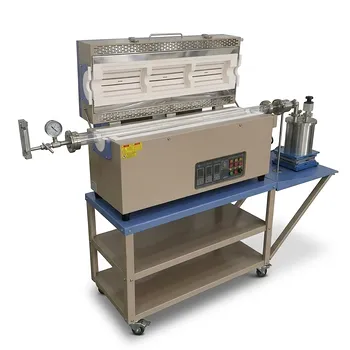
5 Inch Two Zone Rotary Tube Furnace 1100C for Powder CVD and Material Synthesis
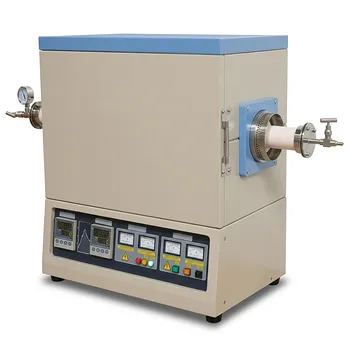
High Temperature 1700C Dual Zone Tube Furnace for Material Science and Industrial Chemical Vapor Deposition Research
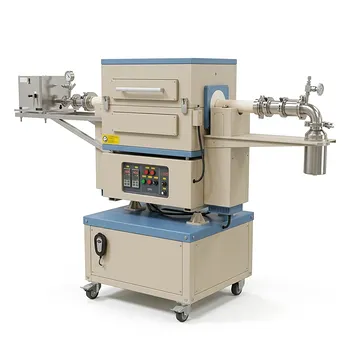
1500C Max Dual Zone Rotary Tube Furnace with 60 mm OD Alumina Tube for High Temperature Material Synthesis
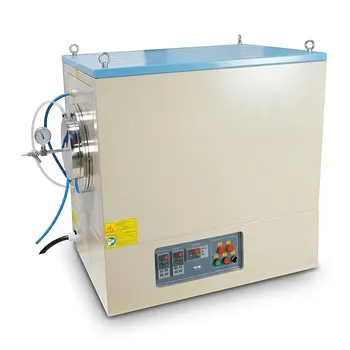
Dual Zone Tube Furnace 1100C with 11 Inch Quartz Tube and Vacuum Flanges for 8 Inch Wafer Processing
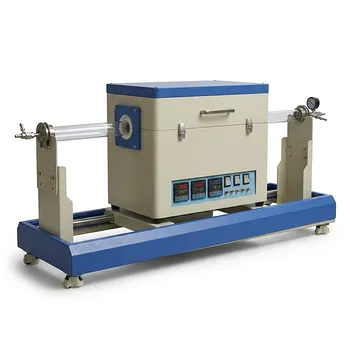
Double Temperature Zone Double Cover Tube Furnace for High Temperature CVD and Vacuum Annealing
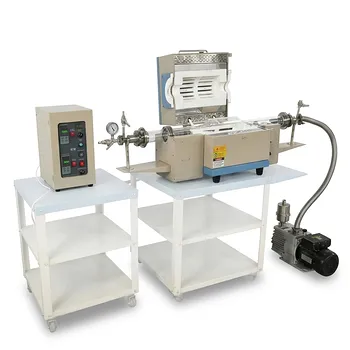
Two Zone Rotary Tube Furnace for Powder CVD Coating and Core Shell Material Synthesis 1100C
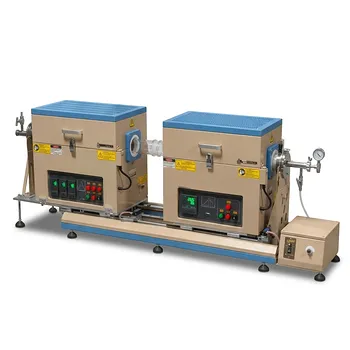
1200C Dual Temperature Zone Slidable Tube Furnace for 2D Material Growth and TCVD Synthesis
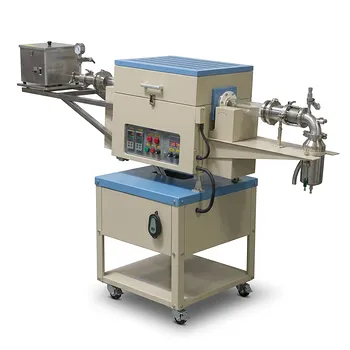
Two Zone Rotary CVD Furnace with Automatic Feeding and Receiving System for Powder Processing
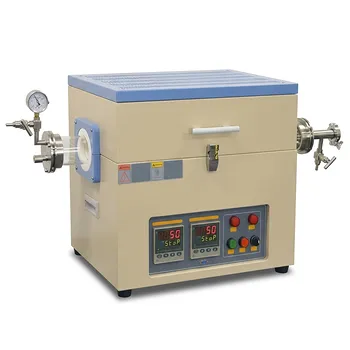
1200C Dual Zone Split Tube Furnace with Fused Quartz Tube and Vacuum Flanges Available in 60mm 80mm and 100mm Diameters
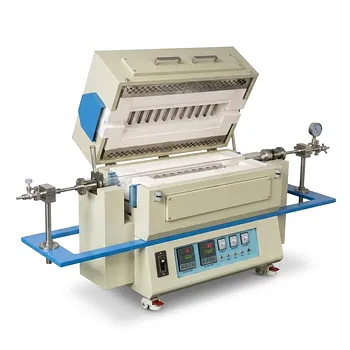
High Temperature Dual Zone Rotating Tube Furnace 1500C Silicon Carbide Heating for Advanced Material Synthesis
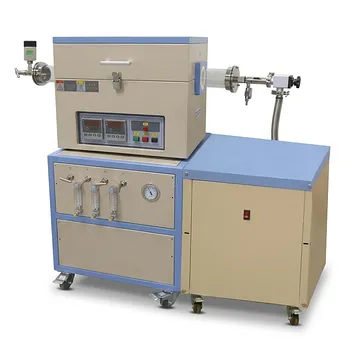
Dual Zone Quartz Tube Furnace with 80mm Diameter 1200C Max Temperature 3 Channel Gas Mixer and Vacuum Pump System
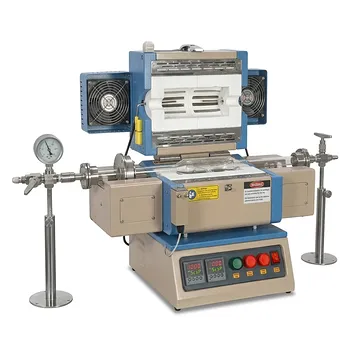
Dual Zone Rotary Tube Furnace for Uniform Powder Calcination 1000C 2 Inch Quartz Tube
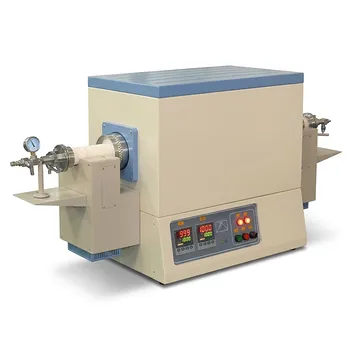
High Temperature 1700C Dual Zone Rotary Tube Furnace with 60mm Alumina Tube and Precision Rotation Control
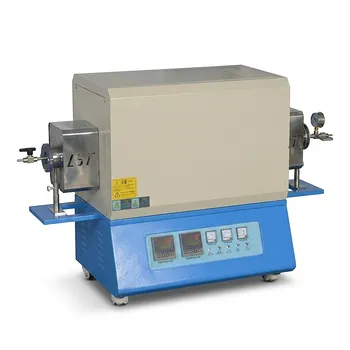
High Temperature Dual Zone Vacuum Tube Furnace for Material Research and CVD Processing
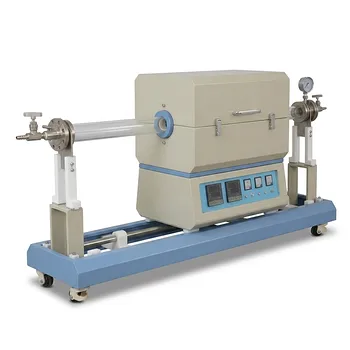
Double Zone Fast Heating Tube Furnace High Temperature Vacuum Atmosphere System
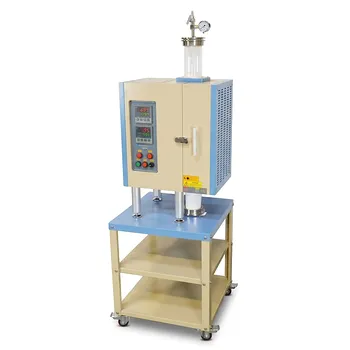
1100°C Dual Zone Split Vertical Tube Furnace with 4 Inch Quartz Tube and Vacuum Sealing Flanges
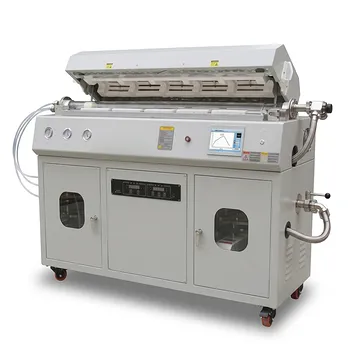
Multi Heating Zones CVD Tube Furnace System for Precision Chemical Vapor Deposition and Advanced Material Synthesis
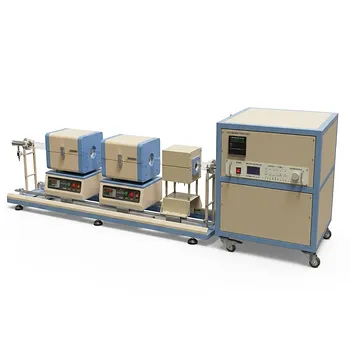
1200C Dual Sliding Tube Furnace with Dual Tubes and Flanges for PECVD Processes
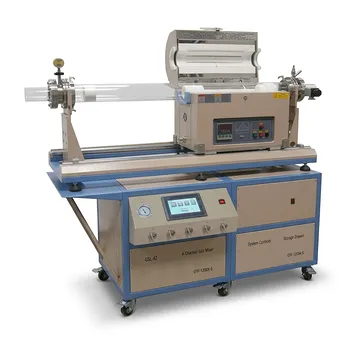
Dual Tube 100mm 80mm CVD Sliding Furnace with 4 Channel Gas Mixing and Vacuum System