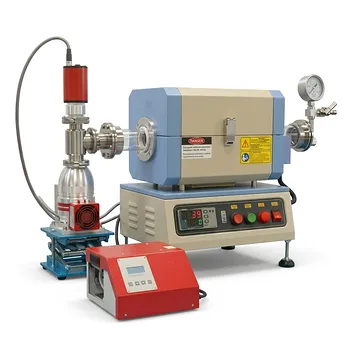
What is the function of a tube furnace in YBCO-358 sintering? Optimize Oxygen Flow & Phase Transitions
Updated 3 months ago
The synergy between thermal precision and chemical environment is the foundation of high-performance superconductivity. In the final sintering of YBCO-358, a high-temperature tube furnace provides a stable 930°C environment to complete solid-state reactions and facilitate crystal formation. The oxygen atmosphere precisely adjusts the oxygen content within the crystal lattice, repairing vacancy defects and enabling the critical structural transition required for superior superconducting properties.
Core Takeaway: The high-temperature tube furnace acts as both a thermal reactor and a chemical regulator, ensuring YBCO-358 achieves the high density and specific orthorhombic crystal structure necessary for optimized transition temperatures and carrier density.
The Role of Precision Thermal Control
Completing Solid-State Reactions
At the specific sintering temperature of 930°C, the tube furnace provides the thermal energy required for constituents to undergo final solid-state reactions. This ensures the material achieves its intended chemical identity and a high degree of phase purity.
Driving Densification and Grain Growth
The furnace facilitates particle diffusion, which leads to material densification by eliminating internal pores and interfaces between particles. This process is essential for creating a high-density ceramic that can maintain structural integrity and electrical connectivity.
Managing Internal Stresses
By utilizing programmable temperature curves, the furnace allows for extended "soaking times" that help eliminate internal stresses within the ceramic. This controlled environment prevents the formation of structural weaknesses that could compromise the final product.
The Critical Influence of the Oxygen Atmosphere
Repairing Lattice Defects
The introduction of a pure oxygen (O2) flow into the furnace tube is vital for controlling the oxygen stoichiometry within the crystal lattice. This process repairs oxygen vacancy defects, which are common during high-temperature processing.
Optimizing Superconducting Performance
Precise oxygen control directly influences the superconducting carrier density. By saturating the lattice correctly, the material achieves its optimal critical transition temperature (Tc), the point at which it loses all electrical resistance.
Eliminating Residual Porosity
Similar to other advanced ceramics, a high-purity oxygen flow helps to eliminate residual pores within the material. This contributes to a relative density that can exceed 99%, ensuring a robust and consistent material foundation.
The Phase Transformation Process
Tetragonal to Orthorhombic Transition
The most critical function occurs during the cooling phase, where the material must transition from a tetragonal phase to an orthorhombic phase. Only the orthorhombic structure possesses the superior superconducting properties required for YBCO-358.
The 500°C Isothermal Hold
To ensure this transformation is complete, the furnace must follow a strict cooling curve, often cooling at 10°C/min to reach 500°C. At this temperature, an extended isothermal hold allows the material to fully absorb oxygen, locking in the superconducting phase.
Preventing Micro-Cracking
Precise control of the cooling rate prevents the formation of micro-cracks caused by excessive temperature gradients. Maintaining a uniform thermal environment during this sensitive structural shift is essential for the mechanical integrity of the ceramic.
Understanding the Trade-offs
Temperature vs. Grain Size
While higher temperatures promote densification, excessive heat can lead to uncontrolled grain growth. If grains become too large, the mechanical strength of the ceramic may decrease, and its superconducting properties can become non-uniform.
Oxygen Flow vs. Cooling Rate
Introducing oxygen too late or cooling the furnace too quickly can trap the material in the tetragonal phase. This results in a ceramic that is physically intact but functionally useless as a high-temperature superconductor.
How to Apply This to Your Project
Recommendations for Sintering Success
- If your primary focus is Maximum Transition Temperature: Prioritize the 500°C oxygen annealing stage to ensure the lattice is fully saturated and the orthorhombic phase is stabilized.
- If your primary focus is Material Density: Focus on the 930°C sintering duration and oxygen flow rate to eliminate pores and facilitate particle diffusion without causing excessive grain growth.
- If your primary focus is Structural Integrity: Implement a slow, programmable cooling curve (e.g., 10°C/min) to prevent micro-cracking during the phase transition.
Mastering the balance between thermal energy and oxygen concentration is the only path to producing high-quality YBCO-358 superconducting ceramics.
Summary Table:
| Process Stage | Key Parameters | Function & Benefit |
|---|---|---|
| Sintering | 930°C | Completes solid-state reactions and ensures high phase purity. |
| Densification | Particle Diffusion | Eliminates internal pores to create high-density ceramic structures. |
| Oxygen Flow | Pure $O_2$ Atmosphere | Repairs lattice vacancy defects and optimizes carrier density. |
| Phase Transition | 500°C Isothermal Hold | Facilitates critical Tetragonal to Orthorhombic structural shift. |
| Controlled Cooling | ~10°C/min | Manages internal stresses and prevents mechanical micro-cracking. |
Elevate Your Superconductivity Research with THERMUNITS
Precision is the foundation of breakthrough material science. THERMUNITS is a leading manufacturer of high-temperature laboratory equipment, providing the thermal accuracy and atmospheric control essential for complex processes like YBCO-358 sintering.
Our comprehensive range of thermal processing solutions includes:
- Advanced Furnaces: Tube, Atmosphere, Vacuum, Muffle, Rotary, and Hot Press Furnaces.
- Specialized Systems: CVD/PECVD systems, Dental Furnaces, Electric Rotary Kilns, and Vacuum Induction Melting (VIM) furnaces.
- Support: High-quality Thermal Elements and tailored heat treatment equipment for industrial R&D.
Ready to achieve superior density and phase purity in your materials? Contact our technical team today to find the perfect furnace configuration for your laboratory needs.
References
- Fatih Bulut. Application and comparison of theoretical approaches to mechanical properties of bulk YBCO-358 ceramic superconductors. DOI: 10.17714/gumusfenbil.1462251
Mentioned Products
- High Temperature 1700C Vertical Tube Furnace for Powder Spherification and Material Sintering
- Compact High Temperature 1600C Tube Furnace with 50mm Alumina Tube and Vacuum Flanges for Material Sintering
- High Temperature 1800C Atmosphere Tube Furnace for CVD Research and Vacuum Sintering Precision Heat Treatment
- High Temperature Tube Furnace 1500C with Sliding Flanges and 50mm OD for Rapid Thermal Processing Fast Heating and Cooling
- High Temperature 1700C Tube Furnace with High Vacuum Turbomolecular Pump System and Multi Channel Mass Flow Controller Gas Mixer
People Also Ask
- What role does a high-temperature vertical tube furnace play in simulating high-carbon ferromanganese slag formation?
- What functions does a vertical high-temperature tube furnace perform? Master Industrial Sintering & R&D Simulation
- What is the primary function of a high-temperature tube furnace in Cu1-N-C synthesis? Precision Thermal Control.
- High-Temp Tube Furnace Role in Converting Microbial Proteins to Iron Single-Atom Sites: Expert Synthesis Guide
- What impact does the heating rate of a tube furnace have on biochar microstructure? Optimize Your Material R&D.

Tech Team · ThermUnits
Last updated on Jun 02, 2026
Related Products

High Temperature 1700C Vertical Tube Furnace for Powder Spherification and Material Sintering

Compact High Temperature 1600C Tube Furnace with 50mm Alumina Tube and Vacuum Flanges for Material Sintering
High Temperature 1800C Atmosphere Tube Furnace for CVD Research and Vacuum Sintering Precision Heat Treatment

High Temperature Tube Furnace 1500C with Sliding Flanges and 50mm OD for Rapid Thermal Processing Fast Heating and Cooling

High Temperature 1700C Tube Furnace with High Vacuum Turbomolecular Pump System and Multi Channel Mass Flow Controller Gas Mixer
High Temperature Three Temperature Zone Tube Furnace for Advanced Material Science Sintering and Chemical Vapor Deposition Applications
1750C Compact Muffle Furnace 1.7L Ultra High Temperature Laboratory Sintering System for Advanced Ceramics and Material Science Research
High Temperature 1700C Tube Furnace with 4 Inch OD Alumina Tube and Vacuum Sealing Flanges

High Temperature 1700C Benchtop Tube Furnace with 5 Inch Heating Zone High Purity Alumina Tube and Vacuum Sealing Flanges
High Temperature Vertical Atmosphere Controlled Furnace with Automatic Bottom Loading and 1700°C Capacity for Advanced Material Research
High Temperature Three Zone Tube Furnace 1700C with Alumina Tube and Water Cooled Flanges

1750°C High Temperature Benchtop Vacuum Atmosphere Tube Furnace with Kanthal Super 1800 Heating Elements and 60mm Alumina Processing Tube

1800C High Temperature Compact Vacuum Tube Furnace with 60mm OD Alumina Tube and Kanthal MoSi2 Heating Elements
High Temperature Split Tube Furnace 1500C for Material Research Vacuum and Atmosphere Thermal Processing
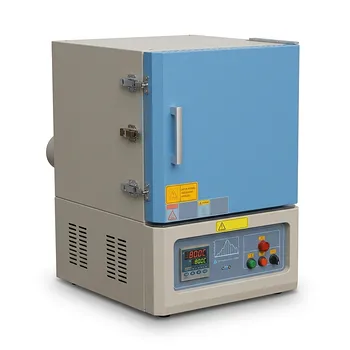
1800C Bench Top Muffle Furnace 18 Liters with Kanthal Super 1900 Heating Elements for High Purity Ceramic Sintering and Material Research
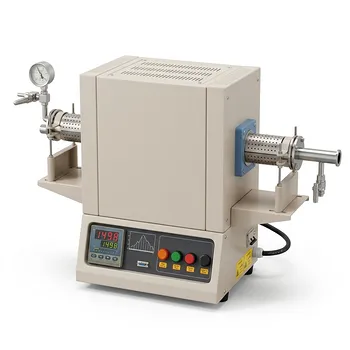
1500C High Temperature Compact Tube Furnace 2 Inch OD with Vacuum Flanges and Complete Accessories
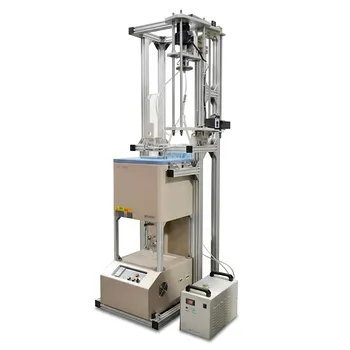
500C Vacuum Vertical Tube Furnace 84mm OD Sample Rotation Lifting System
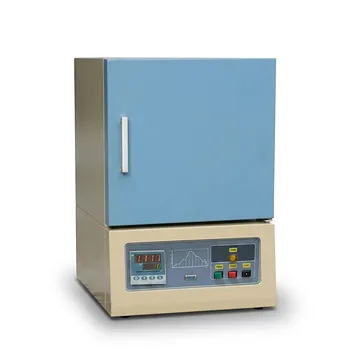
Ultra High Temperature Bench Top Muffle Furnace 1750C Sintering System with Kanthal Super Heating Elements and Precision Digital Control
1200C Max Four Zone Split Tube Furnace with Optional Large Diameter Quartz Tubes