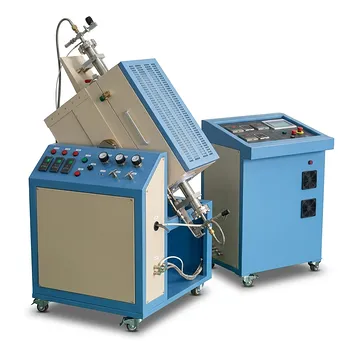
What is the function of a high-temperature tube furnace during thermal debinding of SS316L and zirconia? Expert Guide
Updated 3 months ago
The high-temperature tube furnace acts as a precision reactor for the controlled extraction of organic binders. During the thermal debinding of SS316L and zirconia components, the furnace utilizes an inert atmosphere and extremely low heating rates to decompose residual backbone binders without damaging the part. This process ensures the structural integrity of the interface between the metal and ceramic, transforming the "green body" into a "brown body" ready for final sintering.
The core function of the tube furnace is to facilitate a slow, uniform thermal decomposition of binders while maintaining a protective environment that prevents oxidation and interfacial cracking. By precisely managing gas diffusion and thermal gradients, it prepares the multi-material component for high-strength bonding.
Controlled Decomposition and Gas Diffusion
Removing the Organic Framework
The furnace provides the thermal energy required to break down backbone binders, such as low-density polyethylene (LDPE) or polyvinyl alcohol (PVA). These organic substances, which initially gave the "green" part its shape, are thermally decomposed into small gaseous molecules.
Managing Internal Pressure
As binders decompose, the furnace allows these gases to diffuse slowly through pre-formed pores to the surface of the component. The stable thermal field provided by the tube furnace ensures this diffusion happens uniformly, preventing the buildup of internal pressure that could lead to macroscopic defects.
Transitioning to the Brown Body
Once the organic binders are completely removed, the component is referred to as a brown body. This porous structure consists only of the SS316L and zirconia particles, held together by weak physical forces or initial sintering necks before the final densification stage.
Preserving the Metal-Ceramic Interface
The Role of Extremely Low Heating Rates
A critical function of the furnace is maintaining an exceptionally slow heating ramp, often as low as 0.1 °C per minute. This precision is vital because SS316L and zirconia have different thermal properties; rapid heating would cause uneven binder decomposition and internal stress.
Preventing Micro-cracking
By minimizing temperature gradients, the furnace prevents micro-cracks from forming at the sensitive SS316L/zirconia interface. Without this level of control, the internal pressure from rapid gas evolution would pull the metal and ceramic layers apart before they have a chance to bond.
Establishing the Foundation for Sintering
The furnace may also be used to reach pre-sintering temperatures (around 600 °C to 1260 °C) immediately following debinding. This facilitates the formation of initial "sintering necks" between metal particles, providing the brown body with the mechanical stability needed for the final high-temperature soak.
Environmental Control and Material Integrity
Oxidation Prevention via Inert Atmosphere
SS316L is highly susceptible to oxidation and chromium depletion at elevated temperatures. The tube furnace maintains a strictly controlled atmosphere using inert gases like Argon or high-vacuum levels (e.g., 5 x 10⁻⁴ mbar) to protect the metal’s chemical composition.
Facilitating Phase Transformations
For the zirconia component, the furnace's thermal environment can induce the transformation of the material into a stable tetragonal crystal structure. This calcination process is essential for ensuring the ceramic remains durable and firmly anchored to the metallic carrier.
Understanding the Trade-offs
Time vs. Structural Integrity
The primary trade-off in thermal debinding is the processing time. While heating rates of 0.1 °C per minute are necessary to prevent cracks in complex multi-material parts, this results in extremely long cycle times that can limit production throughput.
Atmosphere Purity Requirements
Maintaining a high-vacuum or ultra-pure Argon environment is technically demanding and increases operational costs. However, any compromise in atmosphere quality can lead to surface oxidation, which weakens the eventual bond between the SS316L and zirconia during the sintering phase.
Applying This Process to Your Project
Recommendations for Implementation
- If your primary focus is interface strength: Prioritize the slowest possible heating rates (0.1 °C/min) during the peak binder decomposition phase to eliminate micro-stresses.
- If your primary focus is material purity: Utilize a high-vacuum tube furnace to prevent chromium depletion in the SS316L and ensure the chemical integrity of the alloy.
- If your primary focus is zirconia stability: Ensure the furnace program includes a specific dwell time at calcination temperatures to lock in the tetragonal crystal phase.
By mastering the delicate balance of thermal ramp rates and atmospheric control, the high-temperature tube furnace ensures that complex metal-ceramic components achieve a dense, crack-free connection.
Summary Table:
| Key Function | Mechanism | Impact on Material Integrity |
|---|---|---|
| Binder Extraction | Controlled thermal decomposition | Prevents internal pressure & macroscopic defects |
| Interface Preservation | Ultra-low heating (0.1 °C/min) | Eliminates micro-cracks between metal & ceramic |
| Atmosphere Control | Inert gas (Argon) or High Vacuum | Prevents SS316L oxidation & chromium depletion |
| Phase Stabilization | Precise calcination temperatures | Ensures zirconia achieves stable tetragonal structure |
| Structural Transition | Pre-sintering (600°C - 1260°C) | Provides mechanical stability to the "brown body" |
Elevate Your Material Research with THERMUNITS Precision Furnaces
Mastering the delicate debinding and sintering of SS316L/Zirconia components requires absolute thermal control. THERMUNITS is a leading manufacturer of high-temperature laboratory equipment specifically designed for advanced material science and industrial R&D.
Our comprehensive range of thermal processing solutions—including Tube Furnaces, Vacuum & Atmosphere Furnaces, CVD/PECVD systems, Muffle, and Rotary Kilns—ensures the uniform heating and ultra-pure environments necessary for crack-free, high-strength bonding.
Ready to optimize your heat treatment process? Contact our technical experts today to find the perfect solution for your laboratory’s unique requirements!
References
- Al Basir, Kambiz Rashidi. Influence of SS316L Nanoparticles on the Sintered Properties of Two-Component Micro-Powder Injection Moulded Bimodal SS316L/Zirconia Bi-Materials. DOI: 10.3390/ma17225536
Mentioned Products
- High Temperature Tube Furnace 1500C with Sliding Flanges and 50mm OD for Rapid Thermal Processing Fast Heating and Cooling
- High Temperature 1700C Tube Furnace with High Vacuum Turbomolecular Pump System and Multi Channel Mass Flow Controller Gas Mixer
- 1750°C High Temperature Benchtop Vacuum Atmosphere Tube Furnace with Kanthal Super 1800 Heating Elements and 60mm Alumina Processing Tube
- High Temperature 1700C Benchtop Tube Furnace with 5 Inch Heating Zone High Purity Alumina Tube and Vacuum Sealing Flanges
- High Temperature Split Tube Furnace 1500C for Material Research Vacuum and Atmosphere Thermal Processing
People Also Ask
- How are high-temperature tube furnaces utilized to repair etching damage? Precision Lattice Restoration Solutions
- What role does a high-temperature tube furnace play in CVD synthesis of silicon nanowires? Master VLS Growth Precision.
- What core conditions does a high-temperature tube furnace provide for rGO aerogels? Mastering Precision Synthesis.
- What role does a high-temperature tube furnace play in the sulfidation heat treatment of CoS@C/MXene nanocomposites? Guide
- How does precision tube furnace control influence CoFe nanoparticle formation? Master Your Bimetallic Synthesis.

Tech Team · ThermUnits
Last updated on Jun 02, 2026
Related Products
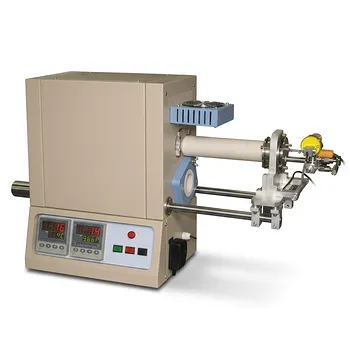
High Temperature Tube Furnace 1500C with Sliding Flanges and 50mm OD for Rapid Thermal Processing Fast Heating and Cooling

High Temperature 1700C Tube Furnace with High Vacuum Turbomolecular Pump System and Multi Channel Mass Flow Controller Gas Mixer
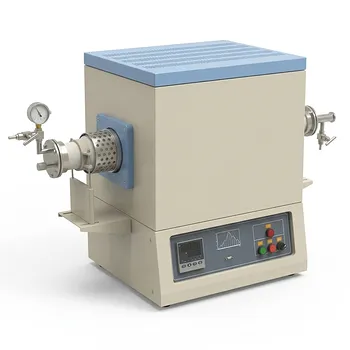
1750°C High Temperature Benchtop Vacuum Atmosphere Tube Furnace with Kanthal Super 1800 Heating Elements and 60mm Alumina Processing Tube

High Temperature 1700C Benchtop Tube Furnace with 5 Inch Heating Zone High Purity Alumina Tube and Vacuum Sealing Flanges
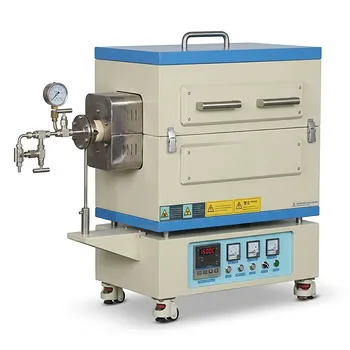
High Temperature Split Tube Furnace 1500C for Material Research Vacuum and Atmosphere Thermal Processing
1700C High Temperature Alumina Tube Furnace with 18 Inch Heated Zone and Vacuum Sealing Flanges

1800C High Temperature Compact Vacuum Tube Furnace with 60mm OD Alumina Tube and Kanthal MoSi2 Heating Elements

Compact High Temperature 1600C Tube Furnace with 50mm Alumina Tube and Vacuum Flanges for Material Sintering
High Temperature Three Zone Tube Furnace 1700C with Alumina Tube and Water Cooled Flanges
High Temperature Rocking Tube Furnace 1700°C Alumina Processing Tube with Precision Oscillation for Material Synthesis
High Temperature 1700C Tube Furnace with 4 Inch OD Alumina Tube and Vacuum Sealing Flanges

High Temperature 1700C Vertical Tube Furnace for Powder Spherification and Material Sintering
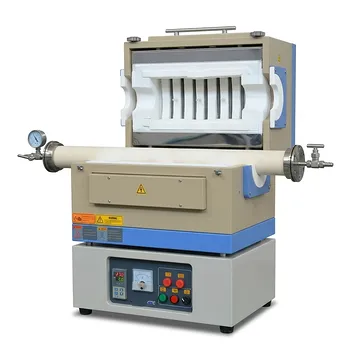
High Temperature 1600C Split Tube Furnace Vacuum Flanges Valves Optional 60mm 80mm Alumina Tube

High Temperature Automated 5 Inch Tube Furnace for Autonomous Material Research and Advanced Laboratory R&D

High Temperature 1700C Six Zone Split Tube Furnace with Alumina Tube and Water Cooled Flanges
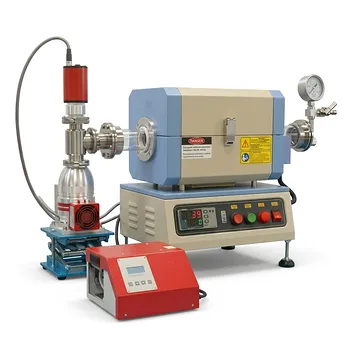
High Vacuum Compact Tube Furnace 1200C with Integrated Turbo Pump System and 8 Inch Heating Zone
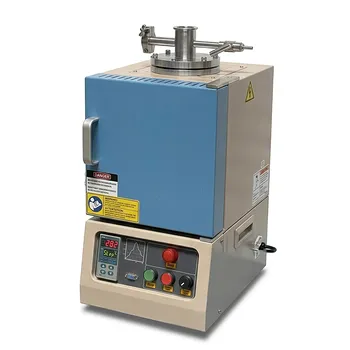
High Temperature Hybrid Muffle and Tube Furnace with Vacuum Capability and PID Control
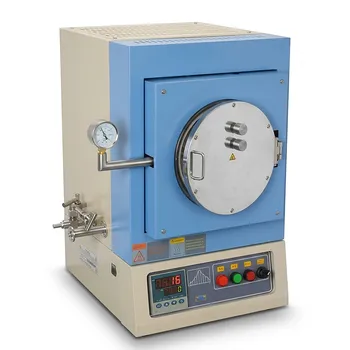
1100°C High Temperature Quartz Chamber Furnace 8 Inch OD with 7.6 Liter Capacity and Vacuum Atmosphere Capability
1100C Tube Furnace with Vacuum Flange and Programmable Temperature Controller for Material Science and Industrial Heat Treatment