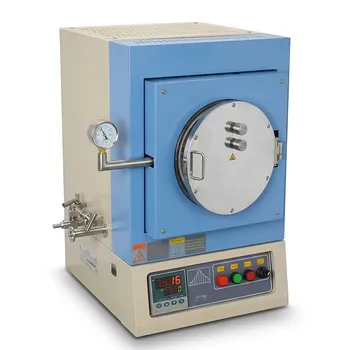
What is the function of a high-throughput tube furnace in the pretreatment of Ni-8YSZ anode materials? Precise Reduction.
Updated 6 months ago
A high-throughput tube furnace serves as the foundational environment for the chemical reduction of Ni-8YSZ anodes. Its primary function is to provide a precisely controlled high-temperature setting (800 °C) and a specific reducing atmosphere (9% H2/91% N2) to transform nickel oxide (NiO) into metallic nickel (Ni). This ensures the anode reaches the standardized, porous microstructure necessary for subsequent performance testing and re-oxidation failure research.
The high-throughput tube furnace is essential for converting NiO-8YSZ precursors into functional Ni-8YSZ anodes by maintaining a stable, low-oxygen reduction environment. This process establishes the repeatable microstructural baseline required to study the degradation and durability of solid oxide fuel cell components.
The Role of Atmospheric and Thermal Precision
Achieving Chemical Reduction
The furnace facilitates the critical phase transformation of the anode material by introducing a hydrogen-nitrogen mixed gas. This controlled atmosphere prevents unwanted oxidation while actively stripping oxygen from the nickel oxide (NiO) particles. The result is the formation of metallic nickel, which provides the necessary electrical conductivity for the anode.
Maintaining Thermal Uniformity at 800 °C
Precision is vital because the reduction must be complete and uniform across the entire sample. The tube furnace maintains a constant 800 °C environment for extended periods, ensuring that the kinetics of the reduction reaction are consistent. This uniformity prevents localized variations in the material that could skew results during re-oxidation failure studies.
Establishing the Microstructural Baseline
Creating the Porous Network
As NiO reduces to metallic Ni, the material undergoes a volume contraction that creates a porous network within the YSZ ceramic matrix. This porosity is essential for gas transport within the fuel cell. The tube furnace allows researchers to control this transition accurately, ensuring the triple phase boundary (TPB) is correctly established.
Standardization for Failure Analysis
By using a high-throughput setup, researchers can ensure that multiple samples undergo the exact same pretreatment. This creates a standardized starting microstructure, which is the "ground truth" for experimental comparisons. Without this consistency, it would be impossible to determine if a cell failure was due to the experiment itself or variations in the initial reduction process.
Understanding the Trade-offs
Atmospheric Risks and Safety
Operating a furnace with hydrogen, even in a diluted 9% mix, requires rigorous safety protocols to prevent leaks or combustion. While higher hydrogen concentrations could speed up reduction, they increase the risk of explosion and may lead to overly rapid structural changes. Using a nitrogen-balanced mix balances chemical efficiency with laboratory safety.
Thermal Gradients and Scaling
High-throughput tube furnaces are excellent for small-to-medium batches, but they can suffer from longitudinal thermal gradients. Samples placed near the ends of the tube may experience slightly lower temperatures than those in the center. Researchers must carefully calibrate the "constant temperature zone" to ensure all samples receive the identical thermal treatment required for valid data.
Applying Pretreatment to Your Research Goals
Making the Right Choice for Your Goal
To achieve the best results with Ni-8YSZ pretreatment, the furnace parameters must align with the specific objectives of your material study.
- If your primary focus is microstructural stability: Prioritize a slow ramp rate and an extended dwell time at 800 °C to allow the nickel grains to stabilize within the YSZ matrix.
- If your primary focus is high-efficiency catalysis: Ensure the H2/N2 flow rate is high enough to remove all water vapor (a byproduct of reduction), which prevents the premature coarsening of nickel particles.
- If your primary focus is re-oxidation failure kinetics: Use the exact 9% H2/91% N2 ratio to mimic standard operating conditions, ensuring your baseline matches established literature for SOFC degradation.
By mastering the high-throughput tube furnace's environment, you transform a raw ceramic-oxide composite into a high-performance, conductive anode ready for rigorous scientific evaluation.
Summary Table:
| Parameter/Feature | Function in Ni-8YSZ Pretreatment |
|---|---|
| Temperature (800°C) | Ensures consistent reduction kinetics and thermal uniformity. |
| Atmosphere (9% H2) | Safely transforms NiO into metallic Ni; prevents oxidation. |
| Porosity Creation | Develops the porous network required for gas transport and TPB. |
| High-Throughput | Provides standardized microstructures for consistent batch testing. |
Elevate Your Material Research with THERMUNITS
Achieving the perfect porous microstructure for Ni-8YSZ anodes requires uncompromising thermal and atmospheric control. THERMUNITS is a leading manufacturer of high-temperature laboratory equipment specifically designed for material science and industrial R&D.
We offer a comprehensive range of thermal processing solutions, including Tube, Atmosphere, Vacuum, and Muffle furnaces, CVD/PECVD systems, and Rotary kilns. Whether you are researching SOFC degradation or developing new catalysts, our equipment ensures the precision and repeatability your work demands.
Ready to optimize your heat treatment process? Contact our expert team today to find the perfect solution for your lab.
References
- Sen Yang, Fenghui Wang. Failure Analysis of Ni-8YSZ Electrode under Reoxidation Based on the Real Microstructure. DOI: 10.3390/ma17184599
Mentioned Products
- High Throughput 1200C Four Channel Tube Furnace with 3 Inch Quartz Tubes for Multi Zone Annealing and Material Research
- 1200C High Throughput Multi Channel Tube Furnace with 50mm Quartz Tubes for Annealing and Material Phase Diagram Research
- High Temperature 1700C 4 Channel Tube Furnace 1 Inch Alumina Tube for Hi-Throughput Annealing
- 1200C Max 6 Channel High Cleanliness Hydrogen Furnace for High Throughput Annealing
- High Temperature 1700C Vertical Tube Furnace for Powder Spherification and Material Sintering
People Also Ask
- Why is high-purity alumina selected for sample trays? Key to High-Throughput Sintering Success
- How does a high-throughput tube furnace achieve precise sulfurization? Expert Control for CoS2–Co(OH)F Nanostructures
- Why is a quartz tube furnace necessary for phosphorus-doped MoS2/GO preparation? Ensure Purity & Precise Synthesis
- Why is high-purity argon used as a flowing atmosphere during the catalyst carbonization process in a tube furnace? Role
- What role does an industrial programmable tube furnace play in preparing MXene/MWCNTs@C-Co microspheres? Expert Guide

Tech Team · ThermUnits
Last updated on Apr 14, 2026
Related Products
High Throughput 1200C Four Channel Tube Furnace with 3 Inch Quartz Tubes for Multi Zone Annealing and Material Research
1200C High Throughput Multi Channel Tube Furnace with 50mm Quartz Tubes for Annealing and Material Phase Diagram Research
High Temperature 1700C 4 Channel Tube Furnace 1 Inch Alumina Tube for Hi-Throughput Annealing
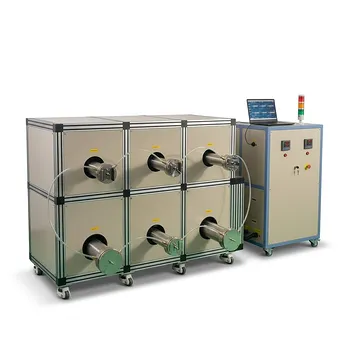
1200C Max 6 Channel High Cleanliness Hydrogen Furnace for High Throughput Annealing
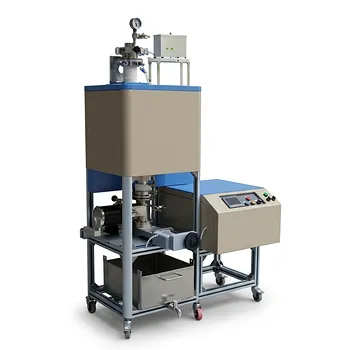
High Temperature 1700C Vertical Tube Furnace for Powder Spherification and Material Sintering
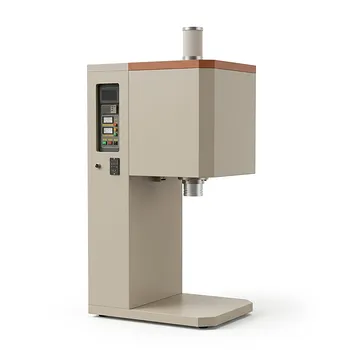
Vertical Openable Tube Furnace 0-1700c High Temperature Laboratory System for CVD and Vacuum Heat Treatment
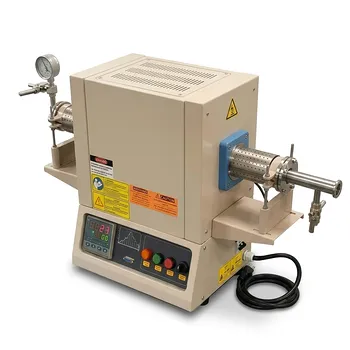
Compact High Temperature 1600C Tube Furnace with 50mm Alumina Tube and Vacuum Flanges for Material Sintering
Rapid Thermal Processing RTP Atmosphere Controlled Bottom Loading Furnace 1100C High Throughput 50C per Second Heating Rate
High Temperature Tube Furnace 1500C with Sliding Flanges and 50mm OD for Rapid Thermal Processing Fast Heating and Cooling
High Temperature Automated 5 Inch Tube Furnace for Autonomous Material Research and Advanced Laboratory R&D
1200C Sliding Tube Furnace for Rapid Thermal Processing and CVD Graphene Growth with 100mm OD Capacity
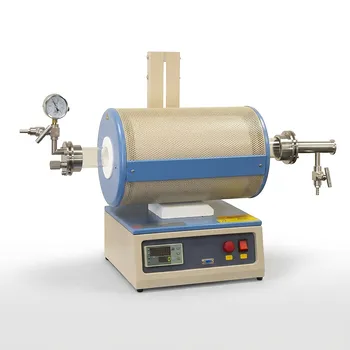
1100C Tube Furnace with Vacuum Flange and Programmable Temperature Controller for Material Science and Industrial Heat Treatment
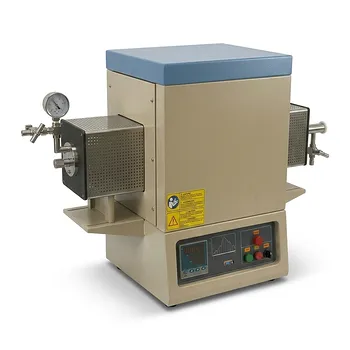
High Temperature 1700C Benchtop Tube Furnace with 5 Inch Heating Zone High Purity Alumina Tube and Vacuum Sealing Flanges
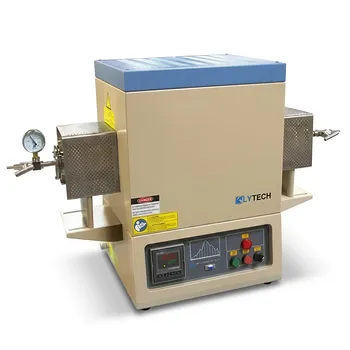
1800C High Temperature Compact Vacuum Tube Furnace with 60mm OD Alumina Tube and Kanthal MoSi2 Heating Elements
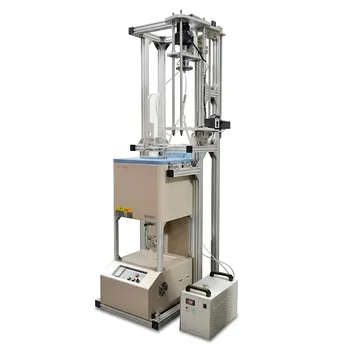
500C Vacuum Vertical Tube Furnace 84mm OD Sample Rotation Lifting System
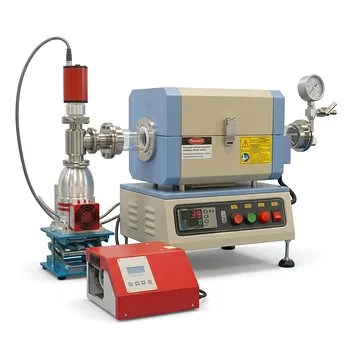
High Vacuum Compact Tube Furnace 1200C with Integrated Turbo Pump System and 8 Inch Heating Zone
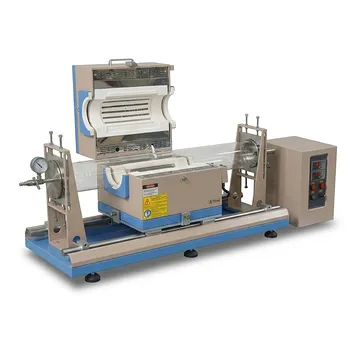
1200C High Temperature 5 Inch Sliding Tube Furnace for Rapid Thermal Processing RTP and Wafer Annealing
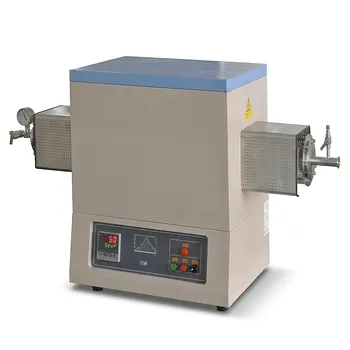
High Temperature 1700C Tube Furnace with 4 Inch OD Alumina Tube and Vacuum Sealing Flanges
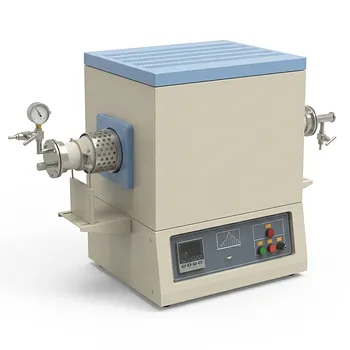
1750°C High Temperature Benchtop Vacuum Atmosphere Tube Furnace with Kanthal Super 1800 Heating Elements and 60mm Alumina Processing Tube