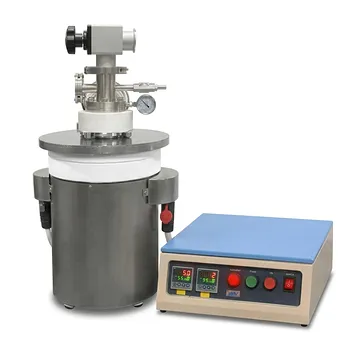
What is the function of a quartz tube furnace in the fabrication of rare earth oxide-coated graphene emitters? Key Roles
Updated 3 months ago
In the fabrication of rare earth oxide-coated graphene emitters, the quartz tube furnace serves as the critical reactor for thermal decomposition and interfacial annealing. This specialized equipment provides a precisely controlled argon atmosphere and high-temperature environment (typically around 800 °C) to convert rare earth nitrate precursors into stable, continuous oxide films like $Gd_2O_3$ or $La_2O_3$. Beyond simple heating, the furnace facilitates the chemical bonding between the oxide coating and the graphene substrate, which is essential for stable electron emission.
Core Takeaway: The quartz tube furnace acts as a high-purity environment that triggers the chemical transformation of liquid-phase precursors into solid-state functional coatings while optimizing the structural integrity of the graphene-oxide interface.
The Mechanism of Thermal Decomposition
Converting Nitrates to Stable Oxides
The primary role of the furnace is to facilitate the high-temperature decomposition of rare earth nitrates that have been coated onto the graphene surface. At controlled temperatures such as 800 °C, the nitrate molecules break down, releasing gaseous byproducts and leaving behind a stable rare earth oxide continuous film.
Ensuring Film Uniformity
The "hot-wall" design of the quartz tube furnace creates a steady-state, isothermal environment. This uniform heat distribution ensures that the decomposition occurs at the same rate across the entire sample, preventing localized defects in the $Gd_2O_3$ or $La_2O_3$ layers.
Interfacial Engineering and Structural Integrity
Enhancing Interfacial Bonding
The heating process within the furnace doubles as an annealing treatment for the composite material. This process provides the energy necessary for atoms at the boundary to rearrange, significantly improving the interfacial bonding between the rare earth oxide and the underlying graphene lattice.
Optimizing Electron Emission
Stronger interfacial bonding reduces contact resistance and prevents the coating from delaminating during high-voltage operation. This structural stability is a prerequisite for creating high-performance field emitters that can operate reliably over long periods.
Environmental Control and Material Purity
Atmospheric Protection
Graphene is highly susceptible to oxidation and degradation when heated in the presence of oxygen. The quartz tube furnace provides a strictly controlled argon protective atmosphere or vacuum environment that shields the graphene from damage while the oxides form.
Chemical Inertness of Quartz
Quartz is selected for these furnaces because of its excellent temperature resistance (up to 1160 °C) and extremely low vapor pressure. This ensures that the reaction environment remains free from metallic impurities or silicon contamination, preserving the high crystalline quality of the graphene.
Understanding the Trade-offs
Thermal Stress and Cooling Rates
While high temperatures are necessary for decomposition, rapid heating or cooling can induce thermal stress due to the different expansion coefficients of graphene and rare earth oxides. If the cooling phase is not carefully managed within the furnace software, the coating may develop micro-cracks.
Equipment Limitations
Quartz tubes, while chemically pure, are susceptible to devitrification if exposed to certain alkaline contaminants at high temperatures for extended periods. Additionally, maintaining a high-vacuum seal (typically ≤0.1 kPa) requires meticulous maintenance of the furnace flanges and O-rings to prevent oxygen ingress.
How to Optimize Your Fabrication Process
The specific configuration of your furnace should align with your primary objective for the emitter's performance.
- If your primary focus is Maximum Coating Adhesion: Prioritize a longer annealing soak time at 800 °C to allow for deeper interfacial diffusion between the oxide and the graphene.
- If your primary focus is High Graphene Crystallinity: Ensure the furnace is purged with high-purity argon for at least 30 minutes before heating to eliminate any trace oxygen that could cause lattice defects.
- If your primary focus is Large-Scale Uniformity: Utilize a multi-zone quartz tube furnace to maintain a perfectly isothermal "sweet spot" across the entire length of your substrate.
The quartz tube furnace is the indispensable bridge between a raw precursor-coated substrate and a functionalized, high-efficiency electron emitter.
Summary Table:
| Key Function | Technical Process | Impact on Emitter Performance |
|---|---|---|
| Thermal Decomposition | Converts rare earth nitrates into stable oxides ($Gd_2O_3$, $La_2O_3$) at ~800 °C | Creates a continuous, functional solid-state oxide film. |
| Interfacial Annealing | Facilitates atomic rearrangement and chemical bonding at the boundary | Reduces contact resistance and prevents coating delamination. |
| Atmosphere Control | Provides high-purity Argon or vacuum environments | Protects the graphene lattice from oxidation and degradation. |
| Thermal Uniformity | Employs "hot-wall" design for isothermal distribution | Ensures consistent decomposition rates and prevents localized defects. |
| Purity Preservation | Uses chemically inert quartz to resist contamination | Maintains high crystalline quality and prevents metallic impurities. |
Elevate Your Material Research with THERMUNITS Precision Technology
High-performance electron emitters require the absolute precision and purity that only world-class thermal equipment can provide. THERMUNITS is a leading manufacturer specializing in high-temperature laboratory equipment for material science and industrial R&D.
Whether you are performing complex interfacial annealing in a Tube Furnace, synthesizing thin films via CVD/PECVD systems, or conducting large-scale heat treatments in our Vacuum, Atmosphere, or Rotary furnaces, our solutions ensure uniform heating and strict atmospheric control. From Muffle and Dental furnaces to Vacuum Induction Melting (VIM) and specialized Thermal Elements, we empower researchers to achieve superior structural integrity in advanced composites.
Ready to optimize your fabrication process?
Contact THERMUNITS today to discuss your specific heating requirements and discover how our advanced thermal solutions can accelerate your R&D outcomes.
References
- ZhiJianMuCuo Dong, Baoqing Zeng. Optimized Field Emission from Graphene Sheets with Rare Earth Oxides. DOI: 10.3390/coatings14050545
Mentioned Products
- Dual Zone Quartz Tube Furnace with 80mm Diameter 1200C Max Temperature 3 Channel Gas Mixer and Vacuum Pump System
- 1100°C High Temperature Quartz Chamber Furnace 8 Inch OD with 7.6 Liter Capacity and Vacuum Atmosphere Capability
- Compact Vertical Split Quartz Tube Furnace with Stainless Steel Vacuum Flanges for Rapid Thermal Quenching and Controlled Atmosphere Material Processing
- 1100°C Large Diameter Quartz Tube Furnace with 24 Inch Heating Zone and Water Cooled Flanges
- 1200°C 5 Inch Vertical Quartz Tube Furnace with Stainless Steel Vacuum Flanges
People Also Ask
- How do dual-zone quartz tube furnaces achieve controllable material preparation? Optimize Perovskite VD Processes
- What are the technical advantages of using a dual-zone tube furnace for growing large PdCoO2 crystals via CVT? Expert Tips
- Purpose of the reverse gradient step in CVT growth? Master Crystal Purity with Dual-Zone Furnaces
- Why is it necessary to place MoS2 devices in a dual-zone tube furnace for annealing? Optimize Lattice Repair & Doping
- Why is a dual-zone tube furnace necessary for ReO3-doped Cu2Te CVD? Essential for precise precursor synchronization.

Tech Team · ThermUnits
Last updated on Jun 02, 2026
Related Products
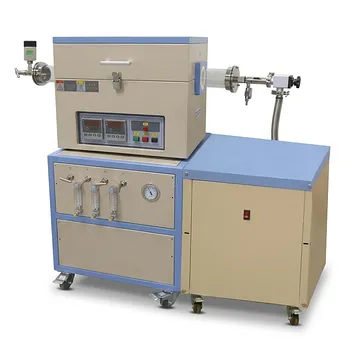
Dual Zone Quartz Tube Furnace with 80mm Diameter 1200C Max Temperature 3 Channel Gas Mixer and Vacuum Pump System
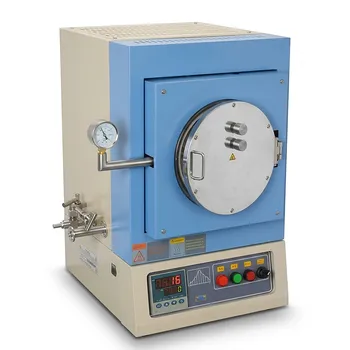
1100°C High Temperature Quartz Chamber Furnace 8 Inch OD with 7.6 Liter Capacity and Vacuum Atmosphere Capability

Compact Vertical Split Quartz Tube Furnace with Stainless Steel Vacuum Flanges for Rapid Thermal Quenching and Controlled Atmosphere Material Processing
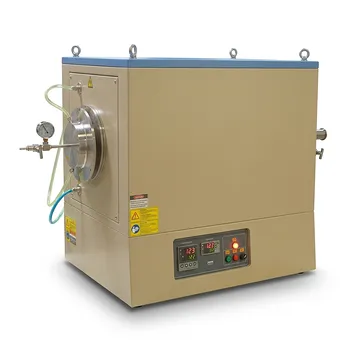
1100°C Large Diameter Quartz Tube Furnace with 24 Inch Heating Zone and Water Cooled Flanges

1200°C 5 Inch Vertical Quartz Tube Furnace with Stainless Steel Vacuum Flanges
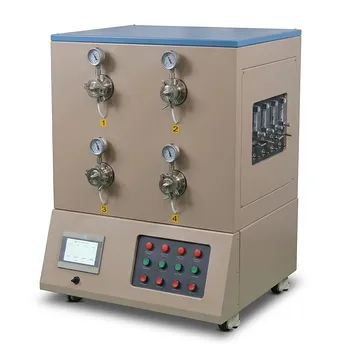
High Throughput 1200C Four Channel Tube Furnace with 3 Inch Quartz Tubes for Multi Zone Annealing and Material Research
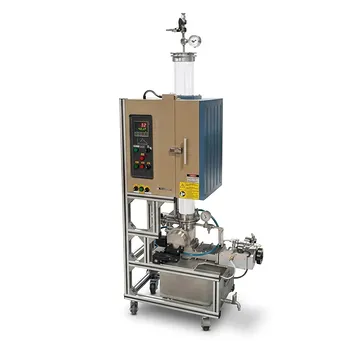
1200C High Temperature Atmosphere Controlled Vertical Quenching Tube Furnace with 4 Inch Quartz Tube
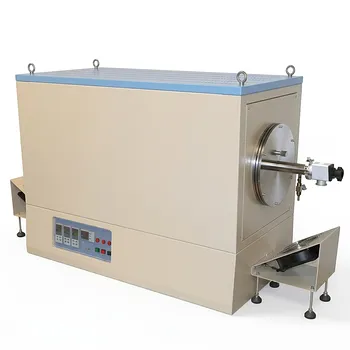
1100°C Three Zone Tube Furnace with 8.5 to 11 Inch OD Quartz Tube and Vacuum Flanges for Large Wafer Processing
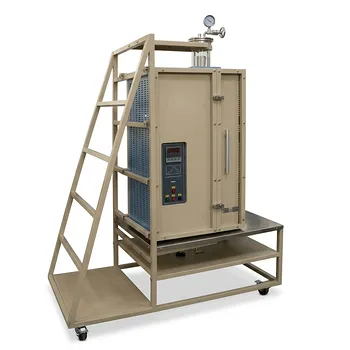
Split Vertical Tube Furnace with 1200C Quartz Tube and Stainless Steel Vacuum Flanges for Rapid Thermal Processing
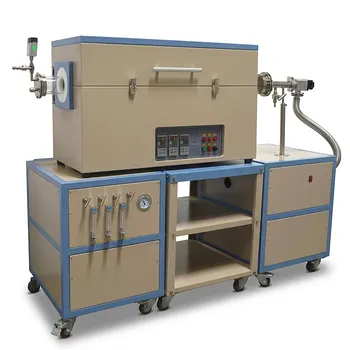
Three Zone Quartz Tube Furnace with 3 Channel Gas Mixer Vacuum Pump and Anti Corrosive Vacuum Gauge
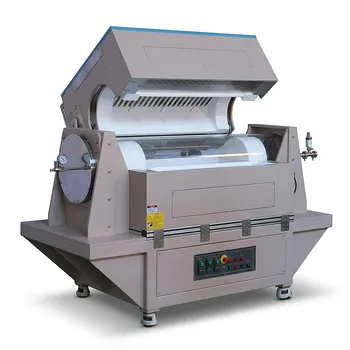
Three Zone Tube Furnace with 11 Inch or 15 Inch Quartz Tube and Hinged Flanges for Vacuum Atmosphere Heat Treatment
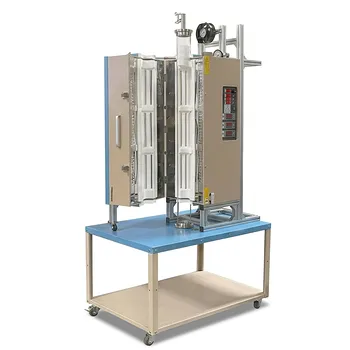
1200C Three Zone Split Vertical Tube Furnace 4 Inch Quartz Tube Stainless Steel Vacuum Flanges
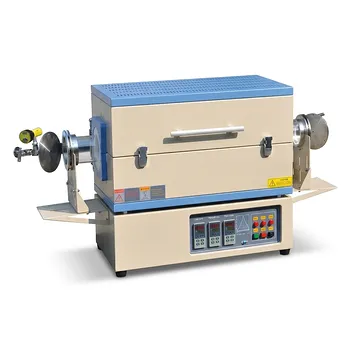
Three Zone Tube Furnace with 24 Inch Heating Length and Hinged Flange Quartz Tube System
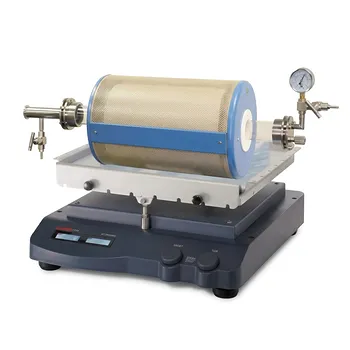
High Temperature Rocking Tube Furnace with Quartz Tube and Vacuum Flange for Materials Synthesis
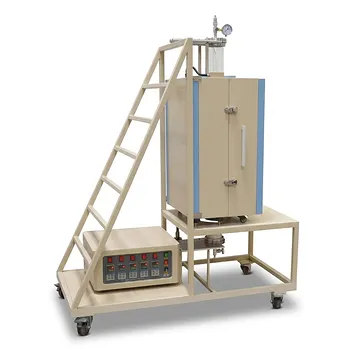
Five Zone Split Vertical Tube Furnace 1200C Max with 4 Inch Quartz Tube and Stainless Steel Vacuum Flanges
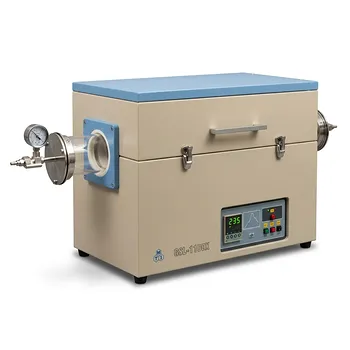
Single Zone Tube Furnace 5 Inch Quartz Tube 36 Inch Heating Zone Vacuum Flanges
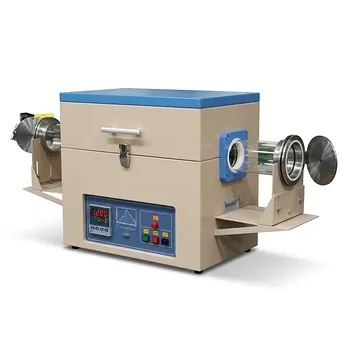
High Temperature 1200C Split Tube Furnace with Hinged Vacuum Flanges and 4 Inch Quartz Tube for Laboratory Research
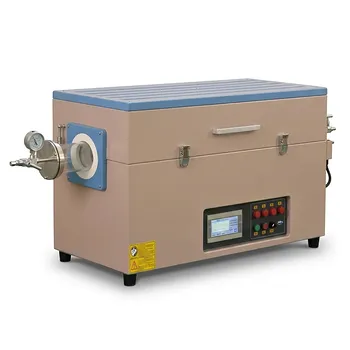
1200C Four Zone Split Tube Furnace with Touch Screen Control and High Purity Quartz Tube and Vacuum Sealing Flanges

High Temperature Automated 5 Inch Tube Furnace for Autonomous Material Research and Advanced Laboratory R&D