What is the function of a single-zone tube furnace in CVD synthesis of 1T-VSe2 nanosheets? Expert Control Insights
Updated 3 months ago
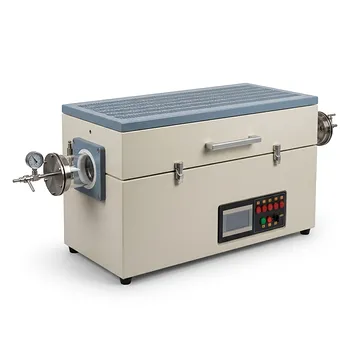
The single-zone horizontal tube furnace acts as the primary thermal reactor and environment controller during the chemical vapor deposition (CVD) synthesis of 1T-VSe2 nanosheets. It provides the precise high-temperature field—typically regulated around 440°C—necessary to vaporize selenium powder and drive its gas-phase reaction with vanadium pentoxide precursors. By maintaining stable reaction kinetics and a controlled temperature gradient, the furnace ensures the growth of high-quality, large-sized single-crystal nanosheets.
The core function of the furnace is to provide a stable, uniform thermal environment that facilitates the precise volatilization of solid precursors and regulates the molecular-level deposition of vanadium diselenide (VSe2) onto the substrate.
The Role of Thermal Energy in Precursor Activation
Driving the Volatilization of Solid Precursors
The furnace provides the specific heat required to transform solid selenium powder and vanadium precursors into a gaseous state. In the synthesis of 1T-VSe2, this energy is critical for initiating the volatilization process, allowing the materials to mix in the vapor phase.
Precision Control of Reaction Kinetics
The single-zone system establishes a stable thermal field that governs the speed of the chemical reaction. By maintaining a constant temperature, such as 440°C, the furnace ensures stable reaction kinetics, which prevents erratic crystal growth and minimizes defects in the nanosheet lattice.
Facilitating Gas-Phase Reactions
Because the reaction occurs in the vapor phase, the furnace acts as a chamber where the selenium gas and vanadium species collide. This gas-solid phase interaction is the fundamental mechanism that allows vanadium diselenide to crystallize and deposit onto the target substrate.
Atmospheric and Spatial Regulation
Maintaining a Controlled Reaction Environment
The horizontal tube design allows for a sealed quartz environment where inert or reactive gases can flow without contamination. This setup is essential for maintaining the purity of the 1T-VSe2 nanosheets, as oxygen or moisture could lead to unwanted vanadium oxides instead of pure selenides.
Utilizing the Natural Temperature Gradient
Even in a single-zone furnace, a natural temperature gradient exists between the heating center and the tube ends. This gradient is leveraged to position the precursors at the ideal high-temperature point while the substrate is placed at a slightly cooler zone to encourage the condensation and growth of the nanosheets.
Ensuring Thickness and Morphology Consistency
The uniformity of the thermal field within the furnace directly influences the dimensions and layer count of the resulting nanosheets. Precise temperature control allows for molecular-level regulation, ensuring that the nanosheets grow with consistent thickness and high crystallinity across the substrate.
Understanding the Trade-offs
A single-zone furnace is highly efficient for reactions requiring a specific, unified temperature, but it presents limitations compared to multi-zone systems. In a single-zone setup, the researcher has less independent control over the separate evaporation rates of different precursors, as everything is governed by a single heating element.
Furthermore, achieving a steep temperature gradient—which can sometimes benefit faster deposition—is more difficult in a single-zone furnace. If the thermal stability fluctuates even slightly, it can lead to inconsistent crystal quality or the formation of different phases of VSe2, rather than the desired 1T metallic phase.
Applying Furnace Parameters to Your Synthesis Goals
When configuring your CVD process for 1T-VSe2, your furnace settings must align with your specific material requirements.
- If your primary focus is large-scale single crystals: Focus on maximizing thermal stability and lengthening the growth time at a constant 440°C to allow for slow, ordered crystallization.
- If your primary focus is controlling nanosheet thickness: Precisely calibrate the gas flow rates in conjunction with the furnace temperature to regulate the concentration of vaporized precursors reaching the substrate.
- If your primary focus is phase purity: Ensure the furnace is perfectly sealed and purged with inert gas to prevent oxidation of the vanadium precursor throughout the heating cycle.
By mastering the thermal field of the horizontal tube furnace, you gain definitive control over the morphology and electrical properties of synthesized 1T-VSe2 nanosheets.
Summary Table:
| Key Role | Impact on CVD Synthesis | Benefit to Research |
|---|---|---|
| Precursor Activation | Provides heat for Se and V2O5 volatilization | Initiates vapor-phase reactions |
| Kinetic Regulation | Maintains stable 440°C thermal field | Ensures uniform crystal growth |
| Atmosphere Control | Sealed environment with inert gas flow | Prevents vanadium oxidation |
| Spatial Gradient | Leverages natural temperature drops | Facilitates nanosheet condensation |
| Morphology Control | Uniform heat distribution | Governs thickness and crystallinity |
Elevate Your R&D Precision with THERMUNITS
Success in CVD synthesis depends on the reliability of your thermal environment. THERMUNITS is a leading manufacturer of high-temperature laboratory equipment, providing the cutting-edge tools needed for advanced material science and industrial research.
From high-precision Tube and Atmosphere furnaces to sophisticated CVD/PECVD systems and Vacuum Induction Melting (VIM) units, we offer a comprehensive range of thermal processing solutions tailored to your specific synthesis goals. Our equipment ensures maximum thermal stability, precise morphology control, and the purity your nanosheet research demands.
Ready to optimize your lab's performance?
Contact our expert team today to find the perfect furnace for your application and experience the THERMUNITS commitment to excellence.
References
- Zhao-Hui Chen, Zhi‐Min Liao. Charge density wave modulated third-order nonlinear Hall effect in <mml:math xmlns:mml="http://www.w3.org/1998/Math/MathML"><mml:mrow><mml:mn>1</mml:mn><mml:mi>T</mml:mi><mml:mtext>−</mml:mtext><mml:msub><mml:mi>VSe</mml:mi><mml:mn>2</mml:mn></mml:msub></mml:mrow></mml:math> nanosheets. DOI: 10.1103/physrevb.110.235135
Mentioned Products
- Single Zone Tube Furnace 5 Inch Quartz Tube 36 Inch Heating Zone Vacuum Flanges
- 1200°C 10-Zone Split Tube Furnace with Horizontal and Vertical Mounting for Multi-Zone Thermal Gradients and Large Diameter Material Processing
- Multi Position Tube Furnace 1100C for Laboratory Material Research and Advanced Industrial Thermal Processing
- Ten Zone Multi Orientation Laboratory Tube Furnace for 1200C High Temperature Gradient Thermal Processing
- High Temperature Elongated Dual Zone Tube Furnace for Material Research and Industrial Heat Treatment
People Also Ask
- Why is a quartz tube furnace necessary for phosphorus-doped MoS2/GO preparation? Ensure Purity & Precise Synthesis
- Why is high-temperature annealing in a quartz tube furnace done after HfO2 deposition? Unlock peak film performance.
- What role does a single-temperature zone quartz tube furnace play in the growth of monolayer MoS2? Optimize 2D Synthesis
- What is the function of a quartz tube furnace in simulating sulfate hot corrosion for turbine materials?
- What functions do quartz tube furnaces perform in NMC111 calcination? Enhance material purity and performance.

Tech Team · ThermUnits
Last updated on Jun 03, 2026
Related Products
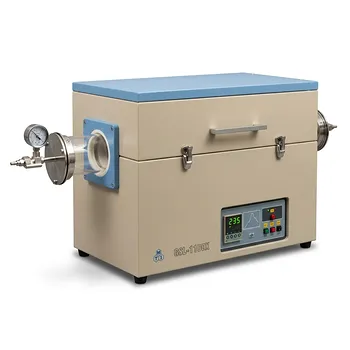
Single Zone Tube Furnace 5 Inch Quartz Tube 36 Inch Heating Zone Vacuum Flanges
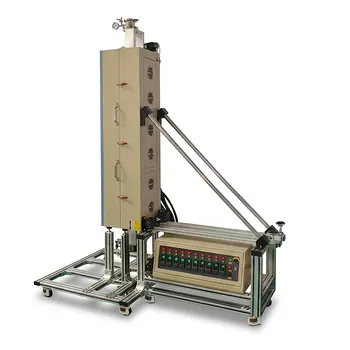
1200°C 10-Zone Split Tube Furnace with Horizontal and Vertical Mounting for Multi-Zone Thermal Gradients and Large Diameter Material Processing
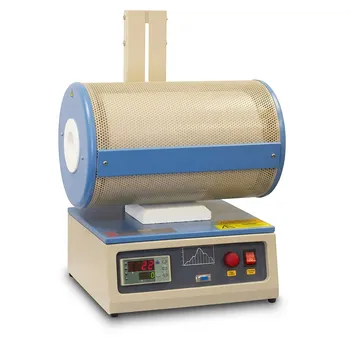
Multi Position Tube Furnace 1100C for Laboratory Material Research and Advanced Industrial Thermal Processing
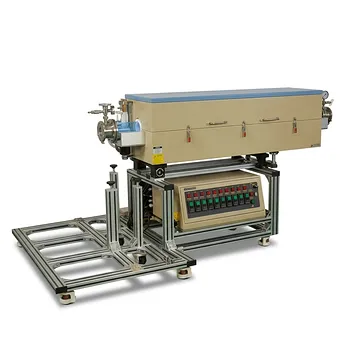
Ten Zone Multi Orientation Laboratory Tube Furnace for 1200C High Temperature Gradient Thermal Processing
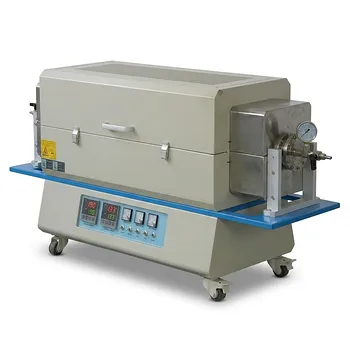
High Temperature Elongated Dual Zone Tube Furnace for Material Research and Industrial Heat Treatment
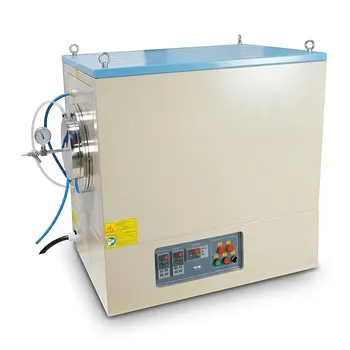
Dual Zone Tube Furnace 1100C with 11 Inch Quartz Tube and Vacuum Flanges for 8 Inch Wafer Processing
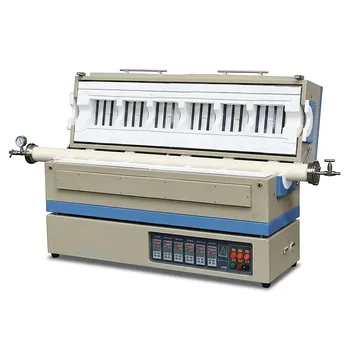
Six Zone Split Tube Furnace with Alumina Tube and Vacuum Flanges for 1500C High Temperature Thermal Processing and CVD
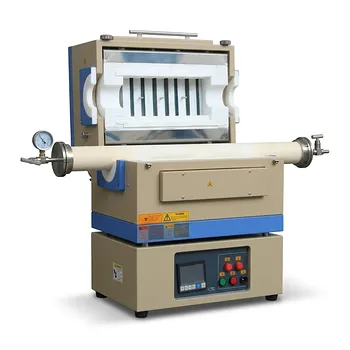
1500C Eight Zone Split Tube Furnace for Thermal Gradient Processing and Advanced Material Research
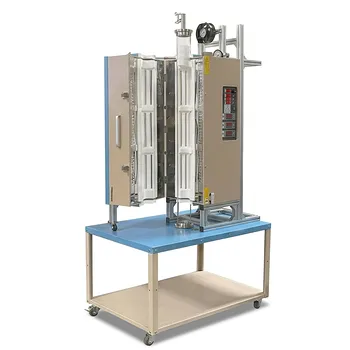
1200C Three Zone Split Vertical Tube Furnace 4 Inch Quartz Tube Stainless Steel Vacuum Flanges

Three Zone Tube Furnace with 11 Inch or 15 Inch Quartz Tube and Hinged Flanges for Vacuum Atmosphere Heat Treatment
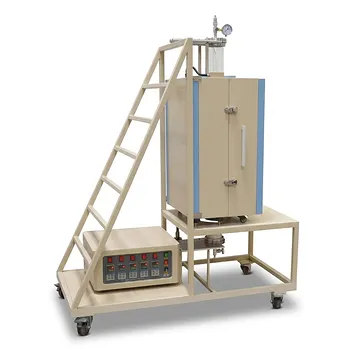
Five Zone Split Vertical Tube Furnace 1200C Max with 4 Inch Quartz Tube and Stainless Steel Vacuum Flanges
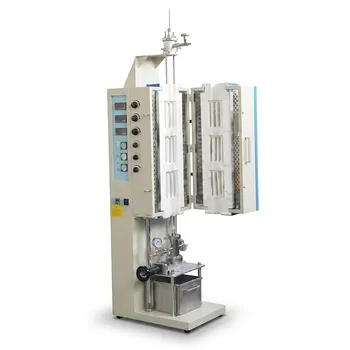
High Temperature Dual Zone Tube Furnace for Material Science Research and Professional Thermal Processing
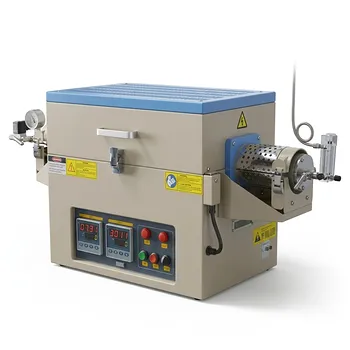
1100C Dual Zone Hydrogen Gas Tube Furnace with Quartz Tube and Integrated H2 Leak Detection System
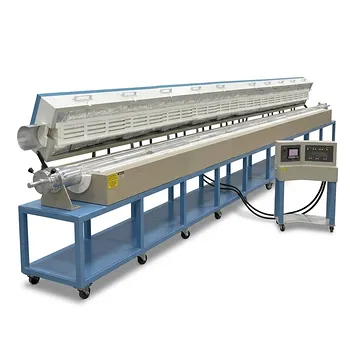
12 Zone Ultra Long Split Tube Furnace with 20 Foot Quartz Tube and 1100C Max Temperature

High Temperature 1700C Six Zone Split Tube Furnace with Alumina Tube and Water Cooled Flanges
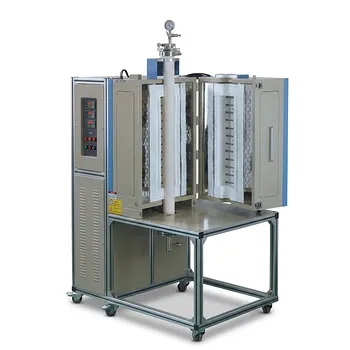
Three Zone Heating Split Vertical Tube Furnace 1700 High Temperature Vacuum Atmosphere Thermal Process System
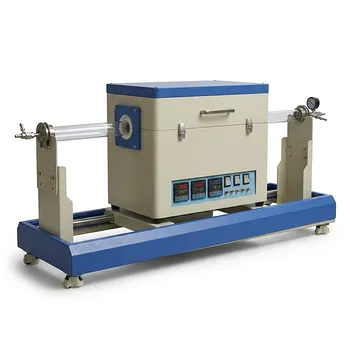
Double Temperature Zone Double Cover Tube Furnace for High Temperature CVD and Vacuum Annealing
Five Zone 1200C High Temperature Split Tube Furnace with Touch Screen Controller and Multiple Quartz Tube Options
1600C Three Zone Split Tube Furnace with Alumina Tube and Vacuum Flange