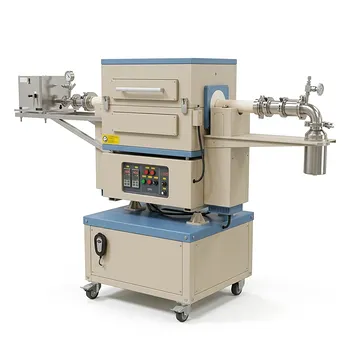
What is the function of a three-zone tube furnace & rail in hBN growth? Optimize your CVD process & protect substrates.
Updated 3 months ago
Precise thermal control and rapid kinetic switching. A three-zone tube furnace integrated with a linear rail system functions as the primary thermal engine for hexagonal boron nitride (hBN) growth, providing a highly controlled temperature gradient. The rail system adds a mechanical layer of control, allowing the furnace to move over the substrate instantly to initiate or terminate the reaction, which is vital for maintaining the integrity of sensitive materials like germanium (Ge).
The integration of a linear rail with a multi-zone furnace transforms a standard heating element into a dynamic growth tool. It enables the extreme heating and cooling rates necessary to prevent substrate degradation and to achieve the sharp "on/off" switching required for high-quality atomic layers.
Advanced Thermal Management in hBN Synthesis
Precision of Three-Zone Temperature Control
A three-zone furnace allows for the creation of independent thermal environments within a single quartz tube. This setup is essential for managing temperature field gradients, which dictate how the borazine precursor decomposes and deposits onto the substrate.
By adjusting each zone, researchers can ensure temperature uniformity across the growth area or create specific gradients that drive the flow of vapor. This level of control is a prerequisite for achieving the high crystallinity and layer thickness uniformity required for hBN films.
Rapid Thermal Cycling via Linear Rail Integration
The linear rail system allows the furnace to slide rapidly toward or away from the reaction zone. This mechanical movement provides a level of thermal agility that traditional stationary furnaces cannot match, enabling extremely high heating and cooling rates.
Instead of waiting for a stationary heating element to ramp up or down—which can take several minutes—the rail system moves the "heat" itself. This allows the substrate to reach growth temperatures almost instantaneously, providing a precise start time for the chemical vapor deposition (CVD) process.
Protecting the Growth Environment
Preventing Thermal Degradation of the Substrate
When using a germanium (Ge) substrate, thermal exposure must be strictly limited. Prolonged high temperatures during non-growth phases can lead to thermal degradation or unwanted surface modifications of the Ge lattice.
The rail system acts as a protective mechanism by keeping the furnace away from the substrate until the exact moment the borazine precursor is ready. Once growth is complete, the furnace is slid away, providing rapid cooling that "freezes" the hBN structure and protects the underlying substrate from further heat damage.
Kinetic Control of the Growth Phase
The ability to quickly terminate the reaction is critical for stopping the growth of hBN at the monolayer or few-layer stage. Without the rapid cooling provided by the rail system, residual heat could continue to drive the reaction, leading to uncontrolled thickness or poor film quality.
By decoupling the furnace temperature from the substrate's exposure time, the rail system grants the user kinetic control. This ensures that the chemical reaction only occurs during the window of optimal temperature and precursor concentration.
Understanding the Trade-offs
Mechanical and Thermal Stress
While the linear rail offers speed, the rapid temperature fluctuations can place significant thermal stress on the quartz reaction tube. Repeatedly sliding a hot furnace over a cool tube (or vice versa) increases the risk of structural fatigue or cracking over time.
System Complexity and Calibration
A three-zone system requires complex PID tuning to maintain stability across all zones, especially when the furnace is in motion. Any vibration from the rail system could potentially disturb the laminar flow of the borazine precursor, which might lead to inhomogeneities in the resulting hBN film.
How to Apply This to Your Project
Making the Right Choice for Your Goal
- If your primary focus is Monolayer hBN Quality: Prioritize the linear rail system to ensure sharp growth termination and prevent over-growth or multi-layer formation.
- If your primary focus is Substrate Integrity (e.g., Germanium): Use the rapid-slide capability of the furnace to minimize the "time-at-temperature" for the substrate, preventing surface pitting or degradation.
- If your primary focus is Scalable Uniformity: Focus on the calibration of the three independent heating zones to maintain a perfectly flat thermal profile across the entire length of your growth substrate.
The combination of multi-zone thermal precision and mechanical mobility represents the gold standard for synthesizing high-quality, atomic-layer thin films while preserving substrate morphology.
Summary Table:
| Feature | Primary Function | Impact on hBN Growth |
|---|---|---|
| Three-Zone Heating | Independent thermal gradient control | Ensures film uniformity and precise precursor decomposition. |
| Linear Rail System | Mechanical furnace movement | Enables instant reaction start/stop and protects sensitive substrates. |
| Rapid Thermal Cycling | High heating/cooling rates | Achieves sharp kinetic control for high-quality monolayer production. |
| Kinetic Control | Decoupled heat and exposure time | Prevents over-growth and maintains atomic-layer precision. |
Elevate Your Material Research with THERMUNITS
As a leading manufacturer of high-temperature laboratory equipment for material science and industrial R&D, THERMUNITS provides the precision tools required for cutting-edge synthesis. Whether you are focusing on the growth of hexagonal boron nitride (hBN), graphene, or other advanced nanomaterials, our specialized thermal solutions ensure unparalleled control over your growth environment.
Our Comprehensive Product Range Includes:
- Tube & CVD/PECVD Systems: Optimized for 2D material synthesis with multi-zone control.
- Advanced Furnaces: Muffle, Vacuum, Atmosphere, Rotary, and Hot Press furnaces.
- Specialized Equipment: Dental Furnaces, Electric Rotary Kilns, and Vacuum Induction Melting (VIM) furnaces.
- Thermal Elements: High-quality components to maintain peak performance.
Don't let equipment limitations hinder your scientific breakthroughs. Contact our technical team today to discuss a customized solution for your laboratory’s heat treatment needs.
References
- Katherine A. Su, Michael S. Arnold. Chemical vapor deposition of hexagonal boron nitride on germanium from borazine. DOI: 10.1039/d4ra03704a
Mentioned Products
- 5 Inch Three Zone Rotary Tube Furnace with Integrated Gas Delivery System and 1200C Capability for Advanced Material CVD Processing
- Three Zone Tube Furnace with 24 Inch Heating Length and Hinged Flange Quartz Tube System
- Three Zone Hydrogen Gas Tube Furnace with 82mm Superalloy Tube and Dual Hydrogen Detectors 1200C High Temperature Material Processing System
- 24 Inch Three Zone Split Tube Furnace with Optional Quartz Tube and Vacuum Flange System for High Temperature Material Synthesis
- High Temperature Three Zone Split Tube Furnace 1200C Max 35.4 Inch Heating Length 8 Inch ID Tube
People Also Ask
- What is the primary function of a three-zone tube furnace in the synthesis process of corn-derived carbon nanotubes?
- What role does an industrial-grade three-zone tube furnace play in VOx@VACNT synthesis? Precision Phase-State Control
- Why Use a Three-Zone vs. Single-Zone Furnace for Fe-Ni-Cu Diffusion? Key Benefits for Lab Accuracy
- What advantages does a three-zone tube furnace offer for nanoparticle synthesis? Unlock Superior Thermal Precision.
- What is the core function of an industrial-grade three-zone tube furnace in MgCO3 layer formation?

Tech Team · ThermUnits
Last updated on Jun 03, 2026
Related Products
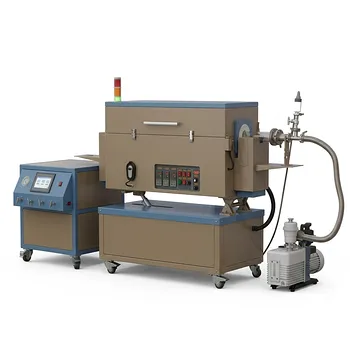
5 Inch Three Zone Rotary Tube Furnace with Integrated Gas Delivery System and 1200C Capability for Advanced Material CVD Processing
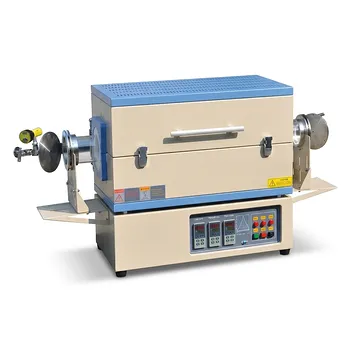
Three Zone Tube Furnace with 24 Inch Heating Length and Hinged Flange Quartz Tube System
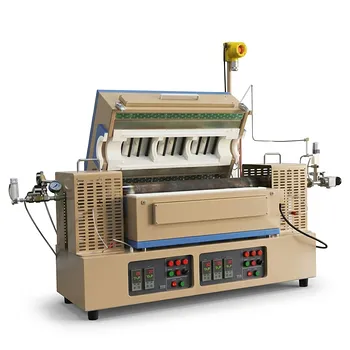
Three Zone Hydrogen Gas Tube Furnace with 82mm Superalloy Tube and Dual Hydrogen Detectors 1200C High Temperature Material Processing System
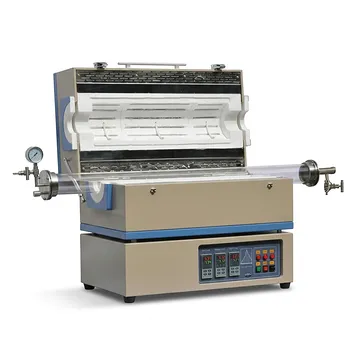
24 Inch Three Zone Split Tube Furnace with Optional Quartz Tube and Vacuum Flange System for High Temperature Material Synthesis
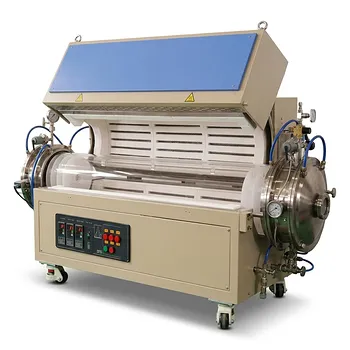
High Temperature Three Zone Split Tube Furnace 1200C Max 35.4 Inch Heating Length 8 Inch ID Tube
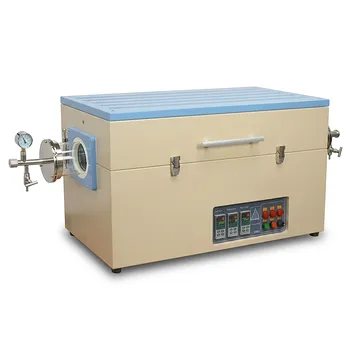
Three Zone Split Tube Furnace 36 Inch Heating Length High Temperature 1200C Material Research Furnace with Vacuum Flanges
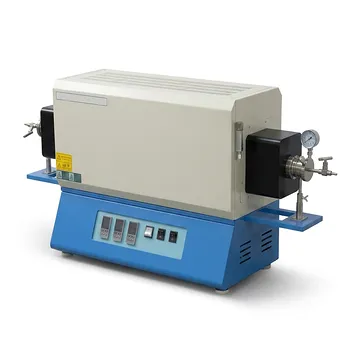
High Temperature Three Temperature Zone Tube Furnace for Advanced Material Science Sintering and Chemical Vapor Deposition Applications
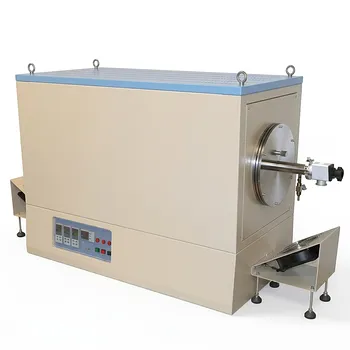
1100°C Three Zone Tube Furnace with 8.5 to 11 Inch OD Quartz Tube and Vacuum Flanges for Large Wafer Processing
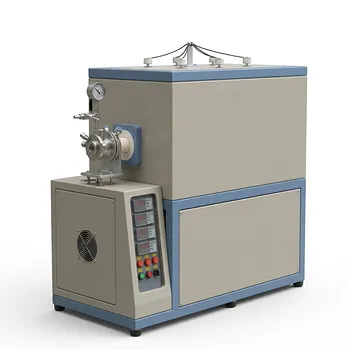
High Temperature 1700C Three Zone Tube Furnace with Alumina Tube 50mm 60mm 80mm OD for Material Research and Industrial Heat Treatment
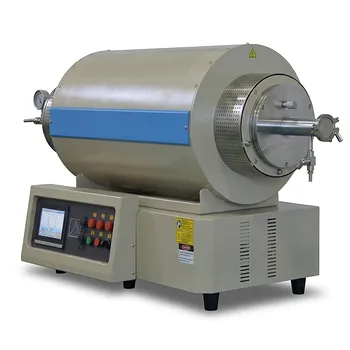
1200C Max Three Zone Tube Furnace 6 Inch OD Max with Tube and Flange
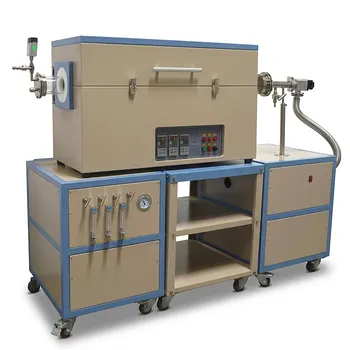
Three Zone Quartz Tube Furnace with 3 Channel Gas Mixer Vacuum Pump and Anti Corrosive Vacuum Gauge
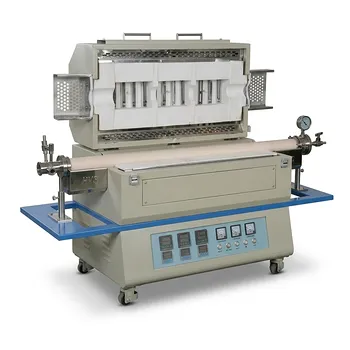
Three Temperature Zone Fast Heating Furnace 1500C Laboratory High Precision Thermal Processing System
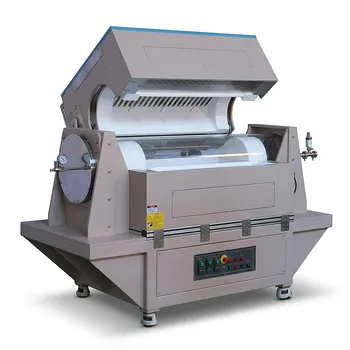
Three Zone Tube Furnace with 11 Inch or 15 Inch Quartz Tube and Hinged Flanges for Vacuum Atmosphere Heat Treatment
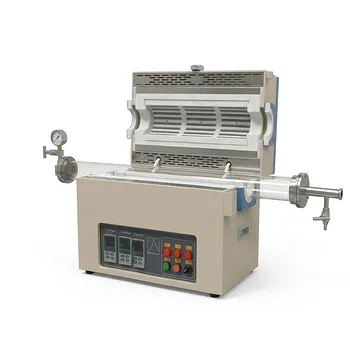
1200°C Three Zone Split Tube Furnace with 18 Inch Heating Length and Vacuum Flanges
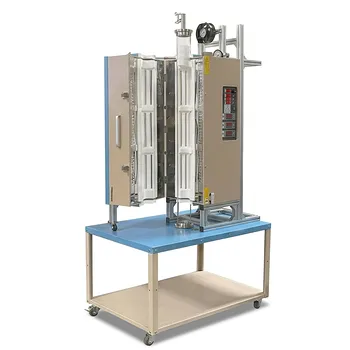
1200C Three Zone Split Vertical Tube Furnace 4 Inch Quartz Tube Stainless Steel Vacuum Flanges
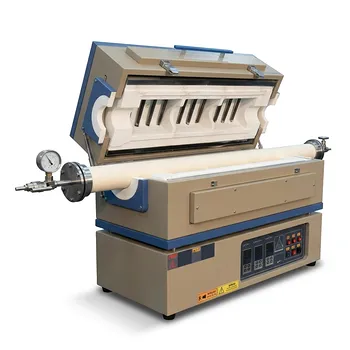
1600C Three Zone Split Tube Furnace with Alumina Tube and Vacuum Flange
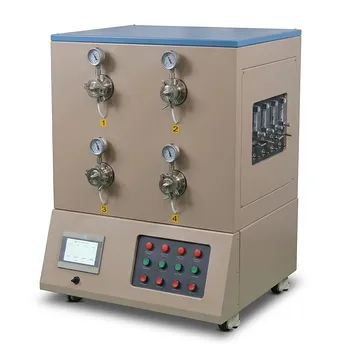
High Throughput 1200C Four Channel Tube Furnace with 3 Inch Quartz Tubes for Multi Zone Annealing and Material Research
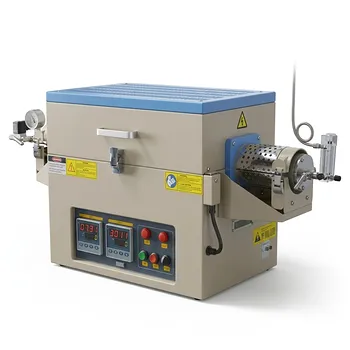
1100C Dual Zone Hydrogen Gas Tube Furnace with Quartz Tube and Integrated H2 Leak Detection System
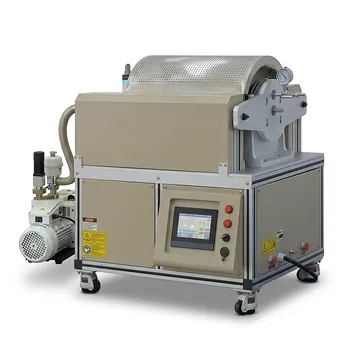
Automated 1200 C Tube Furnace for AI Material Research with 6 Inch OD and Sliding Flange