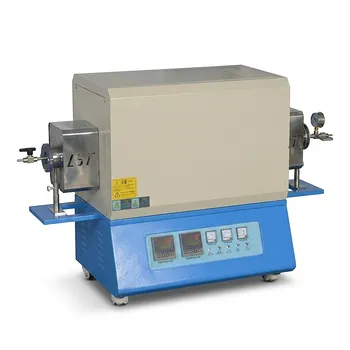
What is the function of an independent precursor reservoir in CVD of hBN? Precision Control for High-Quality 2D Films
Updated 3 months ago
The independent precursor reservoir serves as a precision thermal control stage that decouples the vaporization of reactants from the high-temperature synthesis environment. In the Chemical Vapor Deposition (CVD) of hexagonal boron nitride (hBN), this reservoir ensures that solid or liquid precursors enter the reaction chamber with a stable and controllable flux. By precisely regulating the sublimation temperature—often around 100°C for materials like ammonia borane—the system prevents unpredictable precursor surges and allows for the accurate regulation of deposition rates required for uniform film growth.
The core function of an independent precursor reservoir is to provide stable, reproducible reactant vapor pressure by isolating the vaporization process from the furnace's reaction temperature. This thermal decoupling is essential for preventing "precursor dumping" and achieving the atomic-scale precision necessary for high-quality 2D material synthesis.
Decoupling Vaporization from Reaction
Thermal Isolation of Precursors
Most hBN precursors, such as ammonia borane (solid) or borazine (liquid), require significantly lower temperatures to vaporize than the high temperatures (up to 1300°C) needed for the substrate reaction. An independent reservoir allows the precursor to be heated to a specific, lower threshold—typically 100°C—without being influenced by the intense heat of the main furnace.
Regulation of Vapor Pressure
By maintaining a dedicated heating zone, the system ensures a reproducible reactant vapor pressure. This stability is critical because even minor fluctuations in temperature at the source can lead to exponential changes in the amount of precursor gas delivered to the substrate.
Segmented Heating Design
The segmented heating approach allows for independent ramping of the furnace and the reservoir. This prevents an instantaneous excess of precursors caused by rapid temperature increases, which frequently occurs in single-zone systems where the precursor is placed inside the main furnace.
Enhancing Material Quality and Uniformity
Preventing Precursor Surges
In hBN growth, an uncontrolled "dump" of precursor gas often results in multilayer clusters or non-uniform islands rather than a continuous monolayer. The independent reservoir acts as a thermal "tap," allowing the operator to introduce the gas only when the substrate has reached the optimal growth temperature.
Achieving Conformal Growth
Precise control over the flow rate and pressure enables the conformal growth of single-layer hBN across various substrates, including metal foils and carbon nanotubes. A stable flux ensures that boron and nitrogen atoms deposit in an orderly manner, which is the primary factor determining the crystalline quality and thickness uniformity of the film.
Role of Carrier Gases
The reservoir often works in tandem with hydrogen (H2) or Argon as carrier gases. In systems like the bubbling configuration, hydrogen passes through a liquid precursor in the reservoir to transport a specific concentration of vapor to the reaction zone, further stabilizing the feeding mechanism.
Understanding the Trade-offs
System Complexity and Condensation
While independent reservoirs provide superior control, they increase the mechanical complexity of the CVD system. A significant risk in these setups is precursor condensation within the transfer lines connecting the reservoir to the furnace, which can cause clogs or inconsistent delivery if the lines are not also independently heated.
Thermal Decomposition Windows
Precursors like ammonia borane have narrow thermal windows for stable decomposition. If the independent reservoir exceeds the target temperature even slightly, the precursor may decompose prematurely into non-volatile residues, effectively "killing" the source material before it reaches the reaction chamber.
How to Apply This to Your Project
Choosing the Right Precursor Strategy
When designing your hBN synthesis process, the configuration of your reservoir depends entirely on your specific material requirements and equipment capabilities.
- If your primary focus is monolayer uniformity: Utilize an independently heated reservoir with a solid precursor like ammonia borane to ensure a low, steady flux of reactants.
- If your primary focus is high crystalline quality: Pair the independent reservoir with a high-temperature furnace (1100°C - 1300°C) and hydrogen carrier gas to facilitate surface planarization and orderly deposition.
- If your primary focus is scalability and repeatability: Implement a bubbling system with a liquid borazine precursor to maintain a constant concentration over long growth cycles.
Precise thermal decoupling of the precursor source remains the most effective method for transforming hBN synthesis from an unpredictable process into a controlled, scientific standard.
Summary Table:
| Key Function | Technical Mechanism | Impact on hBN Quality |
|---|---|---|
| Thermal Decoupling | Isolates precursor vaporization (e.g., 100°C) from furnace temp (up to 1300°C). | Prevents "precursor dumping" and uncontrolled surges. |
| Vapor Pressure Control | Maintains a constant, reproducible heating zone for the source material. | Ensures accurate regulation of deposition rates and thickness. |
| Segmented Heating | Allows independent temperature ramping for the reservoir and reaction zone. | Facilitates precise timing for initiating monolayer growth. |
| Carrier Gas Synergy | Integrates with H2 or Ar to transport vapor in bubbling configurations. | Enhances flux stability for conformal, continuous film growth. |
Elevate Your Material Research with THERMUNITS Precision CVD Systems
Achieving atomic-scale uniformity in hexagonal boron nitride synthesis requires more than just high heat—it requires total control. THERMUNITS is a leading manufacturer specializing in high-temperature laboratory equipment designed for the most demanding material science and industrial R&D applications.
Our advanced CVD/PECVD systems and specialized Atmosphere/Vacuum Tube Furnaces are engineered with the precision thermal decoupling necessary to prevent precursor surges and ensure high-crystalline quality. Whether you are scaling up 2D material synthesis or optimizing heat treatment, our comprehensive range—including Muffle, Rotary, Hot Press, and Vacuum Induction Melting (VIM) furnaces—provides the reliability your research deserves.
Ready to optimize your thermal processing? Contact our expert engineering team today to discover how THERMUNITS can provide the tailored solutions your lab needs for superior material performance.
References
- Anja Sutorius, Sanjay Mathur. Understanding vapor phase growth of hexagonal boron nitride. DOI: 10.1039/d4nr02624a
Mentioned Products
- Vertical Openable Tube Furnace 0-1700c High Temperature Laboratory System for CVD and Vacuum Heat Treatment
- Versatile Chemical Vapor Deposition Tube Furnace System for Advanced Material Research and Industrial Coating Processes
- HFCVD Machine System for Nano Diamond Coating on Drawing Dies and Industrial Tools
- Chemical Vapor Deposition CVD System Slide PECVD Tube Furnace with Liquid Gasifier PECVD Machine
- Two Zone Rotary CVD Furnace with Automatic Feeding and Receiving System for Powder Processing
People Also Ask
- Why is a Tube Furnace typically utilized for CVD? Achieve Precision in Graphene and 2D Material Synthesis
- What role does a high-temperature vertical tube furnace play in simulating high-carbon ferromanganese slag formation?
- What functions does a vertical high-temperature tube furnace perform? Master Industrial Sintering & R&D Simulation
- How does a vertical tube furnace facilitate thermoelectric alloy melting? Precision synthesis for material homogeneity.
- How is an industrial-grade vertical tube furnace utilized in smelting leaching residues? Enhance Metal Recovery Efficiency

Tech Team · ThermUnits
Last updated on Jun 03, 2026
Related Products
Vertical Openable Tube Furnace 0-1700c High Temperature Laboratory System for CVD and Vacuum Heat Treatment
Versatile Chemical Vapor Deposition Tube Furnace System for Advanced Material Research and Industrial Coating Processes
HFCVD Machine System for Nano Diamond Coating on Drawing Dies and Industrial Tools
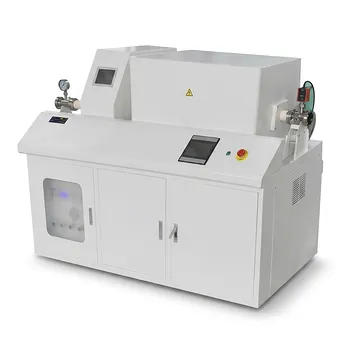
Chemical Vapor Deposition CVD System Slide PECVD Tube Furnace with Liquid Gasifier PECVD Machine
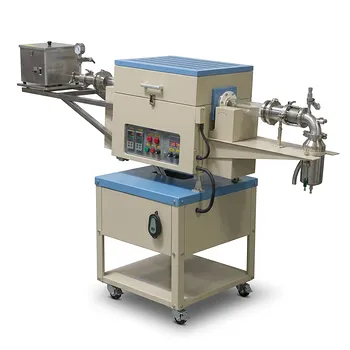
Two Zone Rotary CVD Furnace with Automatic Feeding and Receiving System for Powder Processing
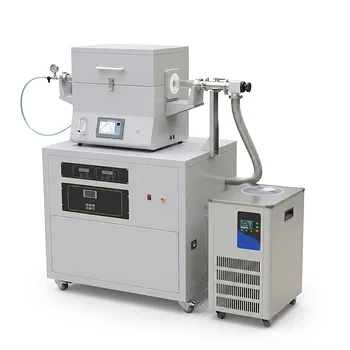
Split Chamber CVD Tube Furnace with Vacuum Station Chemical Vapor Deposition System Machine
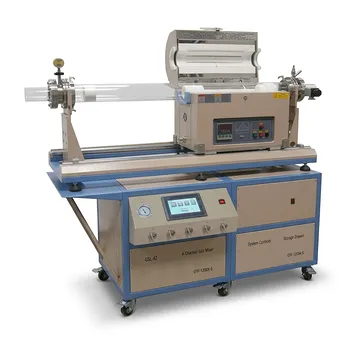
Dual Tube 100mm 80mm CVD Sliding Furnace with 4 Channel Gas Mixing and Vacuum System
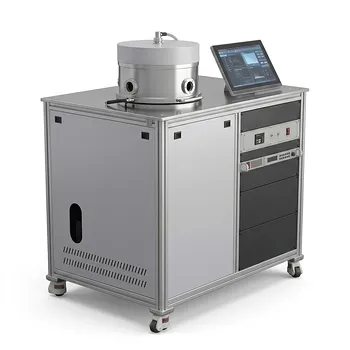
Inclined Rotary Plasma Enhanced Chemical Vapor Deposition PECVD System for Thin Film Deposition and Nanomaterial Synthesis
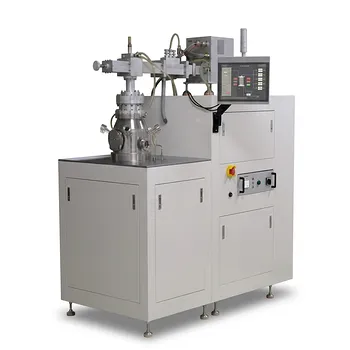
Cylindrical Resonator MPCVD Machine System for Microwave Plasma Chemical Vapor Deposition and Lab Diamond Growth
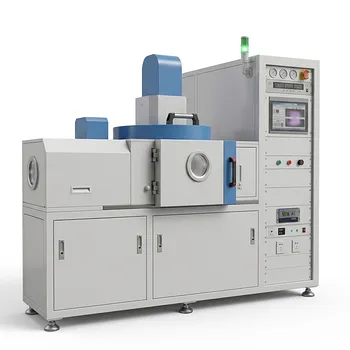
Radio Frequency Plasma Enhanced Chemical Vapor Deposition RF PECVD System for Laboratory and Industrial Thin Film Growth
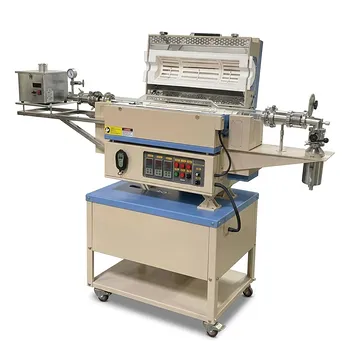
5 Inch Rotary Tube Furnace with Automatic Feeding and Receiving System 1200C Three Zone CVD Powder Processing
1200°C High Temperature 4 Inch Tube Furnace with Sliding Flange for CVD Systems
915MHz MPCVD Diamond Machine Microwave Plasma Chemical Vapor Deposition System Reactor
5 Inch Two Zone Rotary Tube Furnace 1100C for Powder CVD and Material Synthesis
1200C Max Dual Sliding Tube Furnace with 50 mm Tube Flanges for CVD
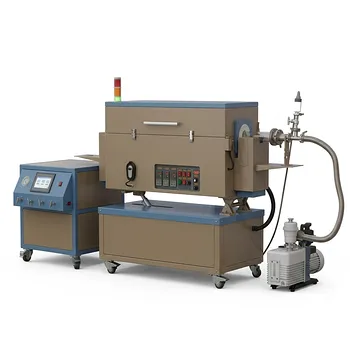
5 Inch Three Zone Rotary Tube Furnace with Integrated Gas Delivery System and 1200C Capability for Advanced Material CVD Processing
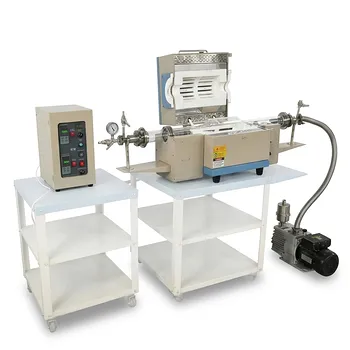
Two Zone Rotary Tube Furnace for Powder CVD Coating and Core Shell Material Synthesis 1100C
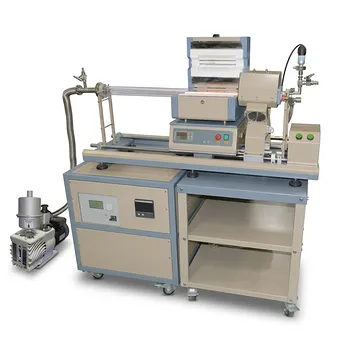
1200C Max Compact Auto-Sliding PECVD Furnace with 2 Inch Tube and Vacuum Pump

High Temperature 1700C Tube Furnace with High Vacuum Turbomolecular Pump System and Multi Channel Mass Flow Controller Gas Mixer