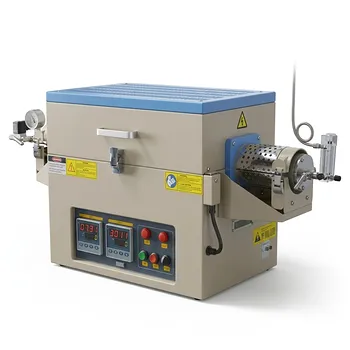
What is the primary function of a Drop Tube Furnace (DTF) in the research of biomass and coal co-combustion?
Updated 3 months ago
The primary function of a Drop Tube Furnace (DTF) is to simulate the high-temperature, high-speed environment of industrial boilers under strictly controlled laboratory conditions. It allows researchers to analyze the combustion kinetics, pollutant emissions, and ash deposition behavior of coal and biomass blends by providing a quasi-one-dimensional reaction zone that replicates the rapid heating rates and short residence times found in full-scale power plants.
A Drop Tube Furnace acts as the critical bridge between bench-scale material analysis and industrial-scale implementation. It provides the only laboratory environment capable of subjecting fuel particles to the extreme thermal shocks—up to 100,000 K/s—required to accurately predict how biomass and coal will interact in a real-world furnace.
Simulating the Industrial Thermal Environment
Replicating High Heating Rates
In industrial pulverized coal boilers, fuel particles encounter a massive thermal shock upon entry. The DTF replicates this by providing heating rates between 10⁴ and 10⁵ K/s, which is essential for understanding how biomass volatiles are released.
Traditional methods, such as Thermogravimetric Analysis (TGA), use heating rates that are far too slow. Without the extreme heating rates of a DTF, researchers cannot accurately observe the "flash" pyrolysis and ignition behavior characteristic of industrial combustion.
Controlling Residence Time
The DTF is designed to simulate the short residence times (typically less than 5 seconds) that particles experience as they travel through a boiler. This allows for the study of "burnout" efficiency, ensuring that the biomass-coal blend can react fully before exiting the high-temperature zone.
By adjusting the length of the heated tube or the flow rate of the carrier gas, researchers can capture the fuel particles at specific stages of combustion. This level of temporal precision is vital for mapping the chemical transformation of the fuel.
Analyzing Chemical and Physical Outputs
Measuring Pollutant Emissions
A primary goal of co-combustion research is reducing the environmental impact of power generation. The DTF provides a sealed, controlled atmosphere that allows for the precise collection and analysis of flue gases.
Researchers use the DTF to quantify how adding biomass—like rice husks or sawdust—affects the emission of nitrogen oxides (NOx), sulfur dioxide (SO2), and particulate matter. The data gathered helps in designing more efficient filtration and scrubbing systems.
Assessing Slagging and Ash Deposition
Biomass often contains high levels of alkali metals, which can melt and stick to boiler tubes, causing "slagging." The DTF allows for the insertion of deposition probes into the reaction stream to monitor how ash adheres to surfaces.
By observing these melting and adhesion characteristics at temperatures around 1200°C, researchers can determine the optimal blending ratio. This prevents costly damage to industrial equipment while maximizing the use of renewable fuels.
Understanding the Trade-offs
Complexity and Operational Costs
Operating a DTF is significantly more complex than standard laboratory furnaces. It requires precise control over particle feeding systems, gas flow dynamics, and high-temperature sealing, which increases the likelihood of mechanical failure.
Wall Effects and Particle Trajectory
Because the reaction occurs within a narrow tube, wall effects can occasionally interfere with the data. If particles collide with the tube walls rather than staying in the "quasi-one-dimensional" flow, the resulting combustion data may be skewed.
How to Apply This to Your Research
If you are integrating a Drop Tube Furnace into your experimental workflow, your approach should vary based on your specific technical objectives:
- If your primary focus is emission reduction: Use the DTF to test varying air-fuel ratios and biomass percentages while monitoring the flue gas composition via downstream analyzers.
- If your primary focus is boiler longevity: Prioritize the use of air-cooled deposition probes to study the morphology and chemical composition of ash residues to identify slagging risks.
- If your primary focus is combustion kinetics: Focus on the high-heating rate capabilities to determine the ignition delay and burnout rates of new fuel blends compared to pure coal.
The Drop Tube Furnace remains the definitive tool for transforming theoretical biomass potential into practical, industrial-scale energy solutions.
Summary Table:
| Key Feature | Functional Role | Research Benefit |
|---|---|---|
| Extreme Heating Rates | Replicates 10⁴ - 10⁵ K/s | Accurate observation of flash pyrolysis and ignition behavior |
| Controlled Residence Time | Short duration (< 5s) | Precise mapping of fuel burnout efficiency and kinetics |
| Sealed Atmosphere | Flue gas collection | Exact measurement of NOx, SO2, and particulate emissions |
| Deposition Probes | Ash monitoring at 1200°C | Prediction of slagging risks and optimal fuel blending ratios |
Elevate Your Combustion Research with THERMUNITS
Are you looking to bridge the gap between bench-scale analysis and industrial-scale implementation? THERMUNITS is a leading manufacturer of high-temperature laboratory equipment dedicated to supporting material science and industrial R&D. We provide the precision tools necessary to simulate extreme thermal environments and achieve repeatable, high-accuracy results.
Our comprehensive range of thermal processing solutions includes:
- Research Specialized: Tube, Drop Tube, CVD/PECVD systems, and Vacuum Induction Melting (VIM) furnaces.
- Industrial & Lab Essentials: Muffle, Vacuum, Atmosphere, Rotary, and Hot Press furnaces.
- Niche Applications: Dental Furnaces, Electric Rotary Kilns, and high-quality Thermal Elements.
Whether you are analyzing biomass kinetics or developing advanced alloys, our expert team is ready to provide tailored heat treatment solutions that meet your specific technical objectives.
Contact THERMUNITS today to optimize your laboratory efficiency!
References
- Agus Prasetyo Nuryadi, Ade Andini. Computational Prediction of Co-firing with Various Biomass Waste Using Turbulent Non-Premixed Combustion. DOI: 10.37934/cfdl.17.4.89106
Mentioned Products
- 1200C Sliding Tube Furnace for Rapid Thermal Processing and CVD Graphene Growth with 100mm OD Capacity
- 1250C Split Tube Furnace with 3 Inch Mullite Tube and Vacuum Sealing Flanges for Precision Thermal Processing
- Compact Vertical Split Quartz Tube Furnace with Stainless Steel Vacuum Flanges for Rapid Thermal Quenching and Controlled Atmosphere Material Processing
- 1200C Tube Furnace with Internal Magnetic Sample Sliding for Direct Vaporizing Deposition and Rapid Thermal Processing
- High Temperature 1700C Six Zone Split Tube Furnace with Alumina Tube and Water Cooled Flanges
People Also Ask
- Why is a Tube Furnace typically utilized for CVD? Achieve Precision in Graphene and 2D Material Synthesis
- Why use CVD and a tube furnace for Pd3P0.95/NC catalyst phosphidation? Ensure high phase purity and performance.
- What is the function of CVD furnaces in graphene prep? Enhancing Photodetector Charge Transport
- CVD Tube Furnace Advantages for Pd-P Catalyst Durability: Precision Control for 40,000+ Cycles
- How does a tube furnace system equipped with gas mass flow controllers facilitate the MCW process? Optimize Graphene Yield

Tech Team · ThermUnits
Last updated on Jun 02, 2026
Related Products
1200C Sliding Tube Furnace for Rapid Thermal Processing and CVD Graphene Growth with 100mm OD Capacity
1250C Split Tube Furnace with 3 Inch Mullite Tube and Vacuum Sealing Flanges for Precision Thermal Processing

Compact Vertical Split Quartz Tube Furnace with Stainless Steel Vacuum Flanges for Rapid Thermal Quenching and Controlled Atmosphere Material Processing
1200C Tube Furnace with Internal Magnetic Sample Sliding for Direct Vaporizing Deposition and Rapid Thermal Processing

High Temperature 1700C Six Zone Split Tube Furnace with Alumina Tube and Water Cooled Flanges
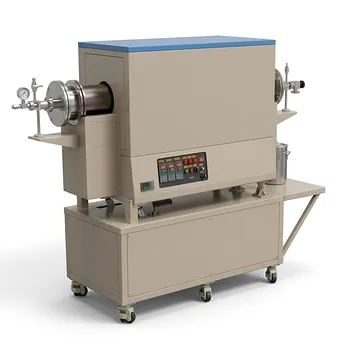
900°C Max Rotary Tube Furnace with 8 Inch 310S Alloy Tube and Optional Multi Zone Heating for Industrial Material Calcination

1100C Tube Furnace with Vacuum Flange and Programmable Temperature Controller for Material Science and Industrial Heat Treatment

Vertical 1700C Vacuum and Atmosphere Tube Furnace with 80mm Alumina Tube
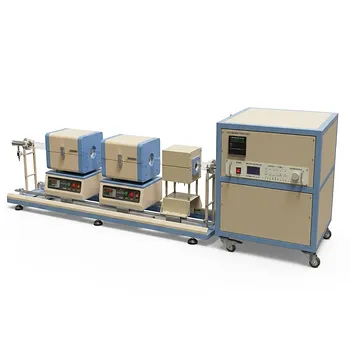
1200C Dual Sliding Tube Furnace with Dual Tubes and Flanges for PECVD Processes

1800C High Temperature Compact Vacuum Tube Furnace with 60mm OD Alumina Tube and Kanthal MoSi2 Heating Elements
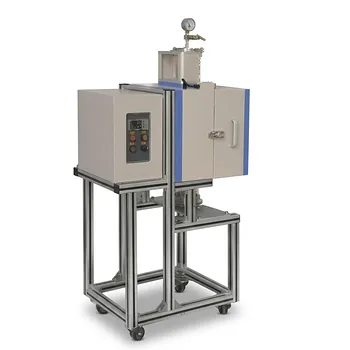
1200°C 5 Inch Vertical Quartz Tube Furnace with Stainless Steel Vacuum Flanges

High Temperature 1700C Tube Furnace with High Vacuum Turbomolecular Pump System and Multi Channel Mass Flow Controller Gas Mixer

High Temperature 1700C Benchtop Tube Furnace with 5 Inch Heating Zone High Purity Alumina Tube and Vacuum Sealing Flanges
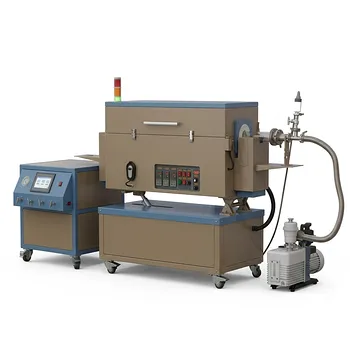
5 Inch Three Zone Rotary Tube Furnace with Integrated Gas Delivery System and 1200C Capability for Advanced Material CVD Processing
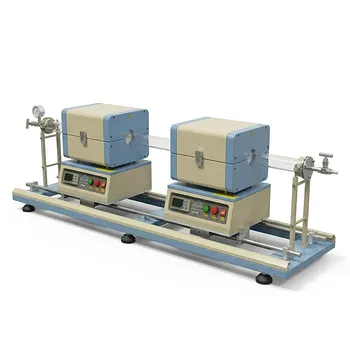
1200C Max Dual Sliding Tube Furnace with 50 mm Tube Flanges for CVD
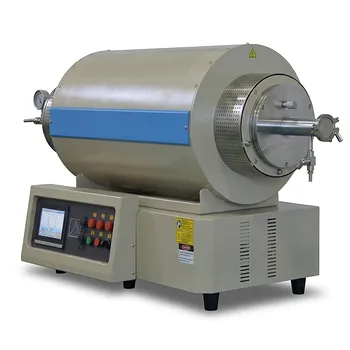
1200C Max Three Zone Tube Furnace 6 Inch OD Max with Tube and Flange
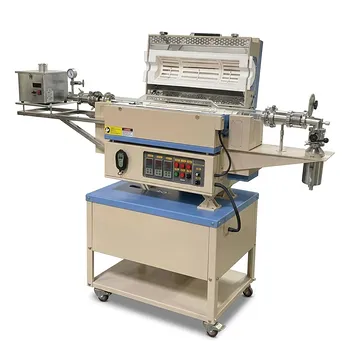
5 Inch Rotary Tube Furnace with Automatic Feeding and Receiving System 1200C Three Zone CVD Powder Processing
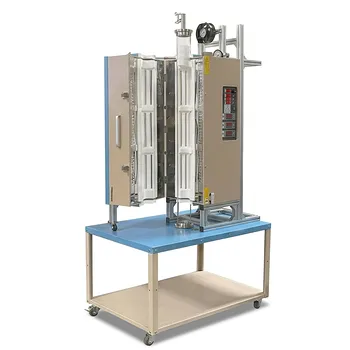
1200C Three Zone Split Vertical Tube Furnace 4 Inch Quartz Tube Stainless Steel Vacuum Flanges
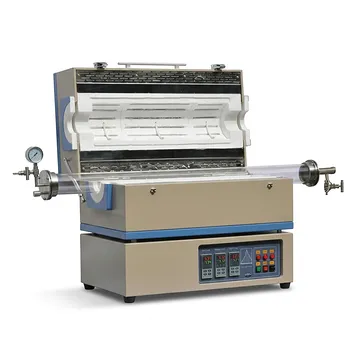
24 Inch Three Zone Split Tube Furnace with Optional Quartz Tube and Vacuum Flange System for High Temperature Material Synthesis