What is the primary function of a high-vacuum tube furnace in the synthesis of In1.75Sb0.25Se3? Expert Guide
Updated 3 months ago
The primary function of a high-vacuum tube furnace in the synthesis of $In_{1.75}Sb_{0.25}Se_{3}$ is to provide an oxygen-free, sealed environment that prevents the oxidation of active metals while establishing precise temperature gradients for controlled gas-phase crystallization. This dual-purpose environment is critical for ensuring the resulting two-dimensional ferroelectric crystals achieve the exact stoichiometry and high structural quality required for advanced applications.
Core Takeaway: A high-vacuum tube furnace is essential because it simultaneously protects reactive precursors (Indium and Antimony) from atmospheric contamination and provides the thermal stability needed to drive the precise formation of ternary alloy crystal structures.
Preventing Oxidation of Reactive Precursors
The Role of the High-Vacuum Seal
The furnace creates a sealed environment with extremely low oxygen levels, often reaching pressures below $10^{-4}$ Pa or $10^{-6}$ Torr depending on the specific system requirements. This vacuum level is necessary to remove residual air and moisture that would otherwise react with the material during heating.
Protecting Active Metals
Indium (In) and Antimony (Sb) are active metals that oxidize rapidly at the high temperatures required for synthesis. By maintaining a high vacuum, the furnace ensures these elements remain in their pure metallic state, allowing them to react correctly with Selenium (Se) to form the $In_{1.75}Sb_{0.25}Se_{3}$ alloy.
Ensuring Chemical Purity
Without the protection of a vacuum, surface reaction layers would form on the precursors, interfering with atomic diffusion and the movement of grain boundaries. A pure heating environment allows for the accurate simulation and execution of the physical processes involved in crystal growth.
Achieving Stoichiometric Precision and Structural Quality
Establishing Precise Temperature Gradients
The tube furnace is capable of establishing controlled temperature zones that are essential for the growth of ternary alloys. These gradients provide the necessary thermal energy to drive the transport of precursor vapors from the source to the deposition area.
Controlling Gas-Phase Crystallization
High-quality single crystals are obtained by driving the crystallization of gas-phase components in controlled condensation zones. The furnace manages the evaporation rates and thermodynamics required for growth mechanisms like Vapor-Solid (VS) or Vapor-Liquid-Solid (VLS) growth.
Maintaining Accurate Stoichiometry
Precise programmed temperature control ensures that the ratio of elements—specifically the 1.75:0.25:3 ratio of In, Sb, and Se—remains consistent throughout the crystal. This thermal stability is what allows the synthesis of complex 2D ferroelectric materials with specific morphologies and structures.
Understanding the Trade-offs
Vacuum Levels vs. Evaporation Rates
While a higher vacuum provides better protection against oxidation, it also significantly lowers the boiling points of the precursors. This can lead to uncontrolled evaporation of volatile elements like Selenium if the temperature and pressure are not perfectly balanced.
Thermal Uniformity vs. Processing Time
Achieving superior temperature uniformity often requires slower heating and cooling cycles to avoid thermal shock to the quartz tube or the crystals. While this produces higher-quality crystals, it limits the overall throughput of the synthesis process.
Complex Atmosphere Management
In some cases, using a vacuum alone is insufficient, and a carrier gas or forming gas must be introduced to facilitate vapor transport or reduce surface oxides. Managing the transition between high vacuum and controlled gas flow increases the complexity of the furnace operation.
How to Apply This to Your Project
When utilizing a high-vacuum tube furnace for ternary alloy synthesis, your operational strategy should align with your specific material requirements:
- If your primary focus is High Chemical Purity: Prioritize achieving a vacuum level of at least $10^{-4}$ mBar before initiating the heating cycle to ensure all trace oxygen is removed.
- If your primary focus is Structural Uniformity: Focus on calibrating the multi-zone temperature controllers to establish a stable, repeatable gradient that matches the condensation temperature of the alloy.
- If your primary focus is Accurate Stoichiometry: Monitor the evaporation rates of the individual precursors and adjust the furnace pressure to prevent the loss of more volatile components like Selenium.
By masterfully controlling both the chemical environment and the thermal field, the high-vacuum tube furnace becomes the definitive tool for producing high-performance $In_{1.75}Sb_{0.25}Se_{3}$ crystals.
Summary Table:
| Key Function | Technical Benefit | Impact on Material |
|---|---|---|
| Oxidation Prevention | High vacuum levels ($10^{-4}$ Pa to $10^{-6}$ Torr) | Protects active metals (In, Sb) from atmospheric contamination. |
| Temperature Gradient | Multi-zone programmable control | Drives gas-phase crystallization and precursor transport. |
| Stoichiometry Control | Thermal stability & pressure management | Ensures exact 1.75:0.25:3 element ratio in the final crystal. |
| Purity Maintenance | Sealed quartz/ceramic environment | Facilitates clean atomic diffusion and superior structural quality. |
Precision Thermal Solutions for Your Advanced Material R&D
Synthesizing complex ternary alloys like In1.75Sb0.25Se3 requires uncompromising control over atmosphere and temperature. THERMUNITS is a leading manufacturer of high-performance laboratory equipment, providing the precision needed for cutting-edge material science and industrial R&D.
Whether you are working on 2D ferroelectrics or advanced semiconductors, our comprehensive range of thermal processing solutions—including High-Vacuum Tube Furnaces, CVD/PECVD systems, Atmosphere Furnaces, and Vacuum Induction Melting (VIM) furnaces—are engineered to deliver repeatable, high-purity results.
Ready to elevate your synthesis process? Contact our technical experts today to discuss your specific requirements and find the ideal furnace configuration for your laboratory. Let THERMUNITS provide the thermal foundation for your next breakthrough.
References
- Shasha Li, Yimin A. Wu. Emergence of Ferroelectricity in p‐Type 2D In<sub>1.75</sub>Sb<sub>0.25</sub>Se<sub>3</sub>. DOI: 10.1002/pssr.202400057
Mentioned Products
- 1500C Max Dual Zone Rotary Tube Furnace with 60 mm OD Alumina Tube for High Temperature Material Synthesis
- High Temperature 1700C Vertical Tube Furnace for Powder Spherification and Material Sintering
- Compact High Temperature 1600C Tube Furnace with 50mm Alumina Tube and Vacuum Flanges for Material Sintering
- 1750°C High Temperature Benchtop Vacuum Atmosphere Tube Furnace with Kanthal Super 1800 Heating Elements and 60mm Alumina Processing Tube
- 1800C High Temperature Compact Vacuum Tube Furnace with 60mm OD Alumina Tube and Kanthal MoSi2 Heating Elements
People Also Ask
- How does a rotary tube furnace improve the processing of granular materials? Enhance Uniformity and Reaction Kinetics
- Why is the precise optimization of residence time essential in the catalyst calcination process? Maximize Your Yields.
- Why use a rotary tube furnace for FACS carbonization? Ensure uniform morphology and prevent sphere agglomeration.
- In what ways do rotary tube furnaces enhance chemical and specialty mineral processing? Drive Precision and Uniformity.
- What parameters must operators control to maintain product quality in a rotary furnace? Master Your Heat Treatment.

Tech Team · ThermUnits
Last updated on Jun 03, 2026
Related Products
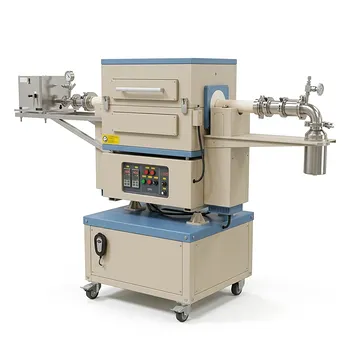
1500C Max Dual Zone Rotary Tube Furnace with 60 mm OD Alumina Tube for High Temperature Material Synthesis

High Temperature 1700C Vertical Tube Furnace for Powder Spherification and Material Sintering

Compact High Temperature 1600C Tube Furnace with 50mm Alumina Tube and Vacuum Flanges for Material Sintering
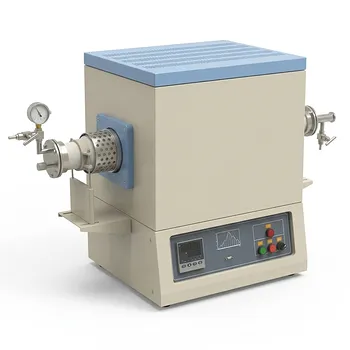
1750°C High Temperature Benchtop Vacuum Atmosphere Tube Furnace with Kanthal Super 1800 Heating Elements and 60mm Alumina Processing Tube

1800C High Temperature Compact Vacuum Tube Furnace with 60mm OD Alumina Tube and Kanthal MoSi2 Heating Elements
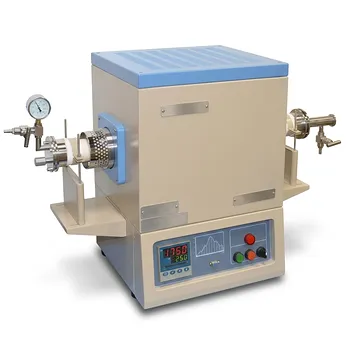
High Temperature Compact Vacuum Tube Furnace 1750C Max 60mm OD Alumina Tube
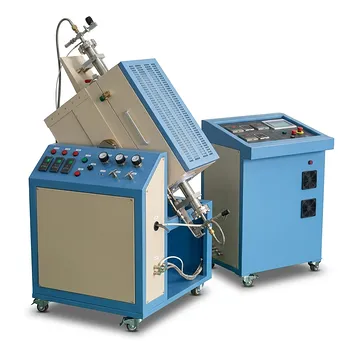
1100C High Pressure Rocking Tube Furnace with 2 Inch Super Alloy Processing Tube for Material Synthesis
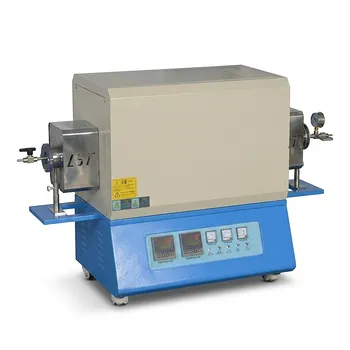
High Temperature Dual Zone Vacuum Tube Furnace for Material Research and CVD Processing
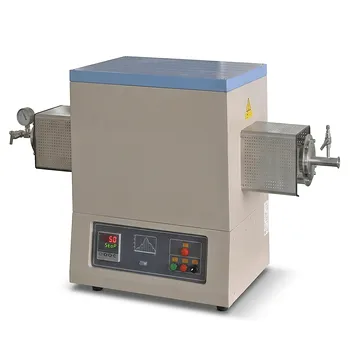
High Temperature 1700C Tube Furnace with 4 Inch OD Alumina Tube and Vacuum Sealing Flanges
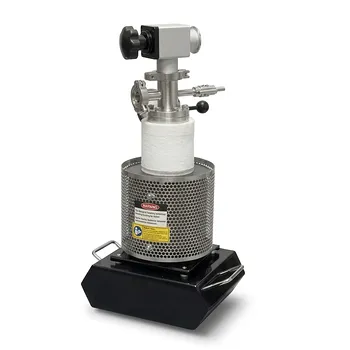
High Temperature 1100C Compact Top Loading Vertical Vacuum Tube Furnace for High Vacuum Noble Metal Melting and Material Research
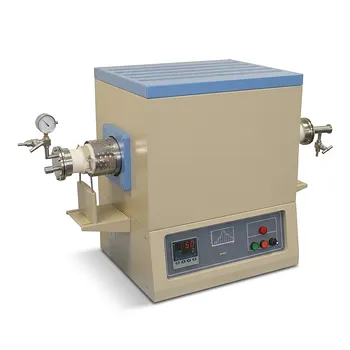
1700C High Temperature Alumina Tube Furnace with 18 Inch Heated Zone and Vacuum Sealing Flanges
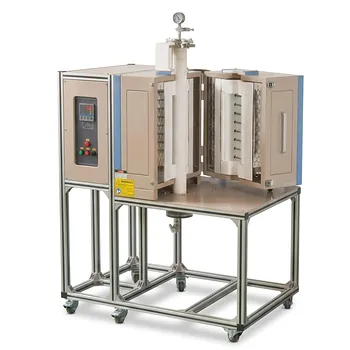
High Temperature 1700C Vertical Split Tube Furnace for Material Quenching and Single Crystal Growth
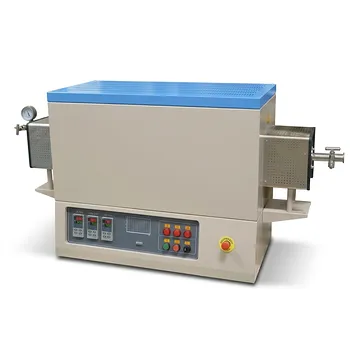
Three Zone Alumina Tube Furnace with Vacuum Flanges High Temperature 1700C Thermal Gradient CVD System

High Temperature 1700C Tube Furnace with High Vacuum Turbomolecular Pump System and Multi Channel Mass Flow Controller Gas Mixer

High Temperature 1700C Benchtop Tube Furnace with 5 Inch Heating Zone High Purity Alumina Tube and Vacuum Sealing Flanges
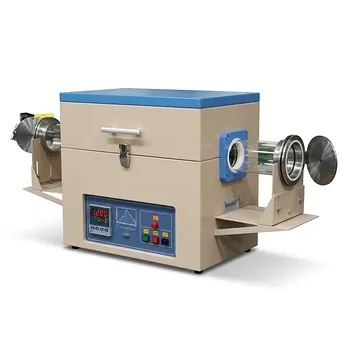
High Temperature 1200C Split Tube Furnace with Hinged Vacuum Flanges and 4 Inch Quartz Tube for Laboratory Research

High Temperature 1700C Six Zone Split Tube Furnace with Alumina Tube and Water Cooled Flanges

High Temperature Automated 5 Inch Tube Furnace for Autonomous Material Research and Advanced Laboratory R&D
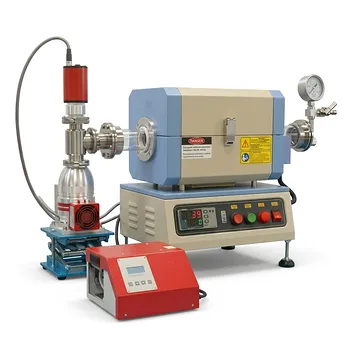
High Vacuum Compact Tube Furnace 1200C with Integrated Turbo Pump System and 8 Inch Heating Zone
