What role does a high-temperature atmosphere tube furnace play in the hydrogen reduction of vanadium pentoxide? Key Insights
Updated 3 months ago
A high-temperature atmosphere tube furnace is the fundamental reactor for the hydrogen reduction of vanadium pentoxide. It provides a hermetically sealed, controlled environment that enables precise thermal programming (typically between 600°C and 1400°C) while facilitating a constant flow of high-purity hydrogen gas. This combination of a stable thermal field and a regulated atmosphere is the essential physicochemical requirement for driving the multi-stage reduction of vanadium oxides.
Core Takeaway: The tube furnace transforms vanadium pentoxide into lower oxides or metallic vanadium by maintaining a strict balance between temperature and gas partial pressures, preventing re-oxidation and ensuring a predictable phase transition.
Providing the Controlled Thermal Environment
Precise Heat Regulation for Stepwise Reduction
The reduction of vanadium pentoxide ($V_2O_5$) is not a single-step event but a series of transitions through intermediate phases like $VO_2$, $V_2O_3$, and $VO$.
A tube furnace allows researchers to set specific temperature ramps and dwell times that match the thermodynamic requirements of each stage.
By maintaining a stable thermal field, the furnace ensures that the entire sample undergoes these phase changes uniformly, preventing a mixture of incomplete reaction products.
Facilitating High-Temperature Kinetics
High temperatures are necessary to overcome the activation energy required for hydrogen to strip oxygen atoms from the vanadium lattice.
The furnace's ability to reach and maintain temperatures up to 1400°C provides the thermal energy needed to drive the reaction toward metallic vanadium.
Managing the Chemical Atmosphere
Isolation and Protection via Sealed Reaction Space
The tube furnace provides a sealed reaction chamber that is critical for excluding oxygen and moisture from the external environment.
This isolation prevents the secondary oxidation of the newly formed vanadium sub-oxides or metallic vanadium, which are highly reactive at elevated temperatures.
Regulation of Hydrogen Flow and Partial Pressure
Through the use of integrated flow meters, the furnace ensures a constant delivery of high-purity hydrogen across the sample surface.
This flow is vital for maintaining the correct hydrogen-to-water vapor partial pressure ratio ($P_{H2}/P_{H2O}$), which determines the final oxidation state of the vanadium.
By continuously removing the water vapor produced during the reduction, the furnace shifts the chemical equilibrium in favor of the desired reduced products.
Enabling Process Verification and Scalability
Simulating Industrial Parameters
The furnace serves as a laboratory-scale proxy for industrial vanadium production, allowing for the observation of actual phase transition points.
Researchers use the precise controls of the tube furnace to identify the exact temperature and gas flow boundaries required to achieve specific stoichiometric ratios.
Phase Optimization and Structural Control
Beyond simple reduction, the furnace's controlled cooling and heating curves allow for the optimization of the material’s crystalline structure.
This is particularly important when the goal is to produce high-purity monoclinic phase powders or ultra-fine particles with specific thermochromic or electrochemical properties.
Understanding the Trade-offs
Thermal Sintering and Particle Coarsening
While high temperatures facilitate faster reduction, they also increase the risk of particle sintering.
Excessive heat can cause individual vanadium particles to fuse together, reducing the specific surface area and potentially negatively impacting the material's performance in battery or catalytic applications.
Gas Purity and Flow Rate Sensitivity
The success of the reduction is highly dependent on the precision of the gas delivery system.
If the hydrogen flow rate is too low, the local concentration of water vapor may rise, stalling the reduction process or leading to unwanted intermediate phases.
Furthermore, any leakage in the tube seals can introduce trace oxygen, which can lead to "back-oxidation" and ruin the purity of the final metallic product.
How to Apply This to Your Project
Making the Right Choice for Your Goal
- If your primary focus is producing high-purity metallic vanadium: Operate the furnace at the upper end of its temperature range (near 1000°C–1400°C) with a high hydrogen flow rate to ensure complete oxygen removal.
- If your primary focus is synthesizing intermediate phases like $V_2O_3$: Use a lower, more precisely controlled temperature (around 600°C–800°C) and carefully monitor the $P_{H2}/P_{H2O}$ ratio to stop the reduction at the desired stoichiometry.
- If your primary focus is preventing particle growth or sintering: Utilize the lowest possible effective reduction temperature combined with a high gas flow rate to sweep away moisture quickly, reducing the time the material spends at peak heat.
The high-temperature atmosphere tube furnace remains the indispensable tool for bridging the gap between theoretical thermodynamic derivations and the practical synthesis of advanced vanadium materials.
Summary Table:
| Feature | Function in Reduction | Impact on Result |
|---|---|---|
| Thermal Regulation | Stepwise heating (600°C–1400°C) | Ensures uniform phase transitions ($V_2O_5$ to $V$) |
| Sealed Chamber | Isolation from oxygen and moisture | Prevents secondary oxidation of sub-oxides |
| Hydrogen Flow | Maintains high $P_{H2}/P_{H2O}$ ratio | Shifts chemical equilibrium toward metallic products |
| Atmosphere Control | Constant removal of water vapor | Accelerates reaction kinetics and improves purity |
Elevate Your Material Research with THERMUNITS
Are you looking to achieve precise results in vanadium reduction or other advanced material synthesis? THERMUNITS is a leading manufacturer of high-temperature laboratory equipment for material science and industrial R&D. We provide the high-performance tools necessary for complex thermal processing, including:
- Atmosphere & Tube Furnaces for precise gas-solid reactions.
- Vacuum, Muffle, & Rotary Furnaces for diverse heat treatments.
- CVD/PECVD Systems and Vacuum Induction Melting (VIM) for high-purity production.
- Hot Press & Dental Furnaces, plus specialized Thermal Elements.
Our solutions are designed to ensure stable thermal fields and strict atmosphere control, helping you bridge the gap between lab-scale research and industrial scalability.
Contact THERMUNITS today to find the ideal furnace for your project!
References
- M. A. Levchenko, Olena Volkova. Direct Reduction of Solid V<sub>2</sub>O<sub>5</sub> with Hydrogen at 600–1400 °C. DOI: 10.1002/srin.202300705
Mentioned Products
- 1750°C High Temperature Benchtop Vacuum Atmosphere Tube Furnace with Kanthal Super 1800 Heating Elements and 60mm Alumina Processing Tube
- High Temperature 1200C Split Tube Furnace for CVD Research and Vacuum Atmosphere Heat Treatment
- High Temperature Split Tube Furnace 1500C for Material Research Vacuum and Atmosphere Thermal Processing
- High Temperature Vertical Atmosphere Controlled Furnace with Automatic Bottom Loading and 1700°C Capacity for Advanced Material Research
- 1700C High Temperature Alumina Tube Furnace with 18 Inch Heated Zone and Vacuum Sealing Flanges
People Also Ask
- What core functions does a high-temperature vacuum tube furnace provide? Optimize np-CuSn Sintering & Joint Integrity
- What is the role of a high-temperature tube furnace in the calcination process of ZnO/In2O3 nanocomposites?
- What role does a high-temperature tube furnace play in the sulfidation heat treatment of CoS@C/MXene nanocomposites? Guide
- Why is a high-temperature tube furnace required for CuAlO2 heat treatment? Master Phase Transformation Today
- What role does a high-temperature tube furnace play in executing nitrogen absorption kinetic experiments? Expert Insights

Tech Team · ThermUnits
Last updated on Jun 02, 2026
Related Products
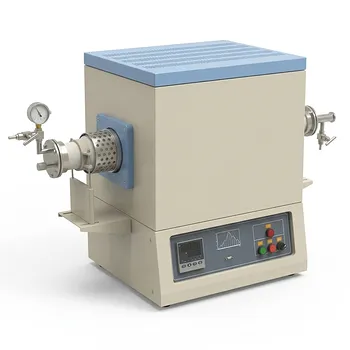
1750°C High Temperature Benchtop Vacuum Atmosphere Tube Furnace with Kanthal Super 1800 Heating Elements and 60mm Alumina Processing Tube
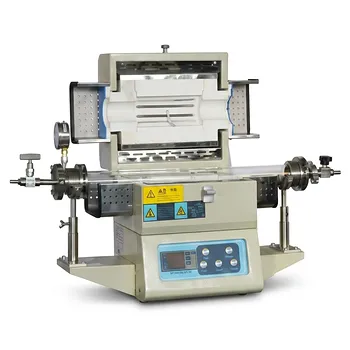
High Temperature 1200C Split Tube Furnace for CVD Research and Vacuum Atmosphere Heat Treatment
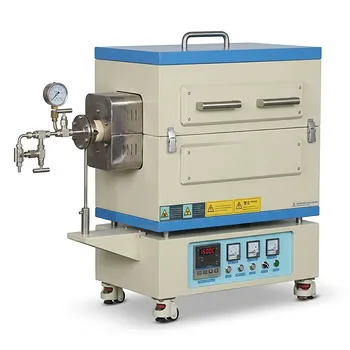
High Temperature Split Tube Furnace 1500C for Material Research Vacuum and Atmosphere Thermal Processing
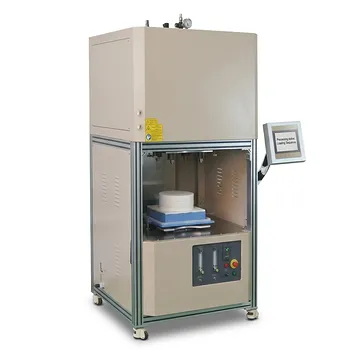
High Temperature Vertical Atmosphere Controlled Furnace with Automatic Bottom Loading and 1700°C Capacity for Advanced Material Research
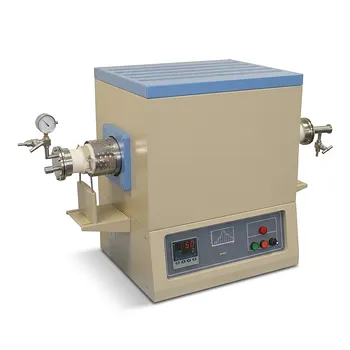
1700C High Temperature Alumina Tube Furnace with 18 Inch Heated Zone and Vacuum Sealing Flanges
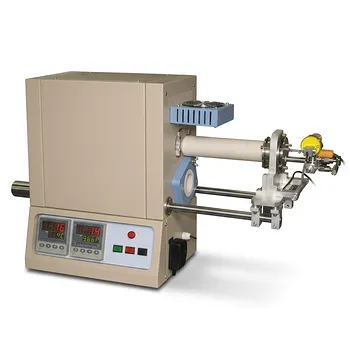
High Temperature Tube Furnace 1500C with Sliding Flanges and 50mm OD for Rapid Thermal Processing Fast Heating and Cooling

High Temperature 1700C Tube Furnace with High Vacuum Turbomolecular Pump System and Multi Channel Mass Flow Controller Gas Mixer
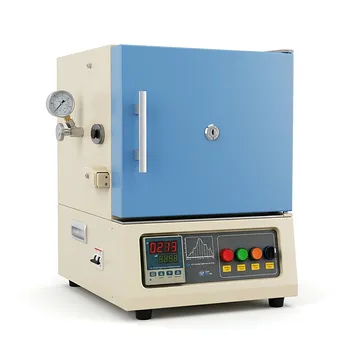
1200C Hybrid Muffle and Tube Furnace for Material Research with Dual Atmosphere Control Quartz Tubes
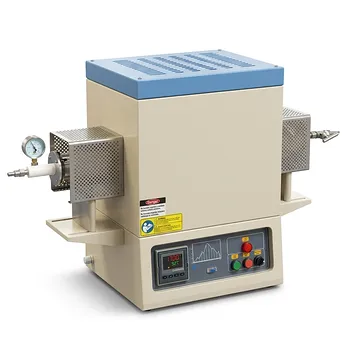
High Temperature Three Zone Tube Furnace 1700C with Alumina Tube and Water Cooled Flanges

Vertical 1700C Vacuum and Atmosphere Tube Furnace with 80mm Alumina Tube
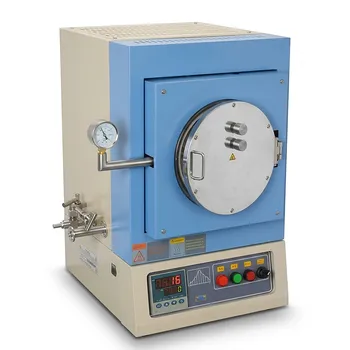
1100°C High Temperature Quartz Chamber Furnace 8 Inch OD with 7.6 Liter Capacity and Vacuum Atmosphere Capability

Compact High Temperature 1600C Tube Furnace with 50mm Alumina Tube and Vacuum Flanges for Material Sintering

High Temperature 1700C Benchtop Tube Furnace with 5 Inch Heating Zone High Purity Alumina Tube and Vacuum Sealing Flanges

1800C High Temperature Compact Vacuum Tube Furnace with 60mm OD Alumina Tube and Kanthal MoSi2 Heating Elements
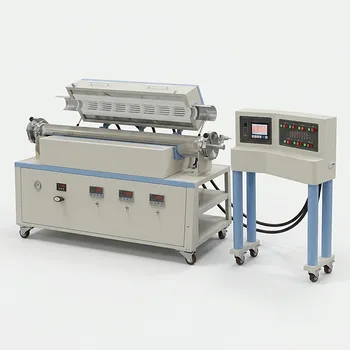
1100C Eight Zone High Pressure Super Alloy Tube Furnace with Integrated High Pressure Gas Control System

High Temperature 1700C Vertical Tube Furnace for Powder Spherification and Material Sintering
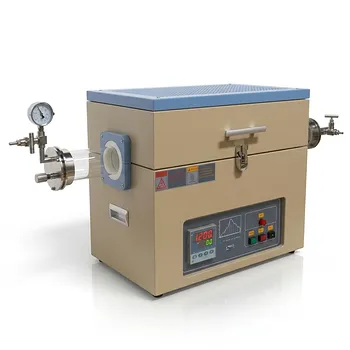
High Temperature 1200C Split Tube Furnace with Optional Quartz Tube Sizes and Vacuum Sealing Flanges for Material Science Research
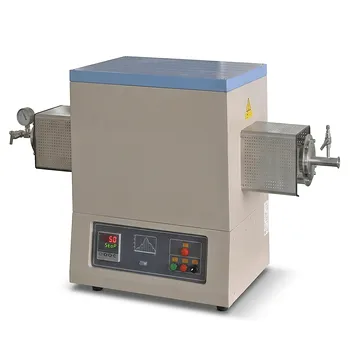
High Temperature 1700C Tube Furnace with 4 Inch OD Alumina Tube and Vacuum Sealing Flanges
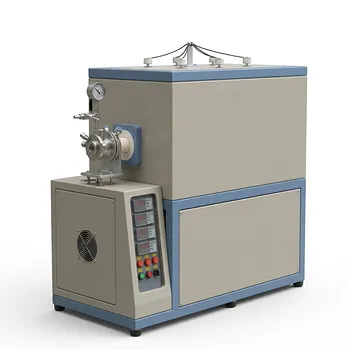
High Temperature 1700C Three Zone Tube Furnace with Alumina Tube 50mm 60mm 80mm OD for Material Research and Industrial Heat Treatment
