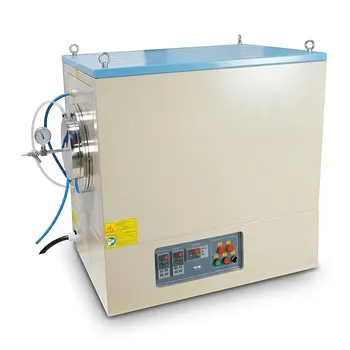
What is the purpose of using a tube furnace for ScSZ thin film post-treatment? Boost Crystallinity & SOFC Stability.
Updated 3 months ago
The high-temperature tube furnace serves as the critical instrument for the high-temperature annealing of Scandia-Stabilized Zirconia (ScSZ) thin films. This post-treatment process, typically conducted in an air atmosphere, is designed to eliminate internal growth stresses and promote significant grain growth within the film. By providing precise temperature cycles, the furnace allows researchers to investigate phase stability and structural evolution under conditions that simulate the actual operating temperatures of Solid Oxide Fuel Cells (SOFCs).
Core Takeaway: A laboratory tube furnace is used to transform amorphous or stressed ScSZ deposits into highly crystalline, stable structures. It provides the controlled thermal environment necessary to optimize the material's mechanical and electrochemical properties for high-temperature energy applications.
Optimizing the Crystalline Microstructure
Eliminating Internal Growth Stresses
During the initial deposition process, thin films often accumulate internal mechanical stresses that can lead to delamination or cracking. The tube furnace provides a controlled thermal field that facilitates atomic rearrangement, effectively relaxing these stresses and stabilizing the film's attachment to the substrate.
Promoting Grain Growth and Densification
Thermal energy from the furnace drives particle diffusion, which is the primary mechanism for grain growth. As grains enlarge and boundaries minimize, the crystalline quality of the ScSZ film improves, which is essential for maintaining the high ionic conductivity required in electrolyte applications.
Enhancing Material Crystallinity
By maintaining a stable high-temperature environment according to a programmed temperature curve, the furnace ensures the material achieves a uniform crystalline state. This process converts less structured phases into the specific tetragonal or cubic structures required for optimal performance in electrochemical environments.
Simulating Real-World SOFC Conditions
Investigating Phase Stability
Scandia-Stabilized Zirconia is valued for its performance in Solid Oxide Fuel Cells (SOFCs), but it must remain stable over thousands of hours of operation. The tube furnace allows researchers to subject thin films to sustained high temperatures to observe how the crystal lattice evolves and to ensure that detrimental phase transitions do not occur during use.
Accurate Atmosphere Control
While ScSZ is typically annealed in air, the design of a tube furnace allows for a controlled atmospheric environment. This capability is vital for ensuring that the chemical composition of the zirconia remains consistent and that no unintended oxidation or reduction of the film or substrate occurs during the heating cycle.
Precise Thermal Cycling
The ability to program specific ramp rates and soak times is critical for understanding the thermal expansion behavior of ScSZ. This precision helps researchers determine how the thin film will respond to the repeated heating and cooling cycles inherent in fuel cell startup and shutdown procedures.
Understanding the Trade-offs
The Risk of Over-Annealing
While heat treatment improves crystallinity, excessive temperatures or prolonged soak times can lead to coarsening of the microstructure. This may result in increased film porosity or the unwanted diffusion of substrate elements into the ScSZ layer, potentially degrading its electrical properties.
Substrate Compatibility Issues
The high temperatures required for ScSZ annealing (often exceeding 800°C) can cause thermal expansion mismatches between the thin film and the substrate. If the cooling rate is not precisely managed within the tube furnace, the resulting thermal shock can cause the film to fracture or peel.
How to Apply This to Your Project
When utilizing a tube furnace for the post-treatment of ScSZ thin films, your approach should be dictated by your specific performance requirements:
- If your primary focus is mechanical durability: Prioritize a slow cooling ramp within the furnace to minimize thermal shock and ensure all internal growth stresses are fully dissipated.
- If your primary focus is ionic conductivity: Optimize the soak temperature to maximize grain growth and crystallinity, as larger grains typically offer lower resistance to oxygen ion transport.
- If your primary focus is phase stability: Use the furnace to conduct long-term isothermal aging tests that simulate the multi-thousand-hour lifespan of an operational fuel cell.
Mastering the thermal history of ScSZ through precise tube furnace annealing is the most effective way to ensure the long-term reliability and efficiency of high-temperature electrochemical devices.
Summary Table:
| Process Function | Impact on ScSZ Thin Films | Key Material Benefit |
|---|---|---|
| Stress Relief | Atomic rearrangement & relaxation | Prevents delamination and substrate cracking |
| Grain Growth | Drives particle diffusion & densification | Maximizes ionic conductivity for electrolytes |
| Phase Stability | Sustained high-temp simulation | Ensures long-term reliability in SOFC environments |
| Thermal Cycling | Controlled ramp/soak programming | Determines resistance to repeated startup/shutdown |
Elevate Your Material Research with THERMUNITS
As a leading manufacturer of high-temperature laboratory equipment for material science and industrial R&D, THERMUNITS provides the precision thermal solutions required for advanced electrochemical research. Our laboratory tube furnaces offer the controlled thermal environments necessary to transform ScSZ deposits into highly stable, crystalline structures.
Our Comprehensive Thermal Solutions include:
- Furnaces: Muffle, Vacuum, Atmosphere, Tube, Rotary, and Hot Press models.
- Advanced Systems: CVD/PECVD systems, Dental Furnaces, and Vacuum Induction Melting (VIM) furnaces.
- Specialized Equipment: Electric rotary kilns, Thermal Elements, and custom heat treatment solutions.
Ready to achieve superior heat treatment results for your thin film projects? Contact our expert team today to find the perfect thermal solution for your laboratory.
References
- Viktor Danchuk, Albina Musin. Nanocrystalline Cubic Phase Scandium-Stabilized Zirconia Thin Films. DOI: 10.3390/nano14080708
Mentioned Products
- 1200C Sliding Internal Crucible Tube Furnace for Controlled Atmosphere Thin Film Deposition and Material Sublimation Research
- Two Zones CSS Furnace for Rapid Thermal Processing Thin Film Coating 3 Inch Diameter 650C
- High Temperature 800C Rapid Thermal Processing Furnace with Rotating Sample Holder for Close Spaced Sublimation and Thin Film Solar Cell Research
- Double Temperature Zone Double Cover Tube Furnace for High Temperature CVD and Vacuum Annealing
- 1200C High Throughput Multi Channel Tube Furnace with 50mm Quartz Tubes for Annealing and Material Phase Diagram Research
People Also Ask
- What are the advantages of a tube atmosphere furnace for CdS thin films? Enhance Crystallinity & Prevent Sulfur Loss
- Why is an atmosphere tube furnace considered core equipment for CVD? Essential for Precision Thin-Film & 2D Materials
- Why is an atmosphere-controlled tube furnace required for the annealing of Sb2S3? Optimize Semi-conductor Performance
- How does a slanted tube furnace contribute to the crystal growth of Sr4Os3O12? Optimize Thermal Fields and Purity
- Why must deposited LiMn2O4 thin films undergo annealing in a digital tube furnace? Unlock High-Performance Cathodes

Tech Team · ThermUnits
Last updated on Jun 03, 2026
Related Products
1200C Sliding Internal Crucible Tube Furnace for Controlled Atmosphere Thin Film Deposition and Material Sublimation Research
Two Zones CSS Furnace for Rapid Thermal Processing Thin Film Coating 3 Inch Diameter 650C
High Temperature 800C Rapid Thermal Processing Furnace with Rotating Sample Holder for Close Spaced Sublimation and Thin Film Solar Cell Research
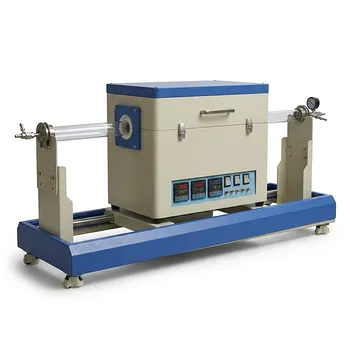
Double Temperature Zone Double Cover Tube Furnace for High Temperature CVD and Vacuum Annealing
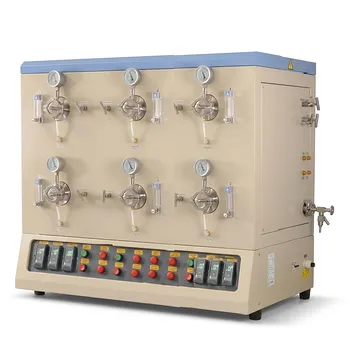
1200C High Throughput Multi Channel Tube Furnace with 50mm Quartz Tubes for Annealing and Material Phase Diagram Research
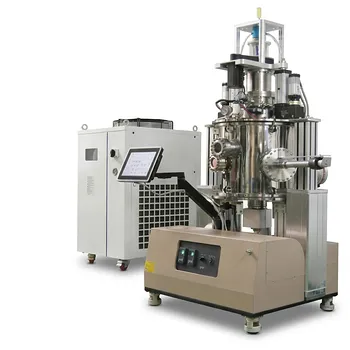
950C Rapid Thermal Processing Furnace for 12 Inch Wafer CSS Coating with Rotating Substrate Holder
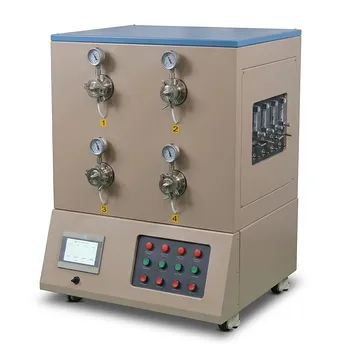
High Throughput 1200C Four Channel Tube Furnace with 3 Inch Quartz Tubes for Multi Zone Annealing and Material Research
High Temperature 1700C 4 Channel Tube Furnace 1 Inch Alumina Tube for Hi-Throughput Annealing
Single Zone Tube Furnace 5 Inch Quartz Tube 36 Inch Heating Zone Vacuum Flanges

Compact Vertical Split Quartz Tube Furnace with Stainless Steel Vacuum Flanges for Rapid Thermal Quenching and Controlled Atmosphere Material Processing
1200C High Temperature 5 Inch Sliding Tube Furnace for Rapid Thermal Processing RTP and Wafer Annealing
Compact Atmosphere Controlled Rapid Thermal Processing RTP Furnace with 4 Inch ID Quartz Tube 1100C
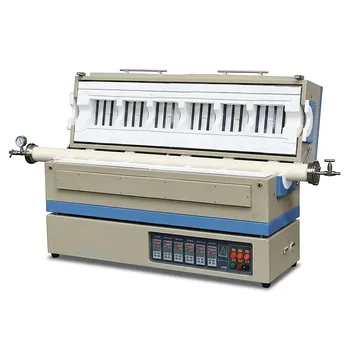
Six Zone Split Tube Furnace with Alumina Tube and Vacuum Flanges for 1500C High Temperature Thermal Processing and CVD
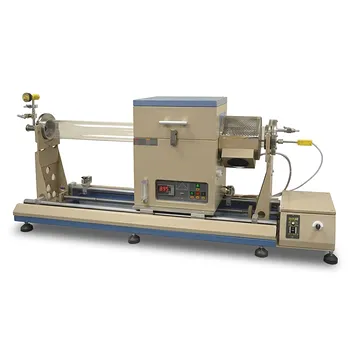
900 ºC Max Sliding RTP Tube Furnace with Rapid IR Heating and 4 Inch OD Quartz Tube
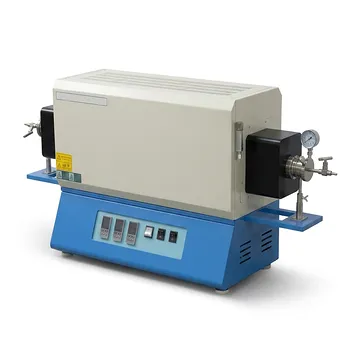
High Temperature Three Temperature Zone Tube Furnace for Advanced Material Science Sintering and Chemical Vapor Deposition Applications

Three Zone Tube Furnace with 11 Inch or 15 Inch Quartz Tube and Hinged Flanges for Vacuum Atmosphere Heat Treatment

1200°C 5 Inch Vertical Quartz Tube Furnace with Stainless Steel Vacuum Flanges

Vertical 1700C Vacuum and Atmosphere Tube Furnace with 80mm Alumina Tube
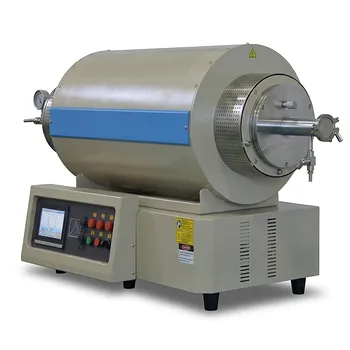
1200C Max Three Zone Tube Furnace 6 Inch OD Max with Tube and Flange