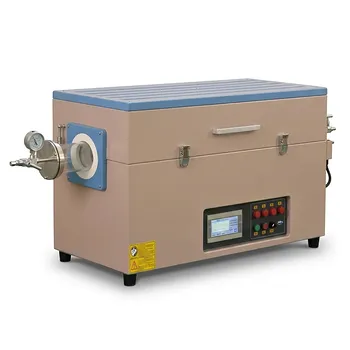
What is the role of a quartz tube furnace in the ammonia DRI process? Precision Heating for Advanced Reduction Kinetics
Updated 3 months ago
The quartz tube furnace with infrared (IR) heating serves as a high-precision simulator for the ammonia-based direct reduction iron (DRI) process. It provides the rapid heating rates and temperature stability necessary to recreate industrial thermal fields at a laboratory scale. This setup ensures that ammonia reacts efficiently with iron oxide particles under controlled conditions, allowing for the accurate study of reduction kinetics and phase transformations.
The core role of this equipment is to provide a highly controlled, stable environment that simulates the intense thermal demands of industrial iron reduction. By combining rapid infrared heating with a sealed quartz environment, researchers can precisely measure how ammonia interacts with iron oxide to drive efficient thermochemical reactions.
Achieving Industrial-Grade Thermal Precision
Rapid Thermal Response and Stability
Infrared heating units allow for high heating rates that traditional resistive heating elements cannot easily match. This speed is essential for simulating the quick temperature ramps seen in industrial furnaces, ensuring the specimen reaches the preset reduction temperature without premature or uncontrolled reactions.
Simulating Industrial-Scale Thermal Fields
The furnace creates a stable thermal environment that mimics the heat distribution of large-scale reduction processes. This stability is critical for ensuring that the data collected—such as the rate of oxygen removal—is representative of real-world industrial behavior.
Managing Ammonia-Based Thermochemical Reactions
Precision in Reduction Kinetics
Ammonia-based reduction requires specific temperatures to ensure the gas decomposes and reacts effectively with the iron oxide. The furnace provides the precise temperature stability needed to isolate variables, allowing researchers to determine the exact kinetic parameters of the reduction process.
Facilitating Controlled Gas-Solid Interactions
The quartz tube provides a sealed reaction environment that prevents contamination from the outside atmosphere. This allows for the introduction of high-purity gases like ammonia, hydrogen, or helium to displace air, ensuring that the phase transformation from hematite to magnetite and metallic iron occurs under strictly controlled gas concentrations.
Structural and Phase Transformation Control
Atomic Rearrangement and Crystalline Order
Beyond simple reduction, the controlled heating curves enable the atomic-scale rearrangement of metal species. This is vital for forming highly ordered structures on support surfaces, which can be used to regulate catalytic active sites or improve the quality of the final metallic iron.
Isothermal Reduction and Phase Shifts
The equipment allows for isothermal reduction, typically maintained at specific ranges like 375-400 °C, to study specific phase shifts. By switching between inert gases and reducing gases, the furnace facilitates a controlled transition through various iron oxide stages until a metallic state is achieved.
Understanding the Trade-offs
Material Limitations of Quartz
While quartz is excellent for purity and transparency to IR radiation, it has mechanical limits at extremely high temperatures. If the process requires temperatures far exceeding standard reduction ranges, the quartz tube may lose structural integrity or undergo devitrification.
Infrared Heating Uniformity
Infrared heating is often line-of-sight, meaning the orientation and surface characteristics of the iron oxide particles can affect heating uniformity. If the sample is not positioned correctly or is too dense, the internal particles may not reach the same temperature as the surface particles, potentially skewing kinetic data.
Making the Right Choice for Your Goal
How to Apply This to Your Project
- If your primary focus is Understanding Reduction Kinetics: Use the IR heating unit to achieve rapid ramps to the target temperature, ensuring that the reaction data is not muddied by slow heat-up times.
- If your primary focus is Phase Transformation Accuracy: Utilize the horizontal furnace configuration to enable precise gas switching between inert displacement gases and high-purity reducing flows.
- If your primary focus is Catalyst Development: Leverage the stable thermal environment to ensure atomic-scale rearrangement and the formation of ordered crystalline structures on supports.
The combination of infrared heating and quartz containment provides the essential precision required to transform ammonia-based iron reduction from a theoretical concept into a scalable industrial reality.
Summary Table:
| Feature | Primary Role | Key Benefit |
|---|---|---|
| Infrared Heating Unit | High-speed thermal response | Simulates industrial-scale rapid heating ramps |
| Sealed Quartz Tube | Contamination-free environment | Enables precise gas-solid interactions (NH3, H2) |
| Precision Control | Isothermal stability | Accurate measurement of reduction kinetics and phases |
| Horizontal Layout | Controlled gas flow | Facilitates phase shifts from hematite to metallic iron |
Elevate Your DRI Research with THERMUNITS Thermal Solutions
As a leading manufacturer of high-temperature laboratory equipment for material science and industrial R&D, THERMUNITS provides the precision tools necessary to bridge the gap between lab-scale experiments and industrial reality. We specialize in advanced thermal processing solutions, including Tube Furnaces (IR-equipped), CVD/PECVD systems, and Vacuum Induction Melting furnaces (VIM), specifically designed for complex processes like ammonia-based direct reduction.
Whether you need Muffle, Vacuum, Rotary, or Hot Press furnaces, our equipment ensures the thermal stability and atmospheric control required for superior material outcomes.
Ready to optimize your reduction kinetics? Contact THERMUNITS Today to explore our comprehensive range of heat treatment equipment and tailor-made solutions for your laboratory.
References
- Matic Jovičević‐Klug, Dierk Raabe. Thermal Kinetics and Nitriding Effect of Ammonia-Based Direct Reduction of Iron Oxides. DOI: 10.1021/acssuschemeng.4c02363
Mentioned Products
- Rapid Thermal Processing Sliding Tube Furnace with 4 Inch OD Quartz Tube and 900C IR Heating
- Two Zone IR Heating Rapid Thermal Processing RTP Tube Furnace with 4 Inch ID Quartz Tube and Sliding Sample Holders
- 1100°C Large Diameter Quartz Tube Furnace with 24 Inch Heating Zone and Water Cooled Flanges
- Three Zone Tube Furnace with 11 Inch or 15 Inch Quartz Tube and Hinged Flanges for Vacuum Atmosphere Heat Treatment
- Single Zone Tube Furnace 5 Inch Quartz Tube 36 Inch Heating Zone Vacuum Flanges
People Also Ask
- What role does a SiC-coated graphite susceptor play in H2Se selenization? Boost RTP Thermal Uniformity & Film Purity.
- What materials are used for tube furnace process tubes? Temperature Limits & Selection Guide for Research
- What are the functional advantages of an RTP system for surface deposition? Enhance Heterojunction Interface Integrity
- How does the sealing of the quartz tube affect MOF growth in SCA-CVD? Optimize Atomic-Scale Material Stability
- Why use quartz tubes for La2O3/SnO2 sensor testing? High-temp stability & data integrity for ethanol gas sensing.

Tech Team · ThermUnits
Last updated on Jun 03, 2026
Related Products
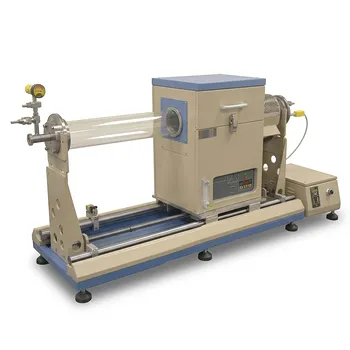
Rapid Thermal Processing Sliding Tube Furnace with 4 Inch OD Quartz Tube and 900C IR Heating
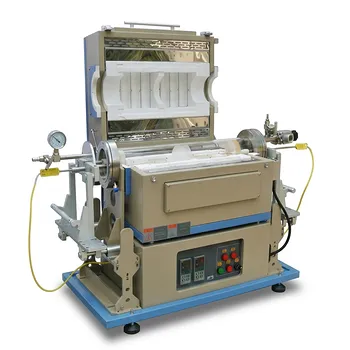
Two Zone IR Heating Rapid Thermal Processing RTP Tube Furnace with 4 Inch ID Quartz Tube and Sliding Sample Holders
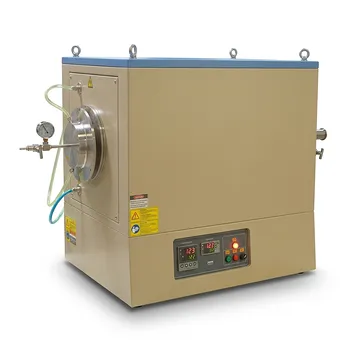
1100°C Large Diameter Quartz Tube Furnace with 24 Inch Heating Zone and Water Cooled Flanges
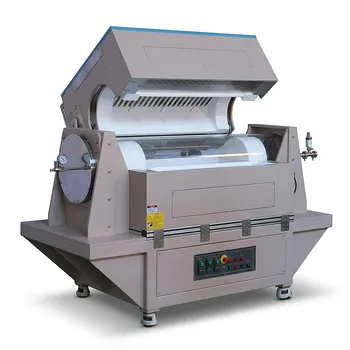
Three Zone Tube Furnace with 11 Inch or 15 Inch Quartz Tube and Hinged Flanges for Vacuum Atmosphere Heat Treatment
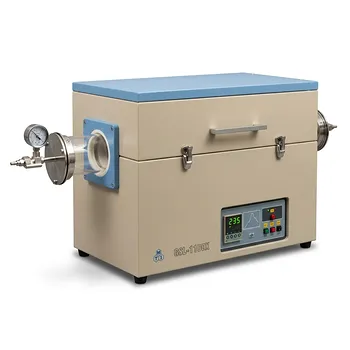
Single Zone Tube Furnace 5 Inch Quartz Tube 36 Inch Heating Zone Vacuum Flanges
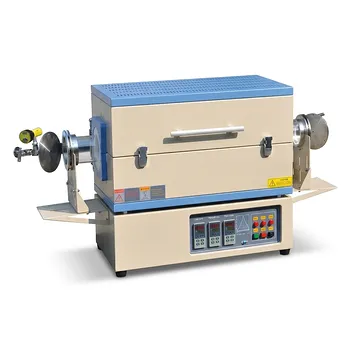
Three Zone Tube Furnace with 24 Inch Heating Length and Hinged Flange Quartz Tube System
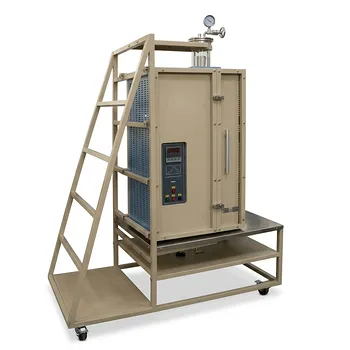
Split Vertical Tube Furnace with 1200C Quartz Tube and Stainless Steel Vacuum Flanges for Rapid Thermal Processing
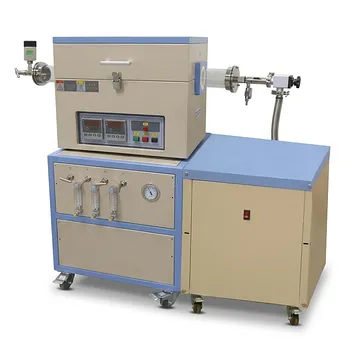
Dual Zone Quartz Tube Furnace with 80mm Diameter 1200C Max Temperature 3 Channel Gas Mixer and Vacuum Pump System
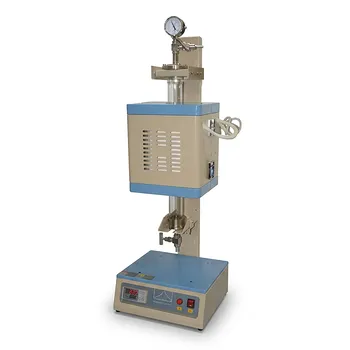
Compact Vertical Split Quartz Tube Furnace with Stainless Steel Vacuum Flanges for Rapid Thermal Quenching and Controlled Atmosphere Material Processing
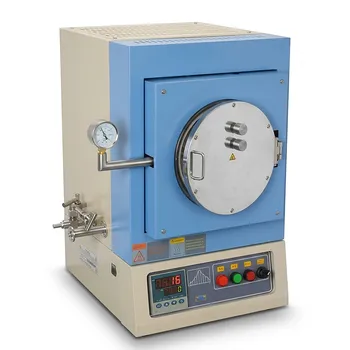
1100°C High Temperature Quartz Chamber Furnace 8 Inch OD with 7.6 Liter Capacity and Vacuum Atmosphere Capability
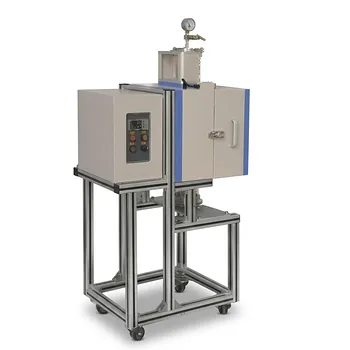
1200°C 5 Inch Vertical Quartz Tube Furnace with Stainless Steel Vacuum Flanges
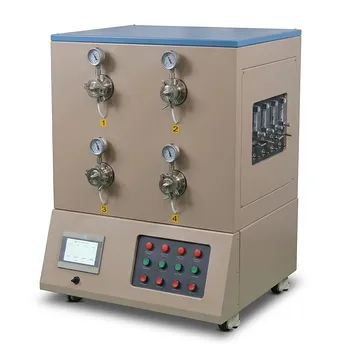
High Throughput 1200C Four Channel Tube Furnace with 3 Inch Quartz Tubes for Multi Zone Annealing and Material Research
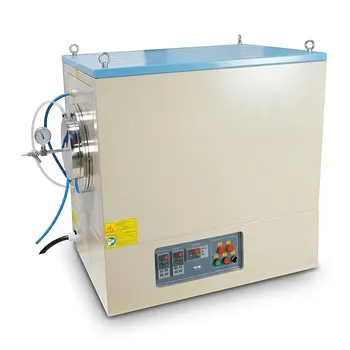
Dual Zone Tube Furnace 1100C with 11 Inch Quartz Tube and Vacuum Flanges for 8 Inch Wafer Processing

High Temperature Automated 5 Inch Tube Furnace for Autonomous Material Research and Advanced Laboratory R&D
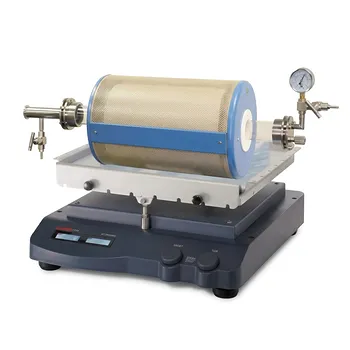
High Temperature Rocking Tube Furnace with Quartz Tube and Vacuum Flange for Materials Synthesis
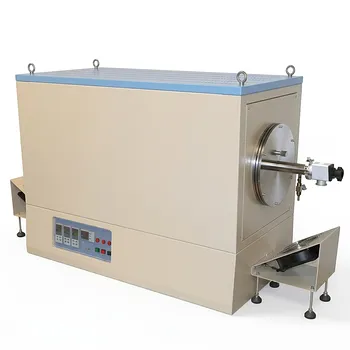
1100°C Three Zone Tube Furnace with 8.5 to 11 Inch OD Quartz Tube and Vacuum Flanges for Large Wafer Processing
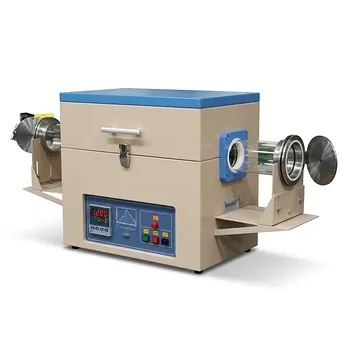
High Temperature 1200C Split Tube Furnace with Hinged Vacuum Flanges and 4 Inch Quartz Tube for Laboratory Research
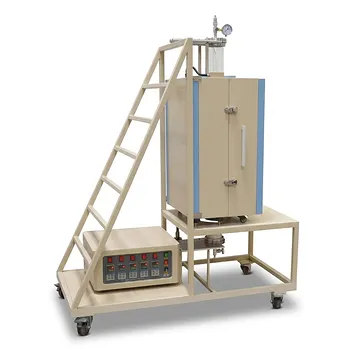
Five Zone Split Vertical Tube Furnace 1200C Max with 4 Inch Quartz Tube and Stainless Steel Vacuum Flanges
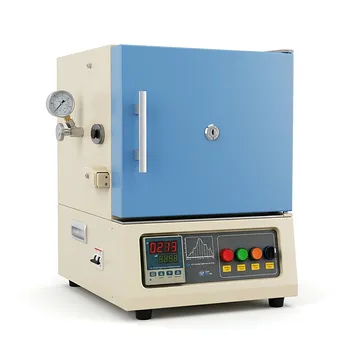
1200C Hybrid Muffle and Tube Furnace for Material Research with Dual Atmosphere Control Quartz Tubes