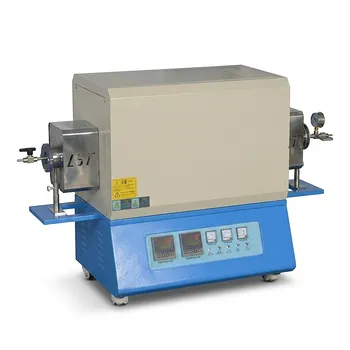
What is the role of the high-purity quartz tube in the growth of FexTaSe2 single crystals? Ensure Purity & Stability
Updated 3 months ago
In the synthesis of $\text{Fe}_x\text{TaSe}_2$ via Chemical Vapor Transport (CVT), the high-purity quartz tube serves as the essential hermetically sealed reaction vessel. It provides the necessary chemical inertness and thermal stability to contain volatile iodine transport agents and reactive metal powders at temperatures often exceeding 1000°C, ensuring the resulting single crystals maintain precise stoichiometry and high purity.
Core Takeaway: The high-purity quartz tube acts as a controlled, isolated micro-environment that prevents atmospheric contamination and oxidation while enabling the gas-phase diffusion required for crystal growth. Its primary value lies in its ability to remain chemically non-reactive under extreme thermal gradients.
Ensuring Chemical and Structural Integrity
Unwavering Chemical Inertness
The quartz tube is chosen primarily because it does not react with the raw materials—iron (Fe), tantalum (Ta), and selenium (Se)—or the iodine transport agent. This inertness is critical because any reaction between the vessel and the precursors would introduce unwanted impurities into the $\text{Fe}_x\text{TaSe}_2$ crystal lattice, degrading its physical properties.
Resistance to Thermal Deformation
CVT processes often require sustained high temperatures for long durations, sometimes exceeding 100 hours. High-purity quartz can withstand these environments without deforming or softening, ensuring the physical dimensions of the growth chamber remain constant throughout the cycle.
Isolation from the External Environment
By serving as a physical barrier, the tube isolates the reaction from the heating elements and the external atmosphere. This prevents metal impurities from the furnace coils or particulates from the laboratory environment from migrating into the high-purity precursor mix.
Facilitating the Vacuum Environment
Prevention of Oxidation
Transition metal powders like iron and tantalum are highly susceptible to oxidation at elevated temperatures. The quartz tube allows for high-vacuum sealing (often down to $10^{-5}$ Torr), which effectively excludes oxygen and moisture that would otherwise terminate the growth or produce oxide phases.
Support for Gas-Phase Diffusion
The tube provides a sealed, closed-system volume where the iodine transport agent can sublime and circulate. This gas-phase cycle is the "engine" of CVT, carrying the constituent elements across a temperature gradient to the growth zone where the single crystal forms.
Maintenance of Vapor Pressure
A sealed quartz ampoule maintains the saturated vapor pressure of the transport agents. This stable pressure is vital for a steady growth rate, ensuring that the crystals grow slowly and uniformly rather than forming disordered polycrystalline masses.
Understanding the Trade-offs
Material Fragility and Handling
While quartz is thermally robust, it is mechanically brittle and sensitive to thermal shock if cooled too rapidly. Additionally, even minor surface contaminants (like skin oils) can cause the quartz to devitrify or crystallize at high temperatures, which can lead to tube failure and vacuum loss.
Limitations of Chemical Compatibility
Although quartz is inert to most CVT agents, it can be etched by certain highly aggressive chemicals or specific alkaline components at extreme temperatures. For $\text{Fe}_x\text{TaSe}_2$, quartz is ideal, but researchers must always verify that their specific transport agent won't react with silica ($\text{SiO}_2$) over long durations.
How to Apply This to Your Project
Successful crystal growth depends heavily on the preparation and quality of the quartz vessel used in the furnace.
- If your primary focus is Maximum Crystal Purity: Use "electronic grade" or high-purity synthetic quartz to minimize the leaching of trace boron or hydroxyl groups into the reaction.
- If your primary focus is Preventing Tube Failure: Ensure the quartz is thoroughly cleaned with aqua regia and deionized water, and handled only with gloves to prevent devitrification.
- If your primary focus is Precise Stoichiometry: Prioritize a high-vacuum seal ($10^{-3}$ to $10^{-5}$ Torr) to ensure no oxygen interference alters the ratio of Fe to TaSe2.
The integrity of the high-purity quartz tube is the silent guardian of the chemical vapor transport process, turning a chaotic high-temperature reaction into a controlled laboratory for perfect crystal growth.
Summary Table:
| Key Feature | Role in CVT Process | Impact on FexTaSe2 Growth |
|---|---|---|
| Chemical Inertness | Resists reaction with Fe, Ta, Se, and Iodine | Ensures high crystal purity and stoichiometry |
| Thermal Stability | Withstands 1000°C+ for long durations | Maintains structural integrity of the vessel |
| Vacuum Integrity | Supports sealing down to $10^{-5}$ Torr | Prevents precursor oxidation and contamination |
| Gas-Phase Support | Contains volatile iodine transport agents | Enables uniform diffusion and crystal formation |
Elevate Your Material Research with THERMUNITS
Precise crystal growth demands superior thermal control and reliable containment. THERMUNITS is a leading manufacturer of high-temperature laboratory equipment, providing the precision tools required for advanced material science and industrial R&D.
Our comprehensive range of thermal processing solutions—including Tube Furnaces ideal for CVT, Muffle, Vacuum, and Atmosphere Furnaces, as well as CVD/PECVD systems and Vacuum Induction Melting (VIM) furnaces—are engineered to meet the most rigorous experimental standards. Whether you are synthesizing transition metal dichalcogenides or exploring new alloys, our equipment ensures the stable thermal gradients and vacuum environments your work depends on.
Ready to optimize your heat treatment process?
Contact THERMUNITS today to discover how our high-performance furnaces and thermal elements can enhance your laboratory’s capabilities.
References
- Qianqian Feng, Guang‐hua Guo. Magnetic properties of Fe intercalation FexTaSe2. DOI: 10.3389/fphy.2024.1371171
Mentioned Products
- High Temperature 1700C Vertical Split Tube Furnace for Material Quenching and Single Crystal Growth
- Versatile Chemical Vapor Deposition Tube Furnace System for Advanced Material Research and Industrial Coating Processes
- Multi Heating Zones CVD Tube Furnace System for Precision Chemical Vapor Deposition and Advanced Material Synthesis
- Dual Tube 100mm 80mm CVD Sliding Furnace with 4 Channel Gas Mixing and Vacuum System
- Split Chamber CVD Tube Furnace with Vacuum Station Chemical Vapor Deposition System Machine
People Also Ask
- What is the primary function of a high-temperature split tube furnace in nitrogen metastable particle research? Expert Guide
- What role does a high-temperature vertical tube furnace play in simulating high-carbon ferromanganese slag formation?
- Why integrate a vertical split tube furnace with hydraulic loading for HSECC? Essential for In-Situ Fire Simulation.
- What functions does a vertical high-temperature tube furnace perform? Master Industrial Sintering & R&D Simulation
- What is the role of a split vertical tube furnace during flash sintering of 8YSZ and 20SDC? Master Ultra-Fast R&D

Tech Team · ThermUnits
Last updated on Jun 02, 2026
Related Products
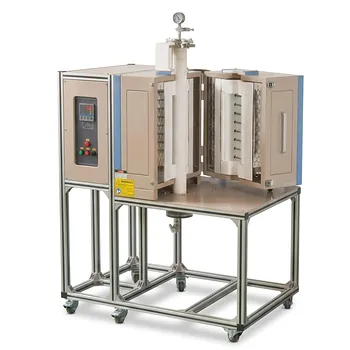
High Temperature 1700C Vertical Split Tube Furnace for Material Quenching and Single Crystal Growth
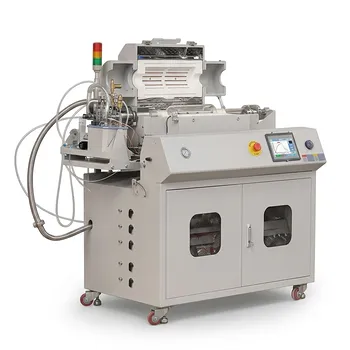
Versatile Chemical Vapor Deposition Tube Furnace System for Advanced Material Research and Industrial Coating Processes
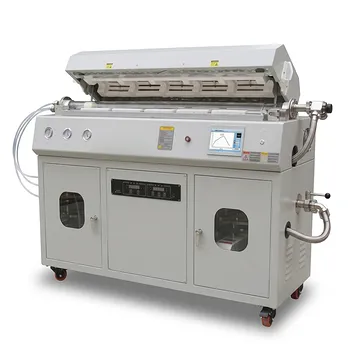
Multi Heating Zones CVD Tube Furnace System for Precision Chemical Vapor Deposition and Advanced Material Synthesis
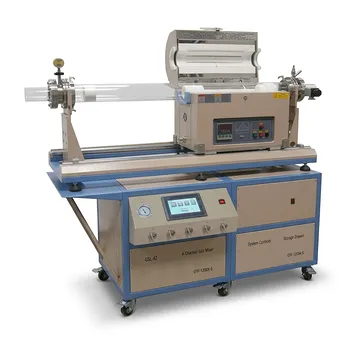
Dual Tube 100mm 80mm CVD Sliding Furnace with 4 Channel Gas Mixing and Vacuum System
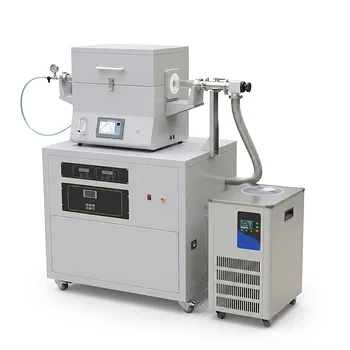
Split Chamber CVD Tube Furnace with Vacuum Station Chemical Vapor Deposition System Machine
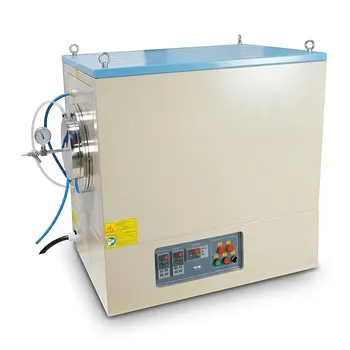
Dual Zone Tube Furnace 1100C with 11 Inch Quartz Tube and Vacuum Flanges for 8 Inch Wafer Processing
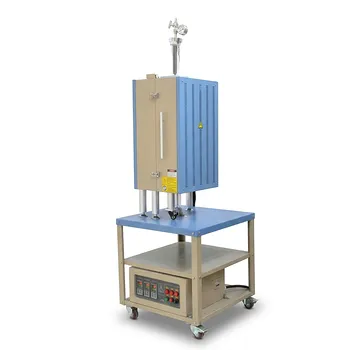
1200C Three Zone Vertical Tube Furnace with 2 Inch Quartz Tube and Vacuum Flanges
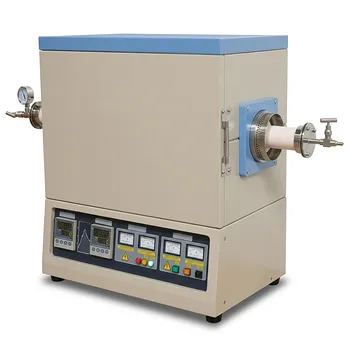
High Temperature 1700C Dual Zone Tube Furnace for Material Science and Industrial Chemical Vapor Deposition Research

Compact Vertical Split Quartz Tube Furnace with Stainless Steel Vacuum Flanges for Rapid Thermal Quenching and Controlled Atmosphere Material Processing
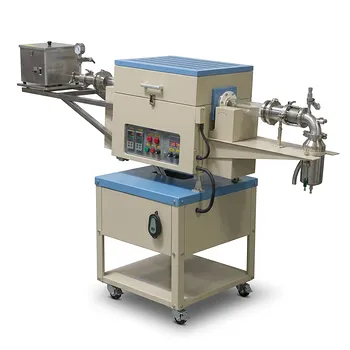
Two Zone Rotary CVD Furnace with Automatic Feeding and Receiving System for Powder Processing
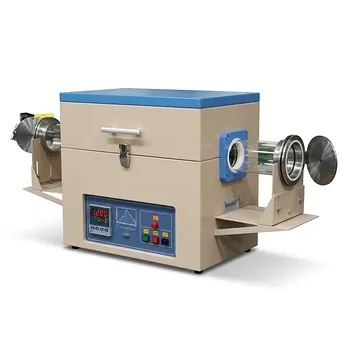
High Temperature 1200C Split Tube Furnace with Hinged Vacuum Flanges and 4 Inch Quartz Tube for Laboratory Research
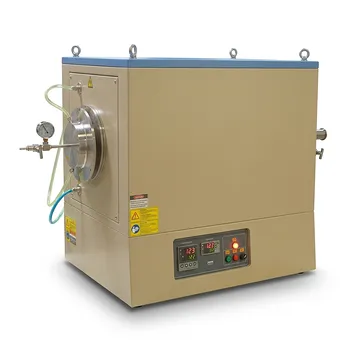
1100°C Large Diameter Quartz Tube Furnace with 24 Inch Heating Zone and Water Cooled Flanges
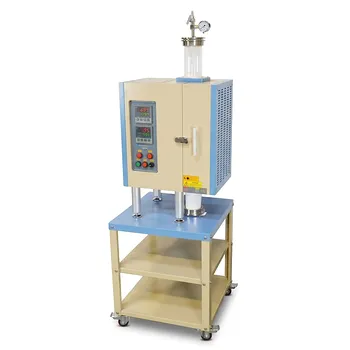
1100°C Dual Zone Split Vertical Tube Furnace with 4 Inch Quartz Tube and Vacuum Sealing Flanges
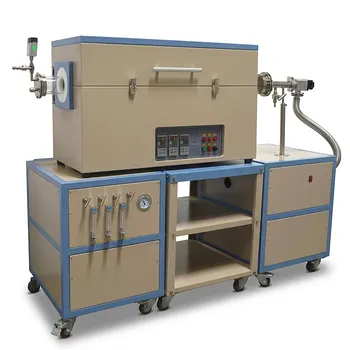
Three Zone Quartz Tube Furnace with 3 Channel Gas Mixer Vacuum Pump and Anti Corrosive Vacuum Gauge
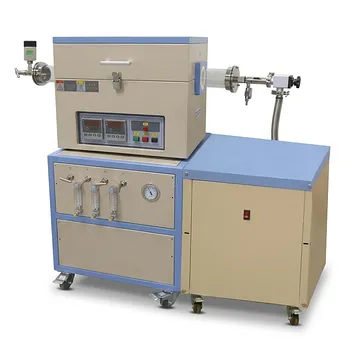
Dual Zone Quartz Tube Furnace with 80mm Diameter 1200C Max Temperature 3 Channel Gas Mixer and Vacuum Pump System

1200°C 5 Inch Vertical Quartz Tube Furnace with Stainless Steel Vacuum Flanges

High Temperature Automated 5 Inch Tube Furnace for Autonomous Material Research and Advanced Laboratory R&D
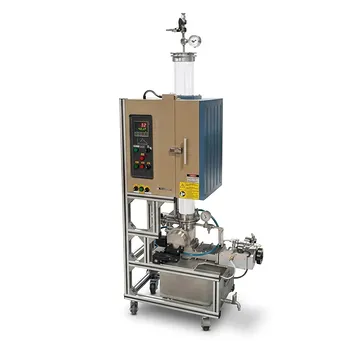
1200C High Temperature Atmosphere Controlled Vertical Quenching Tube Furnace with 4 Inch Quartz Tube
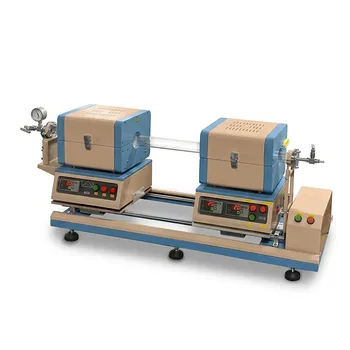
High Temperature 1200C Automatic Sliding Dual Zone Tube Furnace for 2D Transition Metal Dichalcogenides Growth and Material Sublimation Research