Significance of MFC in CVD Monolayer WSe2: Achieving Stoichiometric Accuracy & Crystal Quality
Updated 3 months ago
A precision Mass Flow Controller (MFC) is the critical hardware component responsible for the stoichiometric accuracy and structural integrity of monolayer tungsten diselenide ($WSe_2$). It functions by strictly regulating the flow rates of carrier gases—typically a mixture of argon and hydrogen—to maintain a precise chemical environment during the Chemical Vapor Deposition (CVD) process. By keeping flow rates within a highly specific range (such as 28.3 to 31.2 sccm), the MFC ensures that selenium vapor is delivered consistently to nucleation sites without triggering the decomposition of the newly formed monolayer.
Core Takeaway: The precision MFC acts as the "governor" of the CVD reaction, balancing the delivery of precursor vapors against the atmospheric concentration of reducing gases. This precise equilibrium is what enables the growth of large-scale, high-quality triangular single crystals rather than fragmented or multilayered films.
The Role of Gas Dynamics in $WSe_2$ Synthesis
Regulating Selenium Vapor Transport
In the CVD process, the MFC determines the flux of precursor vapors transported to the substrate surface. Because selenium has a specific vapor pressure requirement for growth, any fluctuation in the carrier gas flow directly alters the amount of selenium available at the reaction site.
Maintaining Atmospheric Concentration
The MFC controls the concentration of the reaction atmosphere, particularly the ratio of hydrogen to argon. This ratio is vital because hydrogen acts as a reducing agent that facilitates the reaction, but its concentration must be kept under strict limits to remain constructive.
Controlling Vapor Pressure and Supersaturation
By adjusting the flow rate, the MFC indirectly manages the supersaturation levels within the reaction chamber. Precise control over these levels allows researchers to dictate the growth rate and ensure the consistency of the film thickness across large-area substrates.
Impact on Crystal Quality and Morphology
Facilitating Complete Selenization
If flow rates are too low, the delivery of selenium vapor becomes insufficient to fully react with the tungsten precursor. This results in incomplete selenization of nucleation sites, leading to defects in the crystal lattice or failed growth of the monolayer.
Preventing Hydrogen-Induced Decomposition
Excessive flow rates, particularly of hydrogen-rich mixtures, can be destructive to the synthesis process. High hydrogen concentrations can lead to the decomposition of synthesized $WSe_2$, stripping away the selenium atoms and destroying the monolayer structure.
Ensuring Crystalline Uniformity
The stability provided by a precision MFC ensures that the growth mode remains in the monolayer regime. By optimizing these parameters, the transition from multilayer clusters to large-area, uniform single crystals becomes repeatable and scalable.
Understanding the Trade-offs
While high-precision MFCs are essential, they introduce specific challenges into the system design. Increased sensitivity means that even minor fluctuations in upstream pressure or gas temperature can require the controller to compensate rapidly, which may introduce brief "jitter" in the flow.
Furthermore, relying on extremely narrow flow windows (e.g., a ~3 sccm range) leaves little room for hardware drift. Over time, even a precision MFC can lose calibration, which, in a $WSe_2$ context, might result in a sudden drop in crystal size or an increase in amorphous contamination without an obvious change in the software-reported values.
How to Apply This to Your Project
Recommendations for CVD Optimization
- If your primary focus is maximizing crystal size: Maintain carrier gas flow within the identified "sweet spot" (e.g., 28.3–31.2 sccm) to ensure stable nucleation and steady growth of triangular flakes.
- If your primary focus is achieving strict monolayer thickness: Use the MFC to optimize the precursor flux, as stable flow rates are the primary driver in preventing the transition from monolayer to multilayer growth.
- If your primary focus is minimizing lattice defects: Prioritize the precision of the hydrogen flow to prevent the reducing atmosphere from becoming aggressive enough to decompose the synthesized $WSe_2$.
Precise control over gas dynamics is not merely a process variable but the fundamental requirement for achieving the stoichiometric precision necessary for high-performance 2D semiconductors.
Summary Table:
| Feature | Role of Precision MFC | Impact on WSe2 Quality |
|---|---|---|
| Precursor Flux | Regulates selenium vapor transport | Prevents incomplete selenization of sites |
| Gas Concentration | Balances Argon/Hydrogen ratios | Protects monolayer from H2-induced decomposition |
| Vapor Pressure | Controls chamber supersaturation | Ensures uniform growth of large-scale crystals |
| Flow Stability | Minimizes hardware drift and jitter | Maintains consistent thickness across substrates |
Elevate Your Material Research with THERMUNITS
Precision in gas dynamics is the difference between a fragmented film and a perfect 2D crystal. As a leading manufacturer of high-temperature laboratory equipment, THERMUNITS provides researchers with the high-performance thermal processing solutions required for cutting-edge material science.
Our advanced CVD/PECVD systems, Tube furnaces, and Vacuum Atmosphere furnaces are designed to integrate precision mass flow control, ensuring your R&D projects achieve repeatable, stoichiometric excellence. From Dental Furnaces to Vacuum Induction Melting (VIM) systems, we empower industrial and academic labs with the tools for tomorrow's breakthroughs.
Ready to optimize your synthesis process?
Contact our engineering experts today to find the perfect thermal solution for your lab!
References
- Xuemin Luo, Yong Liu. Impact of Carrier Gas Flow Rate on the Synthesis of Monolayer WSe2 via Hydrogen-Assisted Chemical Vapor Deposition. DOI: 10.3390/ma17102190
Mentioned Products
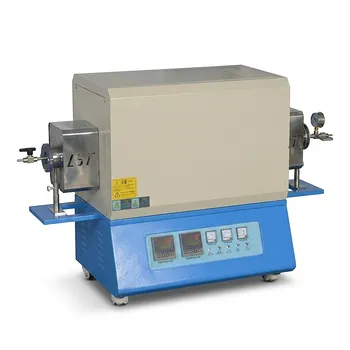
- High Temperature 1700C Tube Furnace with High Vacuum Turbomolecular Pump System and Multi Channel Mass Flow Controller Gas Mixer
- Cylindrical Resonator MPCVD Machine System for Microwave Plasma Chemical Vapor Deposition and Lab Diamond Growth
- Three Zone Quartz Tube Furnace with 3 Channel Gas Mixer Vacuum Pump and Anti Corrosive Vacuum Gauge
- 915MHz MPCVD Diamond Machine Microwave Plasma Chemical Vapor Deposition System Reactor
- Chemical Vapor Deposition CVD System Slide PECVD Tube Furnace with Liquid Gasifier PECVD Machine
People Also Ask
- What is the role of a high-temperature tube furnace in the calcination process of ZnO/In2O3 nanocomposites?
- What impact does the heating rate of a tube furnace have on biochar microstructure? Optimize Your Material R&D.
- What is the function of a high-temperature tube furnace in the synthesis of g-C3N4? Optimize Thermal Polycondensation
- What is the critical function of a high-temperature tube furnace in Si/Al2O3/RGO synthesis? Key to Battery Innovation
- What are the primary functions of a high-temperature tube furnace for Inconel 718? Master Debinding & Pre-sintering.

Tech Team · ThermUnits
Last updated on Jun 02, 2026
Related Products

High Temperature 1700C Tube Furnace with High Vacuum Turbomolecular Pump System and Multi Channel Mass Flow Controller Gas Mixer
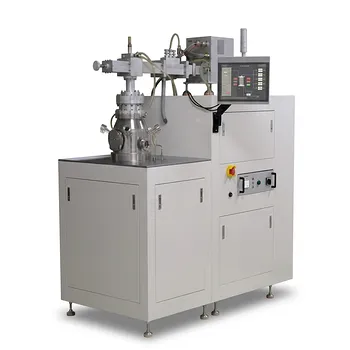
Cylindrical Resonator MPCVD Machine System for Microwave Plasma Chemical Vapor Deposition and Lab Diamond Growth
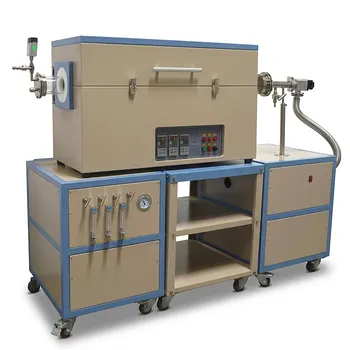
Three Zone Quartz Tube Furnace with 3 Channel Gas Mixer Vacuum Pump and Anti Corrosive Vacuum Gauge
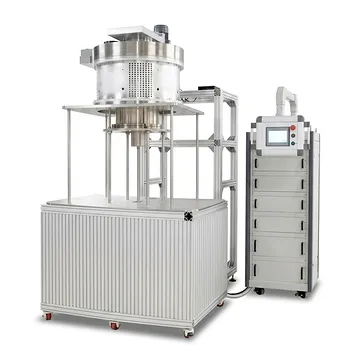
915MHz MPCVD Diamond Machine Microwave Plasma Chemical Vapor Deposition System Reactor
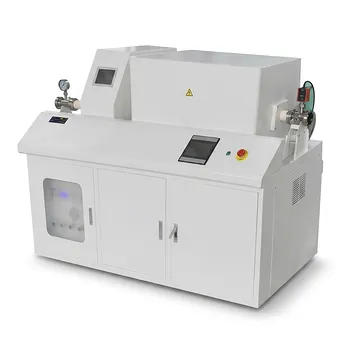
Chemical Vapor Deposition CVD System Slide PECVD Tube Furnace with Liquid Gasifier PECVD Machine
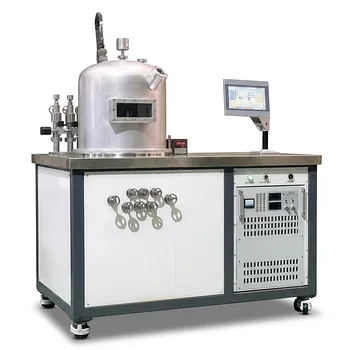
HFCVD Machine System for Nano Diamond Coating on Drawing Dies and Industrial Tools
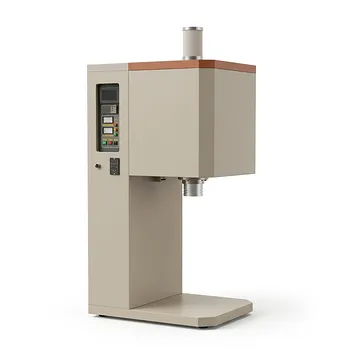
Vertical Openable Tube Furnace 0-1700c High Temperature Laboratory System for CVD and Vacuum Heat Treatment
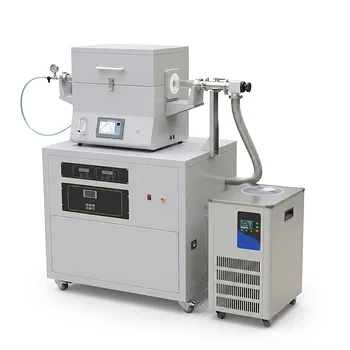
Split Chamber CVD Tube Furnace with Vacuum Station Chemical Vapor Deposition System Machine
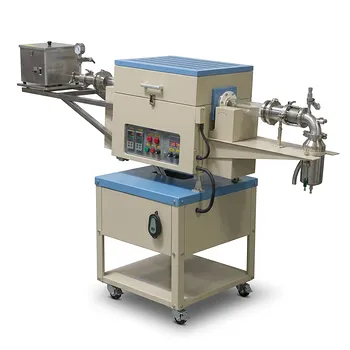
Two Zone Rotary CVD Furnace with Automatic Feeding and Receiving System for Powder Processing
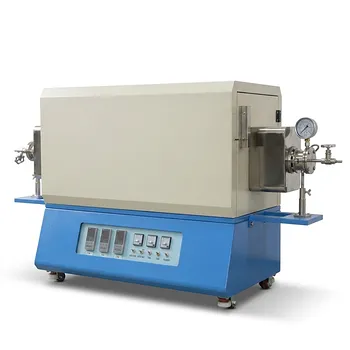
Three Temperature Zone High Temperature Vacuum Tube Furnace for CVD and Material Sintering
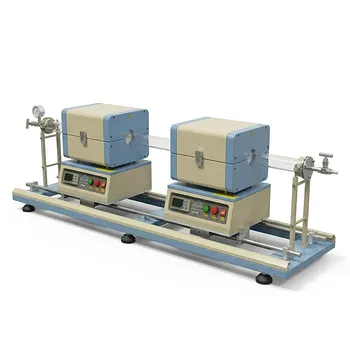
1200C Max Dual Sliding Tube Furnace with 50 mm Tube Flanges for CVD
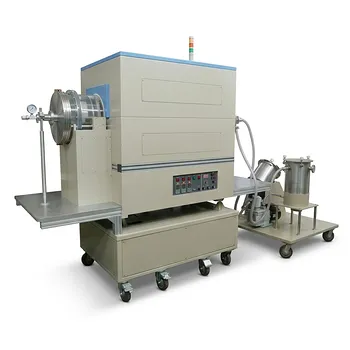
Three Zone Rotary Tube Furnace with Automatic Powder Feeding for Large Scale CVD Coating 1100C
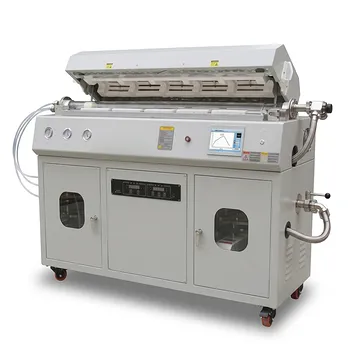
Multi Heating Zones CVD Tube Furnace System for Precision Chemical Vapor Deposition and Advanced Material Synthesis
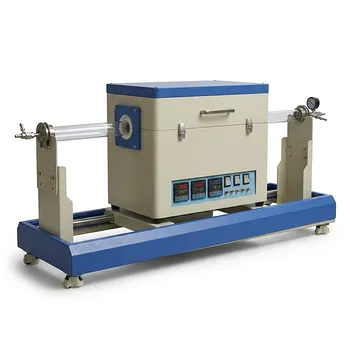
Double Temperature Zone Double Cover Tube Furnace for High Temperature CVD and Vacuum Annealing
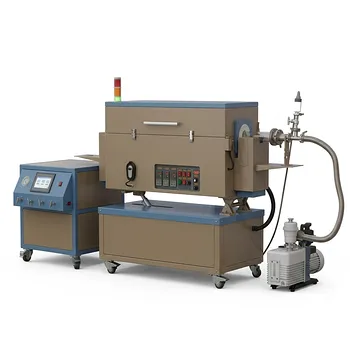
5 Inch Three Zone Rotary Tube Furnace with Integrated Gas Delivery System and 1200C Capability for Advanced Material CVD Processing
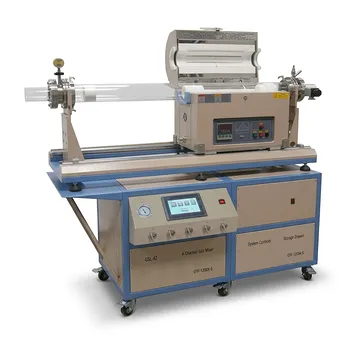
Dual Tube 100mm 80mm CVD Sliding Furnace with 4 Channel Gas Mixing and Vacuum System
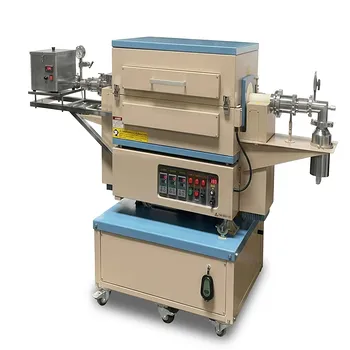
1500C 3-Zone Rotary Tube Furnace 60mm with Automatic Powder Feeding and Receiving System for Continuous Material Synthesis
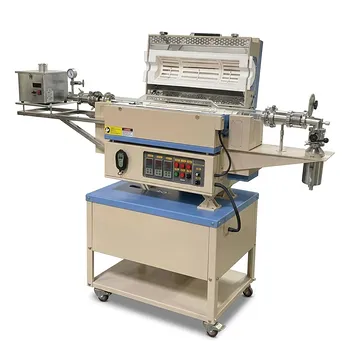
5 Inch Rotary Tube Furnace with Automatic Feeding and Receiving System 1200C Three Zone CVD Powder Processing
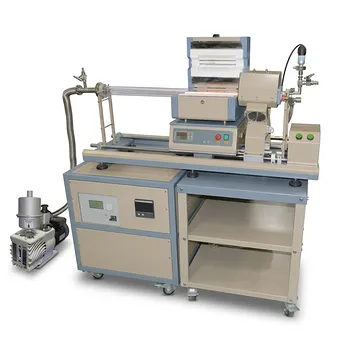
1200C Max Compact Auto-Sliding PECVD Furnace with 2 Inch Tube and Vacuum Pump