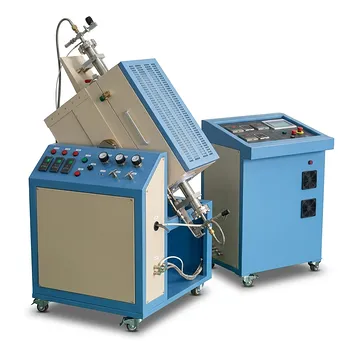
What is the specific role of a high-temperature tube furnace in the preparation of TiO2-alpha-Ga2O3 heterojunctions? Guide
Updated 3 months ago
In the synthesis of $TiO_2$-$\alpha$-$Ga_2O_3$ heterojunctions, the high-temperature tube furnace serves as the fundamental reactor for two distinct chemical processes: thermal oxidation and phase-transformation annealing.
The furnace provides a controlled environment to first oxidize titanium sheets at $600^\circ C$ in an oxygen atmosphere, creating a dense $TiO_2$ thin film. It subsequently facilitates the conversion of a $GaOOH$ precursor into high-crystallinity $\alpha$-$Ga_2O_3$ through a precise $400^\circ C$ annealing cycle lasting four hours, which also optimizes the interface between the two materials.
Core Takeaway: The high-temperature tube furnace is the critical tool for controlling the stoichiometry and crystallinity of the $TiO_2$-$\alpha$-$Ga_2O_3$ interface. By regulating temperature and atmosphere, it ensures the transition from amorphous or precursor states to functional, high-quality crystalline phases.
The Dual-Stage Thermal Process
The preparation of these heterojunctions relies on the furnace's ability to maintain specific temperatures for extended periods. This stability is required to ensure the resulting thin films are uniform and structurally sound.
Controlled Thermal Oxidation of Titanium
The first role of the furnace is the oxidation of high-purity titanium sheets. By maintaining a constant $600^\circ C$ thermal field and a steady flow of oxygen, the furnace forces a reaction that produces a dense and uniform $TiO_2$ thin film.
This stage is sensitive to temperature fluctuations. Precise control ensures that the oxidation layer is neither too thin (leading to poor coverage) nor too thick (which could lead to mechanical flaking or high resistance).
Precursor Conversion and Phase Stability
The second role involves the thermal decomposition of $GaOOH$. The tube furnace provides the thermal energy required to drive the transformation of the gallium oxyhydroxide precursor into $\alpha$-$Ga_2O_3$.
At $400^\circ C$, the furnace enables the atoms to rearrange into a high-crystallinity lattice. Without this precise temperature window, the gallium oxide might remain in an amorphous state or transition into a different, less desirable polymorph.
Optimizing the Heterojunction Interface
Beyond simple chemical conversion, the tube furnace acts as a tool for structural refinement. The quality of the junction between $TiO_2$ and $Ga_2O_3$ determines the electronic efficiency of the final device.
Elimination of Internal Stress
During the growth of different material layers, internal mechanical stresses often develop due to lattice mismatch or thermal expansion differences. The four-hour annealing duration at $400^\circ C$ allows for stress relaxation, preventing the film from cracking or delaminating.
Enhancement of Interface Quality
The stable thermal environment promotes atomic diffusion at the boundary of the $TiO_2$ and $Ga_2O_3$ layers. This creates a more cohesive heterojunction interface, which is essential for efficient charge carrier transport in electronic and photocatalytic applications.
Understanding the Trade-offs and Pitfalls
While the tube furnace is indispensable, it introduces specific variables that can compromise material quality if not strictly managed.
Temperature Gradients and Inhomogeneity
Tube furnaces can sometimes suffer from thermal gradients where the center of the tube is hotter than the ends. If the titanium sheets or precursors are placed outside the "constant temperature zone," the resulting $TiO_2$ or $Ga_2O_3$ will have inconsistent thickness or crystallinity.
Atmospheric Purity and Contamination
The presence of trace impurities in the oxygen or inert gas supply can lead to unintended doping or secondary phase formation. For instance, if nitrogen is inadvertently present at high temperatures, it could lead to the formation of oxynitrides, which fundamentally changes the electronic properties of the heterojunction.
How to Apply This to Your Project
To achieve the best results when preparing $TiO_2$-$\alpha$-$Ga_2O_3$ heterojunctions, your furnace parameters must align with your specific material requirements.
- If your primary focus is high-purity crystalline phases: Ensure the furnace is calibrated to maintain the $400^\circ C$ to $600^\circ C$ range with a variance of less than $\pm 1^\circ C$ to prevent the formation of mixed-phase oxides.
- If your primary focus is mechanical durability of the film: Prioritize the annealing soak time (4 hours or more) and utilize a slow cooling rate (e.g., $2-5^\circ C/min$) to minimize thermal shock and residual stress.
- If your primary focus is interface conductivity: Utilize high-purity process gases and ensure the tube is thoroughly purged before heating to prevent oxygen vacancies or surface contamination from impacting the heterojunction.
The high-temperature tube furnace is not merely a heat source, but a precision instrument that dictates the structural integrity and functional performance of the $TiO_2$-$\alpha$-$Ga_2O_3$ system.
Summary Table:
| Process Stage | Target Temperature | Primary Function |
|---|---|---|
| Thermal Oxidation | 600°C | Creates a dense and uniform $TiO_2$ thin film on titanium sheets. |
| Phase Annealing | 400°C | Converts $GaOOH$ precursor into high-crystallinity $\alpha$-$Ga_2O_3$. |
| Interface Refinement | Constant Soak | Facilitates stress relaxation and atomic diffusion for better conductivity. |
Empower Your Material Research with THERMUNITS
High-quality $TiO_2$-$\alpha$-$Ga_2O_3$ heterojunctions require the extreme precision and stability that only professional thermal equipment can provide. As a leading manufacturer of high-temperature laboratory equipment, THERMUNITS offers a comprehensive range of thermal processing solutions tailored for material science and industrial R&D.
Whether you need specialized Tube Furnaces for chemical vapor deposition, Atmosphere Furnaces for precise oxidation, or Vacuum Induction Melting Furnaces (VIM), our equipment ensures superior temperature uniformity and stoichiometric control.
Enhance your lab's R&D capabilities—contact us today!
References
- Wenxing Zhang, Wanjun Li. A Facile Synthesis of TiO2–α-Ga2O3-Based Self-Powered Broad-Band UVC/UVA Photodetector and Optical Communication Study. DOI: 10.3390/ma17164103
Mentioned Products
- High Temperature Tube Furnace 1500C with Sliding Flanges and 50mm OD for Rapid Thermal Processing Fast Heating and Cooling
- High Temperature 1700C Tube Furnace with High Vacuum Turbomolecular Pump System and Multi Channel Mass Flow Controller Gas Mixer
- 1750°C High Temperature Benchtop Vacuum Atmosphere Tube Furnace with Kanthal Super 1800 Heating Elements and 60mm Alumina Processing Tube
- High Temperature 1700C Benchtop Tube Furnace with 5 Inch Heating Zone High Purity Alumina Tube and Vacuum Sealing Flanges
- 1700C High Temperature Alumina Tube Furnace with 18 Inch Heated Zone and Vacuum Sealing Flanges
People Also Ask
- How are high-temperature tube furnaces utilized to repair etching damage? Precision Lattice Restoration Solutions
- What role does a high-temperature tube furnace play in the sulfidation heat treatment of CoS@C/MXene nanocomposites? Guide
- What core conditions does a high-temperature tube furnace provide for rGO aerogels? Mastering Precision Synthesis.
- How does precision tube furnace control influence CoFe nanoparticle formation? Master Your Bimetallic Synthesis.
- What role does a high-temperature tube furnace play in CVD synthesis of silicon nanowires? Master VLS Growth Precision.

Tech Team · ThermUnits
Last updated on Jun 02, 2026
Related Products
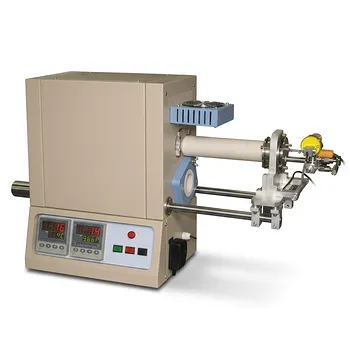
High Temperature Tube Furnace 1500C with Sliding Flanges and 50mm OD for Rapid Thermal Processing Fast Heating and Cooling

High Temperature 1700C Tube Furnace with High Vacuum Turbomolecular Pump System and Multi Channel Mass Flow Controller Gas Mixer
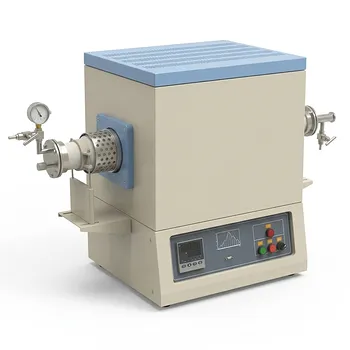
1750°C High Temperature Benchtop Vacuum Atmosphere Tube Furnace with Kanthal Super 1800 Heating Elements and 60mm Alumina Processing Tube
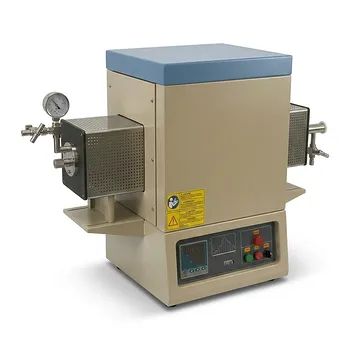
High Temperature 1700C Benchtop Tube Furnace with 5 Inch Heating Zone High Purity Alumina Tube and Vacuum Sealing Flanges
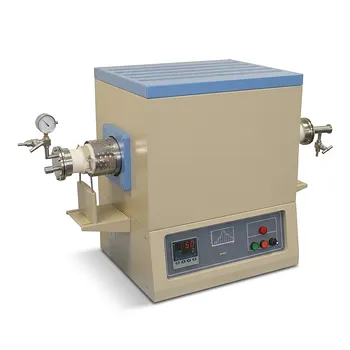
1700C High Temperature Alumina Tube Furnace with 18 Inch Heated Zone and Vacuum Sealing Flanges
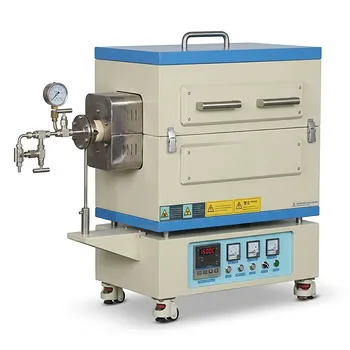
High Temperature Split Tube Furnace 1500C for Material Research Vacuum and Atmosphere Thermal Processing

1800C High Temperature Compact Vacuum Tube Furnace with 60mm OD Alumina Tube and Kanthal MoSi2 Heating Elements

Compact High Temperature 1600C Tube Furnace with 50mm Alumina Tube and Vacuum Flanges for Material Sintering
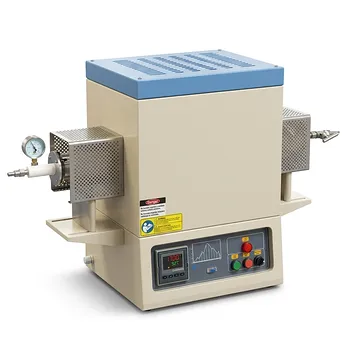
High Temperature Three Zone Tube Furnace 1700C with Alumina Tube and Water Cooled Flanges
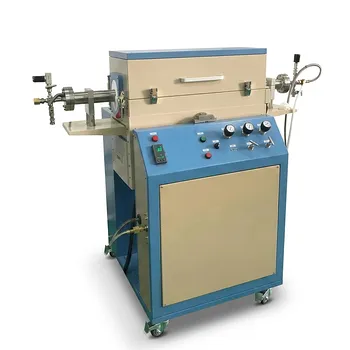
High Temperature Rocking Tube Furnace 1700°C Alumina Processing Tube with Precision Oscillation for Material Synthesis
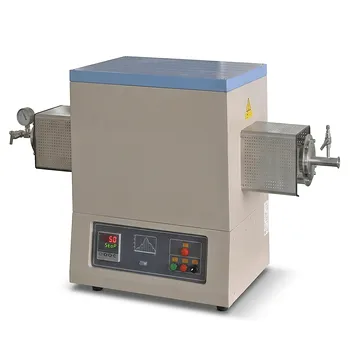
High Temperature 1700C Tube Furnace with 4 Inch OD Alumina Tube and Vacuum Sealing Flanges

High Temperature 1700C Vertical Tube Furnace for Powder Spherification and Material Sintering
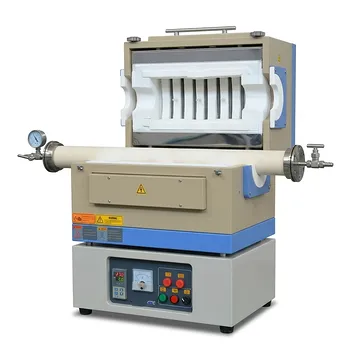
High Temperature 1600C Split Tube Furnace Vacuum Flanges Valves Optional 60mm 80mm Alumina Tube

High Temperature Automated 5 Inch Tube Furnace for Autonomous Material Research and Advanced Laboratory R&D
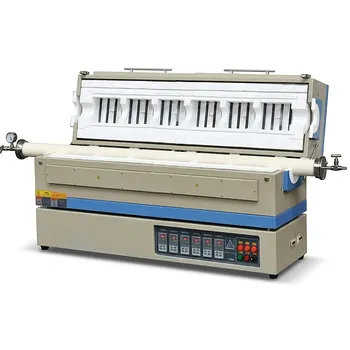
High Temperature 1700C Six Zone Split Tube Furnace with Alumina Tube and Water Cooled Flanges
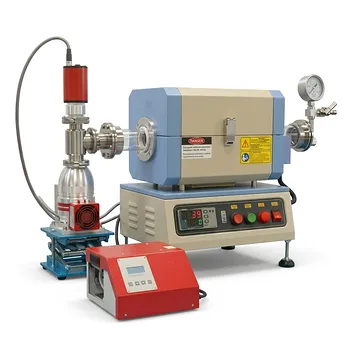
High Vacuum Compact Tube Furnace 1200C with Integrated Turbo Pump System and 8 Inch Heating Zone
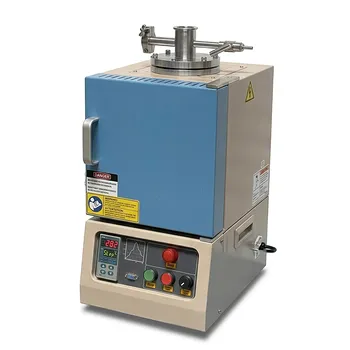
High Temperature Hybrid Muffle and Tube Furnace with Vacuum Capability and PID Control
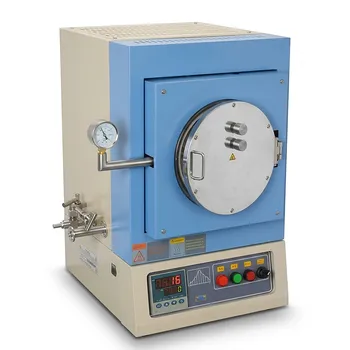
1100°C High Temperature Quartz Chamber Furnace 8 Inch OD with 7.6 Liter Capacity and Vacuum Atmosphere Capability
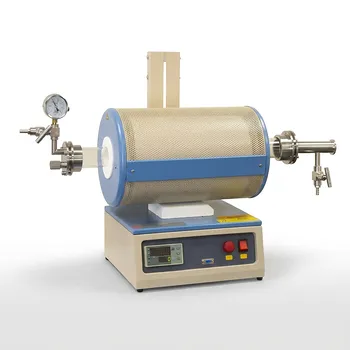
1100C Tube Furnace with Vacuum Flange and Programmable Temperature Controller for Material Science and Industrial Heat Treatment