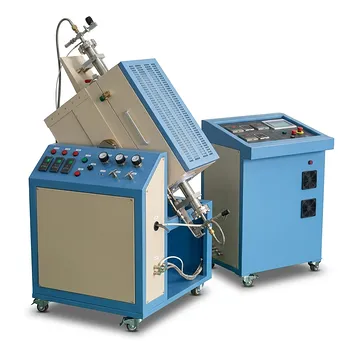
What key processing conditions does a high-temperature tube furnace provide for Strontium Aluminate? Expert Insights
Updated 3 months ago
A high-temperature tube furnace is the fundamental tool for synthesizing long-afterglow phosphors. It provides two critical processing conditions: sustained thermal energy up to 1350°C and a strictly controlled reducing atmosphere (typically a N2/H2 gas mixture). These conditions are mandatory to facilitate the solid-phase reactions and chemical reductions that allow the material to store and slowly release light.
The tube furnace functions as a specialized reactor that manages both the thermodynamic state and the chemical valence of the dopant ions. By providing a stable, high-heat environment and a reducing gas flow, it transforms raw precursors into a crystalline matrix capable of long-term luminescence.
The Role of Thermal Energy in Solid-Phase Synthesis
Achieving Necessary Kinetic Energy
The preparation of Strontium Aluminate requires temperatures reaching 1350°C to overcome the energy barriers of the raw materials. These high temperatures provide the kinetic energy necessary for the solid-state precursors to react and reorganize into the target phase.
Promoting Solid-State Diffusion
Sustained heat over several hours facilitates solid-state diffusion, where ions migrate across grain boundaries to form a uniform crystal lattice. This process is vital for the dopants—Europium (Eu) and Dysprosium (Dy)—to incorporate themselves correctly into the Strontium Aluminate (SrAl2O4) host structure.
Developing Afterglow Trap Levels
Precise temperature control is responsible for generating the specific trap energy levels within the crystal. These "traps" capture electrons during exposure to light and release them slowly over time, which is the mechanical basis for the long-afterglow effect.
Chemical Environment and Atmosphere Control
The Critical Reduction of Europium
The most vital function of the furnace is the introduction of a reducing atmosphere, such as an N2/H2 mixture. This environment is essential for reducing Europium ions from a trivalent state (Eu3+) to a divalent state (Eu2+).
Enabling Luminescent Characteristics
Only the divalent state (Eu2+) acts as the effective activation center for the green light emission characteristic of this phosphor. Without the oxygen-free, hydrogen-rich environment provided by the furnace, the material would fail to exhibit its long-persistent luminescence.
Preventing Oxidation of Components
The sealed tube design of the furnace ensures that atmospheric oxygen is completely excluded during the cooling phase. This prevents the newly reduced Eu2+ ions from re-oxidizing back into Eu3+, which would destroy the material's performance.
Understanding the Trade-offs and Pitfalls
Gas Mixture Sensitivity
While a reducing atmosphere is required, the ratio of Hydrogen to Nitrogen must be carefully managed. Excessive hydrogen can be volatile at high temperatures, while insufficient hydrogen will lead to incomplete reduction and weak afterglow intensity.
Temperature Uniformity and Sintering
Maintaining a uniform temperature field across the entire tube is a significant challenge. If the temperature fluctuates, different parts of the batch may develop different crystal structures, leading to inconsistent color and brightness in the final product.
Cooling Rate Impacts
The rate at which the furnace cools is just as important as the heating phase. Cooling too quickly can induce structural defects or internal stresses in the crystal lattice, which may quench the luminescence and reduce the overall efficiency of the phosphor.
How to Apply These Conditions to Your Project
To achieve the highest quality Strontium Aluminate phosphors, the furnace settings must be aligned with your specific performance requirements.
- If your primary focus is Maximum Afterglow Duration: Prioritize a stable soak at 1350°C for at least 3–5 hours and a high-purity N2/H2 atmosphere to ensure complete Eu3+ to Eu2+ conversion.
- If your primary focus is Color Purity (Green Emission): Focus on precise atmosphere control to prevent any traces of oxidation, as Eu3+ impurities can shift the emission spectrum.
- If your primary focus is Particle Size Control: Adjust the heating rate and peak temperature slightly downward to prevent excessive sintering, which makes the material harder to grind into fine powders later.
Mastering the interplay between high-temperature kinetics and atmospheric chemistry is the only way to produce high-performance long-afterglow materials.
Summary Table:
| Key Processing Condition | Parameters / Requirements | Primary Function |
|---|---|---|
| Sustained Thermal Energy | Up to 1350°C | Facilitates solid-state diffusion and crystal lattice formation. |
| Atmosphere Control | Reducing Gas (N2/H2 mixture) | Reduces Europium ions from Eu3+ to Eu2+ for luminescence. |
| Atmospheric Sealing | Sealed Tube Design | Prevents oxidation of components and preserves material purity. |
| Temperature Field | High Uniformity | Ensures consistent crystal structure and emission color. |
| Cooling Regulation | Controlled Slow Cooling | Prevents structural defects and quenching of the afterglow. |
Elevate Your Material Research with THERMUNITS
As a global leader in high-temperature laboratory equipment, THERMUNITS specializes in providing the precision thermal solutions required for advanced material science and industrial R&D. Our high-performance Tube Furnaces, Atmosphere Furnaces, and CVD/PECVD systems are engineered to deliver the exact 1350°C heat and strictly controlled reducing environments necessary for high-quality Strontium Aluminate synthesis.
Whether you require Muffle, Vacuum, Rotary, or Hot Press furnaces, we offer a comprehensive range of equipment—including Thermal Elements and Vacuum Induction Melting (VIM) furnaces—to support your most demanding heat treatment projects.
Ready to optimize your phosphor preparation and achieve superior afterglow performance?
Contact THERMUNITS Today to discuss your custom thermal processing needs and get a professional consultation.
References
- Adrian Drozdowski, Tomasz Grzyb. Unleashing the glow: upconverting nanoparticles recharge persistent luminescent materials – applications in 3D-printing and optical coding. DOI: 10.1039/d4tc01692k
Mentioned Products
- High Temperature Tube Furnace 1500C with Sliding Flanges and 50mm OD for Rapid Thermal Processing Fast Heating and Cooling
- High Temperature 1700C Tube Furnace with High Vacuum Turbomolecular Pump System and Multi Channel Mass Flow Controller Gas Mixer
- 1750°C High Temperature Benchtop Vacuum Atmosphere Tube Furnace with Kanthal Super 1800 Heating Elements and 60mm Alumina Processing Tube
- High Temperature 1700C Benchtop Tube Furnace with 5 Inch Heating Zone High Purity Alumina Tube and Vacuum Sealing Flanges
- 1700C High Temperature Alumina Tube Furnace with 18 Inch Heated Zone and Vacuum Sealing Flanges
People Also Ask
- How are high-temperature tube furnaces utilized to repair etching damage? Precision Lattice Restoration Solutions
- What role does a high-temperature tube furnace play in CVD synthesis of silicon nanowires? Master VLS Growth Precision.
- What core conditions does a high-temperature tube furnace provide for rGO aerogels? Mastering Precision Synthesis.
- What role does a high-temperature tube furnace play in the sulfidation heat treatment of CoS@C/MXene nanocomposites? Guide
- How does precision tube furnace control influence CoFe nanoparticle formation? Master Your Bimetallic Synthesis.

Tech Team · ThermUnits
Last updated on Jun 03, 2026
Related Products
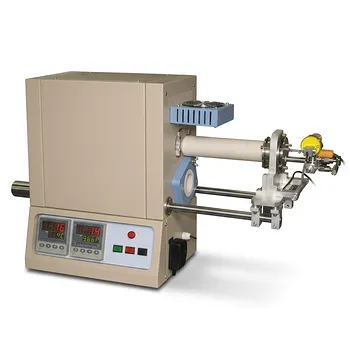
High Temperature Tube Furnace 1500C with Sliding Flanges and 50mm OD for Rapid Thermal Processing Fast Heating and Cooling

High Temperature 1700C Tube Furnace with High Vacuum Turbomolecular Pump System and Multi Channel Mass Flow Controller Gas Mixer
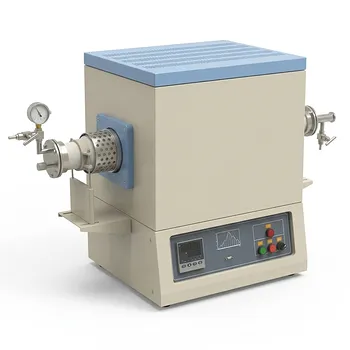
1750°C High Temperature Benchtop Vacuum Atmosphere Tube Furnace with Kanthal Super 1800 Heating Elements and 60mm Alumina Processing Tube

High Temperature 1700C Benchtop Tube Furnace with 5 Inch Heating Zone High Purity Alumina Tube and Vacuum Sealing Flanges
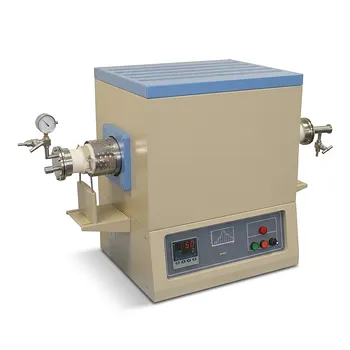
1700C High Temperature Alumina Tube Furnace with 18 Inch Heated Zone and Vacuum Sealing Flanges
High Temperature Split Tube Furnace 1500C for Material Research Vacuum and Atmosphere Thermal Processing

Compact High Temperature 1600C Tube Furnace with 50mm Alumina Tube and Vacuum Flanges for Material Sintering

1800C High Temperature Compact Vacuum Tube Furnace with 60mm OD Alumina Tube and Kanthal MoSi2 Heating Elements
High Temperature Three Zone Tube Furnace 1700C with Alumina Tube and Water Cooled Flanges
High Temperature Rocking Tube Furnace 1700°C Alumina Processing Tube with Precision Oscillation for Material Synthesis
High Temperature 1700C Tube Furnace with 4 Inch OD Alumina Tube and Vacuum Sealing Flanges

High Temperature 1700C Vertical Tube Furnace for Powder Spherification and Material Sintering
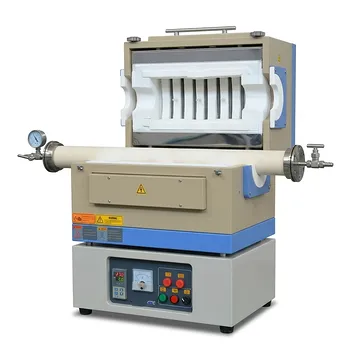
High Temperature 1600C Split Tube Furnace Vacuum Flanges Valves Optional 60mm 80mm Alumina Tube

High Temperature Automated 5 Inch Tube Furnace for Autonomous Material Research and Advanced Laboratory R&D

High Temperature 1700C Six Zone Split Tube Furnace with Alumina Tube and Water Cooled Flanges
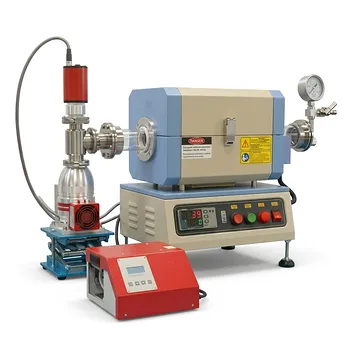
High Vacuum Compact Tube Furnace 1200C with Integrated Turbo Pump System and 8 Inch Heating Zone
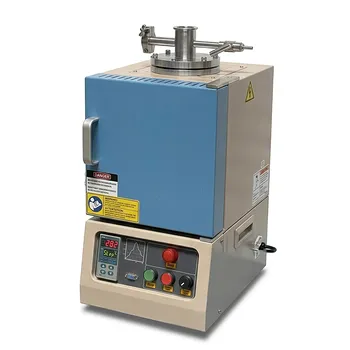
High Temperature Hybrid Muffle and Tube Furnace with Vacuum Capability and PID Control
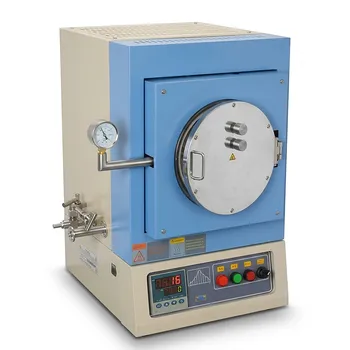
1100°C High Temperature Quartz Chamber Furnace 8 Inch OD with 7.6 Liter Capacity and Vacuum Atmosphere Capability
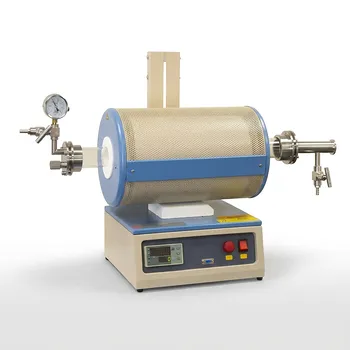
1100C Tube Furnace with Vacuum Flange and Programmable Temperature Controller for Material Science and Industrial Heat Treatment